


Oval Moissanite Ring with Hidden Halo in White Gold
$$$
14k white gold, moissanite, mixed accent stones
M. wanted an engagement ring that looked plain and classic from above but held a secret underneath — a hidden halo and diamond-accented prongs visible only on close inspection. After pausing the project for several weeks while juggling a move and family life, she came back ready to finish it, and loved the render the moment she saw it. She later returned to add a matching wedding band in the same stone and metal so the two would sit together seamlessly.
'I love it!!' — on seeing the first render
Quick specs
Design type
Primary Metal
Shape / Cut
Primary Stone
Accent Stones
Design Complexity
Intent: Certainty
Size
Ring size 7 US (17.32mm). Band width 2.3mm. Center stone approximately 7mm x 10.5mm oval.
How they made it distinctive
-
01
Hidden halo and diamond-accented prongs positioned low in the gallery so the ring reads as a plain solitaire from above or head-on
-
02
Oval moissanite chosen at a substantial size for brilliance and durability without the cost of an equivalent diamond
-
03
Four-prong claw setting keeps the stone secure while maintaining a low, classic profile
-
04
Slim 2.3mm band deliberately kept plain to let the center stone and hidden detailing do the work
-
05
Designed alongside a coordinating wedding band in the same metal and stone for a matched set
How you'd make it yours
Stone: this piece uses moissanite; a new commission could use a lab diamond for a similar look or a natural diamond for a different price point
Metal: this piece is 14k white gold; the same hidden-halo design works in 18k white gold, yellow gold, or platinum
Halo visibility: this piece hides the halo beneath the stone; a new commission could bring the halo fully visible for more sparkle from above
Band width: this piece uses a 2.3mm band; a new piece could be made thicker for a bolder look or thinner for a more delicate one
Engraving: the inside of the band can carry a date or initials on a new piece
One of a kind: this exact ring was designed for one client and is not reproduced — a new commission is an original piece inspired by this one, not a copy
Design changes made
Design matched the initial brief without major changes. After approving the engagement ring render, the client requested a coordinating wedding band be designed separately in the same white gold and moissanite to pair with it.
Who this is for
This piece is for someone who wants a ring that looks classic and understated at a glance but has real detail built into it for those who look closer. It's especially right if you want a large, brilliant center stone without a halo or heavy pave work competing for attention from above.
How it's made
Once the design was approved, the ring was 3D printed in wax and attached to a wax tree inside a flask. The flask was placed in a kiln to burn out the wax, leaving a hollow mold, and molten 14k white gold was cast into that mold under pressure. After cooling, the raw ring was removed from the mold and prepared for cleaning, polishing, and finishing.
The band was polished to a smooth, mirror finish to keep the profile clean and simple from the top view. The oval moissanite was set into a four-prong claw head, with a hidden halo of small pave accent stones set by hand into the gallery beneath the stone — positioned so it is visible only from certain angles, not from above or head-on.
Key note
The hidden halo and accented prongs are deliberately set low in the gallery, below the stone's girdle, so the ring reads as a plain solitaire from the wearer's own viewpoint looking down at her hand.
Pricing guidance
An oval moissanite solitaire with a hidden halo and accented prongs in 14k white gold sits in the mid range for engagement rings of this complexity. Most of the cost comes from the hidden-halo construction and hand-set pave work beneath the center stone, which takes more labor than a simple four-prong solitaire. Center stone size and the extent of the hidden detailing are what move the price most from there.
Moves price up ↑
- ↑ Increasing the center stone size beyond approximately 3 carats
- ↑ Switching the center stone from moissanite to a lab or natural diamond
- ↑ Extending the pave detailing further up the prongs or adding a fully visible halo
- ↑ Upgrading the band from 14k to 18k gold or platinum
- ↑ Adding a matching wedding band designed to nest against the engagement ring
Moves price down ↓
- ↓ Reducing the center stone size
- ↓ Simplifying the hidden halo to fewer accent stones
- ↓ Choosing a round or cushion cut instead of a custom oval, which can reduce stone sourcing time
- ↓ Using a simple four-prong setting with no hidden detailing
- ↓ Selecting a thinner band width
Questions people ask
Yes, moissanite is a popular and durable choice for engagement ring center stones. It rates 9.25 on the Mohs hardness scale, just below diamond's 10, which makes it very resistant to everyday scratching and suitable for daily wear. It also has a higher refractive index than diamond, giving it a distinct, fiery sparkle. High-quality moissanite in the DEF color range appears colorless to the naked eye and is typically eye-clean, meaning no visible inclusions.
A hidden halo is a ring of small accent stones set beneath the center stone, visible from the side or at an angle but not from directly above. Someone chooses this when they want the sparkle and detail of a halo setting without it being visible when looking down at their own hand, keeping the overall look simpler and more understated. It adds extra brilliance to the ring without changing its apparent size or visual weight from the top view. This approach works well for anyone who prefers a classic look day-to-day but still wants added detail built into the design.
A ring like this, with an oval moissanite center stone, hidden halo, and accented prongs in 14k white gold, falls in the mid range for custom engagement rings. The main cost drivers are the labor-intensive hidden-halo construction and the hand-set pave accents beneath the stone, which require more work than a plain solitaire setting. Center stone size and the extent of the hidden detailing are the biggest factors that move the price up or down from there.
Yes, the hidden halo and prong accents can be set with natural or lab diamonds instead of moissanite. Mixing stone types this way is common — some clients choose a moissanite or lab diamond center stone paired with natural diamond accents for a specific look or budget reason. The two stone types read similarly in small accent sizes, so the visual difference is minimal while the material cost can differ.
The full process typically takes around five to six weeks from approved design to completion. The first week covers the 3D design and render, which the client reviews and approves before production starts. Production itself — wax printing, casting, stone setting, and finishing — takes roughly four to five weeks. Shipping and any final quality checks happen after that.
If a stone comes loose or falls out, the ring should be sent back to the jeweler for inspection and repair rather than fixed elsewhere, especially while it is still under any workmanship coverage. A jeweler will typically inspect all of the stones and prongs at the same time, replace the missing stone, and re-secure anything else that is at risk of coming loose. Routine wear can loosen prongs over time, which is why an inspection and cleaning every six months to a year is generally recommended. This kind of repair is a standard service and does not usually require remaking the entire piece.
A 3D render is a close approximation but not a perfect match to the finished piece — lighting, photography, and screen display can all cause slight color variation between a render and the physical ring. Reputable jewelers will tell you upfront that minor differences in how metal or stone color appears are normal and expected. If something looks significantly different from what was approved, it's worth asking for clarification or requesting better photos in natural light before assuming there's an error. In this ring's case, the finished piece matched the approved design once seen in person.
Yes, band width on a setting like this is a flexible choice and can be adjusted thinner or thicker depending on preference and comfort. A slimmer band, like the 2.3mm used here, keeps the focus on the center stone and gives a more delicate look on the hand. A wider band will feel more substantial and can provide a bit more durability over time, though it will shift the overall visual balance of the ring.
Explore Similar Creations
Every masterpiece starts with a spark. Explore how our clients raw ideas - sketches, heirlooms, inspirations - were transformed into bespoke works of arts.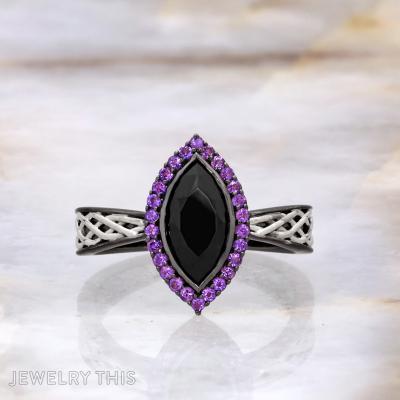
This engagement ring centers a custom-cut marquise black spinel, bezel-set and surrounded by a halo ...

Introducing our captivating twist on a classic style, the 2.13 carat Emerald Cut Lab Created ...

This stunning yellow gold wedding set was custom created to celebrate a special anniversary, blending ...

Crafted in white gold, this enchanting engagement ring features an oval diamond at its center, ...
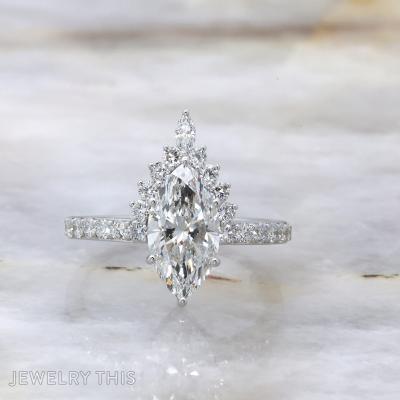
This stunning white gold engagement ring showcases a marquise-shaped center lab-grown diamond, striking in its ...
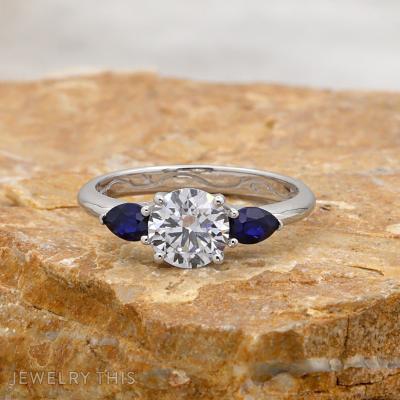
This engagement ring centers a round lab-grown diamond flanked by two pear-shaped sapphires, chosen in ...
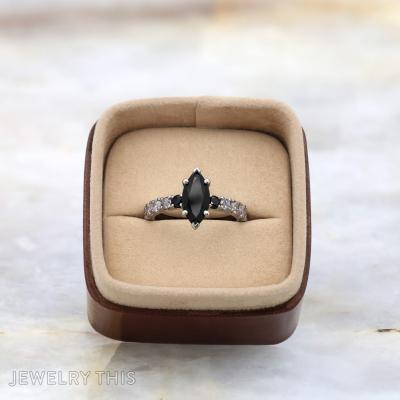
This architectural platinum engagement ring is a breathtaking study in monochrome elegance and graduated light. ...

This stunning 14k yellow gold ring features a beautiful heart-shaped sapphire cabochon at its center, ...

This engagement ring and companion band were designed as a nesting two-ring set in 14k ...

This Cushion Cut Double Halo Double Diamond Band Engagement Ring is a stunning symbol of ...

This engagement ring pairs a 1.05-carat oval lab-grown diamond with two symmetrical clusters of accent ...

14 k yellow gold engagement ring featuring a claddagh design. Set in the center a ...



