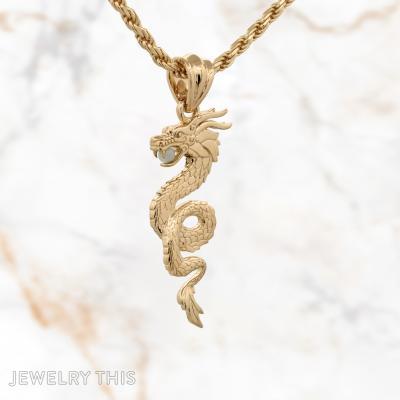
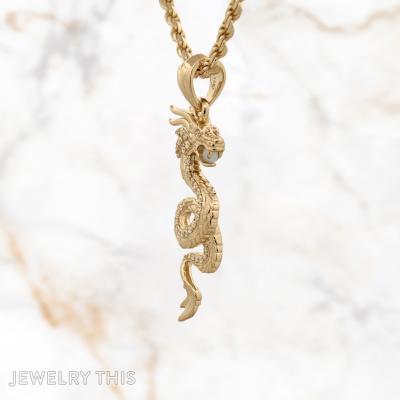
Two-Tone Gold Dragon Pendant With Jade Accent
$$$
14k yellow gold, rhodium plating, lab-created diamonds, jade
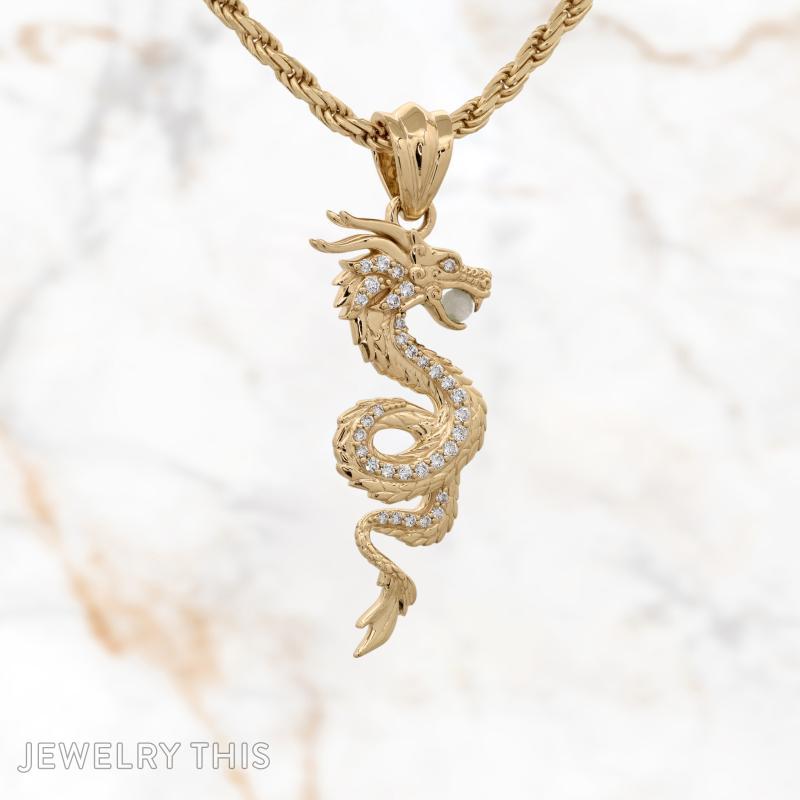
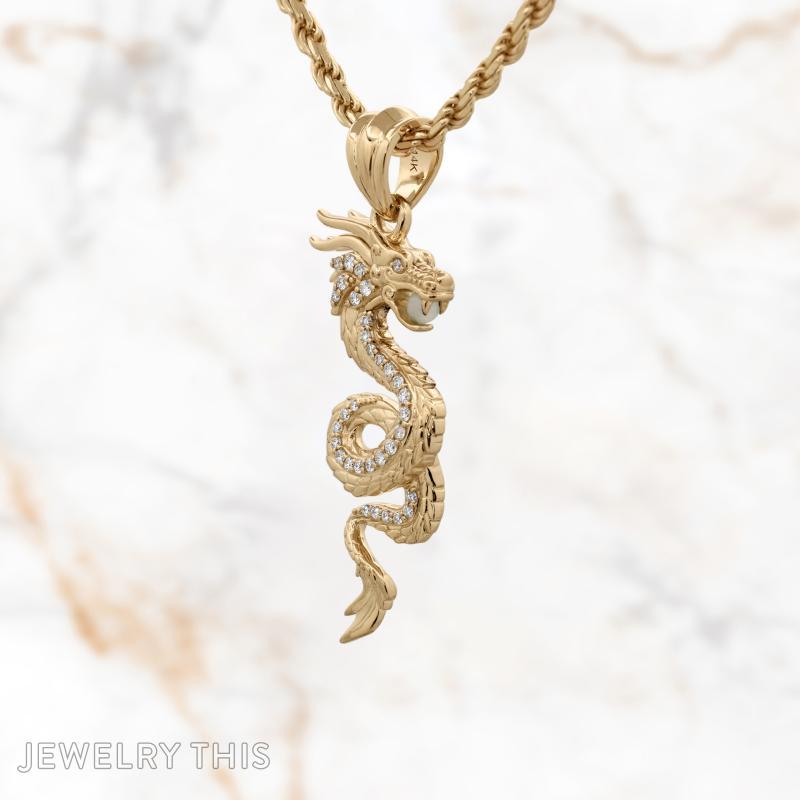
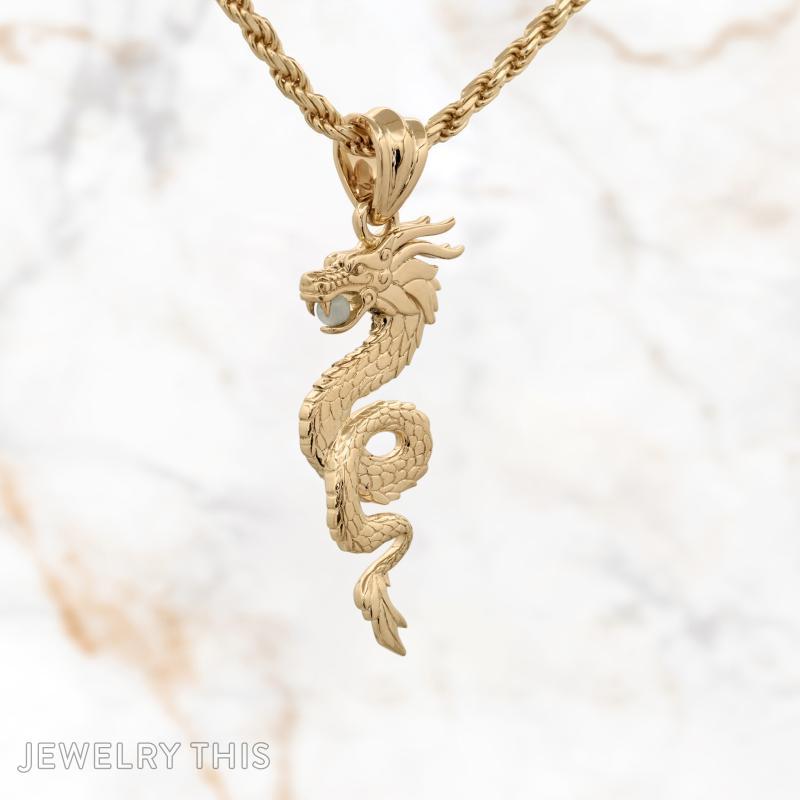
A client came to us wanting a pendant to mark the year of the dragon, drawing on Chinese dragon imagery and asking for a jade accent as an essential detail. The design went through several rounds of sketch revisions — adjusting the horns, reworking the tail from a fish-like curve to a spiked, looped shape, and refining the body silhouette — until the dragon read right. The final piece scaled down from an early, much larger concept to fit the client's everyday-wear preference, with a smaller jade bead sourced specifically to make that possible.
'This is so beautiful!!! I am so happy with this sketch already.' — on seeing an early sketch
'So awesome!' — on seeing the resin model before casting
Quick specs
Design type
Primary Metal
Secondary Metal
Shape / Cut
Primary Stone
Accent Stones
Style
Design Complexity
Intent: Certainty
Size
Pendant approximately 1.5in long (excluding bail); jade bead 2.5mm.
How they made it distinctive
-
01
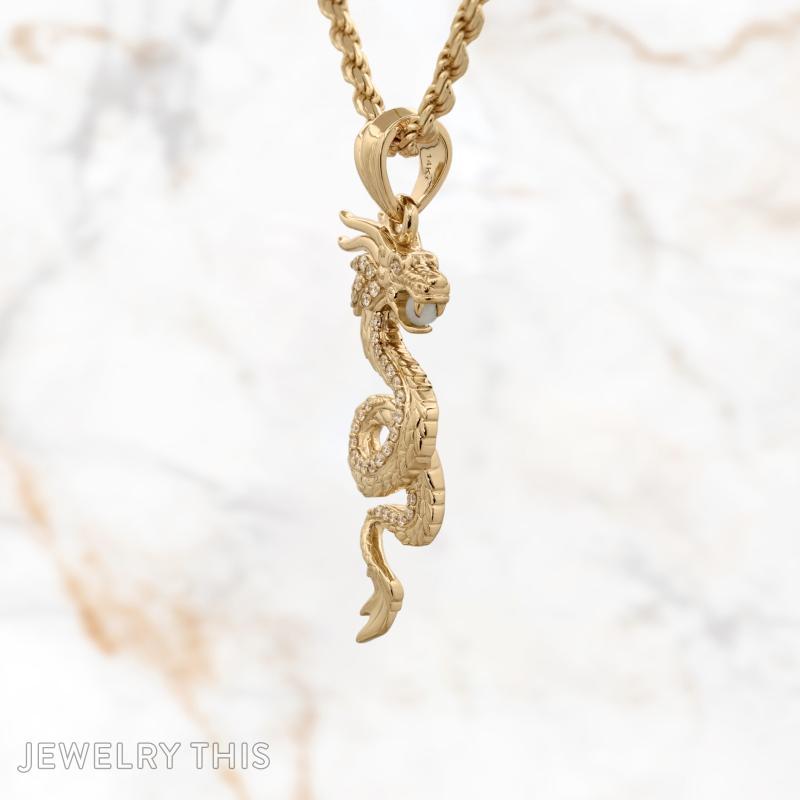
Fully three-dimensional dragon form rather than a flat silhouette, giving the coiled body real depth and presence
-
02
Jade bead held in the dragon's mouth by a soldered pin rather than a standard bezel, chosen specifically to fit the small scale of the piece
-
03
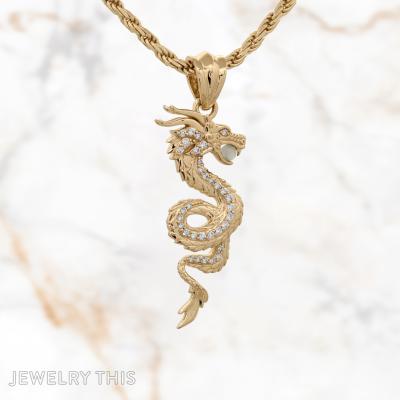
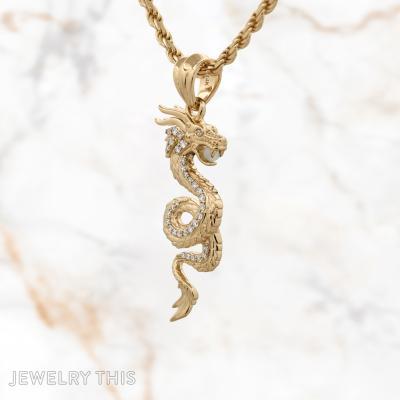
Two-tone finish achieved by rhodium-plating only the diamond-set scale areas against solid yellow gold, rather than casting in two separate metals
-
04
Tail redesigned twice — from a fishtail to a looped curve to a thinner spiked shape — until the silhouette read as a dragon rather than a sea creature
-
05
Scaled down from an original 2-inch, 5-carat concept to a compact, everyday-wearable 1.5-inch size without losing the sculptural detail
How you'd make it yours
Stone in the mouth: this piece uses a small jade bead; a new commission could use another cabochon gemstone or a birthstone in its place
Diamonds: this piece uses lab-created diamonds in the scales; a new commission could use natural diamonds or moissanite for a different look or budget
Finish: this piece uses rhodium-plated white gold scales against yellow gold; a new commission could reverse the contrast or use a single gold tone throughout
Size: this piece is sized at about 1.5 inches for everyday wear; a new commission is sized to its own wearer and setting needs
Back detail: this piece has a fully dimensional front and back; a new commission could use a flat-back design for a flatter, more comfortable everyday profile
One of a kind: this exact pendant was designed for one client and is not reproduced — a new commission is an original piece inspired by this one, not a copy
Design changes made
The dragon's tail was reworked twice — first from a fishtail into a looped curve, then into a thinner, spikier shape — and the horns were lengthened for a more traditional look. After the first full render came in larger and more detailed than intended, the design was rebuilt at a smaller scale with a smaller sourced jade bead to fit the client's size and budget preferences.
Who this is for
This piece is for someone who wants a symbol with real cultural weight rendered as a genuine dimensional object, not a flat charm. It's especially right if you have a very specific image in your head — down to how a tail should curl or how a horn should sit — and want a process built around getting each of those details right before anything is cast.
How it's made
Once the final design was approved, a 3D digital model was refined into a wax resin version, printed and shared with the client as a preview before casting. The resin was attached to a wax tree, invested in plaster, and fired in a kiln to burn out the wax, leaving a hollow mold. Molten 14k yellow gold was then cast into the mold, producing the raw dragon form ready for finishing.
After casting, the piece was cleaned and polished, and the scale areas along the head, neck, and coiled body were rhodium-plated to create the white-gold contrast against the yellow gold body. The round lab-created diamonds were then hand-set into the plated scale sections, and the jade bead was slid into the dragon's open mouth and secured with a small pin soldered in place from underneath.
Key note
The jade bead in the dragon's mouth isn't glued or bezel-set — it's held in place by a small pin soldered from beneath the mouth, a construction method chosen specifically because a standard setting wouldn't fit the bead into that small a space.
Pricing guidance
A sculptural two-tone dragon pendant with diamond-set scales and a genuine gemstone accent sits at the higher end for custom pendant work, driven mainly by the fully dimensional casting and the hand-setting required across the curved, coiled surface. Diamond carat weight and pendant size are the two biggest levers on cost for a design like this — even modest changes in scale affect metal weight and stone count substantially. Sourcing a small, well-matched cabochon gemstone also adds sourcing time and cost beyond a standard birthstone-size cut.
Moves price up ↑
- ↑ Increasing the pendant size, which increases both metal weight and the number of diamonds needed to cover the scales
- ↑ Using higher total diamond carat weight or natural diamonds instead of lab-created
- ↑ Adding full dimensional detail on both front and back rather than a flat-back design
- ↑ Sourcing a larger or higher-grade jade bead
- ↑ Choosing solid 18k gold instead of 14k
Moves price down ↓
- ↓ Reducing the pendant to a flat-back design rather than fully 3D
- ↓ Using moissanite in place of diamonds for the scale stones
- ↓ Choosing a smaller overall pendant size
- ↓ Using gold-plated sterling silver instead of solid gold
- ↓ Reducing the diamond count by leaving some scale areas plain metal
Questions people ask
Yes, fully dimensional pendants are possible and are shaped using a 3D-printed wax or resin model before casting, which lets the design team preview the exact form before committing to metal. A 3D pendant like a coiled dragon has more surface area and takes more metal than a flat-back version of the same design, which increases both weight and cost. Some clients prefer a flat back specifically because it sits more comfortably against the skin for daily wear. Either approach can achieve the same level of detail on the front-facing side.
Lab-created and natural diamonds are chemically and visually identical — same hardness, same brilliance, same durability for daily wear. The primary difference is cost, with lab-created diamonds typically running significantly less per carat than natural stones of comparable quality. For a design using multiple small stones set into scale details, lab-created diamonds make it possible to achieve more total sparkle within a given budget. Both options are graded the same way for clarity and color.
Yes, though jade requires a setting method suited to its shape and hardness rating, which is lower than diamond or sapphire. In a design where the stone is held in a recessed space like a dragon's mouth, a pin soldered from beneath is a common way to secure a bead-shaped stone without a visible prong or bezel. This method keeps the stone secure for daily wear while preserving the sculptural look of the surrounding metalwork. Genuine jade should still be protected from hard impacts, as with any softer gemstone.
A sculptural pendant with full dimensional casting, diamond-set scales, and a genuine gemstone accent falls toward the higher end of custom pendant pricing, mainly due to the diamond carat weight and the labor of hand-setting stones across a curved surface. Larger sizes and higher diamond counts increase the price substantially, while switching to moissanite or reducing overall size can bring the cost down. The final price depends heavily on the specific carat weight, metal type, and final dimensions agreed during the design phase.
A design like this typically goes through one to two weeks of sketch and 3D rendering before moving to production, though multiple rounds of revisions can extend that phase. Once the design is approved, casting, stone sourcing, setting, and finishing generally take about four to six weeks. Rush timelines are sometimes possible depending on production scheduling, but sourcing a well-matched gemstone can add extra time regardless of rush status.
Yes, a common approach is to cast the entire piece in one gold color and then selectively rhodium-plate the areas meant to look white, rather than fabricating the piece from two separate metal alloys. This is typically applied to detail areas like scales, textured sections, or accent surfaces to create contrast against the base metal color. Rhodium plating on gold will wear over time with daily contact and can be reapplied by a jeweler when it fades. This method is generally more efficient than casting a true two-tone piece from separate metal pours.
Size changes are possible during the design and rendering phase, before casting begins, since the model can be scaled and re-rendered for approval. Once a design has been cast, resizing a fully dimensional, curved piece like this is far more difficult than resizing a simple band, because changing scale affects the proportion of every design element together. For pieces with small set stones like a bead or diamonds, resizing after casting can also risk disturbing the settings. It's generally best to confirm final size during the render approval stage.
A fully dimensional pendant with hand-set stones can absolutely be worn daily, though a smaller, more compact size tends to hold up better to regular movement and contact than an oversized version. Diamonds are extremely durable and well-suited to daily wear, while a genuine jade accent is more moderate in hardness and benefits from avoiding hard knocks. Solid gold construction is also more durable over time than gold-plated alternatives for a piece intended to be worn often. Choosing a compact size, as was done here, is a common way to balance a detailed design with everyday practicality.
Explore Similar Creations
Every masterpiece starts with a spark. Explore how our clients raw ideas - sketches, heirlooms, inspirations - were transformed into bespoke works of arts.
This pendant is a one-of-a-kind piece of jewelry crafted from sterling silver. It features a ...

Crafted with meticulous attention to detail, this custom pendant is a true testament to elegance ...

This yellow gold pendant features a unique combination of religious and spiritual symbols. A cross ...

Symbolizing the cherished memory of a loved one, this heart shaped pendant captures the essence ...

This silver cross is a heartfelt tribute to the memory of a beloved son. Measuring ...

This yin and yang design pendant was crafted in sterling silver. Based on images of ...

This basketball and hoop pendant was designed for a basketball enthusiast. Crafted in sterling silver ...

This pendant was created in remembrance of a cherished loved one. Meticulously crafted in sterling ...

A beautiful combination of a mamba snake and the infinity symbol with a personalized engraving ...

This custom initial pendant features a harmony of letters. The pendant showcases a set of ...

This striking custom logo pendant beautifully represents Cyborg Fitness. It’s crafted from durable sterling silver ...

This gold pendant embraces the fusion of modern design with personal identity. The logo-style initials ...