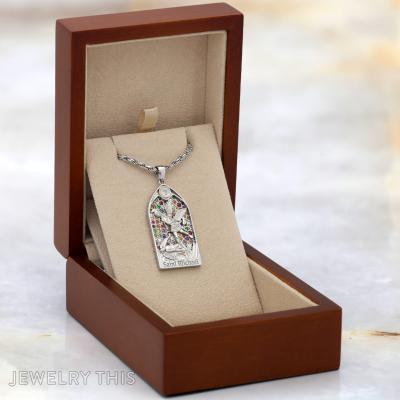
Saint Michael Stained-Glass Pendant in White Gold
$$$$
14k white gold, tsavorite garnet, ruby, sapphire, diamond
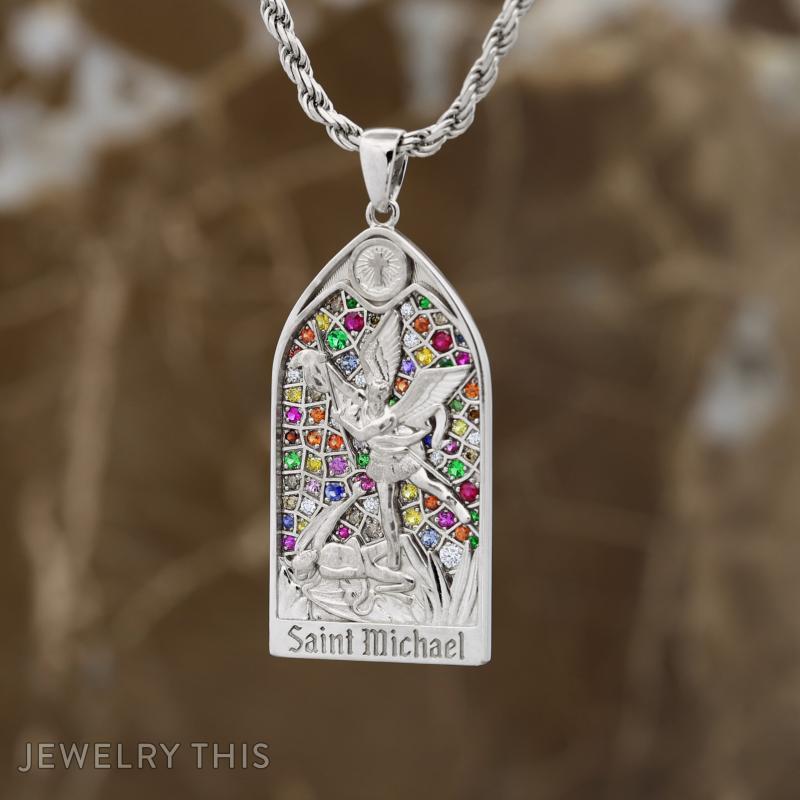
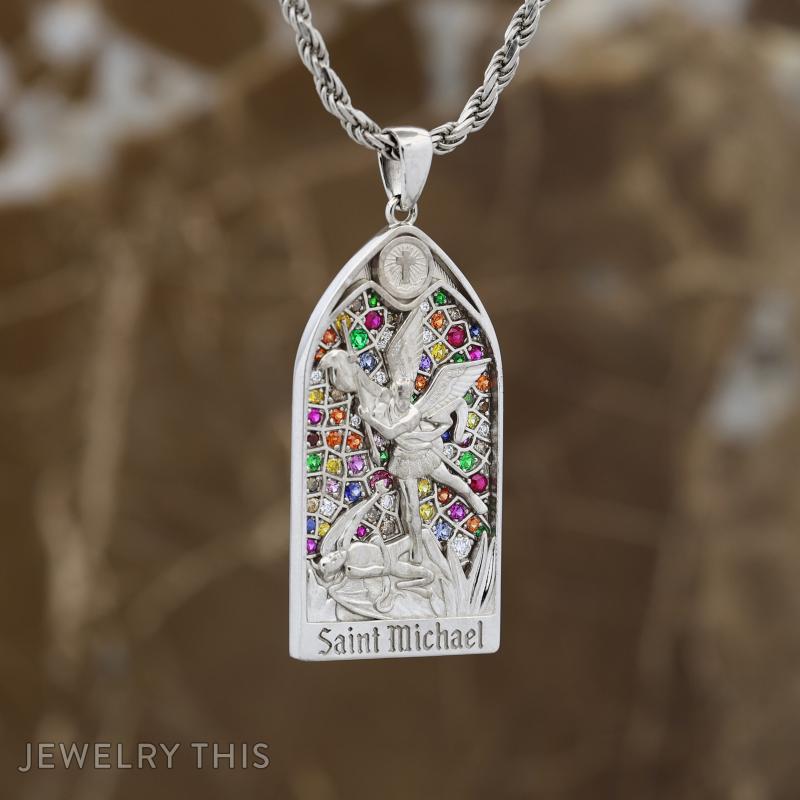
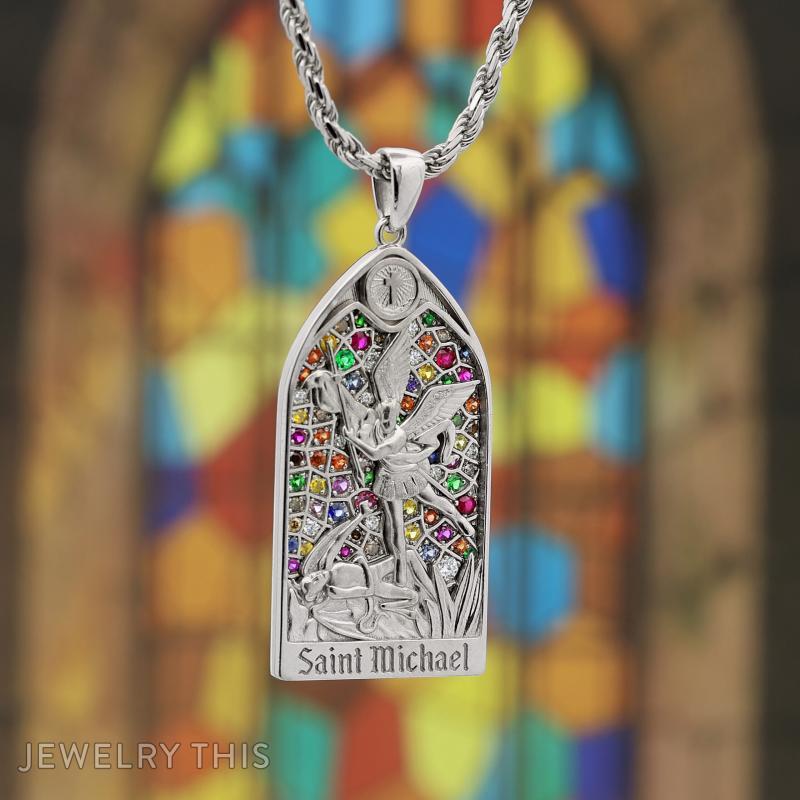
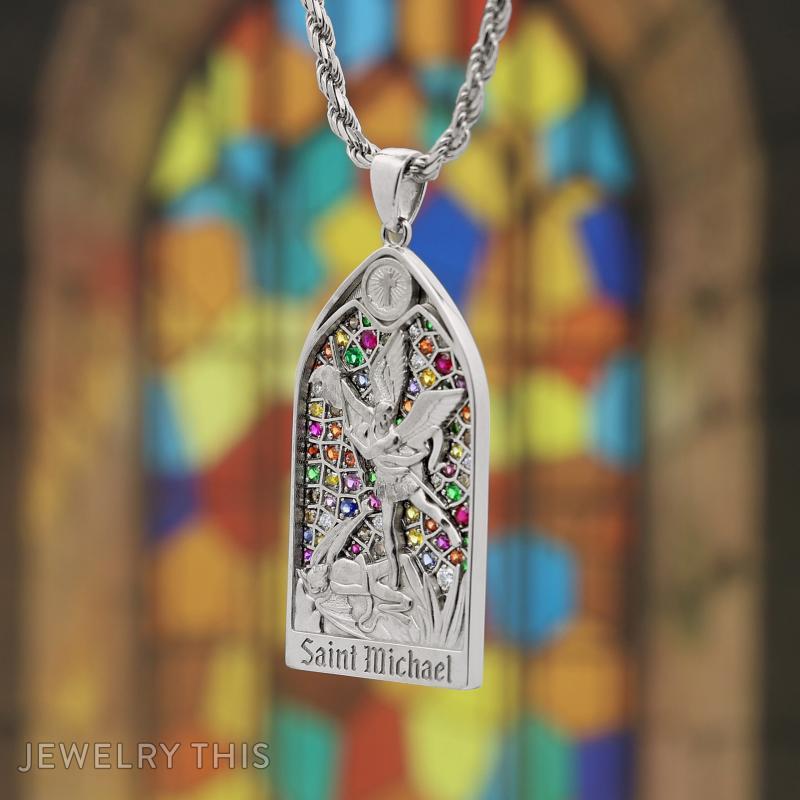
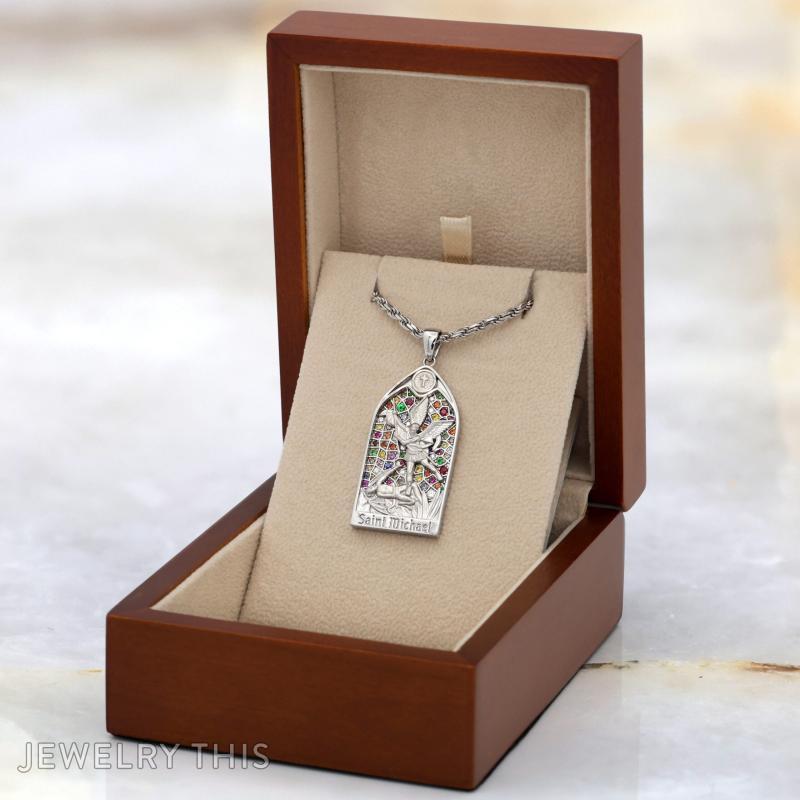
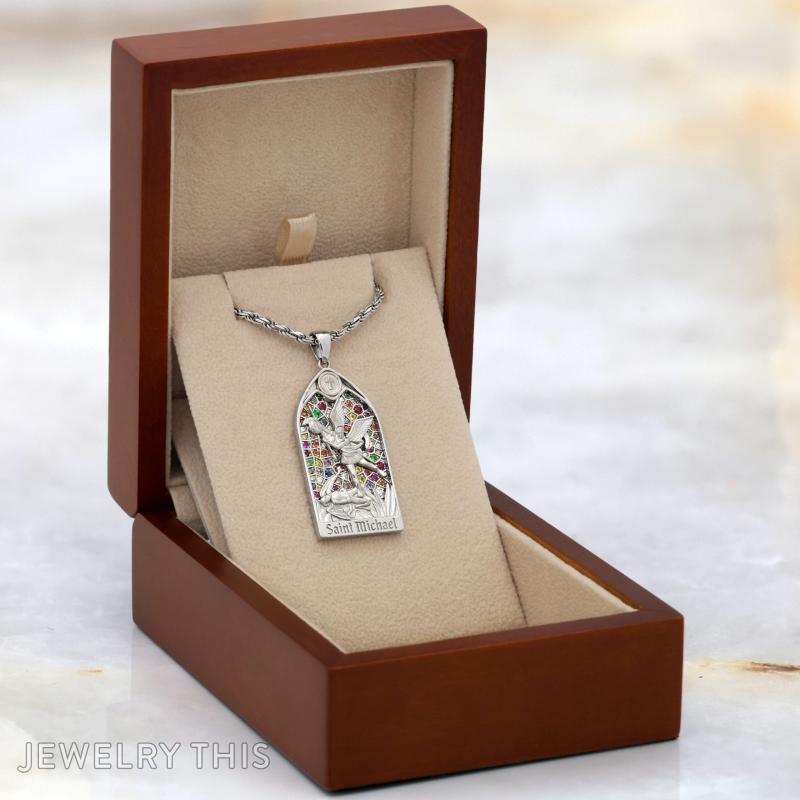
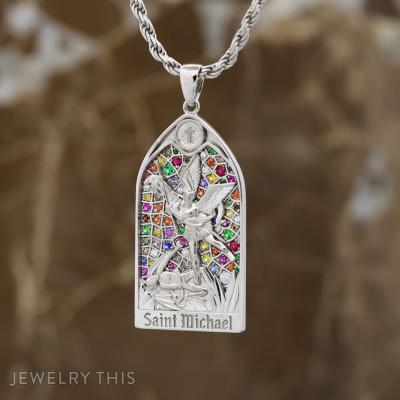
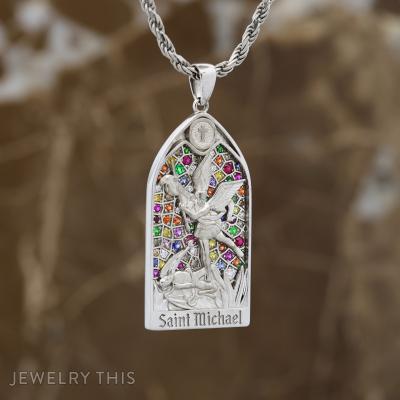
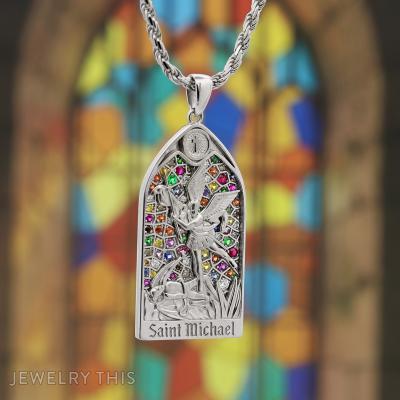
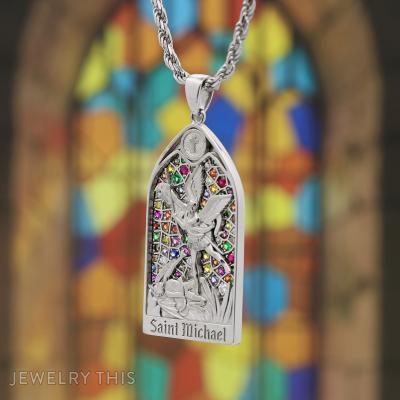
A client wanted a Saint Michael pendant that echoed a stained-glass window he had seen, with the mosaic background rendered in real gemstones rather than enamel or paint. The design evolved substantially during the process — from a single-piece prong-set design to a two-plate construction with hand-drilled openings behind the stones so real light could shine through, in his choice of purple, blue, red, and green gemstones. When it arrived, he wrote: "the pendant turned out amazing. I love it."
'Thank you Tricia, the pendant turned out amazing. I love it!' — on delivery
Quick specs
Design type
Primary Metal
Shape / Cut
Primary Stone
Accent Stones
Design Complexity
Intent: Certainty
Size
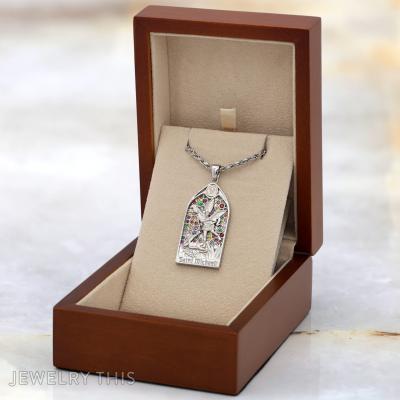
Pendant approximately 1–1.5in tall; two-plate construction approximately 2mm total thickness; chain not included.
How they made it distinctive
-
01
Two-plate laser-welded construction chosen specifically so light could pass through the gemstones from behind, achieving a true stained-glass effect
-
02
66 individually set gemstones — tsavorite garnet, ruby, and purple and blue sapphire, plus diamonds — arranged in a mosaic rather than a single center stone
-
03
Hand-drilled openings behind select stones, a production step added specifically at the client's request to let real light carry through the piece
-
04
Saint Michael rendered in raised dimensional relief over the gemstone background, standing above a fallen figure, with his name engraved at the base
-
05
Multicolor gemstone palette — purple, blue, red, and green — chosen and spaced deliberately to mimic the varied palette of an actual stained-glass window
How you'd make it yours
Gemstone palette: this piece uses purple, blue, red, and green stones — a new commission could use any color combination or a single dominant color
Gemstone count: this piece uses 66 stones in a dense mosaic — a new commission could use fewer stones for a simpler background
Metal: this piece is 14k white gold — the same construction works in platinum or yellow gold, or a two-tone combination
Construction: the two-plate light-piercing build is integral to the stained-glass effect and cannot be simplified to a single plate without losing that effect
Size: this piece is roughly 1 to 1.5 inches — a new commission is sized to its own wearer and preference
One of a kind: this exact pendant was designed for one client and is not reproduced — a new commission is an original piece inspired by this one, not a copy
Design changes made
The design changed from a single-piece pendant with prong-set stones to a two-plate construction — a back plate and a front plate, cast separately, hand-set, and laser-welded together — specifically to achieve a stained-glass look with light passing through the gemstones. Hand-drilled openings were added behind the stones at the client's request to let light carry through each gem the way it would in an actual stained-glass window.
Who this is for
This piece is for someone who wants a religious pendant that goes beyond a flat engraved medallion — something with real dimensional depth, color, and light. It's especially right for anyone drawn to stained-glass imagery who wants that effect achieved in real gemstones and metal rather than enamel, and who is willing to invest in the extra engineering that makes light-through-stone possible.
How it's made
The design moved from sketch to a 3D CAD model and photorealistic render for approval, then into a resin model — a physical preview of the piece before any metal was cast. Because the stained-glass effect required light to pass through the gemstone background, the piece was engineered as two separate plates: a back plate and a front plate, each cast individually in 14k white gold, cleaned, and polished before assembly.
Small openings were hand-drilled behind select gemstone positions on the back plate so that light could pass through the stones once set, echoing the look of an actual stained-glass window. The 66 gemstones — tsavorite garnets, rubies, and purple and blue sapphires, alongside diamonds — were then hand-set into their sockets across the mosaic background. Once all stones were secured, the two plates were laser-welded together and the piece was given a final polish.
Key note
The light-piercing stained-glass effect required hand-drilling small openings behind the gemstones during setting — a step the design did not originally call for and one that only became necessary once the piece moved from a single-plate to a two-plate construction.
Pricing guidance
A dimensional religious pendant with a dense multicolor gemstone mosaic and two-plate laser-welded construction sits toward the higher end of custom pendant work. The primary cost driver is labor — sourcing 60+ individually matched gemstones and hand-setting them across two separately cast and welded plates takes considerably longer than a standard cast-and-set pendant. Metal choice and total stone count are where the price moves most from there.
Moves price up ↑
- ↑ Increasing the gemstone count beyond 66 stones, which adds sourcing time and setting labor
- ↑ Choosing platinum instead of 14k white gold for the plates
- ↑ Adding hand-drilled light openings behind additional stones
- ↑ Requesting a larger overall pendant size, which increases metal weight and surface area to set
- ↑ Using rarer or larger natural colored stones instead of small calibrated melee sizes
Moves price down ↓
- ↓ Returning to a single-plate construction rather than the two-plate laser-welded build
- ↓ Reducing the gemstone count and leaving some mosaic sections in plain polished metal
- ↓ Choosing lab-created stones or a mix of lab and natural stones for the mosaic
- ↓ Skipping the hand-drilled light-piercing openings
- ↓ Selecting a smaller overall pendant size to reduce metal and setting time
Questions people ask
The effect comes from setting many small, individually colored gemstones close together in a mosaic pattern across an open background, similar to how stained glass panels are arranged. In pieces like this one, small openings can also be hand-drilled behind select stones so that light physically passes through them, reinforcing the stained-glass illusion. This requires a two-plate construction — a back plate and a front plate cast separately, set with stones, and then joined together — rather than a single solid casting. It is a significantly more involved build than a flat engraved or enameled pendant.
This piece uses 66 gemstones total, including natural tsavorite garnets, rubies, and sapphires in purple and blue tones, alongside diamonds. The mix of colors was chosen to mimic the varied palette of a stained-glass window rather than a single uniform stone. Because the stones needed to match specific colors and sizes across a dense mosaic, sourcing took longer than a single center-stone piece would. Natural stones were used throughout rather than lab-created alternatives.
Yes, 14k white gold is a durable alloy commonly used in daily-wear jewelry, and it holds up well to normal handling and wear. White gold pieces are typically rhodium-plated for a bright white finish, and that plating can wear thin over years of daily contact, at which point re-plating restores the original brightness. The gold content itself does not tarnish or corrode under normal conditions. For a pendant with this much surface detail and gemstone setting, careful cleaning is recommended over harsh chemical cleaners.
A dimensional religious pendant with a dense multicolor gemstone mosaic and a two-plate laser-welded construction falls toward the higher end of custom pendant pricing. Most of the cost comes from labor — sourcing dozens of individually matched gemstones and hand-setting them across two plates that are cast, polished, and welded together takes far longer than a standard cast pendant. Stone count, stone type, and metal choice are the main variables that move the price up or down from there.
For a piece of this complexity, the full process typically runs several weeks longer than a standard pendant. Design — sketch, 3D CAD model, and photorealistic render for approval — usually takes one to two weeks, with additional rounds if the design changes significantly during review. Production, including casting both plates, hand-drilling light openings, setting dozens of gemstones, and laser-welding the assembly, typically takes four to six weeks depending on stone sourcing. Complex multi-stone mosaics like this one generally fall on the longer end of that range.
Yes, stained-glass-style designs translate well into jewelry when the piece is engineered specifically for that effect — using a dense mosaic of colored gemstones set into an open framework rather than trying to replicate glass panes directly. The key technical challenge is allowing light to interact with the stones the way it would with actual glass, which can be achieved with hand-drilled openings behind the setting. This approach works best on pendants and other pieces with enough surface area to support a detailed mosaic layout.
Reducing the size significantly is usually not possible without also reducing the design detail, because gemstones need adequate space to be set securely. On a piece with a dense mosaic background, shrinking the overall size by half would typically require removing many of the gemstone positions entirely rather than simply shrinking everything proportionally. A more modest size reduction, or reducing the stone count while keeping the overall dimensions, is usually a more workable path if a smaller or simpler piece is the goal.
A two-plate construction requires casting two separate pieces of metal instead of one, polishing and finishing each independently, hand-setting gemstones into both, and then laser-welding them together as a final assembly step. This adds meaningful labor and precision work compared to a single casting with prong-set stones. It is typically chosen only when the design requires an effect — like light passing through a stone from behind — that a single solid casting cannot achieve.
Explore Similar Creations
Every masterpiece starts with a spark. Explore how our clients raw ideas - sketches, heirlooms, inspirations - were transformed into bespoke works of arts.
Experience timeless elegance with our 0.75-inch pendant, expertly crafted in 14kt yellow gold, replicating the ...

This custom pendant is a poignant tribute created to honor the loss of twins. The ...
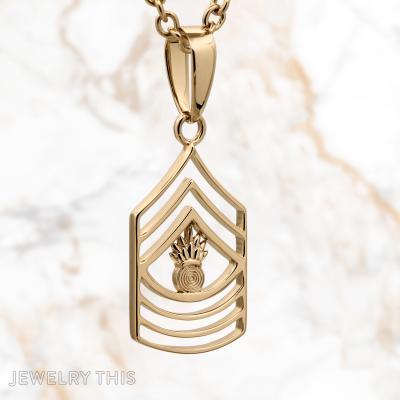
This gold pendant bears the distinguished rank insignia of a Master Gunnery Sergeant in the ...

Behold the striking allure this custom pendant crafted from radiant 10k yellow gold. This substantial ...

This silver pendant features a circular silver frame combined with a cut-out central area. Three ...

This logo pendant is a true testament to the one who wears it- the “world’s ...

This circular pendant is built around a sequence: fourteen round pink tourmalines, cut in graduating ...

This harmonious fusion of celestial elements and personalized motifs creates a wearable talisman, resonating with ...

14k yellow gold sitting panda holding a cat in its lap. The cat is filled ...

This gorgeous rose gold tear drop pendant is the perfect combination of luxury and edginess. ...

Immerse yourself in nostalgia with this 3D mini calculator and tape roll pendant, a whimsical ...

18karat Yellow gold Round pendant featuring detailed Snake eating its tail (Ouroboros) A symbol of ...