

Roman Numeral Pendant — Diamond XXII in 14k Yellow Gold
$$$
14k yellow gold, natural diamonds
A husband wanted to surprise his wife with a Roman numeral pendant marking a meaningful number, sized small enough that she could wear it on its own or layered with the rest of her jewelry. He left the exact font and numeral styling up to the design team, asking only that it read XXII. When it arrived, he wrote simply: 'Received it. Looks awesome.'
'This looks great....' — on seeing the first render
'Received it. Looks awesome! Thanks again.' — on delivery
Quick specs
Design type
Primary Metal
Shape / Cut
Primary Stone
Accent Stones
Design Complexity
Intent: Certainty
Size
Pendant approximately 0.75in long. Chain integrated at pendant center rather than hung from a bail.
How they made it distinctive
-
01
Roman numerals rendered entirely in pave-set diamonds rather than flat engraving or a stamped font
-
02
Chain integrated directly into the sides of the numerals instead of hanging from a top bail, creating one continuous line
-
03
Scaled down from the client's initial 1-inch request to 3/4 inch specifically to make the piece easier to layer with other necklaces
-
04
Numeral stroke width kept at approximately 1mm, a deliberate proportion tradeoff that maximizes delicacy but rules out later engraving
-
05
Font and numeral styling left entirely to the design team's discretion, with only the numeral sequence specified by the client
How you'd make it yours
Numeral/text: this piece spells a specific Roman numeral — a new commission could spell any word, date, or number sequence
Stone type: this piece uses natural diamonds — lab-grown diamonds offer the same appearance at lower cost
Diamond grade: this piece uses VS clarity/F-G color — a new piece could use a different clarity/color combination
Size: this piece is 3/4 inch — a new commission can be sized larger or smaller depending on the wearer's preference
Chain style: this piece has the chain integrated directly into the pendant — a new piece could instead use a separate bail and chain
One of a kind: this exact pendant was designed and cast for one client and is not reproduced — a new commission is an original piece inspired by this one, not a copy
Design changes made
The pendant size was set at 3/4 of an inch rather than the client's initial 1-inch request, based on the designer's recommendation that a smaller scale would be more wearable and easier to layer with other necklaces. The client also asked about adding a back engraving after seeing the render, but this wasn't possible without widening the numerals and increasing the stone size, so the design stayed as rendered.
Who this is for
This piece is for someone who wants a specific number or date to carry real meaning, rendered in a way that feels deliberate rather than decorative. It's especially right for a partner choosing a surprise gift who wants something delicate enough to wear every day or layer with existing jewelry, without needing to know all the technical details themselves.
How it's made
Once the design was approved, the pendant was 3D printed in wax and attached to a wax tree inside a flask. The flask was placed in a kiln to burn out the wax, leaving a hollow mold, and molten 14k yellow gold was poured into the mold under pressure to cast both the numerals and the connecting chain links. After cooling, the piece was removed from the mold and prepared for finishing.
The cast numerals were cleaned and polished to a bright finish before the round diamonds were pave-set into the top surface of each numeral, one by one, along the narrow metal channels. Because the numeral strokes are only about 1mm wide, the diamonds had to be set at a small scale with tight bead spacing to keep the pave line continuous. The chain was polished separately and joined directly into the sides of the numerals rather than through a separate bail attachment.
Key note
The numeral strokes were cast at roughly 1mm wide, which is why the piece can't carry a back engraving — engraving needs at least 2mm of metal width, and widening the numerals would have meant larger stones and a bigger pendant overall.
Pricing guidance
A pave-diamond Roman numeral pendant with an integrated chain sits in the mid range for custom diamond pendants of this scale. Most of the cost comes from the number and setting labor of the pave diamonds rather than the gold itself, since the piece uses a modest amount of metal. Diamond quality grade and whether the chain is sold separately or included are the next biggest factors in the final price.
Moves price up ↑
- ↑ Upgrading diamond clarity/color grade above VS/F-G
- ↑ Choosing natural diamonds over lab-grown for the same carat total
- ↑ Increasing numeral height beyond 3/4 inch, which requires more and larger stones
- ↑ Adding a separate matching bail-mounted pendant version alongside the integrated-chain style
- ↑ Upgrading the chain to 18k gold or adding a safety clasp
Moves price down ↓
- ↓ Switching to lab-grown diamonds, which were offered as a lower-cost option with the same appearance
- ↓ Choosing SI clarity/G-H color diamonds instead of VS/F-G
- ↓ Reducing the pendant to a shorter numeral sequence with fewer total stones
- ↓ Using a thinner or shorter chain
- ↓ Selecting 10k gold instead of 14k for the pendant and chain
Questions people ask
Yes, Roman numerals can be rendered in pave-set diamonds along the top surface of each numeral stroke. This requires the numerals to be cast first in metal, then each stone set individually into the narrow channel of each stroke. The numeral width needs to be wide enough to accommodate the stone size — numerals that are too thin, around 1mm, can only hold very small diamonds. The finished look reads as a continuous line of brilliance rather than a flat engraved or printed numeral.
Engraving requires a minimum metal thickness to cut clean, legible lettering, typically around 2mm or more. A pendant with numeral strokes cast at only 1mm wide doesn't have enough material depth to engrave without risking a weak or illegible result. The only way around this is to widen the numerals, which in turn requires larger diamonds and a bigger overall pendant. Many pave-style pendants with fine detail face this same size constraint.
Natural and lab-grown diamonds are chemically and visually identical — both are real diamond, graded on the same clarity and color scales. The difference is origin: natural diamonds form over millions of years underground, while lab-grown diamonds are created in a controlled environment in a matter of weeks. For a pave pendant using small round stones, lab-grown diamonds typically cost noticeably less than natural diamonds of the same clarity and color grade, with no visible difference to the eye.
A pendant like this, set with pave diamonds across a few numeral characters, falls in the mid range for custom diamond pendants. The price is driven mostly by the number of stones and the labor of setting them individually into narrow metal channels, rather than by the amount of gold used. Choosing lab-grown diamonds over natural, or a lower clarity/color grade, are the two most effective ways to bring the cost down without changing the design.
From design approval to completion, a pave-set diamond pendant like this typically takes about three to four weeks to produce. Before that, the initial 3D design and render usually take about a week to finalize. The process starts with a 3D wax model, which is cast in gold, followed by cleaning, polishing, and individual stone setting, so the stone-setting stage is usually the most time-intensive part.
Yes, a chain can be connected directly into the sides of a pendant rather than passing through a top bail, which creates a more seamless, continuous look where the pendant reads as part of the chain itself. This works well for pendants like numeral or letter designs that sit horizontally rather than hanging vertically. The tradeoff is that the chain and pendant become a single fixed unit rather than a separate pendant that can be swapped onto a different chain.
Yes, a compact pendant sized around 3/4 of an inch is generally easier to layer with other necklaces than a larger 1-inch version, since it sits closer to the collarbone and leaves room for additional chains underneath or around it. Designers often recommend scaling down slightly from an initial size request specifically to make a piece more versatile for everyday layering. The integrated chain style can make layering slightly less flexible than a pendant with a bail, since the chain length is fixed to that specific piece.
14k gold is a common choice for daily-wear pendants because it balances durability with a rich gold color, holding up well to regular contact and movement. 10k gold is harder and more affordable but has a lighter gold tone, while 18k gold is softer and more prone to scratching despite its deeper color. For a pave-set piece with many small stones, 14k offers a practical middle ground between durability and appearance.
Explore Similar Creations
Every masterpiece starts with a spark. Explore how our clients raw ideas - sketches, heirlooms, inspirations - were transformed into bespoke works of arts.
This round pendant centers a dimensional, matte-finished portrait of a dog’s face, angled slightly rather ...

Inspired by work from female architect, Zaha Hadid. This unique and striking Rose gold pendant ...

Immerse yourself in nostalgia with this 3D mini calculator and tape roll pendant, a whimsical ...
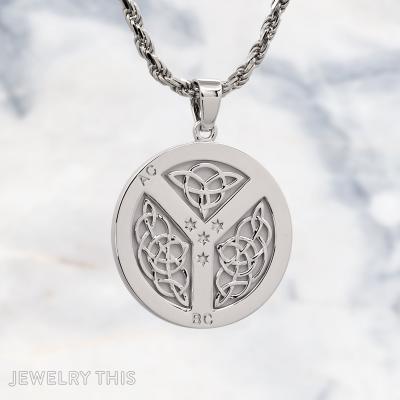
This round sterling silver pendant combines Celtic knotwork with a nod to Chicago through its ...

This fleur-de-lis pendant was designed at a substantial 2-inch scale with the wearer’s build and ...

This sterling silver pendant elegantly captures the essence of creative science with its unique shape, ...

This lariat-style pendant pairs an open heart with a smaller pineapple charm that hangs through ...


This pendant reimagines the sand dollar as a wearable keepsake, cast in sterling silver with ...

This cutout-style pendant reimagines a skull motif with a dimensional cowboy hat, sandblasted texture across ...

This oval shaped silver pendant is a simple yet elegant piece of jewelry. The pendant ...
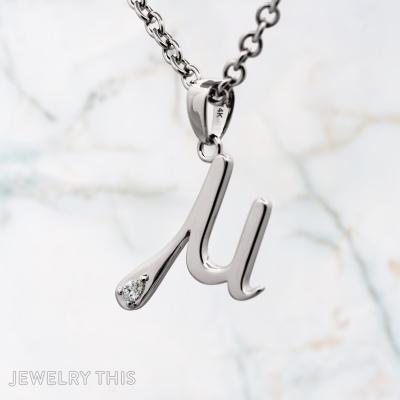
This pendant takes a single lowercase letter, rendered in a flowing cursive script, and casts ...



