

Sand Dollar Pendant with Peridot in Sterling Silver
$$
Sterling silver, peridot
A client wanted a sand dollar pendant that captured a beach memory in a wearable, everyday piece. He sent a reference image with colored stones marking the sand dollar's natural markings and asked for the same layout using engraved lines instead of stones, with a single peridot at the center. The result is a coin-shaped silver pendant with an engraved star pattern on both sides and a bright green peridot set exactly where he pictured it.
'This looks amazing thank you!' — on seeing the first render
Quick specs
Design type
Primary Metal
Shape / Cut
Primary Stone
Accent Stones
Style
Design Complexity
Intent: Certainty
Size
Pendant approximately 1in (25mm) diameter; stone 5.5mm round (0.75ct). Chain 16in, 1.5mm cable link.
How they made it distinctive
-
01
Engraved star pattern on both front and back — replicates the client's reference image using line work instead of embedded stones
-
02
Organic, irregular coin-like outline chosen deliberately to mimic a real sand dollar's natural shape
-
03
Peridot placed and sized to match the client's specific reference (0.75ct, 5.5mm) rather than a standard stock size
-
04
Bezel setting selected for the center stone, offering secure, snag-free protection suited to daily wear
-
05
Beaded milgrain edge added around the perimeter to frame the organic silhouette
How you'd make it yours
Stone: this piece uses a 5.5mm round peridot; a new commission could use a different colored gem or a larger stone for a bolder look
Metal: this piece is sterling silver; the same engraved design works in gold-plated silver or solid gold for a warmer tone
Outline: this piece has an organic, irregular coin shape; a new piece could use a perfectly round or more geometric outline instead
Engraving: the radiating line pattern can be adjusted in density or replaced with a different motif on a new piece
Chain: this piece pairs with a 16-inch 1.5mm cable chain; a new commission could use a different length or link style
One of a kind: this exact pendant was designed for one client and is not reproduced — a new commission is an original piece inspired by this one, not a copy
Design changes made
The initial rough sketch didn't include the sand dollar's signature surface markings. After reviewing it, the client asked for the star-shaped pattern to be engraved into the design (using lines rather than stones) to better resemble the natural sand dollar texture, and that detail was added to the final render.
Who this is for
This piece is for someone who wants a nature motif rendered with restraint rather than realism — a design that reads as a sand dollar without being literal. It suits anyone who wants a pendant they can wear daily without worrying about a stone catching or falling out, thanks to the bezel setting.
How it's made
Once the engraved design was approved, the team built a 3D digital model and printed a resin version on-site to confirm the layout before committing to metal. The resin was invested in plaster and fired in a kiln to burn out the pattern, leaving a hollow mold. Molten sterling silver was then cast into that mold, producing the raw pendant blank ready for finishing.
After casting, the pendant was cleaned up and its irregular, coin-like edge was refined, with a fine beaded (milgrain) border finished along the rim. The sand-dollar star pattern was engraved into both the front and back faces of the disc so the motif reads from either side. Finally, the round peridot was bezel-set at the center of the front face, with the metal rim burnished down around the stone to hold it securely for everyday wear.
Key note
The star pattern is engraved on both the front and back faces of the pendant, so the sand-dollar motif is visible even when the piece flips over on the chain.
Pricing guidance
A silver pendant of this size and engraving detail sits toward the lower end of the price spectrum for custom pendant work, with the chain adding a modest amount on top. Most of the cost comes from the 3D design work and the hand-finishing of the engraved surface and bezel setting rather than the metal itself. Stone size and metal choice are what move the price most from this baseline.
Moves price up ↑
- ↑ Upgrading the metal from sterling silver to 14k gold or gold-plated silver
- ↑ Increasing the peridot size beyond 5.5mm or adding accent stones around it
- ↑ Adding cut-out sections to the design rather than a solid engraved disc
- ↑ Choosing a wider or more elaborate chain style instead of a standard 1.5mm cable
Moves price down ↓
- ↓ Reducing the pendant size below 1 inch
- ↓ Simplifying the engraving to fewer lines or a plainer border
- ↓ Omitting the chain and using an existing one
- ↓ Choosing a smaller center stone or a lower-cost stone alternative to peridot
Questions people ask
Peridot rates about 6.5 to 7 on the Mohs hardness scale, which is durable enough for daily pendant wear as long as it isn't knocked against hard surfaces repeatedly. Because a pendant hangs away from the hands, it faces less impact risk than a ring stone would. A bezel setting, like the one used here, wraps metal fully around the stone's edge and offers more protection than a prong setting. With normal care, a bezel-set peridot pendant should hold up well for years of regular wear.
Sterling silver is a solid alloy that is 92.5% pure silver throughout the entire piece, which is why it's often marked '925.' Silver-plated jewelry has a thin layer of silver over a different base metal, and that layer can wear through over time to reveal the metal underneath. A solid sterling silver pendant like this one will tarnish naturally with air exposure but can be polished back to its original shine repeatedly, since the silver runs all the way through. Occasional polishing with a silver cloth is typically all that's needed to maintain the finish.
Yes, engraving lines directly into the metal surface is a common alternative to cutting sections out of the piece. It creates a similar visual pattern while keeping the pendant a single solid piece, which is generally sturdier for everyday wear than an open cut-out design. Engraved detail also allows the pattern to be replicated on both the front and back of a piece, which isn't possible with a cut-out. The trade-off is that engraved lines read as texture rather than the more dramatic light-and-shadow effect a cut-out can create.
A silver pendant in this size range, with a single center stone and hand-engraved detailing, generally falls toward the lower end of custom jewelry pricing. The primary cost drivers are the design and modeling work plus the labor for engraving and stone setting, rather than the silver itself. Adding a chain, increasing the stone size, or upgrading the metal to gold will move the price upward from that baseline. Because every piece is designed individually, final pricing depends on the specific combination of size, stone, and metal chosen.
The design phase typically takes about a week, during which a 3D render is created and refined based on feedback before anything is cast. Once the design is approved, production generally takes another three to five weeks, covering the wax/resin model, casting, finishing, and stone setting. A resin sample is sometimes shared partway through so the client can see the piece's exact form before it's cast in metal. Altogether, most custom pendants like this are completed within five to six weeks from the initial deposit.
Yes, bezel settings work with nearly any stone shape, including oval, pear, and marquise cuts, not just round stones. The metal rim is simply shaped to follow the outline of whichever stone is chosen. A round bezel, like the one on this pendant, is one of the more straightforward shapes to fabricate and tends to sit flush and symmetrical within a circular design. Changing to a fancier stone shape would mainly affect the setting's silhouette rather than its durability.
Yes, the coin-like outline can be adjusted to a perfectly round or more uniform shape if that's preferred over the organic, slightly irregular edge used here. The irregular outline in this design was a deliberate choice to mimic the natural, non-uniform shape of a real sand dollar shell. A more geometric outline would shift the piece toward a cleaner, more modern coin-pendant look rather than the nature-inspired feel of this version. Either approach works with the same engraving and bezel-setting techniques.
For a pendant around 1 inch in diameter, a 16 to 18 inch chain is a common choice, sitting at or just below the collarbone. A 1.5mm cable chain, like the one paired with this pendant, is a classic, versatile width that suits a range of necklines without overpowering the pendant itself. Thicker chains can work for a bolder look, but a delicate cable chain keeps the focus on the pendant's engraved detail. The right length ultimately comes down to personal preference and how the wearer likes a pendant to sit.
Explore Similar Creations
Every masterpiece starts with a spark. Explore how our clients raw ideas - sketches, heirlooms, inspirations - were transformed into bespoke works of arts.
This beautiful sterling silver round pendant features initials prominently displayed on the front. Below the ...

This Yellow gold pendant is a cherished homage to a religious guru. Oval in shape, ...

Crafted as a deeply meaningful surprise, this pendant was designed by a girlfriend as a ...
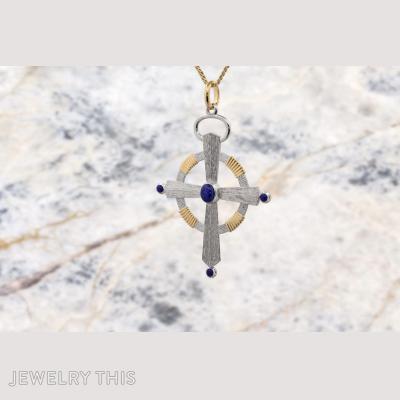
A striking statement cross pendant combining refined craftsmanship and bold design. The piece is crafted ...

This Yellow gold zodiac necklace is a radiant tribute to family bonds and celestial connections. ...

This dimensional 2 inch silver pendant is captivating in detail. A male lion wearing a ...

Introducing our sleek 1.5-inch 14kt white gold bar pendant, meticulously crafted for timeless elegance. Personalized ...

Celebrate your courage and strength with this matching lion logo pendant and lapel pin set. ...

This exquisite white gold pendant is a faithful recreation of a cherished family piece. The ...

Elevate your style with our exquisite 18kt yellow gold tetragrammaton cut-out pendant. Measuring a radiant ...