
Celtic Knot Pendant with Chicago-Inspired Star Detail
$
Sterling silver
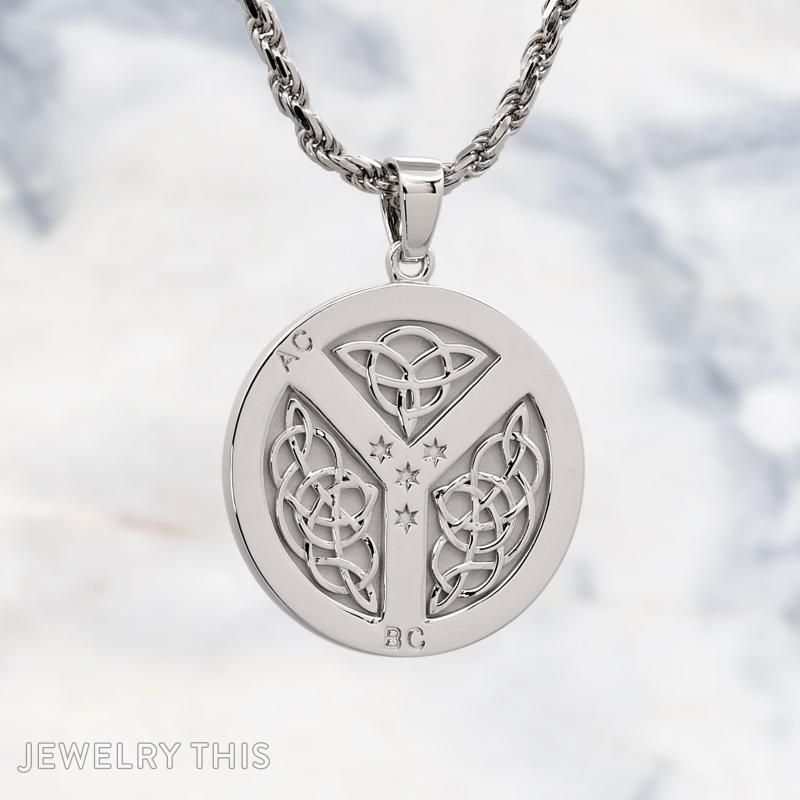
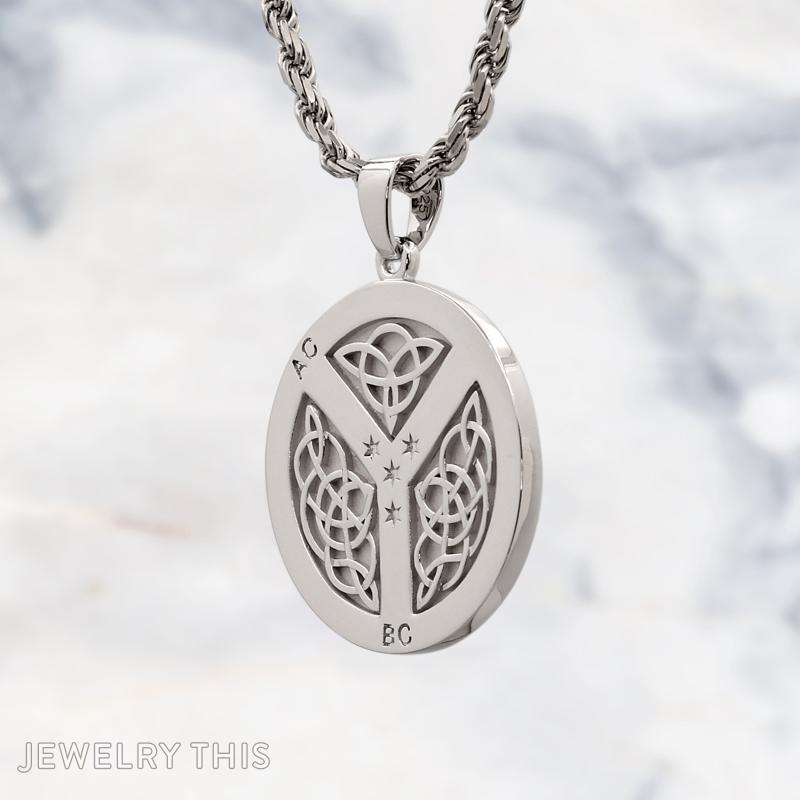
A client wanted a pendant that could hold two things that mattered to him at once — his Celtic heritage and his home city of Chicago — brought together in a single symbol. He worked through several rounds of adjustments on the initial placement, moving two sets of initials into position while deliberately leaving room for a third set to be added down the road. The final design merges a trinity knot with a star motif and the family's initials into one piece meant to grow with the family over time.
'That's great' — on design approval
Quick specs
Design type
Primary Metal
Primary Stone
Accent Stones
Design Complexity
Intent: Certainty
Size
Pendant approximately 25.4mm (1 inch) diameter. Chain: 20in box chain.
How they made it distinctive
-
01
Celtic trinity knot combined with a star motif to represent two distinct personal connections in one symbol
-
02
Openwork cut-out construction rather than a solid disc, creating dimensional depth and reduced weight
-
03
Initial placement deliberately adjusted twice to leave open space for a third set of initials in the future
-
04
Two sets of initials engraved along the outer rim rather than centered in the main design field, keeping the knotwork as the visual focus
How you'd make it yours
Metal: this piece is sterling silver — the same knotwork design works in gold plating or solid gold
Background style: this piece uses a cut-out dimensional design — a new commission could use a solid background instead
Size: this piece is finished at one inch — a new piece is sized to the wearer's preference
Engraving: additional initials or a date can be planned into open space on a new commission
One of a kind: this exact pendant was designed for one client and is not reproduced — a new commission is an original piece inspired by this one, not a copy
Design changes made
The initial placement was adjusted twice after the first sketch — the client asked to center one set of initials directly beneath the Y-shape and shift the other set left, specifically to leave open space for a third set of initials in the future.
Who this is for
This piece is for someone who wants a symbol that carries more than one meaning at once — heritage and home, tradition and personal identity, combined rather than chosen between. It's especially right for someone building a family piece over time, with room intentionally left for future additions rather than a design that's finished the moment it's made.
How it's made
Once the design was approved, the pendant was built from a digital 3D model and printed as a resin pattern — a physical preview that shows the exact geometry before any metal is involved. That resin was invested in plaster and burned out in a kiln, leaving a hollow mold. Molten sterling silver was then cast into the mold, producing the raw pendant ready for finishing.
After casting, the piece was cleaned and hand-finished to bring up a polished surface across the raised knotwork and rim, with the cut-out sections opened and refined so light passes through the negative space between the knot lines. The two sets of initials were finished as engraved text along the rim rather than raised elements, keeping them legible against the dimensional knotwork. No stones were set on this piece, so the finishing sequence focused entirely on surface polish and the clean edges of the openwork.
Key note
The cut-out knotwork is left open rather than backed, so the dimensional look comes from the negative space itself rather than from a solid engraved surface.
Pricing guidance
A dimensional sterling silver pendant with openwork detailing and custom engraving sits in the lower-to-mid range for custom pieces of this complexity. Most of the cost comes from the labor of modeling and finishing the cut-out knotwork rather than from the metal itself. Adding a chain and choosing a heavier gauge silver both shift the price from there.
Moves price up ↑
- ↑ Upgrading from sterling silver to solid 14k gold or gold plating
- ↑ Increasing the pendant size beyond one inch, which requires more metal and more finishing time on the knotwork
- ↑ Adding a third set of initials with additional custom placement adjustments
- ↑ Adding stones or accent gems into the open sections of the design
- ↑ Choosing a heavier or wider chain than the standard box chain
Moves price down ↓
- ↓ Reducing the pendant to a flat solid-background design instead of dimensional cut-out detail
- ↓ Simplifying the knotwork pattern to fewer interlocking panels
- ↓ Omitting the chain and using an existing one
- ↓ Choosing a smaller pendant size, such as 0.75 inch instead of 1 inch
- ↓ Limiting engraving to a single set of initials instead of two or three
Questions people ask
Yes, combining two meaningful themes into a single design is a common request. In this case, Celtic knotwork was merged with a star motif into one cohesive Y-shaped silhouette rather than keeping the two elements visually separate. The key is working through a sketch and 3D render phase so both themes read clearly together rather than competing for attention. This kind of combination design typically takes the same timeline as a single-theme piece.
A solid background pendant has its design elements raised or engraved on top of a continuous metal disc, while a cut-out or dimensional design has sections of metal removed so light passes through the negative space. Cut-out designs like this one create more visual depth and a lighter physical weight for their size. They do require more hand-finishing labor since each open edge has to be cleaned and polished. Both approaches work well in sterling silver, but cut-out designs tend to look more intricate from a distance.
Sterling silver, which is .925 silver, is durable enough for regular wear but will tarnish over time with exposure to air and moisture, developing a darker patina especially in recessed detail areas. It is softer than gold, so a dimensional cut-out design should be handled with reasonable care to avoid bending thin sections. Occasional polishing with a silver cloth keeps the finish bright, particularly on raised knotwork. Compared to gold-plated silver, solid sterling silver won't wear through to a base metal since it is silver throughout.
A dimensional sterling silver pendant with custom cut-out detailing and engraving falls in the lower-to-mid price range for custom jewelry of this complexity. The primary cost driver is the labor involved in modeling and finishing the open knotwork rather than the silver itself. Adding a chain, increasing the size, or adding more engraved elements will move the price up from the base pendant cost. Simpler, flatter designs in the same metal generally cost less.
A custom pendant typically takes about one week for the design phase — sketch, 3D model, and rendered approval — followed by roughly three to four weeks for production and finishing. This piece followed that standard timeline from deposit to shipping. Complex dimensional designs with multiple rounds of placement adjustments may add a few extra days to the design phase specifically. Once the design is approved, production time is fairly consistent regardless of design complexity.
Yes, engraved initials are a common addition to a pendant like this, and they can be placed along the outer rim rather than in the main design field. It's also possible to leave open space in the design intentionally, so additional initials can be added to a future piece without redesigning the whole layout. Engraved text reads best when kept simple and legible against a busy background like knotwork. Font size and placement are usually confirmed during the sketch phase before the 3D model is built.
For a one-inch dimensional pendant, a box chain in a moderate width, such as the 20-inch style used here, provides a secure and proportional pairing. Cable and rope chains are also common choices for pendants of similar weight. The chain width matters more as pendant size and weight increase, since a chain that's too delicate can look mismatched or wear unevenly under a heavier pendant. Chain length is a personal preference, though 18 to 22 inches is the most common range for a pendant meant to sit at or just below the collarbone.
Yes, this is a straightforward request during the design phase — elements like additional initials, dates, or symbols can be planned for in the layout even if they aren't added immediately. The designer simply leaves appropriate open space in the composition so a future addition doesn't require rebuilding the entire piece. This does require communicating the intent clearly during the sketch review stage, since the render is based on the approved layout. It's a practical way to let a meaningful piece grow alongside a family or milestone over time.
Explore Similar Creations
Every masterpiece starts with a spark. Explore how our clients raw ideas - sketches, heirlooms, inspirations - were transformed into bespoke works of arts.
This stunning custom pendant features a striking starburst design crafted in polished silver, beautifully showcasing ...

The pendant is the embodiment of personal significance showcasing the initials A and S intertwined ...

A token of elegance and personal significance, this 1-inch rectangular pendant is crafted from 14kt ...

With its radiant glow and personalized touch, this pendant is a heartfelt gesture that resonates ...

14k yellow gold rectangular pendant featuring the mantra “Just Grace” Pendant: 1.5 inches long

This custom pendant is inspired by a beloved fantasy game, this enchanting pendant features exquisite ...

This sterling silver custom pendant was created to cherish the memory of the client’s beloved ...

This custom pendant was designed with deep personal significance for the client, featuring a skull ...

14k gold plated silver pendant featuring original artwork by the client. Detailed throughout with colorful ...

This basketball and hoop pendant was designed for a basketball enthusiast. Crafted in sterling silver ...

This extraordinary custom jewelry pendant was meticulously handcrafted to capture the allure of mountain landscapes. ...

This Sterling Silver pendant was designed with timeless elegance in mind to commemorate a remarkable ...



