Pen & Paper Pendant — 18k Gold Writer's Keepsake
$$$
18k yellow gold
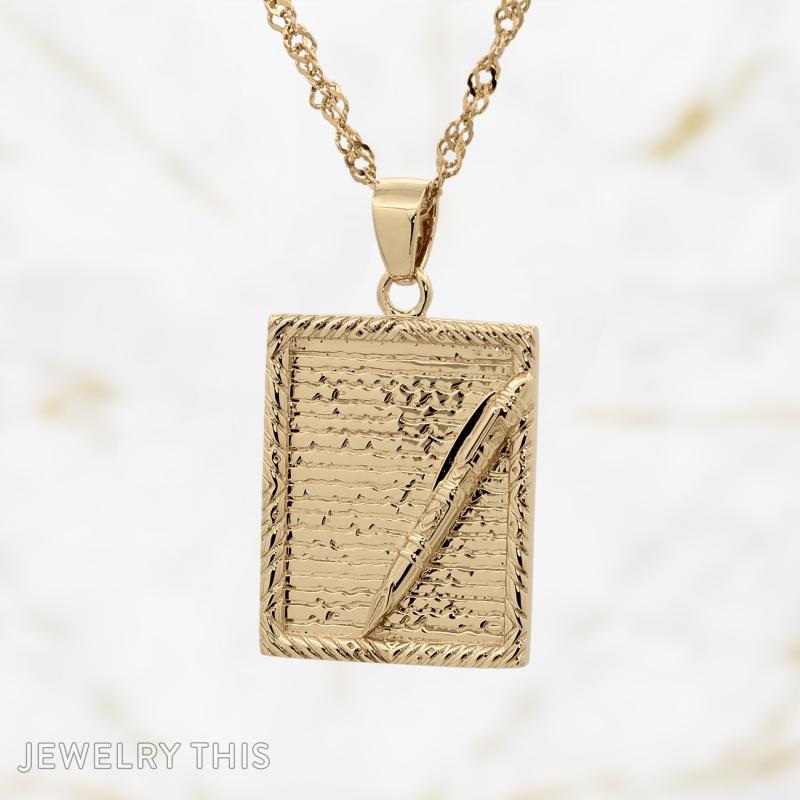
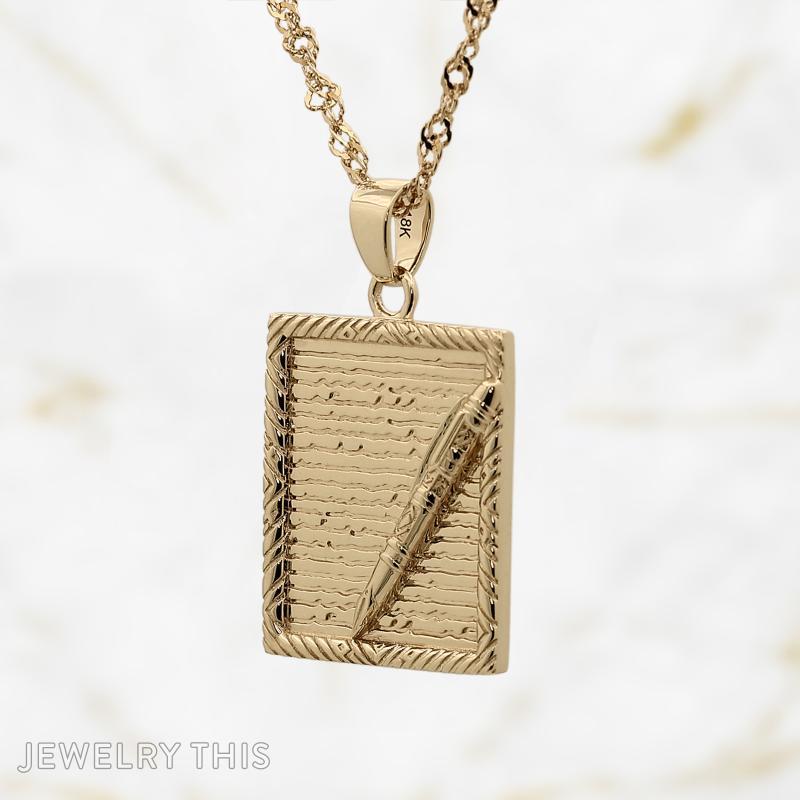
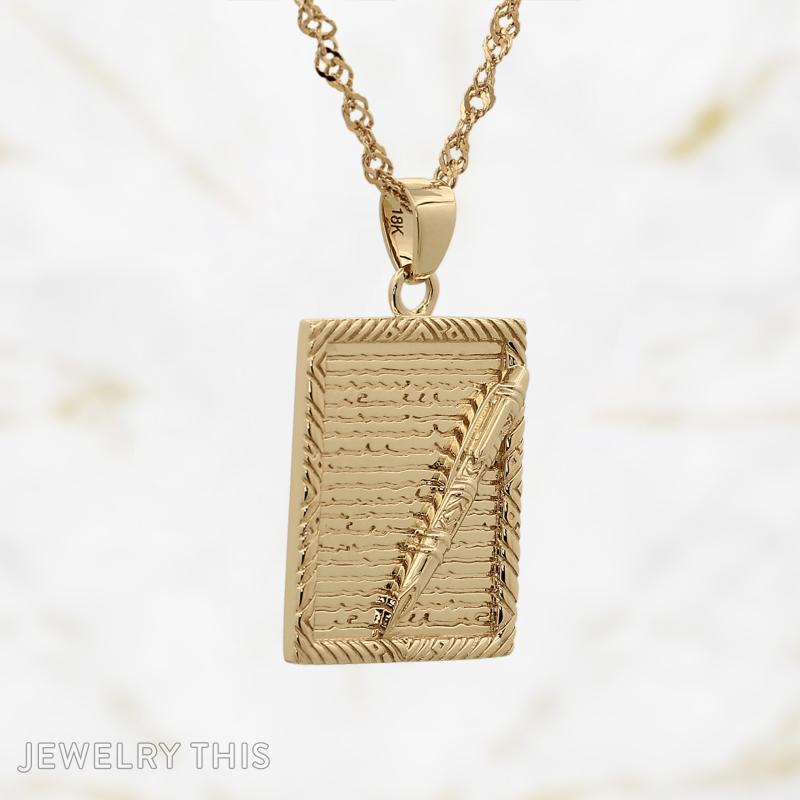
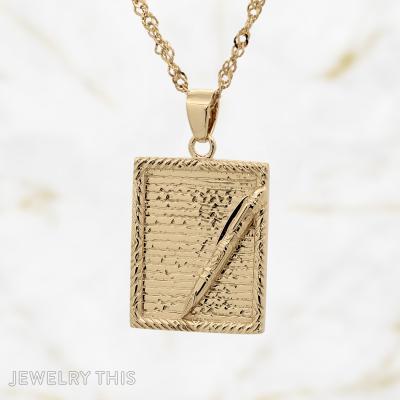
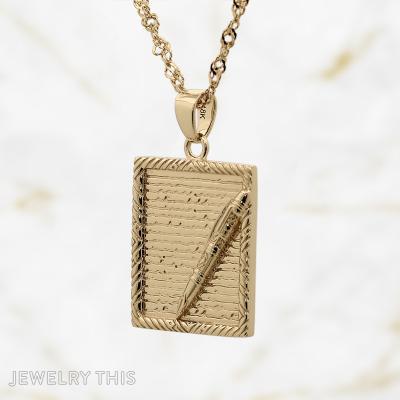
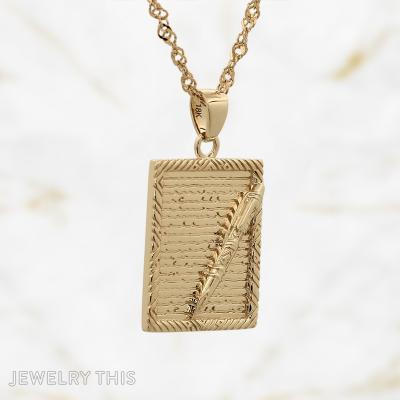
A. wanted a pendant built around the idea of writing itself — a page of scribbled notes with a pen laid across it, inspired by a photo reference and a border pattern from an earlier piece made with the team. Through several rounds of feedback, the pen shifted from a reed-pen look to a slimmer, more minimalist shape, and the writing became loose scribbles rather than structured lines. When the final piece arrived, A. wrote back simply: 'It's great!!! Thank you again so much!'
'that looks amazing! I assuming the back is flat! NICEEEE' — on seeing the final render
'It's great!!! Thank you again so much!' — on delivery
Quick specs
Design type
Primary Metal
Primary Stone
Accent Stones
Design Complexity
Intent: Certainty
Size
Pendant approximately 0.75in tall; flat back; cut-out design.
How they made it distinctive
-
01
Cut-out construction + removes the solid background so the border and pen carry the entire structure of the piece
-
02
Three-dimensional pen cast at an angle + creates a sense of motion, as if caught mid-stroke across the page
-
03
Scribbled, borderless writing lines + replaces structured text with loose gestural marks per the client's specific direction
-
04
Chevron border pattern + intentionally matched to a border style from an earlier piece the client had made, tying the two together
-
05
Flat, undecorated back + kept clean at the client's request, with no additional engraving
How you'd make it yours
Metal: this piece is 18k yellow gold; the same design language works in 14k yellow gold, white gold, or rose gold
Size: this piece is 0.75 inches; a new commission can be scaled up or down depending on how much detail needs to be preserved
Pen style: this piece uses a slim, minimalist pen shape; a new piece could use a different pen style, quill, or writing tool
Border pattern: this piece uses a chevron border; a new commission could use a different decorative edge treatment
Backing: this piece has a plain flat back; a new piece could add engraving or texture to the back surface
One of a kind: this exact pendant was designed for one client and is not reproduced — a new commission is an original piece inspired by this one, not a copy
Design changes made
The pen went through multiple revisions — from a suggested antique reed-pen style to a slimmer, more minimalist shape closer to the client's original reference image — and the document's writing was changed from lined text to loose scribbles with the border removed, per client feedback after the first sketch.
Who this is for
This piece is for someone who thinks of writing, ideas, or creative work as part of their identity and wants that carried as a wearable symbol rather than spelled out literally. It suits someone who already has a design relationship with a jeweler and wants a new piece to visually connect with something they've made before.
How it's made
Once the design was finalized in the 3D model, a wax or resin pattern was produced from the digital file and used to create an investment mold. Molten 18k yellow gold was cast into the mold, producing the raw pendant with its cut-out rectangular shape, textured border, and dimensional pen already formed in the casting. The flat back was cast as a single smooth panel, left undecorated per the client's preference.
After casting, the piece was cleaned of investment material and hand-finished to bring out the contrast between textures. The chevron border and the scribbled writing lines were finished with a textured, slightly matte surface, while the raised pen and outer edges were polished to a brighter shine to make the pen stand out dimensionally against the page. No stones were set, so the finishing sequence moved directly from texturing to final polishing and quality inspection before the bail was fitted for shipping.
Key note
The pen's thickness had to be increased slightly from the original render because the design's small scale meant a slimmer casting risked being too fragile to hold its shape reliably.
Pricing guidance
A dimensional cut-out pendant like this — with textured borders, a raised 3D element, and multiple finish contrasts — sits toward the upper-mid range for custom pendant work. Most of the cost comes from the labor of hand-finishing the contrast between matte and polished surfaces and achieving a crisp cut-out silhouette, rather than from material cost alone. Metal karat and the complexity of dimensional detail are what move the price most from there.
Moves price up ↑
- ↑ Upgrading from 18k to 20k or higher-karat gold
- ↑ Adding engraved detail or text on the back of the pendant
- ↑ Increasing the pendant size beyond 0.75 inches, which increases metal weight and finishing time
- ↑ Adding gemstone accents to the border or pen
- ↑ Requesting a fully solid (non-cut-out) backing with additional dimensional detail on both sides
Moves price down ↓
- ↓ Choosing 14k yellow gold instead of 18k
- ↓ Simplifying the border pattern to a plain edge rather than a textured chevron
- ↓ Reducing the pendant to a smaller size, such as 0.5 inches
- ↓ Using sterling silver or gold-plated silver instead of solid gold
- ↓ Omitting the three-dimensional pen in favor of a flat engraved outline
Questions people ask
This pendant is solid 18k yellow gold, not plated, so there is no plating layer to wear off over time. Solid gold at this karat resists tarnish extremely well under normal wear and only needs occasional polishing to maintain its shine. Because there's no coating to fade, the color stays consistent for the life of the piece. This differs from gold-plated silver, which will show wear on high-contact areas after a few years of daily use.
The entire design, including the raised pen, is built as a single digital 3D model before any metal is used. That model is used to create a wax or resin pattern, which is then invested in plaster and cast in one piece using molten gold, so the pen is not a separate piece attached afterward — it's cast as part of the whole pendant. After casting, the raised pen area is polished separately from the textured background to create visual contrast. This single-cast approach is standard for dimensional pendant designs and keeps the piece structurally solid rather than relying on solder joints that could fail over time.
Yes, cut-out pendant designs can be adapted to nearly any silhouette — round, oval, shield-shaped, or a custom outline tied to a specific idea or symbol. The cut-out approach works by removing the solid background entirely, so the border and any raised elements become the whole structure of the piece. The key design consideration is making sure the remaining metal is thick enough at its narrowest points to stay structurally sound. A jeweler experienced in custom cut-out work can advise on where reinforcement may be needed based on the specific shape requested.
A pendant with a cut-out design, textured borders, and a raised three-dimensional element sits toward the upper-mid range for custom pendant work, largely because of the hand-finishing time required to create contrast between textured and polished surfaces. Metal karat is one of the biggest cost variables — moving from 14k to 18k or higher increases both material cost and weight. Size also matters, since a larger pendant requires more metal and more finishing time. The exact cost depends on the final level of dimensional detail approved in the 3D design stage.
The process typically starts with about one week of design work, moving through an initial sketch, client feedback, and a 3D render for approval. Once the design is approved, production generally takes another three to four weeks to complete, covering casting, finishing, and polishing. Pieces with more revision rounds during the design phase may take slightly longer in that first stage, since each round of client feedback is incorporated before moving to production. Shipping time is separate from this production window.
Yes, fine engraving is an alternative way to create a writing or script effect on a flat metal surface, though it produces a different visual result than a cast textured pattern. Cast texture, like the scribbled lines on this pendant, is built into the mold itself and tends to hold up well over decades of wear since it's not a shallow surface mark. Engraving can achieve finer, more precise detail but sits closer to the surface and may soften slightly with heavy wear over many years. The right choice depends on whether the goal is a bold graphic texture or a more delicate, precise line.
This particular pendant was made without a chain, since the client already had one to pair it with, so chains are not automatically included with every custom pendant order. The bail on this piece was sized to fit a standard-width chain. If a chain is needed, it can be sourced separately in a metal and style that matches or complements the pendant. It's worth confirming bail width against your existing chain's clasp or link size before pairing them.
Yes, a design like this can be scaled down from the 0.75 inch size shown here, though very fine details like the raised pen and textured border lines may need to be simplified at a smaller scale to stay structurally sound. Below a certain size, delicate raised elements risk being too thin to hold their shape reliably during casting and everyday wear. A jeweler can advise on the smallest practical size for a given level of detail once the design is finalized. Balancing size against detail complexity is typically part of the design conversation before the 3D model stage.
Explore Similar Creations
Every masterpiece starts with a spark. Explore how our clients raw ideas - sketches, heirlooms, inspirations - were transformed into bespoke works of arts.
This exquisite custom-made 14k yellow gold round pendant is a timeless piece of jewelry, designed ...

This pendant is a symbol of enduring love and celebration. This pendant holds deep sentimental ...

Sterling silver pendant featuring design of client’s tattoo. The pendant design portrays a sun, moon ...

Celebrate the art of self-expression with this 0.75-inch round pendant, expertly crafted in silver. This ...

This custom sterling silver word pendant is the perfect way to commemorate a special moment. ...
Celebrate the essence of duality with this one-inch custom pendant, a wearable embodiment of the ...

This pendant reimagines a favorite low-cost design in sterling silver — a fully three-dimensional skeleton ...

Embrace your rebellious spirit with this unique custom heart-shaped pendant. Crafted in sterling silver, the ...

This silver pendant features a circular silver frame combined with a cut-out central area. Three ...

A stunning replication of a business logo, rich in intricate detail. This 1.5-inch pendant, crafted ...

Elegantly captured in flight, this captivating pendant takes the form of a majestic owl with ...

This 10k gold pendant features a .75 inch compass cut-out with raised family member names ...