

Ouroboros Eye of Providence Pendant in White Gold
$$
10k white gold, rhodium plating, black diamond, blue enamel
A client came to us wanting to merge two symbols that mattered to her into a single pendant — an ouroboros wrapped around an eye-of-providence pyramid, with a blue eye at the center. She reviewed a photorealistic render, then asked to feel a wax resin model in person before committing to the final proportions, requesting the ouroboros be thinned slightly so it would blend rather than stand apart from the pyramid. When it arrived, she wrote that it was 'beautiful and exactly what I wanted.'
'The design does look amazing.' — on seeing the first render
'It is beautiful and exactly what I wanted.' — on delivery
Quick specs
Design type
Primary Metal
Shape / Cut
Primary Stone
Accent Stones
Design Complexity
Intent: Certainty
Size
Pendant approximately 1 inch (25.4mm) diameter. Chain 2mm thick (client-supplied).
How they made it distinctive
-
01
Ouroboros and eye-of-providence pyramid merged into a single cohesive design rather than kept as two separate motifs
-
02
Pyramid left open rather than solid, echoing the open ring shape of the ouroboros around it
-
03
Ouroboros band intentionally thinned after a physical resin review so it reads as proportional to the pyramid rather than standing apart from it
-
04
Blue enamel paired with a black diamond center chosen over a fully custom-cut stone to balance cost and a lasting, durable finish
-
05
10k white gold selected specifically for daily durability over a softer or higher-karat alternative
How you'd make it yours
Metal: this piece is 10k white gold — a new commission could use sterling silver, yellow gold, or a higher gold karat
Eye detail: this piece uses blue enamel with a black diamond pupil — a new piece could use a different enamel color or a custom-cut stone
Pyramid accent: this piece stays fully white metal — a new commission could gold-plate the pyramid sides for a two-tone look
Texture: the diamond-cut pyramid sides and polished ouroboros band could be swapped for a different finish combination on a new piece
One of a kind: this exact pendant was designed for one client and is not reproduced — a new commission is an original piece inspired by this one, not a copy
Design changes made
The ouroboros band was thinned slightly after the client reviewed a physical wax resin model and felt it was proportionally too thick next to the pyramid's sides. The client also considered a gold-plated triangle accent but ultimately chose to keep the piece entirely in white metal for a more unified look.
Who this is for
This piece is for someone drawn to symbols with real personal meaning rather than conventional pendant motifs — someone who wants a design that merges more than one idea into something cohesive. It's especially right if you already have a strong visual reference in mind and want to work through proportions and details carefully before committing to the final piece.
How it's made
Once the final design was approved, the piece was 3D printed in wax and attached to a wax tree inside a flask. The flask was placed in a kiln to burn out the wax, leaving a hollow mold, and molten 10k white gold was cast into that mold under pressure. After cooling, the piece was removed from the mold and prepared for finishing — cleaning, polishing, and the detail work that brings out the open pyramid structure and the textured ouroboros band.
The diamond-cut texture on the pyramid's sides was cut in during the finishing stage, catching light differently from the smooth, polished ouroboros band around it. The eye was built up with blue enamel fired onto the metal, with a dark center stone set at the pupil. As with all the studio's white gold pieces, the finished pendant was rhodium plated last, giving it the bright white tone and added tarnish resistance.
Key note
The pyramid was deliberately left open rather than cast solid, mirroring the open ring of the ouroboros so the two symbolic elements read as one continuous design rather than a solid shape layered inside a ring.
Pricing guidance
A symbolic pendant combining an ouroboros, an open geometric pyramid, and an enameled center stone sits in the mid range for pendants of this complexity. Most of the cost comes from the layered construction — an open pyramid nested inside a textured ring shape — and the enamel application, rather than from the metal alone. Metal choice is the next biggest lever, with precious white metals costing meaningfully more than sterling silver at the same design complexity.
Moves price up ↑
- ↑ Upgrading from sterling silver to 10k, 14k, or 18k white or yellow gold
- ↑ Using a custom-cut natural stone for the eye instead of enamel with a small accent stone
- ↑ Adding gold-plated accents to specific design elements, like the pyramid sides
- ↑ Increasing the pendant's overall diameter beyond roughly 1 inch
- ↑ Using a higher-karat gold for additional durability and color depth
Moves price down ↓
- ↓ Staying in sterling silver rather than upgrading to gold
- ↓ Using enamel rather than a custom-cut stone for the eye detail
- ↓ Simplifying the ouroboros texture to a smooth band rather than a diamond-cut or hammered finish
- ↓ Reducing the pendant's diameter slightly to use less metal
- ↓ Choosing a simpler accent stone or skipping the center stone pupil detail
Questions people ask
The eye combines two techniques: the surrounding iris area is done in blue enamel, which is a durable fired-glass coating applied directly to the metal, and the small dark center is a genuine black diamond acting as the pupil. Enamel was chosen over a fully custom-cut stone because sourcing a stone cut to match this exact iris shape would have been significantly more expensive and time-consuming. The enamel application is fired onto the metal and is designed to be long-lasting under normal daily wear. This combination gives the full color effect of a colored stone without the cost and lead time of a custom cut.
An ouroboros is a symbol of a serpent or dragon eating its own tail, forming a complete circle with no beginning or end — it traditionally represents cyclicality, renewal, or infinity. In this design, the ouroboros forms the outer ring of the pendant, encircling an open pyramid with an eye at its center. The combination merges two separate symbolic traditions into a single cohesive piece rather than keeping them as two separate motifs.
White gold pieces like this one are rhodium plated, which gives the bright white tone and adds a layer of tarnish resistance on top of the base gold. Over years of daily wear, rhodium plating can gradually wear thinner, especially in high-contact areas, and may eventually need re-plating to maintain the original bright finish. This is a normal maintenance consideration for any rhodium-plated white gold piece, not a flaw specific to this pendant. Most jewelers, including the one that made the piece, can perform re-plating as a standalone service.
A symbolic pendant combining an open pyramid, an ouroboros band, and an enameled stone eye sits in the mid range for custom pendants of this complexity, with the final number depending heavily on metal choice. Sterling silver versions run lower, while 10k, 14k, and 18k white or yellow gold versions increase the price substantially due to material cost. The construction complexity — multiple nested shapes rather than a single flat or domed pendant — is the baseline cost driver regardless of metal. Enamel versus a custom-cut stone for the eye is the next biggest factor.
The design phase for a pendant like this typically takes about a week, during which a 3D render is produced and refined based on feedback. Once the design is approved, production — wax printing, casting, cleaning, polishing, enamel work, and plating — generally takes two to three weeks. Clients who request a physical wax resin model to check proportions before casting should expect a short addition to the design phase for shipping and review. Total turnaround from first approval to shipped piece is typically within a month, barring any requested design revisions.
Yes, a wax resin model can be mailed to the client before the piece is cast in metal, specifically so they can see and feel the actual proportions in person. This is especially useful for pieces with multiple nested design elements, where a photorealistic render on a screen can make proportions look different than they feel in hand. The resin will not reflect the final metal color, but it is the same model used to cast the piece, so size and proportion are accurate. Clients can request small adjustments, like thinning or thickening an element, after reviewing the resin before production begins.
Yes, a design like this can be produced in sterling silver, white gold, or yellow gold, with the metal choice affecting both the final look and the price significantly. Silver and white gold both receive a rhodium plating finish for a bright, consistent tone, while yellow gold keeps its natural color without that plating step. Some clients also consider a two-tone approach, such as gold-plating a specific design element while keeping the rest in white metal, though this adds another finishing step. The choice typically comes down to personal preference and budget rather than any durability difference between the metals.
Diamond-cut texturing is a faceted surface finish applied during the polishing stage, and while it does catch light more than a smooth surface, it is not raised or sharp enough to typically snag on clothing or hair in normal daily wear. It sits on the sides of the open pyramid shape rather than on an edge that makes frequent contact with skin or fabric. The texture is a permanent part of the cast and finished piece and does not wear down with normal use the way plating can. If snagging is a specific concern, a smooth polished finish is available as an alternative on a similar design.
Explore Similar Creations
Every masterpiece starts with a spark. Explore how our clients raw ideas - sketches, heirlooms, inspirations - were transformed into bespoke works of arts.
Experience timeless elegance with our 0.75-inch pendant, expertly crafted in 14kt yellow gold, replicating the ...

This pendant renders the Roman numeral XXII entirely in pave-set round diamonds, sized to sit ...

This pendant translates a traditional shield motif into a compact 18k yellow gold piece, sized ...

This 10karat gold pendant is an exquisite piece of family history. The circular frame of ...

A daughter’s tribute to her late father, this pendant embodies love and remembrance. Crafted in ...

This silver pendant is a unique tribute to a client’s three children. The pendant features ...

This pendant takes the shape of a clenched fist rendered in polished sterling silver, with ...

This yellow gold pendant is crafted to pay homage to the open road and the ...

Bold and full of spirit, this “Long Live Cowgirls” pendant is a tribute to the ...

Embrace the beauty of personalized elegance with this custom pendant—a tribute to cherished moments and ...

This pendant centers on a small diamond-set ship’s helm in 14k yellow gold, with a ...
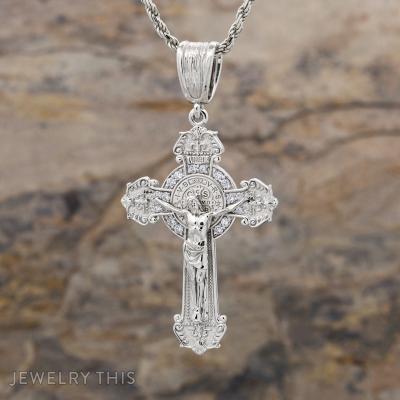
This magnificent white gold crucifix pendant is a masterwork of sacred symbolism and intricate detail. ...



