

Zulu Shield Pendant with Crossed Spears in 18k Gold
$$$
18k yellow gold
A. came to us wanting a pendant based on a specific cultural shield image, with the engraved geometric detail as a non-negotiable and the crossed spears behind it as an optional addition. Through a few rounds of sketches, the spear placement was adjusted until it sat exactly right, equidistant from the shield's centerline. When it arrived, A. wrote: "I LOVE IT...from far it looks kinda like a turtle but I think I love it even more because of that!"
'That's beautiful... don't forget to add the weapons on the back!' — on seeing the first sketch
'I LOVE IT...from far it looks kinda like a turtle but I think I love it even more because of that! Thank youuuuu lol!' — on delivery
Quick specs
Design type
Primary Metal
Primary Stone
Accent Stones
Design Complexity
Intent: Certainty
Size
Pendant approximately 25mm (1in) length. Chain width not specified.
How they made it distinctive
-
01
Shield shape sourced directly from a client-provided reference image rather than a stock design
-
02
Engraved geometric triangle pattern specified by the client as a non-negotiable design element
-
03
Crossed spears added behind the shield mid-design, positioned equidistant from the shield's centerline per specific client direction
-
04
Single spear tip deliberately pointed downward rather than mirrored, a deliberate departure from the original double-tipped reference
-
05
No stones used — all visual interest comes from surface engraving and dimensional form
How you'd make it yours
Shield pattern: this piece uses a specific geometric triangle engraving; a new commission could use a different cultural motif or pattern
Spear elements: this piece includes crossed spears behind the shield; a new piece could omit them for a simpler single-shield design
Metal: this piece is 18k yellow gold; the same design language works in 14k or 22k gold depending on preference
Size: this piece is sized at roughly 25mm; a new commission is sized to its own wearer's preference
Engraving: additional personal engraving could be added to the back of the shield on a new piece
One of a kind: this exact pendant was designed for one client and is not reproduced — a new commission is an original piece inspired by this one, not a copy
Design changes made
The client added the crossed spears mid-design after initially calling them optional, then asked for one spear's tip to point downward rather than mirror the original double-sided reference image. A separate revision removed an added upper element from one sketch version and restored the spear placement to an earlier approved layout, adjusted to be equidistant from the shield's centerline.
Who this is for
This piece is for someone who wants a small, wearable symbol of cultural identity rather than a stone-focused statement piece. It's especially right if you have a specific reference image in mind and want the design process to work through the details with you, sketch by sketch, until the proportions and placement feel exactly right.
How it's made
Once the sketch and 3D render were approved, a wax model of the pendant was 3D printed and attached to a wax tree inside a flask. The flask was placed in a kiln to burn out the wax, leaving a hollow mold, and molten 18k yellow gold was poured into that mold. After cooling, the raw casting was removed from the flask for cleaning and finishing.
The shield's engraved geometric triangle pattern and the raised center ridge were cleaned up and refined by hand after casting to keep the detail crisp at this small scale. The piece was then polished to a bright finish overall, and the two crossed spear elements behind the shield were finished and positioned equidistant from the shield's centerline as specifically requested. No stones were set, since the design relies entirely on surface engraving and dimensional form for its detail.
Key note
A resin 3D-printed model was shared with the client before casting specifically to confirm the engraved shield pattern would hold its detail at this compact scale, since fine engraved lines are the part most likely to soften when a design is shrunk down.
Pricing guidance
A dimensional, hand-engraved pendant like this one sits toward the mid range for custom gold pendants of moderate complexity. Most of the cost comes from the 3D modeling and hand-finishing needed to keep fine engraved detail crisp at a small scale, plus the gold content itself. Adding or removing dimensional elements, like the crossed spears here, is the next biggest factor in the final price.
Moves price up ↑
- ↑ Upgrading from 18k to 22k or 24k gold increases material cost significantly
- ↑ Adding the optional crossed-spear elements behind the shield rather than the shield alone
- ↑ Increasing the pendant size beyond roughly 25mm, which increases metal weight and finishing time
- ↑ Adding gemstone accents or pave detail to the shield face
- ↑ Requesting a heavier chain to match the pendant's weight and scale
Moves price down ↓
- ↓ Dropping the crossed spears and keeping only the shield element
- ↓ Using 14k gold instead of 18k
- ↓ Reducing the pendant size for a more subtle look
- ↓ Simplifying the engraved pattern to fewer geometric lines
- ↓ Choosing a lighter-gauge chain
Questions people ask
Yes, this is done through a sketch and 3D render process before anything is cast. The design team starts with a reference image, drafts a sketch for approval, then builds a 3D CAD model so fine details like geometric engraving can be checked before production. At a small scale, like a 1-inch pendant, some simplification of very fine lines may be needed to keep the pattern crisp once cast. The client reviews a photorealistic render before production begins so nothing is a surprise.
Generally yes, but it depends on how fine the original lines are. A 3D-printed resin model is typically produced before final casting so the client and production team can confirm the engraving reads clearly at the actual size. Geometric line patterns like triangles and chevrons tend to hold up better than very thin or curved lines because they cast more cleanly. If detail looks too soft in the resin stage, the pattern can be adjusted before the metal pour.
A dimensional pendant with hand-engraved detail and no stones typically falls in the mid range for custom gold pieces, driven mainly by the 3D modeling and finishing labor rather than material alone. Adding secondary elements, like additional dimensional pieces behind the main motif, increases the cost further. Gold karat also affects price, with higher karats costing more due to increased gold content. The exact cost depends on final size, karat, and how many dimensional elements are included.
Yes, the sketch stage exists specifically so changes can be made before any 3D modeling or production begins. It's common for clients to decide an optional element should be included, or to request a specific adjustment like changing the orientation of a design feature, after seeing the first draft. Multiple sketch revisions are normal and expected as part of the process. Once the sketch is approved, it moves into 3D modeling and rendering for a final check before production.
The design phase, covering sketch revisions and the 3D render approval, typically takes about a week once the client responds promptly to each round. Production after design approval generally takes three to four weeks, covering wax modeling, casting, and finishing. A resin model is often shared partway through production so the client can see the piece before it's cast in metal. Total turnaround from deposit to shipping is typically around five to six weeks.
The karat number refers to gold purity, with 24k being pure gold and lower numbers indicating more alloy mixed in for durability. 18k gold contains 75% pure gold and has a richer, warmer color than 14k, while also being more valuable due to higher gold content. 14k is more common for everyday wear because the added alloy makes it more scratch-resistant. 22k and 24k are much softer and typically chosen for cultural or symbolic reasons rather than daily durability.
Yes, a solid cast gold pendant with no stones is generally well-suited to daily wear since there's no setting to check or stone to loosen over time. The main consideration is the engraved surface detail, which can wear smoother over many years of contact with skin and clothing but typically holds up well for normal use. Chain width should be matched to the pendant's bail opening for a secure fit. Since there are no gemstones, there's no need for periodic prong or setting inspections.
Yes, optional dimensional elements behind or alongside a main pendant motif are a common request and can be added or left out based on preference. These elements are modeled as part of the same 3D file as the main design so they cast as one unified piece rather than being attached separately. Positioning, like keeping two symmetrical elements equidistant from a center line, is confirmed during the sketch and render stages. This kind of addition does affect both the modeling time and the final cost.
Check what our clients say about us

Adé Sampson
2 years ago
It was wonderful working with Tricia. It was very involved and I had many updates along the way. Can’t wait to buy my next piece! 10/10
Explore Similar Creations
Every masterpiece starts with a spark. Explore how our clients raw ideas - sketches, heirlooms, inspirations - were transformed into bespoke works of arts.
Sterling silver inverted cross pendant. Cross is set vertically with colorless cubic zirconia stones, horizontally ...
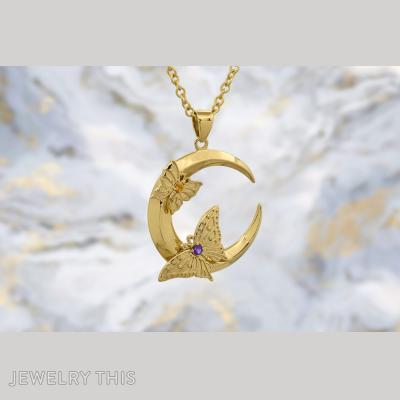
This exquisite pendant beautifully captures the essence of youthful femininity and strength, designed as a ...

This stunning gold medallion-style pendant is circular in shape, featuring an eye-catching ray-like angular design ...

An elegant cross pendant is expertly crafted in high-polished silver, showcasing a timeless and reverent ...
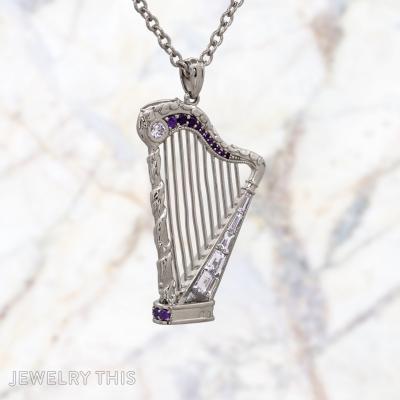
This pendant reimagines a pedal harp in miniature, cast in platinum and built with genuine ...

This custom jewelry pendant features a captivating Celtic knot design. Meticulously crafted in glowing 10k ...

This Sterling Silver pendant was designed with timeless elegance in mind to commemorate a remarkable ...

A heartfelt tribute to a remarkable dentist and artist, this pendant captures the essence of ...
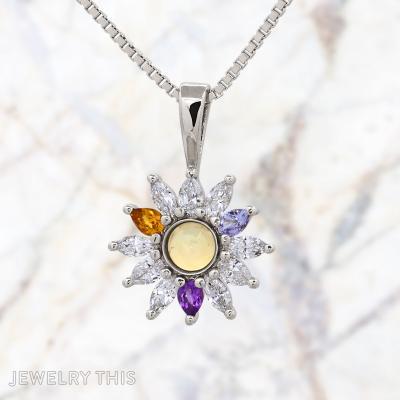
This exquisite white gold pendant is a wearable sunburst, centered by a luminous round opal ...

14k yellow gold featuring Roman Numeral XXII. Set throughout with small round brilliant cut diamonds. ...

This unique minimalist reindeer necklace was created with 14k white gold head and 14k yellow ...
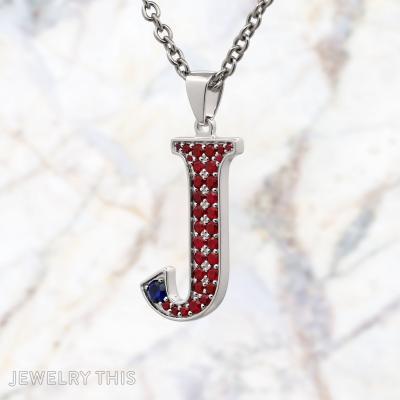
These matching pendants were designed as a celebration of love and individuality, created for a ...