


Open Horseshoe Pendant in White Gold with Diamond Accent
$$
14k white gold, lab diamond
L. wanted to give someone close to her a horseshoe pendant inspired by a necklace she already wears and loves, but made distinctly her own gift back. She went through two rounds of design to get the open, single-point hanging shape just right, and asked for the back engraving to read simply 'Grace' once she decided that was the most legible option. When it arrived, she wrote: 'I got it and love it! Plan to see her in about 2 weeks and can't wait to give it to her.'
'It looks perfect! I can't wait to see the final product!' — on seeing the revised render with engraving
'I got it and love it! Plan to see her in about 2 weeks and can't wait to give it to her.' — on delivery
Quick specs
Design type
Primary Metal
Shape / Cut
Primary Stone
Accent Stones
Design Complexity
Intent: Certainty
Size
Pendant approximately 0.5-0.75 inches. Chain 18in, 1.3mm cable link.
How they made it distinctive
-
01
Single-point attachment chosen specifically to echo a reference necklace the client already owns, rather than a bridged double-sided horseshoe
-
02
Design revised after the first render removed the side indentations the client felt made it too busy
-
03
Engraving simplified to just the name 'Grace' for legibility at the pendant's small scale
-
04
Lab diamond selected for comparable sparkle to a natural stone at a lower cost
-
05
Engraving applied after polishing to keep the lettering sharp against the finished surface
How you'd make it yours
Stone: this piece uses a lab diamond; a new commission could use a natural diamond or a colored gemstone for a different look
Metal: this piece is 14k white gold; the same open horseshoe silhouette works well in yellow or rose gold
Engraving: the back of this piece carries a single name; a new piece could carry a date, phrase, or longer inscription depending on available space
Chain: this piece uses an 18-inch cable chain; a new commission could use a different length or link style
One of a kind: this exact pendant was designed for one client's gift and is not reproduced — a new commission is an original piece inspired by this one, not a copy
Design changes made
The first render included indentations on both sides of the horseshoe and felt too busy to the client; the design was revised to a cleaner single-point hanging shape closer to her reference photo. The engraving was also simplified from a longer phrase to just the name 'Grace' for legibility at the small scale.
Who this is for
This is for someone who wants to give a meaningful gift that nods to something they already share with the recipient, without copying it outright. It's especially right if you have a clear reference in mind but want the final piece to feel like its own distinct, personal design.
How it's made
Once the final design was approved, the piece was 3D printed in wax and attached to a wax tree inside a flask. The flask went into a kiln where the wax was burned out, leaving a hollow mold, and molten 14k white gold was cast into that mold under pressure. After cooling, the piece was removed from the mold and prepared for finishing.
The cast pendant was cleaned, polished to a mirror finish, and the single lab diamond was set into its position at the lower curve of the horseshoe. The name 'Grace' was then laser-engraved on the back in a legible script font, applied after polishing so the engraving stayed crisp and the surrounding metal retained its shine.
Key note
The engraving was applied after polishing rather than before, since engraving a mirror-finished surface keeps the lettering sharp instead of risking it being buffed or blurred during final finishing.
Pricing guidance
A small single-stone pendant with a back engraving in 14k white gold sits toward the lower end of the price range for custom pendant work. Most of the cost comes from the gold weight and the diamond rather than the design complexity, since the silhouette itself is simple. Chain choice and diamond quality are the two variables that move the price most from there.
Moves price up ↑
- ↑ Upgrading from a lab diamond to a natural diamond of the same size and clarity
- ↑ Choosing a larger or higher-clarity center diamond
- ↑ Selecting a thicker or longer chain in solid gold
- ↑ Adding more engraved text or a double-sided engraving
- ↑ Switching from white gold to platinum
Moves price down ↓
- ↓ Choosing a smaller diamond or a diamond simulant
- ↓ Using a shorter or thinner chain
- ↓ Selecting gold-plated silver instead of solid 14k gold
- ↓ Omitting the engraving entirely
- ↓ Reducing the pendant size below .5 inches
Questions people ask
Lab diamonds and natural diamonds are chemically identical and nearly impossible to tell apart, even under magnification by a trained gemologist. The main difference is origin and cost — a lab diamond of the same carat weight and clarity typically costs less than its natural counterpart. For a small single-stone pendant like this, most people choose a lab diamond because it offers the same sparkle and durability at a lower price point. Both are genuine diamonds with the same hardness and brilliance.
Yes, though the available space limits the font style. On a pendant with a curve only about half an inch across, a bold or heavily scripted font can become difficult to read once engraved. Laser engraving works well for short names or single words in a clean, legible script, and the engraving is typically applied after polishing so it stays crisp. Longer phrases usually require either a larger pendant or a simplified, shorter version of the text.
From approved design to finished piece, production typically takes four to five weeks. The process starts with a 3D wax print of the design, which is cast in metal using the lost-wax method, then cleaned, polished, and set with the stone. Engraving and final quality checks happen near the end of that window. Design revisions before approval add time on top of the production window, depending on how many rounds of feedback are needed.
Yes, 14k white gold is a standard choice for daily-wear pendants because it balances durability with a bright, consistent color. It's harder than 18k gold due to its higher alloy content, which makes it more resistant to scratching. White gold pieces are typically rhodium-plated for extra shine, though plating can wear over time and may eventually need to be refreshed. For a pendant that isn't subject to much impact, as opposed to a ring, the plating tends to last quite a while.
It can be designed closely inspired by an existing piece, but a true one-to-one replica isn't the goal of a custom commission like this — the new piece is meant to be its own original design informed by the reference. Details like attachment point, stone placement, and proportions can all be adjusted through a render-and-feedback process until the design feels right. Most clients go through one or two rounds of revision before landing on a final shape. The result is something clearly related to the reference piece but distinct in its own right.
For a small accent-style setting like the one on this horseshoe pendant, the diamond is usually under a quarter carat, chosen more for a clean sparkle than for size. Because the stone sits within the silhouette rather than being the focal point, a smaller, well-cut diamond reads just as effectively as a larger one. VS clarity is a common choice for this kind of setting since inclusions are not visible to the naked eye at that size. The specific carat weight is typically finalized once the overall pendant size is confirmed.
An 18-inch chain is a common choice for a pendant of this size, sitting at a length that works for most necks without being too short or too long. A 16-inch chain sits higher and closer to the collarbone, which can feel tight for some wearers or make a small pendant harder to see. The right length comes down to personal preference and how the wearer likes pendants to sit. A thin cable link chain, around 1.3mm, is a common pairing for a lightweight pendant like this one.
Yes, a single-point attachment is a common design choice for open shapes like a horseshoe, and it tends to read as cleaner and less busy than a design bridged at both ends. The piece hangs at a slight angle from the bail rather than sitting perfectly level, which is a deliberate look rather than a flaw. This approach also keeps the silhouette uninterrupted, since there's no second connection point breaking up the shape. It does mean the pendant can rotate slightly on the chain, which most wearers find adds rather than detracts from the movement of the piece.
Explore Similar Creations
Every masterpiece starts with a spark. Explore how our clients raw ideas - sketches, heirlooms, inspirations - were transformed into bespoke works of arts.
This pendant is a heartfelt tribute to heritage and sentiment, inspired by the island of ...

A daughter’s tribute to her late father, this pendant embodies love and remembrance. Crafted in ...

This exquisite 25 mm Order of Christ cross pendant is a striking fusion of tradition ...

This pure silver pendant combines two design languages on a single oval form. The front ...

This pendant is a fully three-dimensional depiction of two figures grappling — a design pulled ...

Celebrate the beauty of love with our silver oval pendant, a wearable tribute to heartfelt ...

Celebrate religion with this two-tone 14kt yellow and white gold Reuleaux Cross pendant, measuring 0.75 ...

This cross pendant takes a classic silhouette and pares it back to something quiet and ...

Enhance your style with our 1-inch round pendant, resembling a coin, featuring an intricately detailed ...

This elegant diamond vertical bar pendant is a timeless symbol of love and commitment. What ...
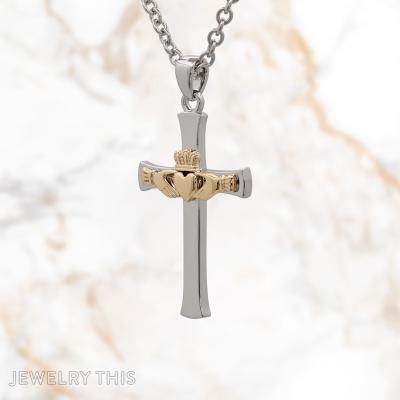
This unique pendant is a meaningful fusion of heritage and faith, masterfully blending two iconic ...

This stunning Platinum pendant depicts a detailed dragon designed in a striking way. The dragon’s ...



