


Miniature Knife Pendant in Polished Sterling Silver
$
Sterling silver
A client wanted to turn a knife design her boyfriend had created into a wearable pendant, starting from a small 3D-printed model a friend had made. The piece was rebuilt as a clean CAD design and cast in sterling silver with a textured grip pattern on the handle. When she saw the first render, she said simply: she loved it — and after wearing the finished piece, she came back for a second, slightly smaller version with a gently rounded tip.
'I opened that picture and said "f*** yeah." Out loud. So, that's a yes.' — on seeing the first render
'Amazing! I love it!' — on seeing the resin model
Quick specs
Design type
Primary Metal
Primary Stone
Accent Stones
Design Complexity
Intent: Certainty
Size
Pendant length 38mm (1.5in); companion piece 32mm (1.25in), approximately 10% smaller.
How they made it distinctive
-
01
Design originated from an original knife design created by the client's boyfriend, not a standard jewelry motif
-
02
Built from a small-scale 3D-printed reference model rather than a traditional sketch or photo alone
-
03
Textured handle grip contrasts with a smooth polished blade surface for visual definition
-
04
Reordered in a second, smaller size with a softened tip after real-world wear revealed the first size felt too large and sharp
How you'd make it yours
Metal: this piece is sterling silver; a new commission could use 10k or 14k gold, or gold-plated silver for a similar look at lower cost
Plating: this piece has no plating; a new commission could add black rhodium to the handle for a two-tone contrast
Size: this piece is sized at a specific scale; a new commission is sized to the wearer's own preference
Tip shape: this piece has a fully pointed tip; a new commission could soften or round the tip from the start
One of a kind: this exact pendant was designed around one client's reference piece and is not reproduced — a new commission is an original piece inspired by this design, not a copy
Design changes made
The client considered black rhodium plating on the handle but decided against it in favor of a plain metal finish. After wearing the first pendant, she requested a second version roughly 10% smaller with the blade tip slightly rounded for comfort, while keeping the overall design the same.
Who this is for
This piece is for someone who wants a pendant built around a specific, personal design rather than a standard jewelry shape — something that started as an idea or an object, not a catalog motif. It suits someone comfortable iterating on fit and feel after wearing a first version, since real-world wear often reveals small adjustments worth making.
How it's made
The design began as a photo and a small 3D-printed reference model, which was rebuilt from scratch as a clean 3D CAD file sized and detailed for casting. Once the design was approved, a wax model was 3D-printed and attached to a wax tree, which was invested in plaster and fired in a kiln to burn out the wax and leave a hollow mold. Molten sterling silver was then cast into the mold to form the raw pendant.
After casting, the piece was cleaned, polished, and finished by hand. The blade was brought to a smooth, mirror-polished surface, while the handle received a fine textured pattern for grip and contrast against the polished blade. The small bail at the top was finished to fit a standard chain the client already owned.
Key note
The textured handle pattern and polished blade are finished as two distinct zones on the same casting, created in sequence after the piece comes out of the mold rather than built into the wax model itself.
Pricing guidance
A sculptural novelty pendant like this, cast in sterling silver with a hand-finished textured zone, sits toward the lower end of custom pendant pricing. Most of the cost comes from the 3D design work needed to turn a reference photo or model into a clean, castable CAD file, plus the hand-finishing on the handle texture. Metal choice is the biggest lever on price from there.
Moves price up ↑
- ↑ Upgrading from sterling silver to 10k or 14k gold
- ↑ Adding black rhodium or other specialty plating to the handle
- ↑ Increasing the size or adding more surface detail to the design
- ↑ Adding gemstone accents to the handle or blade
Moves price down ↓
- ↓ Keeping the design at a smaller scale, which uses less metal
- ↓ Choosing gold-plated silver instead of solid gold for a similar look
- ↓ Simplifying or omitting the textured handle pattern
- ↓ Reusing an already-approved CAD design for a repeat piece, as was done here
Questions people ask
Yes, this is a common request. The 3D print or photo is used as a reference to build a clean 3D CAD model suited for casting, since plastic prints often have rough edges or unrealistic thin sections that would not survive in metal. That CAD file is then used to 3D print a wax or resin pattern, which is cast into metal using the lost-wax casting process. The final piece is cleaned and polished by hand after casting.
Sterling silver is a 92.5% silver alloy, which is why pieces are often stamped 925. It is durable enough for regular wear but will tarnish over time with air exposure, especially in humid climates, and can be cleaned with a standard silver polishing cloth. It is softer than gold alloys, so fine details like a textured handle pattern can wear smoother with years of daily contact. For a pendant that is not in constant abrasive contact with other objects, sterling silver holds up well long-term.
Yes, the same CAD design can be cast in 10k or 14k yellow gold, white gold, or gold-plated sterling silver instead of solid sterling silver. Solid gold costs significantly more than silver or gold-plated silver because of the raw material cost, but the design and level of detail remain identical. Many clients start with a silver version and return later to have the same design made in gold.
The design phase, where a reference photo or 3D print is turned into an approved 3D CAD model, typically takes about one week. Once the design is approved, production including wax printing, casting, and finishing generally takes another three to four weeks. A repeat order using an already-approved design can sometimes move faster since the CAD work is already done.
Yes, small refinements like rounding a sharp edge or adjusting a point can often be made to an existing piece at no additional cost, since they do not require a new design. Larger changes, like resizing the entire piece, typically require a new casting and are treated as a new order, though an already-approved CAD design makes that process faster and less expensive than starting from scratch. It is worth noting any comfort or safety concerns, like a sharp edge, as soon as they come up.
The render is a close approximation, but metal color and finish can vary slightly from the digital image once the piece is actually cast and polished. A 3D digital file is also typically shown at a much larger scale than the real piece, and it represents an unfinished state before polishing rounds and smooths the surfaces. Clients should expect the finished piece to look similar in design but slightly smoother and more refined than the unpolished 3D render.
Yes, an existing CAD design can be rescaled to a different size, which is generally more straightforward and less costly than designing a piece from scratch. A size comparison image can be provided showing the original next to the proposed new size before production begins. This is a common request when a first piece turns out larger or smaller than expected in daily wear.
Explore Similar Creations
Every masterpiece starts with a spark. Explore how our clients raw ideas - sketches, heirlooms, inspirations - were transformed into bespoke works of arts.
Embrace the mystique of Norse mythology with a captivating 1-inch round pendant. Crafted in exquisite ...

This 14k yellow gold custom initial pendant is a personalized masterpiece that radiates individuality. Crafted ...

14k gold plated silver pendant featuring original artwork by the client. Detailed throughout with colorful ...

18karat Yellow gold Round pendant featuring detailed Snake eating its tail (Ouroboros) A symbol of ...

This pendant takes the shape of a mirrored pair of antlers, meeting at a center ...

This teardrop-shaped sterling silver pendant pairs an organic, bark-like hammered texture with a set of ...

Embodying regal charm and personal flair, this custom pendant features the letter “J” adorned with ...
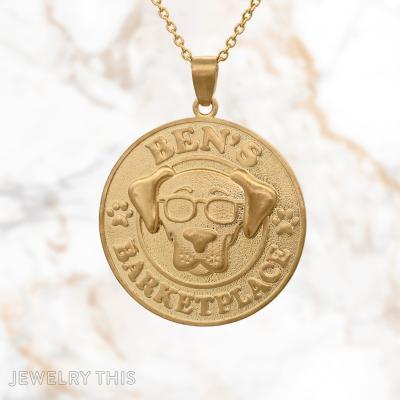
This exquisite custom pendant embodies a heartfelt story, capturing the spirit and personality behind the ...

This custom medallion serves as a heartfelt tribute to family and heritage, designed specifically by ...

This elegant gold pendant is designed in a rectangular shape, showcasing a name in Hebrew ...

This stunning 18k yellow gold shield pendant is the perfect piece to symbolize strenght and ...

This pendant is a symbol of peace and unity. This pendant showcases a beautiful peace ...



