


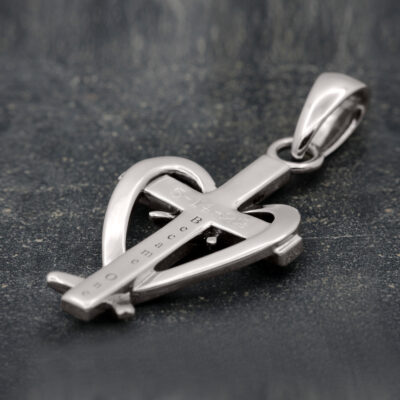
Heart & Cross Pendant with Diamond and Birthstones
$$$
14k white gold, lab-created diamond, ruby, alexandrite, peridot
A client came across a heart-and-cross pendant design he liked and wanted to rework it in solid 14k white gold rather than the cheaper build he'd seen, with a diamond center and three birthstones for family members born in July, June, and August. He went back and forth on center stone size and metal combination before settling on a single-tone white gold piece with a larger diamond. When it arrived, he was frustrated that the shipping date had slipped past his original deadline, but the finished piece itself matched what he had approved.
Quick specs
Design type
Primary Metal
Shape / Cut
Primary Stone
Accent Stones
Design Complexity
Intent: Certainty
Size
Pendant approximately 1.25in (30mm) tall. Chain 20in, 14k white gold, 1.5mm cable chain.
How they made it distinctive
-
01
Heart and cross shapes combined into one cut-out silhouette rather than a standard flat cross
-
02
Center diamond upsized from the first render specifically so it would read as a true 1-carat stone rather than the smaller stone initially modeled
-
03
Three birthstones arranged along the curve of the heart to represent specific family members by birth month
-
04
Back of the pendant engraved with a personal date and inscription as a finishing step
-
05
Open cut-out areas throughout the design keep the piece lighter than its visual size suggests
How you'd make it yours
Stone type: this piece uses a lab-created diamond center — a new commission could use a natural diamond or a colored center stone instead
Metal: this piece is single-tone 14k white gold; the same heart-and-cross silhouette works in a two-tone yellow and white gold build
Birthstones: this piece represents three family members; a new piece could represent a different number or combination of birth months
Engraving: the back of this piece carries a personal inscription; a new commission can carry its own date, initials, or short phrase
Chain: this piece uses a 20-inch cable chain; a new piece can use a different length or chain style
One of a kind: this exact pendant was designed for one client and is not reproduced — a new commission is an original piece inspired by this one, not a copy
Design changes made
The center diamond was redesigned twice after the first render came back with a smaller stone than requested — the pendant was resized from 1 inch to 1.25 inches to accommodate a full 1-carat center diamond instead of the smaller stone initially modeled.
Who this is for
This piece is for someone who wants a religious design element combined with a personal family touch, not just a plain cross. It's especially right if you're drawn to a distinctive silhouette — something that reads as a cross from one angle and a heart from another — and want birthstones that quietly represent specific people rather than just decoration.
How it's made
Once the design was approved, the pendant was 3D printed in wax and attached to a wax tree inside a flask. The flask was invested in plaster and fired in a kiln to burn out the wax, leaving a hollow mold. Molten 14k white gold was then cast into the mold under pressure, producing the raw pendant, which was removed from the mold once cooled and prepared for finishing.
After casting, the piece was cleaned and polished to bring out the open cut-out detailing along the cross and heart silhouette. The center diamond was bezel-set first to anchor the piece, followed by the three birthstones, which were set in sequence along the heart's curve in their smaller finished sizes. The back of the pendant was engraved last, once all stone-setting and polishing were complete.
Key note
The birthstones were set smaller than originally requested specifically so they could fit the heart's curve without altering the cross-and-heart silhouette shown in the approved render.
Pricing guidance
A cut-out heart-and-cross pendant with a bezel-set center diamond and multiple birthstone accents sits toward the higher end of custom pendant work. Most of the cost comes from the multi-part open design and the labor of setting four separate stones in a small space, rather than from any single material. Center stone size and metal choice are the two levers that move the price most from there.
Moves price up ↑
- ↑ Increasing the center stone from under half a carat to a full carat or more
- ↑ Choosing a two-tone (yellow and white gold) build instead of a single metal, which requires casting and assembling separate pieces
- ↑ Upgrading the birthstones to natural stones rather than lab-created
- ↑ Adding engraving on both sides of the pendant rather than one
- ↑ Choosing a heavier gauge chain or upgrading the chain metal
Moves price down ↓
- ↓ Reducing the center stone size
- ↓ Using a single metal tone throughout rather than mixing gold colors
- ↓ Choosing smaller or fewer birthstone accents
- ↓ Leaving the design cut-out and hollow rather than solid metal throughout
- ↓ Selecting a lighter-weight chain
Questions people ask
Yes, a heart-and-cross combination is a common custom request and works well as a cut-out design where the two shapes overlap. The open areas keep the piece lighter than a solid design of the same size. A center stone can be set where the heart and cross intersect, with smaller accent stones arranged along the curve of the heart. This kind of layered silhouette does take more design time than a flat cross, since the proportions of both shapes need to work together.
Lab-created and natural diamonds are chemically and visually identical — same hardness, same brilliance, same durability for daily wear. The only real difference is origin and cost, with lab-created diamonds typically available at a lower cost for the same carat weight and clarity grade. For a pendant center stone, most people cannot tell the difference without lab equipment. Choosing lab-created is purely a cost decision, not a quality tradeoff.
Smaller birthstones, typically under 2mm, are generally quite secure when prong-set or set into a recessed area of the design, since there's less surface area exposed to impact. The bigger risk with multiple stones set close together is during the setting process itself, where a jeweler has to work carefully around neighboring stones. Day-to-day wear is not usually a concern as long as the pendant isn't struck directly. Ruby and peridot are both reasonably hard stones (9 and 6.5-7 on the Mohs scale respectively) and hold up well in pendant settings.
A multi-stone cut-out pendant with a bezel-set center diamond and several birthstone accents falls toward the higher end of custom pendant pricing, mainly because of the labor involved in setting four stones in a compact area and finishing an open-cut design. Center stone size has the single biggest effect on price — moving from a smaller stone to a full carat increases both the metal and stone cost. Metal choice (single tone versus two-tone) and chain upgrades are the next biggest variables.
A custom pendant like this typically takes about three to four weeks for production once the design is approved, following roughly a week of design and rendering beforehand. The process starts with a 3D wax model, which is cast in metal, then cleaned, polished, and set with stones in sequence. Sourcing multiple birthstones in matching small sizes can occasionally add time if a specific stone needs to be cut to size. Total turnaround from deposit to shipping is usually five to seven weeks.
Yes, birthstones in a pendant like this are typically chosen to represent specific people, usually by birth month, so each stone carries individual meaning rather than being decorative. June has two common birthstone options, pearl or alexandrite, and a jeweler can advise on which will better match the other stones in color and durability. The number and arrangement of stones can be adjusted to fit anywhere from one to several family members depending on the design's available space.
Yes, engraving is typically done as one of the final steps, after stone setting and polishing are complete, so the engraving tool doesn't risk disturbing the stones or scratching a freshly polished surface. A short date, name, or phrase can be engraved on the back or along a flat section of the design. Engraving depth and font style can vary, so it's worth discussing legibility if the engraving area is small.
A cable chain in a moderate width, generally around 1.5mm to 2mm, is a common pairing for a cut-out pendant because it's substantial enough to support the pendant's weight without being bulky. Thinner chains can look overwhelmed by a larger pendant and may wear faster at the point where the bail attaches. Matching the chain's metal to the pendant's primary metal keeps the piece visually consistent. Length is a personal preference, but 18 to 20 inches is a common choice for a pendant of this size.
Explore Similar Creations
Every masterpiece starts with a spark. Explore how our clients raw ideas - sketches, heirlooms, inspirations - were transformed into bespoke works of arts.
This custom dinosaur pendant is crafted in 14K yellow gold. The dinosaur pendant stands at ...

A family pendant in 14k rose gold plated sterling silver with engraved names and birthstones.

This pendant featuring abstract elements inspired by Croatian heritage, blending vibrant colors and distinctive patterns. ...

This coin-style pendant was designed to hold two passions on one piece: a rearing horse ...
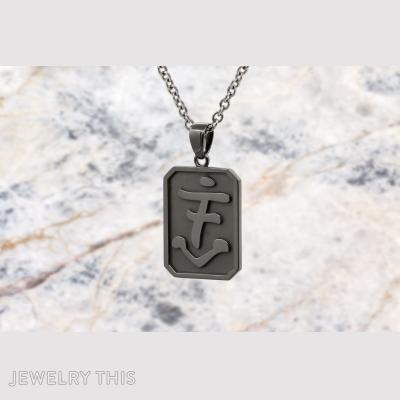

This logo pendant is a true testament to the one who wears it- the “world’s ...

This gorgeous sterling silver pendant features the name “Alicia” in cut out letters that have ...

Embrace the enchanting beauty of this custom cloud-shaped pendant created for a special July birthday. ...
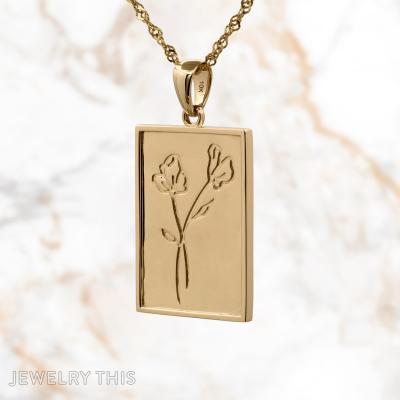
This sweet sentimental pendant features an engraved floral design inspired by a meaningful tattoo — ...

This one-of-a-kind custom pendant is a stunning representation of the Veterinary symbol. Crafted from 10k ...

This 5 heart pendant is a heartfelt tribute to family bonds, meticulously crafted with love ...

This captivating yellow gold pendant is intricately designed in the shape of a pirate ship, ...



