

Chai Symbol Pendant in Solid 18k Yellow Gold
$$$
18k yellow gold
S. wanted a specific set of Hebrew characters turned into a pendant he could wear on a chain he already owned. He worked through the design with the team from sketch to 3D render, eventually choosing a solid 18k yellow gold cut-out piece over the gold-plated option he was first quoted. When it arrived, he asked about expediting future shipping — a good sign he was eager to start wearing it.
Quick specs
Design type
Primary Metal
Primary Stone
Accent Stones
Design Complexity
Intent: Certainty
Size
Pendant approximately 1 inch (similar to a silver dollar); bail sized to fit client's existing chain.
How they made it distinctive
-
01
Cut-out lettering engineered as one connected piece rather than separate floating characters, for structural durability
-
02
Solid 18k yellow gold chosen over an initially quoted gold-plated option for permanence
-
03
Sized specifically to match a silver dollar for a recognizable, wearable scale
-
04
Bail custom-fitted to the client's own existing chain rather than a new standard chain
-
05
Polished finish carried through the inner cut-out edges, not just the outer surface
How you'd make it yours
Metal: this piece is 18k yellow gold — the same design works in 14k yellow gold, white gold, or rose gold
Background: this piece uses an open cut-out design — a solid-background version is also possible
Size: this piece is sized to a silver dollar — a new commission can be made larger or smaller
Chain: this piece was fitted to the client's own chain — a new piece can include a matching chain
One of a kind: this exact pendant was designed for one client's chosen lettering and is not reproduced — a new commission is an original piece inspired by this one, not a copy
Design changes made
The client moved from an initially discussed gold-plated silver option to solid 18k yellow gold, and from a solid-background design to an open cut-out style after reviewing the technical sketch. Both decisions were his own preference, not a correction to the design itself.
Who this is for
This piece is for someone who wants a specific, personally meaningful set of characters or symbols turned into something they can wear every day without question. It's especially right if you already have a chain you love and just need the right pendant to go with it, and if you'd rather pay once for solid gold than maintain a plated finish over time.
How it's made
Once the client approved the photorealistic render and 3D model, the design was printed as a wax model on a 3D printer and attached to a wax tree inside a flask. The flask was invested in plaster and fired in a kiln to burn out the wax, leaving a hollow mold. Molten 18k yellow gold was then poured into that mold, producing the raw cut-out pendant once cooled and removed.
After casting, the piece was cleaned to remove investment residue from the open spaces between the connected letterforms, then polished to a uniform high-shine finish across every surface, inside and out. Because the design is a cut-out rather than a solid plate, extra care was taken polishing the inner edges of each letter so no rough spots remained where the open sections meet. The bail was fitted and hallmarked 18K to match the client's existing chain before final inspection.
Key note
The cut-out letters were engineered as one connected structure rather than separate floating characters, so the open design holds its shape under everyday wear without added internal supports.
Pricing guidance
A cut-out pendant of this size and complexity in solid 18k gold sits toward the higher end for pendant-category custom work, largely because of the gold content required at a dollar-size scale and the cast weight needed to keep a cut-out design structurally sound. Metal karat and solid-vs-plated construction are the biggest levers on cost for a piece like this.
Moves price up ↑
- ↑ Upgrading from 14k to 18k or higher gold content
- ↑ Choosing solid gold construction instead of gold-plated silver
- ↑ Increasing the pendant's overall size beyond a silver-dollar diameter
- ↑ Adding stone accents or engraving to the surface
- ↑ Requesting a thicker, heavier cast for additional durability
Moves price down ↓
- ↓ Choosing gold-plated sterling silver instead of solid gold
- ↓ Selecting 14k gold rather than 18k
- ↓ Reducing the pendant size
- ↓ Choosing a solid-background design instead of an open cut-out (less finishing labor on inner edges)
- ↓ Opting for sterling silver with rhodium plating instead of gold
Questions people ask
A cut-out design can be just as durable as a solid pendant if the open sections are engineered as one connected structure rather than separate floating pieces. This pendant's letters are linked together so the open areas don't flex or bend independently during daily wear. The main vulnerability with any cut-out design is thin connection points, so these are typically cast slightly thicker than a solid piece would need. With normal care, a well-engineered cut-out pendant in 18k gold will hold its shape for decades.
Solid 18k gold means the gold content runs all the way through the metal, so the color and material never wear away no matter how long you own the piece. Gold-plated pieces use a base metal, usually sterling silver, with a thin layer of gold applied to the surface, which will gradually wear thin with daily contact, especially at edges and high-touch points. Solid gold costs significantly more upfront because of the gold weight involved, but it requires no replating over time. Plated pieces are a lower-cost way to get a similar look but need periodic maintenance to stay bright.
Yes, a specific sequence of letters or characters can be modeled as a connected cut-out design, which is what was done here with a set of Hebrew characters. The process starts with a technical sketch showing how the letters will be joined, followed by a 3D render for approval before anything is cast. This approach works for most alphabets and scripts, though multi-language or non-Latin script pieces are flagged for extra review to make sure every character reads correctly. The key is approving the sketch and 3D model carefully, since that is the final reference used for production.
A cut-out pendant around an inch in diameter in solid 18k gold sits toward the higher end of the pendant category, mainly driven by the amount of gold needed at that size and the extra material required to keep an open design structurally sound. Choosing a lower karat, a smaller size, or gold-plated silver instead of solid gold all bring the cost down significantly. The design and sketch phase is priced separately from the final metal choice, so you can see the design finalized before committing to a specific karat and cost. Pricing is always confirmed after the 3D model is approved, since the final weight of the piece depends on the finished design.
The design phase, from initial sketch to an approved 3D render, typically takes about one week. Once the design is approved and production begins, casting and finishing usually takes another three to four weeks, depending on the complexity of the piece. This pendant followed that standard timeline: wax printing, investment casting, cleaning, and polishing all happened within the production window after design approval. Rush timelines are sometimes possible but should be discussed with the team before placing an order.
Yes, many clients provide their own chain rather than ordering a new one. To do this correctly, the design team needs a photo of the chain next to a coin or ruler for scale, along with a clear view of the clasp, so the pendant's bail can be sized to fit the chain's link width properly. This ensures the pendant hangs correctly and the bail doesn't bind or swing loosely. It's worth doing this step early in the design process, before the 3D model is finalized.
The 3D render is a close approximation, but a few things typically shift between render and final piece. Color and luster of the gold often look slightly different in person than on screen, and a cast, polished piece usually appears smoother and more rounded than the sharper edges shown in an unfinished 3D model. The overall design, proportions, and layout should match what was approved, since that approved render is the production reference. Any significant changes from the approved design would typically be discussed with you before production begins.
Pendants generally aren't resized the way rings are, since the design is cast at a fixed scale, but the bail can often be adjusted or replaced to fit a different chain. If you want the pendant itself larger or smaller, that typically means producing a new piece at the desired scale rather than altering the existing one. It's best to confirm the final size you want before the 3D model is approved, since that's the point where the design and proportions are locked in. Sizing by comparison to a common object, like a coin, is a simple way to visualize the final scale before approval.
Explore Similar Creations
Every masterpiece starts with a spark. Explore how our clients raw ideas - sketches, heirlooms, inspirations - were transformed into bespoke works of arts.
This pure silver pendant combines two design languages on a single oval form. The front ...

This minimalist gold pendant is a simple yet elegant design, featuring the word ‘Just’ in ...

Embrace the heartfelt joy of this custom pendant, a whimsical creation born from the imagination ...


This remarkable custom pendant is a bold and distinctive piece of jewelry. Crafted in 10k ...

This striking custom pendant is an emblem of strength and resilience. Crafted from black rhodium-plated ...

Where simplicity meets individuality, this 14kt yellow gold pendant is artfully designed to resemble the ...

This circular pendant recreates a lost piece from memory and a single low-quality photo. A ...

Sail into elegance with our 1-inch sailboat pendant, crafted in luminous 14kt yellow gold-plated silver. ...

14k yellow gold logo pendant featuring raised center lettering. Entire center area of pendant filled ...
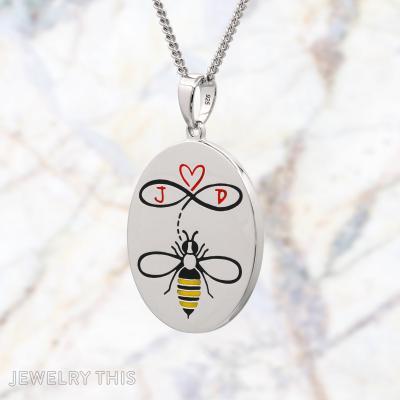
A heartfelt tribute to two best friends, this pendant symbolizes eternal love and connection. A ...

When a client chose to upgrade her engagement ring, she wanted a beautiful and meaningful ...



