




Matador & Bull Cufflinks — Recreated in Sterling Silver
$$$
Sterling silver
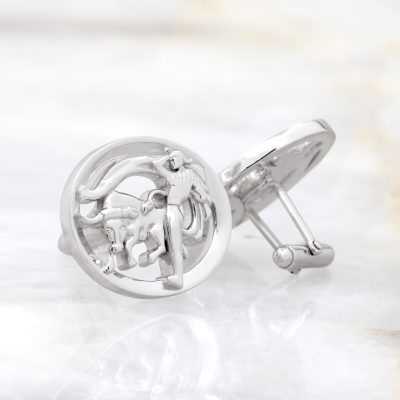
A client wanted to recreate a pair of costume matador cufflinks that had broken and could not be soldered back together. She worked from her own photos of the original pieces, including the back, to get the design right, and chose to have the pair made as mirror images of each other in sterling silver. When they arrived she wrote that they looked beautiful and just as expected, then sent them on as a graduation gift for her brother — who she said was blown away when he finally received them overseas.
'Wow, these look AMAZING.' — on seeing the first render
'They are beautiful and just as expected.' — on delivery
Quick specs
Design type
Primary Metal
Primary Stone
Accent Stones
Style
Design Complexity
Intent: Certainty
Size
Oval top 1.25in x 1in. Pre-cast/pre-polish weight approximately 32g for both tops combined (excludes toggle backs).
How they made it distinctive
-
01
Recreated from a broken costume-jewelry original using the client's own reference photos, including the back of the piece
-
02
Cast as true mirror images of each other rather than identical copies, a deliberate choice made after reviewing the 3D render
-
03
Openwork matador-and-bull scene with raised, dimensional figures set against a cut-out background
-
04
Toggle-and-post backing manufactured as a separate component and soldered on after the decorative tops were cast
-
05
Rebuilt in solderable sterling silver specifically because the original costume material could not be repaired once broken
How you'd make it yours
Metal: this piece is sterling silver — a new commission could use yellow gold, white gold, platinum, or rose gold
Scene detail: this piece reproduces a matador-and-bull design — a new commission could depict a different figural or symbolic scene
Orientation: this piece is a mirror-image pair — a new commission could instead be cast as fully identical cufflinks
Oval size: this piece measures 1.25in x 1in — a new piece could be sized larger or smaller
Backing: this piece uses a soldered toggle-and-post — a new commission could explore a different closure style
One of a kind: this exact pair was cast for one client from their own reference photos and is not reproduced — a new commission is an original piece inspired by this one, not a copy
Design changes made
The client requested the pair be made as mirror images of each other rather than identical copies, after reviewing the photorealistic render and 3D model. No other changes were made to the design as rendered.
Who this is for
This piece is for someone who had a beloved accessory break beyond repair and wants it rebuilt properly, in a metal that can actually be fixed if it's ever damaged again. It's especially right for anyone giving a meaningful, personal gift tied to someone else's long-standing favorite design, rather than something generic off a shelf.
How it's made
Once the design was approved as a 3D model, the matador-and-bull scene was cast in sterling silver using a lost-wax casting process, producing the openwork oval tops at a pre-polish weight of just over 32 grams for the pair. The toggle-and-post backing for each cufflink is a separately manufactured component, made using different techniques than the cast top, and soldered on after casting.
After casting, each oval went through hand finishing and polishing to bring out the dimensional detail in the matador's cape, the bull's musculature, and the surrounding open framework. Because the design is organic and highly detailed with many recessed and raised areas, the cleanup and polishing stage required extensive hand work at the bench before the toggle backs were attached. The pair was finished as true mirror images, so the figure and bull face opposite directions on each cufflink.
Key note
The decorative oval tops and the toggle-and-post backs are made as two separate components using different manufacturing methods, then joined by soldering after the tops are cast.
Pricing guidance
A sculptural pair of cufflinks recreating a detailed figural scene in sterling silver sits toward the higher end for cufflink projects, since pricing here is driven almost entirely by labor rather than material cost. The openwork design and the amount of hand-finishing required to polish the recessed and raised areas account for most of the cost. Metal choice and design complexity are the main levers that move the price from there.
Moves price up ↑
- ↑ Upgrading from sterling silver to yellow gold, white gold, platinum, or rose gold
- ↑ Increasing the level of surface detail or depth of the openwork relief
- ↑ Adding gemstone accents to the design
- ↑ Casting the pair as fully matched rather than mirror-image, which does not change cost but added design decisions can
- ↑ Larger oval dimensions requiring more metal and more hand-finishing time
Moves price down ↓
- ↓ Simplifying the scene to a flatter, less dimensional relief
- ↓ Reducing the oval size to use less metal
- ↓ Omitting the openwork cut-out background in favor of a solid backing
- ↓ Choosing a simpler, more geometric design instead of a figural scene
- ↓ Using a lighter gauge of silver where structurally appropriate
Questions people ask
Yes. This pair of cufflinks was recreated from a broken costume-jewelry original using photos the client provided, including images of the back of the piece to capture details not visible from the front. The process starts with a 3D render based on those references, which the client reviews and approves before anything is cast. Because the recreation is built fresh in precious metal, it also ends up more durable than the original costume piece.
The cost of a detailed cufflink pair like this comes almost entirely from labor, not material. An openwork scene with raised figures against a cut-out background requires extensive hand polishing and finishing to bring out all the recessed and raised detail. The toggle-and-post backing is also a separately made component that has to be soldered onto the cast top afterward. Jewelers typically work on several pieces at once, since castings need time to cool and clean between steps, which adds to the overall time at the bench.
A detailed figural cufflink pair in sterling silver sits toward the higher end of cufflink pricing because of the labor involved in hand-finishing an openwork design. Simpler, flatter cufflink designs cost less since they require less bench time. Moving to a precious metal like gold or platinum would increase cost further, while a simpler or smaller design would bring it down.
Yes, this is a common choice for figural or scene-based cufflink designs. A mirror-image pair means the figures on each cufflink face opposite directions, which can read more naturally when worn on both cuffs. It does not add to the cost compared to an identical pair — it is a design preference confirmed before casting begins. The choice is made after reviewing the 3D render, since it's easier to visualize the orientation at that stage.
The design phase for a 3D render typically takes about one week from when a deposit is made. Once the design is approved and the balance is substantially paid, production of a detailed piece like this generally takes three to four weeks, followed by final polishing and quality control. Total turnaround from deposit to shipping is usually five to eight weeks depending on design complexity.
Sterling silver is a solid choice for cufflinks because it is more durable than most costume jewelry alloys, which often cannot be soldered or repaired once broken. It will show normal wear over time and can tarnish if not cleaned periodically, but it can be polished and maintained by a jeweler much more easily than costume metal. For cufflinks that see regular use, sterling silver holds up well as a practical and solderable alternative to a broken original.
Yes, recreating a design from photographs is a standard part of this kind of commission. The more reference images you can provide — front, back, and any identifying details — the more accurately the final piece can match the original. A 3D render is produced for approval before any metal is cast, so you can confirm the proportions and details match what you remember or have documented. Small missing details, like a broken-off piece of a figure, can typically be reconstructed from the remaining references.
Yes, cufflinks like this can often accommodate engraving on the back or on the toggle bar, space permitting, though a dense figural design like a matador scene typically carries the detail on the front and leaves the back more open for personalization. Material, size, and level of relief detail can all be adjusted for a new commission. Each pair is designed and cast individually, so these choices are made during the design phase before casting begins.
Explore Similar Creations
Every masterpiece starts with a spark. Explore how our clients raw ideas - sketches, heirlooms, inspirations - were transformed into bespoke works of arts.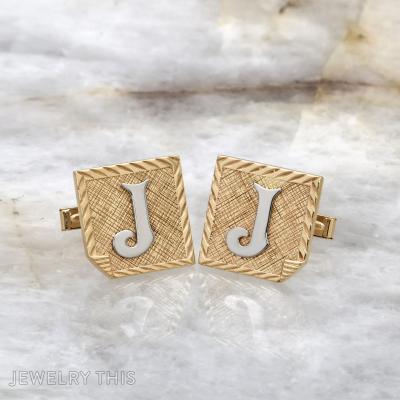
These cufflinks were made to match an existing pair almost exactly — a textured gold ...

These cufflinks blend sophistication with individuality. The timeless bar shape, expertly crafted in silver and ...


Our 1-inch silver moon cufflinks, each adorned with a constellation—Gemini and Aquarius. Meticulously crafted, the ...
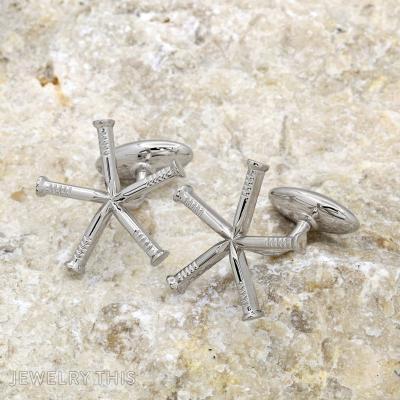
These cufflinks are built from five individual nail forms, cast to stand alone rather than ...



