


Recreated Leaf Brooch — Diamond & Citrine Gold Pin
$$$
14k yellow gold, lab diamonds, citrine
A great-grandmother's brooch was lost at a family wedding, and her great-granddaughter set out to recreate it from a single photograph for her mother. Working from that one image, the team estimated the brooch's original size and matched its leaf pattern in gold, citrine, and diamond. When she saw the finished piece, she wrote: 'Oh my gosh it is perfect!!!!'
'It does look awesome! Thank you. I love it and I am very excited.' — on seeing the first render
'oh my gosh it is perfect!!!! thank you' — on delivery
Quick specs
Design type
Primary Metal
Shape / Cut
Primary Stone
Accent Stones
Design Complexity
Intent: Certainty
Size
Leaf-shaped brooch, approximately 1.25-1.5in at longest point, 0.75in wide at center. 14k gold, approximately 13.38g.
How they made it distinctive
-
01
Leaf shape and proportions recreated from a single family photograph rather than a physical reference piece
-
02
Darker citrine stones specifically sourced to match the heirloom's original coloring rather than using lighter stock stones
-
03
Gold framing behind the pave stones thinned after client feedback while retaining enough structure to prevent bending
-
04
Alternating pave rows of citrine and diamond set by hand to follow the leaf's curved silhouette
How you'd make it yours
Stone type: this piece uses citrine and lab diamonds; a new commission could use sapphire, garnet, or natural diamonds for a different look
Metal: this piece is 14k yellow gold; the same leaf design works in rose gold or white gold
Size: made to match a specific heirloom's proportions; a new piece can be scaled to any size
Pin mechanism: hinge and stem placement can be adjusted for how the piece will be worn
One of a kind: this exact brooch was designed to recreate one family's lost heirloom and is not reproduced — a new commission is an original piece inspired by this one, not a copy
Design changes made
After reviewing the first render, the client asked for the gold framing around the stones to be thinner and less prominent. The production team lightened the metal at the back while keeping enough structure to prevent the brooch from bending over time.
Who this is for
This piece is for someone trying to bring back a specific heirloom that's gone, working from nothing more than a photo and a memory of what it looked like. It's especially right for a family gift where the goal is restoring something meaningful before a particular date, not simply designing something new.
How it's made
Once the design was approved, the piece was 3D printed in wax and attached to a wax tree inside a flask. The flask was invested in plaster and fired in a kiln to burn out the wax, leaving a hollow mold, and molten 14k yellow gold was cast into that mold under pressure to form the raw brooch. After casting, the piece was cleaned and prepared for stone setting and finishing.
The leaf-shaped body was polished to a bright finish across its surface, and the pin stem and hinge were fitted to the back. Round citrine and round diamonds were then set by hand in alternating pave rows following the leaf's contour, with the darker citrine stones specifically sourced to match the original heirloom's coloring before the final polish and quality check.
Key note
Matching the darker citrine stones across the full leaf pattern required additional sourcing time, since citrine's natural color varies considerably stone to stone.
Pricing guidance
A pave-set gold leaf brooch of this complexity sits in the mid range for custom work, largely because of the labor involved in hand-setting two stone types across a continuous curved surface. Stone choice between lab and natural diamonds is the single largest lever on price at this scale, with citrine sourcing and metal weight contributing the rest.
Moves price up ↑
- ↑ Switching from lab-grown to natural diamonds throughout the pave rows
- ↑ Using a heavier gold gauge for additional rigidity or a larger overall size
- ↑ Upgrading to a higher clarity grade across all pave stones
- ↑ Adding stones to both the front and a reverse decorative element
Moves price down ↓
- ↓ Using cubic zirconia or synthetic stones in place of diamonds
- ↓ Reducing the stone count by leaving sections of the leaf plain polished gold
- ↓ Choosing a smaller overall brooch size
- ↓ Using sterling silver with gold plating instead of solid 14k gold
Questions people ask
Yes, a single clear photograph can be enough to start a recreation, though some details like exact stone size have to be estimated. The design team uses the photo to build a 3D model, estimating proportions and stone placement as closely as the image allows. The client reviews a photorealistic render before anything is cast, so any adjustments to scale or detail can be made at that stage. The result won't be a perfect physical duplicate, but it can closely match the original's look.
Citrine is a yellow-to-orange variety of quartz, rated around 7 on the Mohs hardness scale, which makes it reasonably durable for jewelry that isn't subjected to daily impact. Brooches are worn less frequently than rings, so the stone sees less wear than it would in an everyday piece. Citrine's color can range from pale yellow to a deep amber-brown, and darker stones are often chosen to match vintage or heirloom pieces. It does not require special care beyond avoiding harsh chemicals and extreme heat.
Lab-grown diamonds are chemically, physically, and optically identical to natural diamonds — the only differences are origin and price. In a pave setting with many small stones, this distinction has no visible impact on appearance. Lab diamonds typically cost significantly less than natural diamonds of comparable size and clarity, which matters most when a design uses a large number of stones. The choice generally comes down to budget rather than visual difference.
A leaf-shaped gold brooch with pave-set diamonds and colored stones falls in the mid range for custom jewelry, largely because of the hand-setting labor required across a continuous curved surface. Material choice is the biggest cost driver — switching between lab and natural diamonds can shift the price meaningfully. Metal weight and the total number of stones set also factor into the final cost.
The design phase typically takes about a week, during which a 3D render is created and refined based on feedback. Once the design is approved and production begins, casting and stone-setting usually take three to four weeks. Sourcing well-matched colored stones, like darker citrine, can occasionally add extra time if a close color match across many stones is needed. Total turnaround from deposit to shipping is usually five to seven weeks.
A brooch's overall dimensions are generally fixed once cast, since the design is built as one continuous piece rather than something with an adjustable band. Minor modifications to the pin stem or hinge mechanism are possible after the fact if comfort or security becomes an issue. Structural changes to the leaf shape or stone layout, however, would require starting over with a new casting. It's best to confirm scale and proportion during the render review stage, before any metal is cast.
The back of a brooch needs enough structural metal to keep the piece rigid and prevent it from bending during wear, especially around a pin stem and hinge mechanism. A design that looks thin and delicate from the front may still need reinforcement behind the stones to hold its shape over time. This is a common trade-off in custom brooch design — reducing visible metal in front while keeping structural support where it's not seen. It's worth discussing with the design team if a lighter-looking front is a priority.
Explore Similar Creations
Every masterpiece starts with a spark. Explore how our clients raw ideas - sketches, heirlooms, inspirations - were transformed into bespoke works of arts.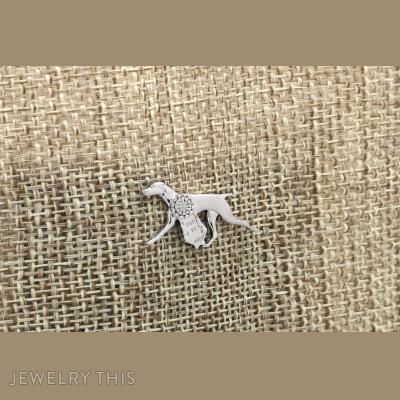
This custom silver pin is crafted in the shape of a German Shorthaired Pointer, capturing ...

This exquisite piece is expertly plated in luxurious 14K rose gold, radiating an enchanting allure. ...

Inspired by alumni and tradition this Silver Black Rhodium Plated Brooch Pin showcases a charming ...
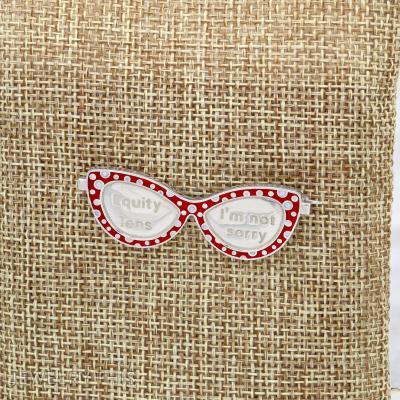
Celebrate bold individuality and fearless expression with this custom-designed pin, crafted to honor a remarkable ...

Sterling silver rectangular pin featuring infinity symbol + 1. Pin was 1 inch long and ...
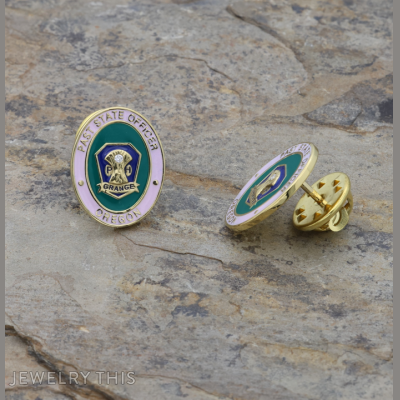
This oval lapel pin reproduces a state agricultural organization’s past-officer insignia — a wheat sheaf ...

This tie bar was built around a client-sourced pre-made bar rather than cast from scratch, ...

Bold and confident, this custom-crafted pin embodies the essence of protection and legal expertise. Designed ...

This prestigious 14karat Gold pin showcases the emblem of The Pacific Astronomical Society. The pin ...
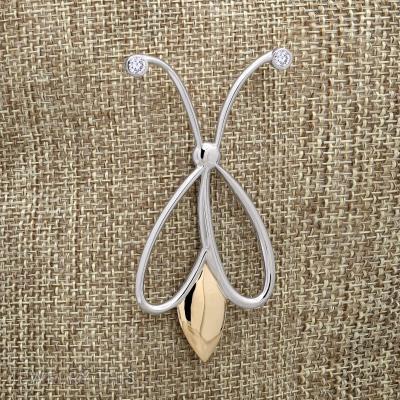
This firefly brooch translates a hand-drawn property logo into a wearable pin, built from sterling ...

This piece pairs a pave-set diamond infinity symbol with a single bezel-set diamond stud, the ...

This custom-made lapel pin is designed for a law office, perfectly capturing their tagline, “Call ...



