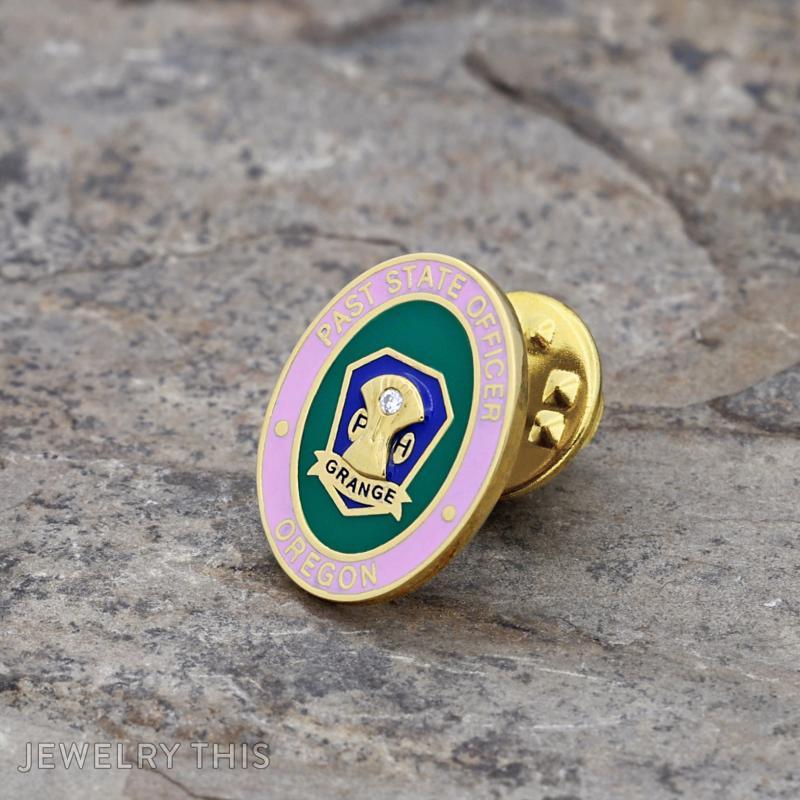
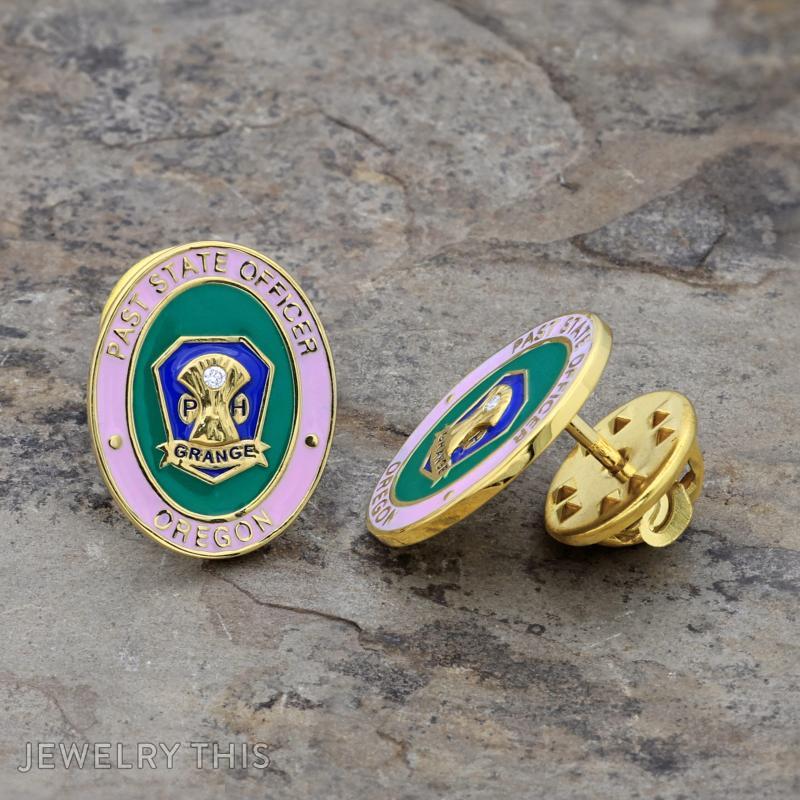
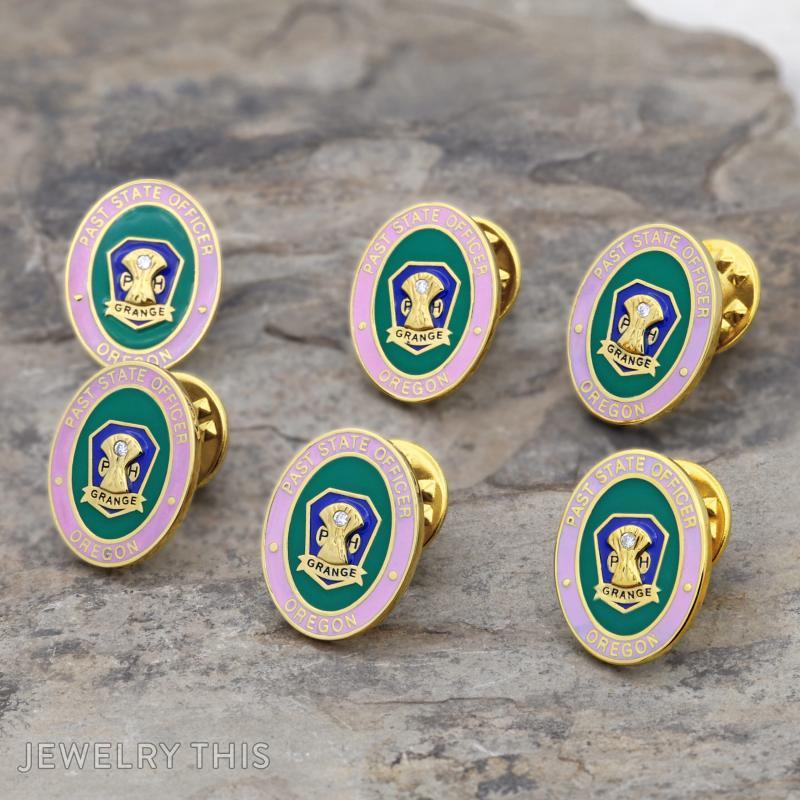
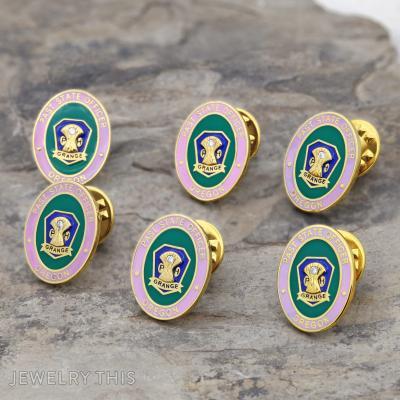
Past State Officer Grange Pin — Enamel Award Pin
$$$
Sterling silver, gold plating, lab diamond, enamel
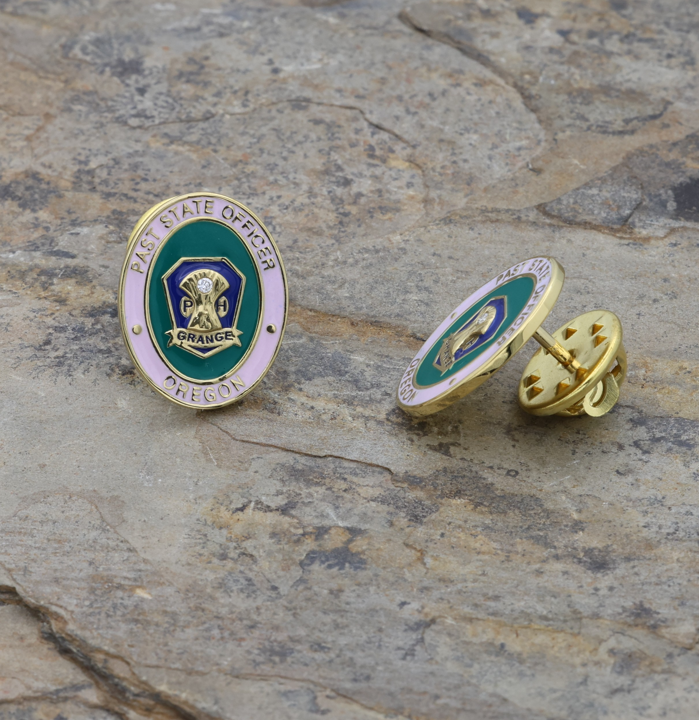
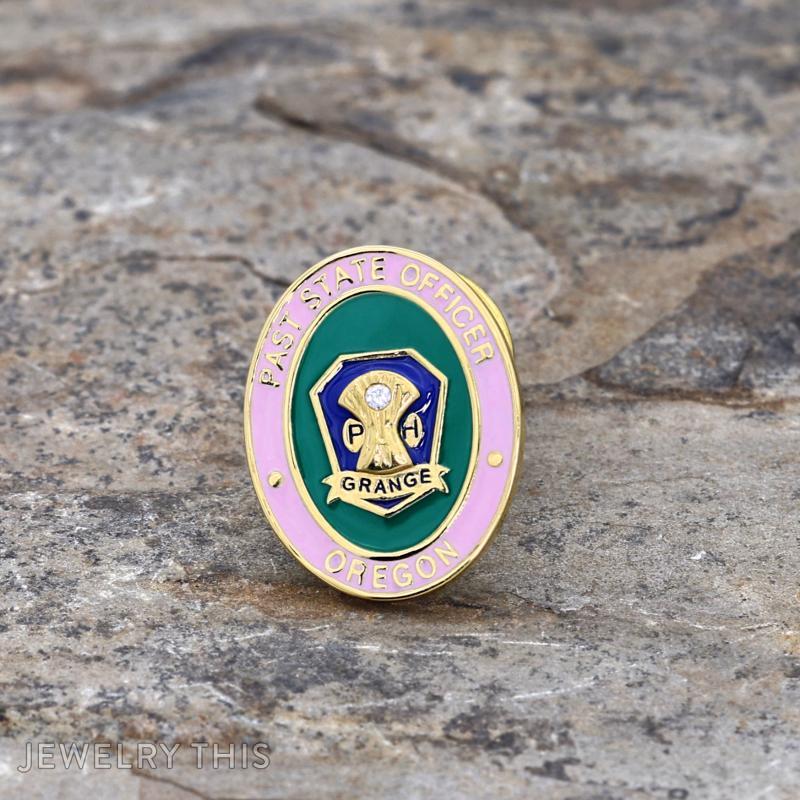
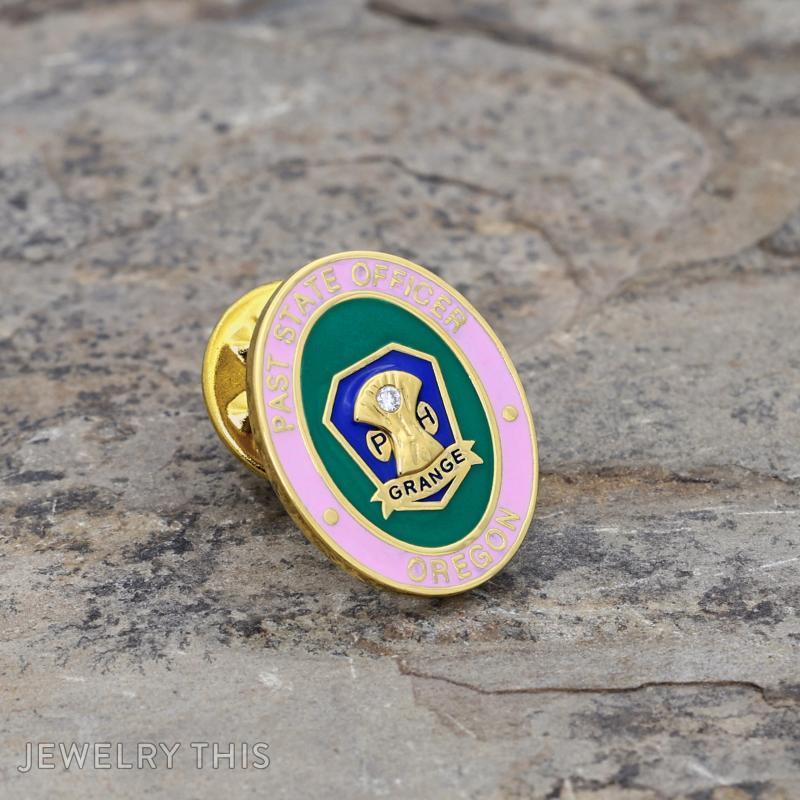
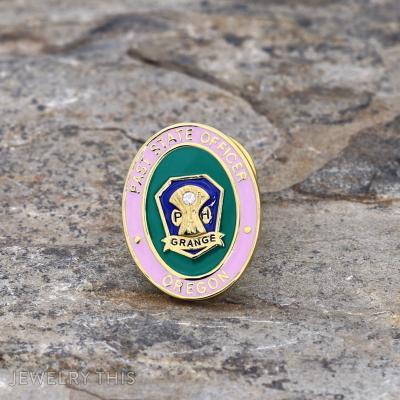
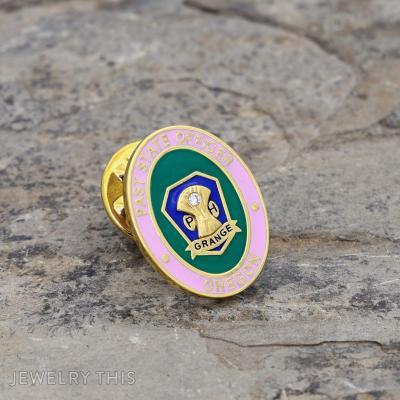
A state grange organization came to us to recreate a past-officer pin its members had worn for years, working from a well-loved original that a past vendor could no longer produce at an affordable price. Getting the enamel colors right took several rounds back and forth — the green needed to move from teal toward a proper pine shade, and the ivory border needed a touch more warmth — all checked against the one surviving original pin the office had on hand. The organization ordered twenty in gold-plated silver with a lab diamond accent, keeping the design faithful to the pin generations of officers had worn before them.
'Yes, that looks great!' — after seeing the sample
Quick specs
Design type
Primary Metal
Shape / Cut
Primary Stone
Accent Stones
Style
Design Complexity
Intent: Certainty
Size
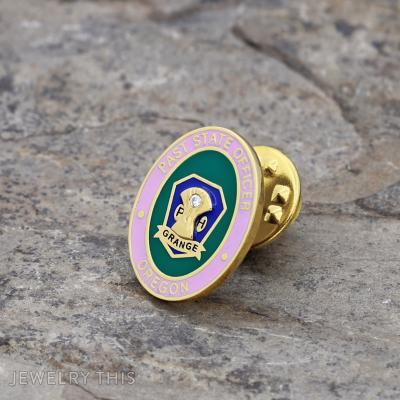
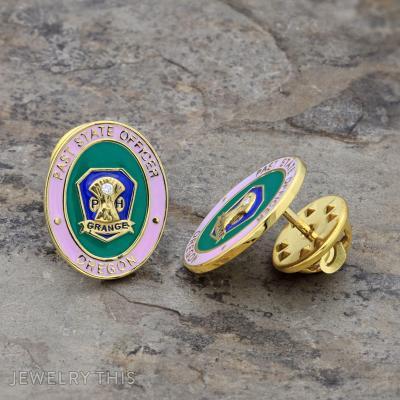
Approximately 5/8 inch tall, oval shape. Pin weight approximately 1.87 grams (reference piece). Single push-pin with clutch back.
How they made it distinctive
-
01
Enamel colors matched over multiple rounds directly against the client's one surviving original pin, not just a photograph
-
02
Single post-and-clutch pin back chosen specifically to replace the older swivel clasp for easier everyday handling
-
03
Four separate enamel fields — navy, pine green, pink, and ivory — fired in sequence to recreate a decades-old design faithfully
-
04
Small lab diamond set at the center of the wheat-sheaf emblem to preserve the historical diamond-chip detail of the original pin
-
05
Produced as a matched batch of twenty identical pins for consistent distribution across an organization's members
How you'd make it yours
Stone: this piece uses a small lab diamond; a new commission could use a natural diamond, cubic zirconia, or omit the stone entirely
Metal: this piece is gold-plated sterling silver; the same design works in solid 10K or 14K gold for a different budget and durability profile
Enamel palette: this piece uses navy, pine green, pink, and ivory; a new commission could use a different color scheme for a different organization or chapter
Clasp: this piece uses a post-and-clutch back; a new commission could use a hinged swivel clasp for added security
Lettering: the wording and initials on this piece are specific to this organization; a new commission would carry its own text and emblem
One of a kind: this exact pin design was produced for one organization's membership and is not sold as a standalone product — a new commission is an original piece inspired by this one, not a reorder
Design changes made
The enamel green was adjusted twice after sample review, moving from a teal-leaning tone to a specific dark pine green matched against the client's original pin, and the ivory border was warmed slightly to match as well. The clasp was also changed from the original swivel-hinge pin to a single push-through post with a clutch back, at the client's request for easier wear.
Who this is for
This is for an organization that has worn the same recognition pin for years and wants it made again, faithfully, rather than redesigned from scratch. It's especially right for a group working from a single surviving original piece rather than clean digital artwork, where getting the color and proportions to match takes patience and a few rounds of back-and-forth.
How it's made
Once the design was confirmed from a sketch and reference photo, a 3D model was built and a resin sample was produced in base metal so the client could check proportions before any enamel or stones were added. The approved model then moved to casting in sterling silver, with the pieces cast as a batch of twenty identical units before finishing began.
Each cast pin was gold-plated, then the recessed fields were filled with four separate enamel colors — navy for the shield, green for the surrounding field, pink for the outer border, and ivory for the lettering band — applied and fired in sequence, with several rounds of color sampling before the shades were approved. A single lab diamond, approximately 1.2mm, was set at the center of the wheat-sheaf emblem last, after all enamel work and plating were complete.
Key note
The final enamel color was matched not from a photo but against the client's one surviving original pin, requiring two rounds of physical resampling before the pine-green shade was correct.
Pricing guidance
A multi-color enameled organizational pin with a small lab-set stone, produced in a run of twenty, sits toward the lower-to-mid range for custom bulk pieces. Per-unit cost at this quantity is driven primarily by the enamel work — four separate colors fired in sequence — rather than the metal or stone. Choosing solid gold instead of gold-plated silver would move this piece into a substantially higher tier.
Moves price up ↑
- ↑ Casting in solid 10K or 14K gold instead of gold-plated sterling silver
- ↑ Increasing the number of enamel colors or adding hand-tinted shading
- ↑ Upgrading from a single small lab diamond to a natural diamond or a larger stone
- ↑ Ordering fewer than 10 pieces, which loses bulk-production pricing
- ↑ Adding engraving on the back of each pin (names, dates, or numbering)
Moves price down ↓
- ↓ Reducing the number of enamel colors used in the design
- ↓ Omitting the center stone entirely and using enamel or a flat metal dot instead
- ↓ Increasing the order quantity beyond 20 to spread tooling and setup costs further
- ↓ Simplifying the pin back to a plain butterfly clutch without additional finishing
- ↓ Choosing a single plating pass without additional color-matching rounds
Questions people ask
Yes, this is a common request for clubs, fraternal groups, and civic organizations replacing a pin that an original vendor can no longer produce. The process starts with a sketch built from the photo, followed by a 3D model and a base-metal resin sample so the client can check proportions and lettering before any enamel or stones are added. Matching enamel color exactly usually takes a few rounds of sampling, especially when working from a physical original rather than just a photo. Having one surviving original piece on hand to compare against, as in this case, makes the color matching much more accurate.
Gold-plated sterling silver has a thin layer of gold over a silver base, giving the same bright gold look at a lower cost than solid gold. Solid 10K or 14K gold costs significantly more per piece, especially at current gold prices, and for a small pin the visual difference between the two is minimal to the naked eye. Gold plating will wear gradually over years of handling, particularly at edges and raised details, while solid gold does not wear down the same way. For a lapel pin worn occasionally rather than daily, gold-plated silver is a common and practical choice.
The pin is cast first with recessed fields for each color, then enamel is filled into those recesses and fired in a kiln to harden and set the color. Each color is typically applied and fired in a separate pass, especially when a design has four or more distinct color zones like this one does. The base metal walls between colors, visible as thin gold lines in the finished piece, keep the enamel colors from bleeding into each other. This is a durable, traditional method used for organizational and military pins that need to hold color well over decades of wear.
For a multi-color enamel pin in gold-plated sterling silver with a small lab diamond, bulk orders of 10 to 20 pieces typically fall in the lower-to-mid price range for custom work, with the enamel application being the largest driver of per-unit cost. Solid gold versions of the same design cost roughly two-and-a-half to three times more per piece due to current gold pricing. Ordering a larger quantity generally lowers the per-piece cost further since design and tooling costs are spread across more units. The exact number of enamel colors and whether a stone is included both affect the final per-unit price.
For a design of this complexity, the design and sampling phase — sketch, 3D model, resin sample, and enamel color matching — typically takes several weeks, especially if multiple rounds of color adjustment are needed. Once the design and colors are approved, production of a batch of 20 identical pins usually takes three to four weeks. Color matching can extend the design phase if the client is working from a physical original rather than a digital reference, since physical samples need to be produced and reviewed each round. Total time from first conversation to delivery is typically eight to twelve weeks when color matching requires several rounds.
Yes, and it produces more accurate results than matching from a photo alone, since photos can shift color depending on lighting and camera settings. The most reliable approach is comparing physical color samples directly against the original piece rather than relying on a digital color code. In this case the client compared several rounds of samples against their one remaining original pin, which caught color differences that photos alone had not shown clearly. This extra step adds some time to the design phase but significantly improves the final color accuracy.
A single post with a clutch back — sometimes called a butterfly clutch — is generally the easiest and fastest option for regular on-and-off wear, since it only requires pushing the post through fabric and securing one clutch. Hinged swivel clasps, which lock with a small lever, are more secure against accidental loss but are slower and more fiddly to open and close. For pins worn occasionally at meetings or events rather than daily, many organizations prefer the simpler push-and-clutch style for convenience. The choice mostly comes down to how often the pin will be put on and taken off and how important extra security is to the wearer.
Yes, small accent stones like the 1.2mm stone used here can be substituted with a variety of alternatives including cubic zirconia, moissanite, or even left as enamel or bare metal if a stone isn't wanted at all. Lab diamonds and cubic zirconia look very similar at this small size to the naked eye, but lab diamonds are harder and hold their polish better over years of handling. For a design where the stone is a small accent rather than a focal point, the choice mostly comes down to budget and how long the piece needs to look sharp under regular wear. Removing the stone entirely and using enamel or a plain metal dot instead is also a straightforward way to reduce cost.