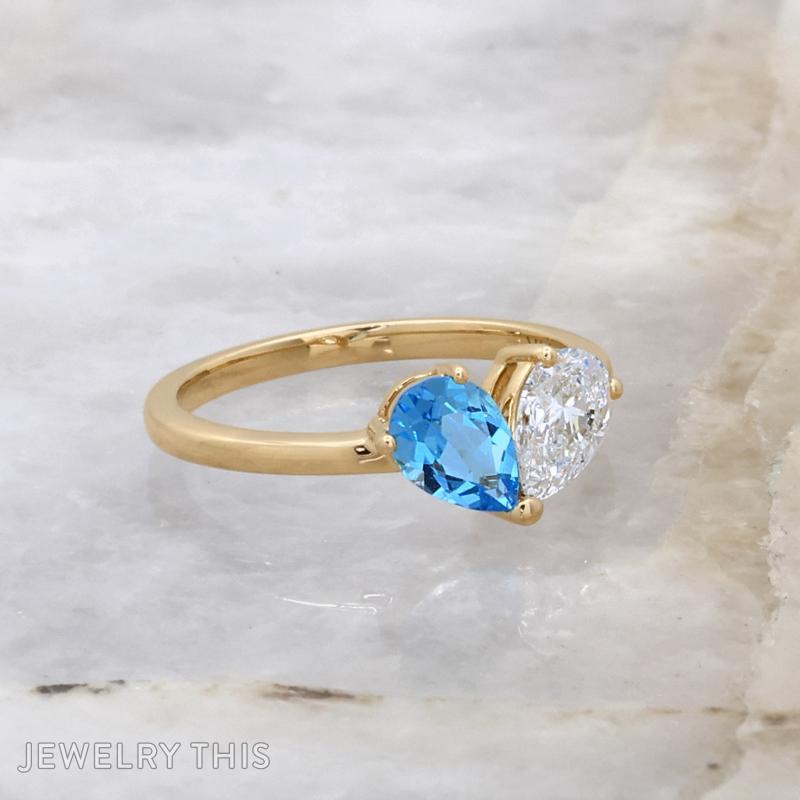
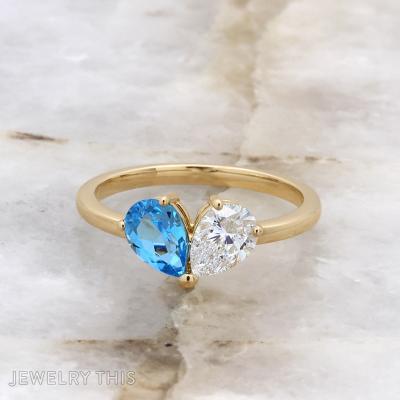
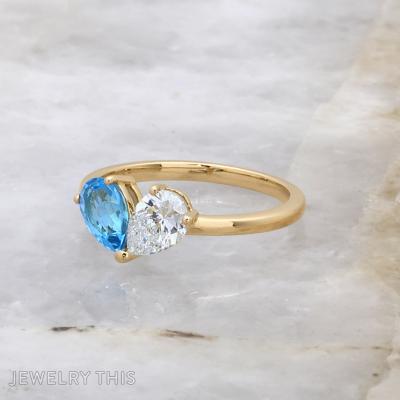
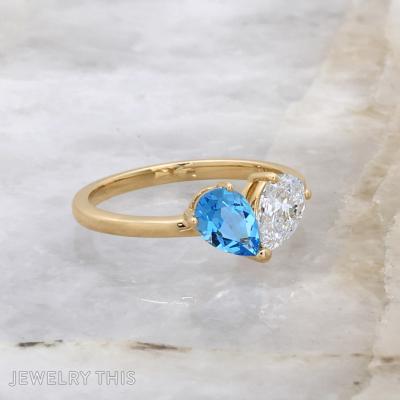
Two-Stone Mother's Ring — Diamond & Blue Topaz Toi et Moi
$$
14k yellow gold, lab diamond, blue topaz
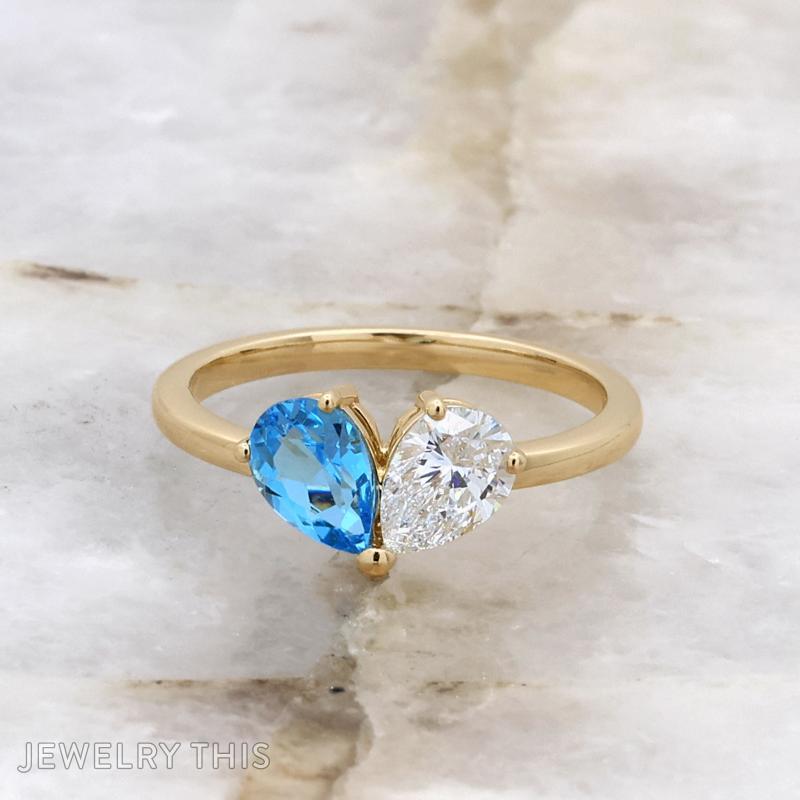
A mother came to us shortly after having her most recent child, wanting a two-stone ring pairing a diamond with blue topaz. During the design phase she asked if the stones could angle closer together to read more like a heart shape, and the team adjusted the render to match. When it arrived, she wrote: 'It's absolutely beautiful and fits perfectly. Couldn't be happier with it.'
'It looks beautiful and I'm so excited!!!' — on seeing the first render
'It's absolutely beautiful and fits perfectly. Couldn't be happier with it. Thank you!' — on delivery
Quick specs
Design type
Primary Metal
Shape / Cut
Primary Stone
Accent Stones
Style
Design Complexity
Intent
Intent: Certainty
Size
Ring size 7 US. Two pear-shaped stones approximately 0.75 carat each.
How they made it distinctive
-
01
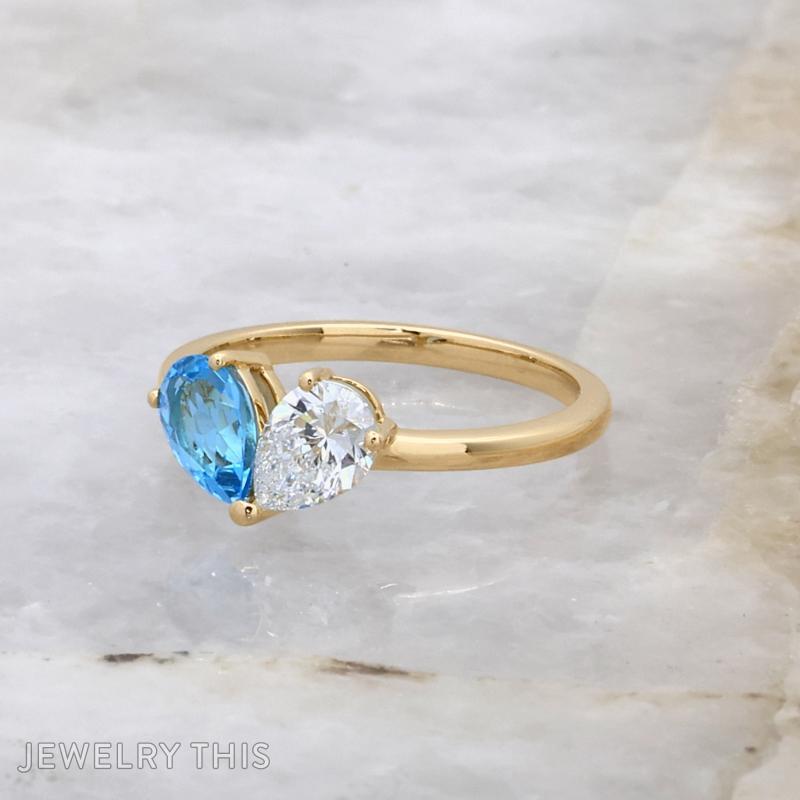
Two pear-shaped stones set point-to-point in a shared prong setting so they angle toward each other at the center
-
02
Stone angle was adjusted mid-design specifically so the pairing would read as a heart shape when worn
-
03
Lab-grown diamond paired with Swiss blue topaz for a bright color contrast without upgrading to a natural stone
-
04
Minimal polished band keeps all visual attention on the two-stone pairing
-
05
No accent stones or halo — a deliberately clean, everyday design despite the symbolic pairing
How you'd make it yours
Stone type: this piece uses a lab-grown diamond; a new commission could use a natural diamond or a different center stone
Stone color: this piece pairs blue topaz with diamond; a new piece could use a different colored gemstone for the second stone
Metal: this piece is 14k yellow gold; the same two-stone design works in white or rose gold
Engraving: the inside of the band can carry a name, date, or short phrase on a new piece
Stone angle: this piece's stones are angled to read as a heart shape; a new commission could set them straight or at a different angle
One of a kind: this exact ring was designed for one client and is not reproduced — a new commission is an original piece inspired by this one, not a copy
Design changes made
The stones were angled closer together after the client saw the first render, so the pairing would read more like a heart shape rather than two separate stones side by side.
Who this is for
This piece is for someone who wants a symbolic two-stone ring that still feels like something they'd wear every day, not just for special occasions. It's especially right for a parent looking to mark a family milestone with color and meaning, without wanting a large or elaborate design.
How it's made
Once the design was approved, the ring was 3D modeled and printed as a wax pattern, then fitted to a wax tree and set inside a flask for investment casting. The flask was placed in a kiln to burn out the wax, leaving a hollow mold, and molten 14k yellow gold was poured in to form the raw ring. After cooling, the piece was extracted from the mold and cleaned in preparation for finishing.
The band was polished to a bright, mirror finish, and the two pear-shaped stones — a lab-grown diamond and a Swiss blue topaz — were set point-to-point in a shared prong arrangement so they angle toward each other at the center. The prongs, which appear tall in early renders, were mechanically bent down over the stone edges and trimmed flush during finishing so nothing extends above the stones.
Key note
The tall prongs visible in the 3D render are intentional — they are mechanically bent over the stone edges and trimmed flush only during finishing, after the stones are set.
Pricing guidance
A two-stone pear-cut ring in 14k gold with lab-grown accent stones sits in the mid range for custom rings of this complexity. Most of the cost comes from the stone sourcing and the precision required to set two matched pear shapes in a shared setting. Choosing lab-grown over natural stones and adjusting stone size are the biggest levers on price for a design like this.
Moves price up ↑
- ↑ Upgrading to a natural diamond instead of a lab-grown diamond
- ↑ Increasing stone size beyond roughly 0.75 carats each
- ↑ Upgrading the band metal from 14k to 18k gold
- ↑ Adding a halo or pave accent stones around the two center stones
- ↑ Choosing a rarer blue topaz shade such as London blue over Swiss blue
Moves price down ↓
- ↓ Reducing the carat size of one or both stones
- ↓ Choosing a less expensive colored stone in place of blue topaz
- ↓ Using sterling silver or gold-plated silver instead of solid 14k gold
- ↓ Simplifying the prong setting to a single shared prong style
- ↓ Skipping inside engraving
Questions people ask
Lab-grown and natural diamonds are chemically, physically, and optically identical — the only real difference is where they come from. A lab-grown diamond is created in a controlled environment rather than mined from the earth, which typically makes it cost significantly less than a natural diamond of the same size and quality. Both are graded using the same cut, color, clarity, and carat standards. For most wearers, there is no visible difference between the two.
Yes, pairing a diamond with a colored stone like blue topaz is a common design, often called a toi et moi style, meaning 'you and me' in French. The two stones are typically set side by side or angled toward each other in a shared prong setting. This style works well as a symbolic piece representing two people, two milestones, or simply a preference for color alongside a diamond. Stone shapes are usually matched, such as two pear cuts, so the pairing looks intentional.
Swiss blue topaz is a brighter, lighter, more vivid blue, while London blue topaz is a deeper, more saturated blue-gray tone. Both are natural color variations of topaz achieved through treatment, and both are durable enough for everyday ring wear. The choice usually comes down to personal preference for a lighter versus darker blue. Swiss blue tends to read as more vibrant in photos, while London blue has a moodier, more subdued look.
A 14k gold two-stone ring with lab-grown diamond and blue topaz around three-quarters of a carat each typically falls in the low-to-mid range for custom rings. The main cost drivers are the stone sourcing, the precision hand-setting required for a shared prong style, and the metal karat chosen. Switching from a natural to a lab-grown diamond is one of the most effective ways to keep the cost down without changing the appearance.
The full process typically takes about five to six weeks from deposit to delivery. The design phase, including the initial render and any revisions, usually takes about one week. Once the design is approved and a majority of the balance is paid, production takes approximately four additional weeks, covering wax modeling, casting, stone setting, and finishing.
Most rings in 14k gold can be resized within a reasonable range by a jeweler, typically one to two sizes up or down without compromising the setting. Because this design uses a shared prong setting for two stones rather than a single center stone, resizing should be discussed with the jeweler beforehand to make sure the stone angles are preserved. It's best to have resizing done by the original maker or an experienced custom jeweler familiar with multi-stone settings.
Yes, blue topaz rates 8 on the Mohs hardness scale, which is quite durable and well-suited to an everyday ring. It is harder than many other colored gemstones, though it can still chip if struck at a sharp angle, so care should be taken during activities like heavy manual work or sports. Regular cleaning with mild soap and water is sufficient to keep it looking bright. It pairs well with diamond in a two-stone setting since both stones can handle daily wear at a similar level.
Yes, the inside of the band has room for a short engraving, such as initials or a date. Many clients choose this option to add a name or birthdate as a personal touch, especially on a design already carrying symbolic meaning. Engraving is typically discussed and confirmed during the design phase before the ring goes into production. Keep in mind that very long text may not fit clearly on a narrow band.
Explore Similar Creations
Every masterpiece starts with a spark. Explore how our clients raw ideas - sketches, heirlooms, inspirations - were transformed into bespoke works of arts.
This captivating set of rings is designed to symbolize unity and individuality. One ring is ...
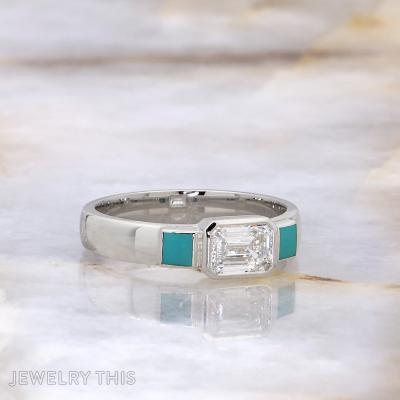
This elegant custom ring beautifully combines a .75 carat emerald cut lab diamond centerpiece with ...
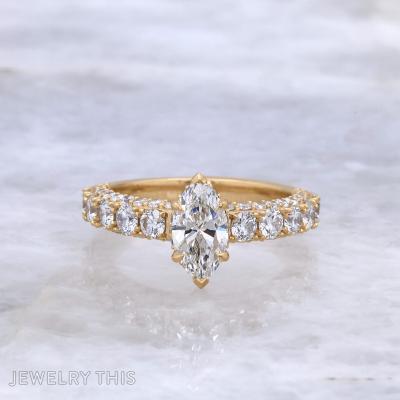
This breathtaking 14K yellow gold engagement ring is a true masterpiece of light and luxury. ...

This custom solitaire ring is a stunning celebration of an anniversary, featuring a magnificent 10-carat ...
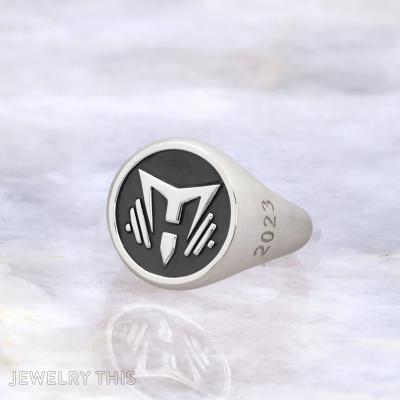
This custom sterling silver signet-style ring was created to honor and celebrate the success of ...

This Rose gold engagement ring is a mesmerizing ode to nature and personal connection. The ...
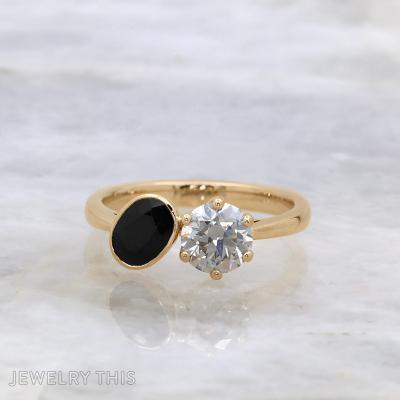
This meaningful yellow gold engagement ring showcases a beautiful combination of heirloom stones, thoughtfully incorporated ...

This exquisite yellow gold three-stone ring is a stunning display of vibrant color. At its ...

This engagement ring pairs a 1.05-carat oval lab-grown diamond with two symmetrical clusters of accent ...
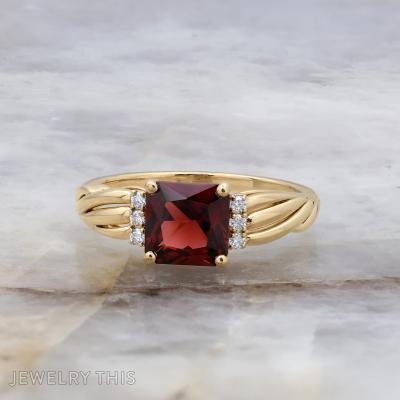
This exquisite engagement ring tells a story of love that is as deep and vibrant ...
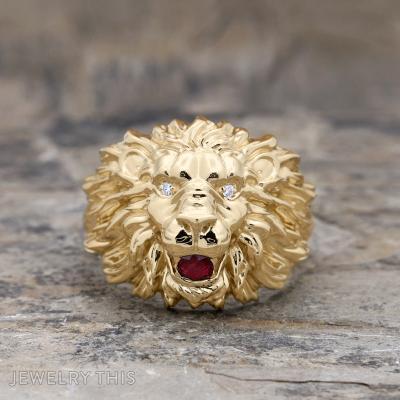
This commanding yellow gold men’s ring is a breathtaking display of sculptural artistry and raw ...

Crafted for the adventurous soul, this sterling silver ring features a captivating eagle with intricate ...