


Rose Gold Cluster Engagement Ring with Round Lab Diamonds
$$
14k rose gold, lab-grown diamonds
A client came to us wanting to recreate an engagement ring design his girlfriend loved, based on a photo of an antique piece with a cluster of stones at the top. The original design used a mix of round and baguette stones, but after exploring the baguette option, the team found the stone sizing and hand-fabrication techniques needed to match it closely weren't achievable within the piece's scope — so the design was reworked around round stones only, in a tapered cluster that echoes the original's shape. When it arrived, he wrote: 'I have received the piece. Thank you so much for working with me on this. It is very beautiful!'
'I have received the piece. Thank you so much for working with me on this. It is very beautiful!' — on delivery
Quick specs
Design type
Primary Metal
Shape / Cut
Primary Stone
Accent Stones
Design Complexity
Intent: Certainty
Size
Ring size 5 US (15.7mm). Top cluster approximately 0.75 inch long.
How they made it distinctive
-
01
Nine round lab diamonds arranged in a tapered, flower-like cluster rather than a single center stone, echoing a vintage reference design
-
02
Round-stone-only layout chosen after the original mixed round-and-baguette vision proved impractical to produce at the requested scale
-
03
14k rose gold selected to match the warm tone of the antique piece that inspired the design
-
04
Cluster kept to roughly 3/4 inch, balancing visual presence with wearability after the client decided a full inch was too large
-
05
Slim, unadorned rose gold band lets the stone cluster remain the sole focal point
How you'd make it yours
Stone type: this piece uses lab diamonds; a new commission could use natural diamonds or moissanite for a different cost and origin profile
Metal: this piece is 14k rose gold; the same cluster design works in yellow gold or white gold
Cluster size: this piece's cluster is about 3/4 inch; a new commission could be made smaller or larger
Band detail: a plain polished band was used here; a new piece could add an engraved pattern for a more vintage feel
Stone shape mix: this piece uses only round stones; a new commission with a larger budget could incorporate baguette or marquise accents
One of a kind: this exact ring was designed for one client and is not reproduced — a new commission is an original piece inspired by this one, not a copy
Design changes made
The design shifted from a mixed round-and-baguette stone layout to an all-round-stone cluster after the baguette version proved impractical to produce at the requested scale. The final layout keeps the tapered, flower-like shape of the original reference but achieves it entirely with round stones.
Who this is for
This piece is for someone who fell in love with a vintage or antique-style ring photo and wants that same silhouette translated into something achievable today. It's especially right if you value a cluster of brilliant round stones over a mix of shapes, and you want a design that references the past without needing it to be an exact, literal copy.
How it's made
Once the design was approved, the ring was first 3D printed in wax using a digital printer, then attached to a wax tree and invested in a flask. The flask was fired in a kiln to burn out the wax, leaving a hollow mold, and molten 14k rose gold was cast into that mold under pressure. After cooling, the raw ring was removed from the mold and prepared for finishing.
The cast band and cluster setting were cleaned, polished, and refined by hand to bring up the rose gold's finish. The nine round lab diamonds were then prong-set individually into the tapered cluster, with the prongs filed and finished to sit flush against each stone for secure daily wear.
Key note
The team found that recreating the original piece's mixed round-and-baguette stone layout would have required hand-fabricating and individually soldering each prong head, the way the antique original was likely made decades ago — a technique no longer practical at this scale, which is why the final design uses round stones throughout instead.
Pricing guidance
A rose gold cluster-style engagement ring set with multiple round lab diamonds sits toward the lower-to-middle end of custom engagement ring pricing. Most of the cost comes from the number of individually prong-set stones rather than the metal itself. Stone count, stone quality, and the complexity of the cluster layout are what move the price most from there.
Moves price up ↑
- ↑ Adding baguette or marquise-shaped accent stones, which require custom sizing and additional prong work
- ↑ Switching from lab-grown to natural diamonds across the cluster
- ↑ Increasing the overall size of the top cluster beyond 3/4 inch
- ↑ Upgrading to 18k gold instead of 14k
- ↑ Adding an engraved pattern along the band for a vintage finish
Moves price down ↓
- ↓ Reducing the total number of stones in the cluster
- ↓ Using moissanite in place of lab-grown diamonds
- ↓ Choosing a smaller overall cluster size
- ↓ Simplifying the cluster to a single row rather than a tapered flower shape
- ↓ Selecting a lower stone clarity or color grade for the round diamonds
Questions people ask
Yes, but some antique techniques don't translate directly to modern production methods. Many older pieces were entirely hand-fabricated, with each small prong head individually soldered into place, which was far more labor-intensive but also less expensive in its original era due to lower labor costs. Modern custom jewelry is typically built through a 3D-modeled and cast process, which has different capabilities and limitations. In this case, the original mixed round-and-baguette layout couldn't be achieved within scope, so the design was reworked to keep the same visual shape using only round stones.
Lab-grown and natural diamonds are chemically and optically identical — both are pure carbon with the same hardness, brilliance, and durability. The only real difference is origin: lab-grown diamonds are created in a controlled laboratory setting rather than mined from the earth. For a cluster design with multiple stones, lab-grown diamonds typically cost significantly less than natural diamonds of comparable size and quality. Most people cannot tell the difference by looking at the stone.
Baguette diamonds have a minimum practical cutting size because the elongated rectangular shape becomes structurally fragile and difficult to facet accurately below a certain size. When a design calls for very small baguettes alongside other stones, the overall setting often has to grow larger to accommodate a baguette that can actually be cut and set reliably. This is a common reason a vintage-inspired design with tiny baguette accents may need a bigger top than originally expected. Round stones have more flexibility at small sizes because their cut is simpler.
A rose gold cluster ring with nine round lab diamonds falls toward the lower-to-middle end of custom engagement ring pricing. The main cost driver is the number of individually set stones rather than the metal, since each stone requires its own prongs and setting work. Choosing lab-grown diamonds over natural ones keeps the cost down significantly for a multi-stone design like this. Price shifts mainly with stone count, stone quality, and overall cluster size.
The design phase for a ring like this, including a 3D render for approval, typically takes about one to two weeks, though layout changes or stone substitutions can extend that. Once the design is approved and production begins, casting and finishing generally takes two to three weeks. The process starts with a 3D-printed wax model, which is cast into metal, then hand-finished and stone-set. Total timeline can run longer than standard if the design requires revisions before final approval.
Yes, cluster-style settings are generally flexible on stone material since the setting style (prongs sized for round stones) stays the same regardless of what's set into them. Moissanite is a common lower-cost alternative to lab-grown or natural diamonds with similar brilliance. The main consideration is making sure the replacement stone's hardness and durability suit everyday wear, since engagement rings are typically worn daily. Stone color and cut consistency across multiple stones also matter for a cluster to look cohesive.
Yes, rose gold is generally considered one of the more durable gold colors because the copper alloy mixed in to create the pink tone also adds hardness compared to pure yellow gold. A 14k rose gold band holds up well to daily wear and resists scratching slightly better than higher-karat yellow gold. Over time it may develop a warm patina, which many people prefer for an antique-inspired design. It does not require re-plating the way white gold does, since the color comes from the alloy itself rather than a surface coating.
A ring with a cluster set at the top rather than stones set all the way around the band can usually be resized within a normal range without disturbing the stone setting, since the resizing work happens on the plain shank. Larger size adjustments may be more limited if the band narrows significantly near the cluster. It's best to confirm your ring size as accurately as possible before production, since a tapered cluster design is more complex to resize than a plain band. A jeweler can typically advise on the safe resizing range for a specific piece.
Check what our clients say about us

Jonas Otoo
4 years ago
I really enjoyed working with JewelryThis! The process was very streamlined and efficient from start to finish. I received very helpful guidance and insight all along the way and the final product was a lovely piece! Highly recommended!
Explore Similar Creations
Every masterpiece starts with a spark. Explore how our clients raw ideas - sketches, heirlooms, inspirations - were transformed into bespoke works of arts.
This engagement ring pairs a round blue sapphire center stone with delicate marquise leaf motifs ...
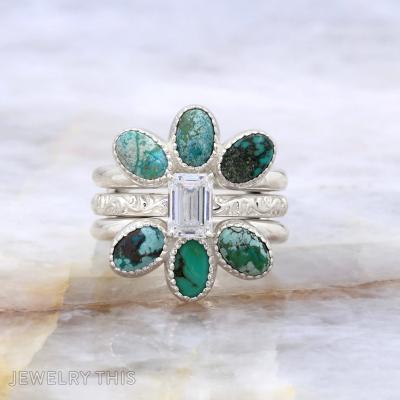
This artisanal sterling silver wedding set is a stunning fusion of modern brilliance and rustic, ...

This enchanting platinum engagement ring showcases a striking hexagonal-shaped teal sapphire at its center, chosen ...

Elegance meets affordability in this custom engagement ring designed to be a replacement for a ...

Introducing our captivating Vintage-Inspired 14k White Gold Custom Oval Engagement Ring, a timeless embodiment of ...
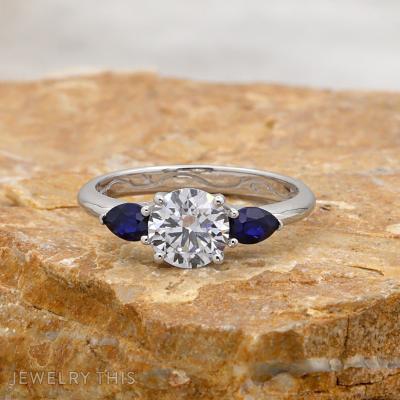
This engagement ring centers a round lab-grown diamond flanked by two pear-shaped sapphires, chosen in ...

This elegant three-stone engagement ring features a classic design. A dazzling round diamond sits at ...

This white gold engagement ring celebrates timeless love and exquisite design. At its heart lies ...

This bridal set recreates a wedding ring that had been lost — originally a grandmother’s ...

This custom wedding set exudes romance and sophistication. The engagement ring, inspired by the classic ...

This engagement ring pairs a 1.05-carat oval lab-grown diamond with two symmetrical clusters of accent ...
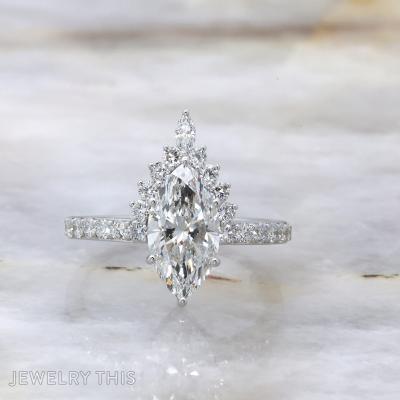
This stunning white gold engagement ring showcases a marquise-shaped center lab-grown diamond, striking in its ...



