


Birthstone Twist Band — Platinum Ring for Three Children
$$
Platinum, lab-grown alexandrite, blue zircon
A father wanted a band his wife could wear with her existing wedding set — one that carried their three children in birthstones rather than just decorative stones. He worked through several design directions before landing on a twisted-rope band with the stones grouped in threes, and added a quiet inside engraving: 'for your smile.' When it arrived, he confirmed it had reached him safely: 'Perfect.'
'Perfect.' — on delivery
Quick specs
Design type
Primary Metal
Shape / Cut
Primary Stone
Accent Stones
Design Complexity
Intent: Certainty
Size
Ring size 7 US (17.32mm).
How they made it distinctive
-
01
Twisted-rope band texture chosen specifically to echo a detail the client liked on his wife's existing wedding ring
-
02
Three birthstones set in repeating groups of three, with the June stone centered between the two December stones at the client's request
-
03
Lab-grown alexandrite recommended and used over natural stones, since natural alexandrite is rarely found in small sizes with good color
-
04
Engraved pattern from the wife's existing wedding band was deliberately left off once the stone-set design left no room for it
-
05
Hidden script engraving inside the band reading a short personal phrase, visible only to the wearer
How you'd make it yours
Stone type: this piece uses lab-grown alexandrite and blue zircon/topaz — a new commission could use different birthstones for other family members
Metal: this piece is platinum — the same twisted-band language works in white or yellow gold at a different cost
Stone arrangement: this piece groups stones in sets of three — a new piece could space stones evenly around the band instead
Engraving: the smooth interior section can carry a different short phrase, date, or initials on a new piece
Band texture: this piece uses a twisted-rope surface — a plain polished or hammered texture could be used instead
One of a kind: this exact ring was designed for one family and is not reproduced — a new commission is an original piece inspired by this one, not a copy
Design changes made
The original plan to mirror the engraved pattern on his wife's wedding band was dropped once the birthstone layout was chosen, since the stone-set design left too little smooth band surface for engraving; the couple's twisted-rope preference was kept and the three birthstones were set in repeating groups of three instead, reordered mid-design so the June stone sits centered between the two December stones.
Who this is for
This piece is for someone who wants a wedding-set companion ring that carries real meaning, not just a matching band. It's especially right if you're blending a family-representation piece with the practical need for it to sit comfortably alongside existing rings worn every day.
How it's made
Once the design was approved, the piece was 3D printed in wax and attached to a wax tree inside a flask. The flask was invested in plaster and fired in a kiln to burn out the wax, leaving a hollow mold. Molten platinum was then poured into the mold under heat and pressure; after cooling, the raw band was broken out of the investment and prepared for finishing.
The band's rope-twist texture was cleaned up and polished to a bright finish across the entire surface, since the piece uses a single continuous finish rather than separate matte and polished zones. The birthstones were then set by hand in their repeating groups of three along the twisted surface, followed by hand engraving of the interior inscription in script along the remaining smooth portion of the band.
Key note
The twisted-rope texture meant the band could not also carry the engraved pattern from the wife's wedding band, since stone-setting space and decorative engraving space could not coexist on the same narrow surface.
Pricing guidance
A platinum birthstone band with a textured surface and multiple small stones sits in the mid range for custom bands of this complexity. Platinum itself carries a higher base cost than gold alternatives, and the hand-setting required for nine small stones in a textured band adds labor on top of the metal cost. Stone choice and the amount of texturing are where the price moves most from there.
Moves price up ↑
- ↑ Using natural alexandrite instead of lab-grown — natural stones in small sizes are rare and significantly more costly
- ↑ Switching to platinum is already a cost driver — a heavier platinum band with more metal weight increases cost further
- ↑ Adding stones in a full eternity layout rather than grouped sections
- ↑ Increasing the number of stones to represent additional family members
- ↑ Adding engraving on both the inside and outside of the band
Moves price down ↓
- ↓ Choosing 14k or 18k white gold instead of platinum for the band
- ↓ Using lab-grown or synthetic stones for all birthstones rather than natural options
- ↓ Reducing the stone count or using fewer repeating groups
- ↓ Choosing a plain polished band without the twisted texture to reduce finishing labor
- ↓ Omitting the interior engraving
Questions people ask
Yes, a twisted-rope texture can be combined with birthstone settings, though the design has to balance where the texture runs and where the stones are set. In this case the stones were grouped in sets of three along the twisted surface rather than spread in a continuous line, which kept the rope texture visible while still featuring each stone clearly. The trade-off is that a fully twisted band usually can't also carry a separate engraved pattern, since there isn't room for both decorative treatments on a narrow band. Discussing the stone layout early in the design process helps determine how much of the texture can be preserved.
Yes. Lab-grown alexandrite has the same chemical composition and color-change properties as natural alexandrite, shifting between green and reddish-purple tones depending on the light source. Natural alexandrite is extremely rare, especially in small sizes suited to ring settings, and tends to have more inclusions or weaker color change at that scale. Lab-grown versions are more consistent in quality and much more available, making them a practical choice for small accent or feature stones.
Both are recognized birthstones for December and share a similar pale blue coloring, though zircon has slightly more brilliance due to its higher refractive index. Zircon is generally considered the more traditional birthstone choice for the month, while blue topaz is more widely available and slightly easier to source in consistent small sizes. Pricing between the two is typically comparable at smaller stone sizes. The choice mostly comes down to personal preference and subtle differences in sparkle versus tone.
Platinum is one of the most durable metals used in fine jewelry and is naturally hypoallergenic, making it a strong choice for a band worn daily alongside other rings. It's denser and heavier than gold, which gives it a solid, substantial feel on the hand. Platinum does develop a soft surface patina over time from daily wear, but this can be polished back to a bright finish whenever desired. It also resists tarnishing, so it won't discolor the way lower-karat gold or silver can.
A platinum band with multiple small birthstones and a textured surface generally sits in the mid range for custom bands of this complexity. The platinum itself carries a higher base metal cost than gold, and hand-setting several small stones along a textured surface adds labor beyond a simple polished band. Choosing lab-grown stones over natural ones, and limiting the number of stones, are the main ways to manage the cost while keeping the design intact.
A standard custom platinum ring typically takes about five to six weeks from approved design to delivery, including roughly one week for design refinement and four to five weeks for production. Platinum casting and finishing can take slightly longer than gold due to the metal's higher melting point and density. Stone sourcing, especially for less common birthstones, can also add time if a specific cut or size isn't readily in stock. Holiday-season orders may need to be placed earlier to ensure delivery by a target date.
Yes, the order of birthstones around the band can usually be customized to reflect birth order or any other meaningful sequence the client prefers. This is typically confirmed during the render stage, where the stone placement can still be adjusted before the design is finalized. Once the render is approved and production begins, the stone order is generally locked in. Small changes like this are easiest to make early, before the final model is sent to production.
Yes, a short phrase or message can usually be engraved on the inside of a band, though the available space depends on how much of the band's interior is left smooth versus taken up by the stone settings from the outside. On a band with stones set partway around, there is typically a flat portion on the opposite side where a brief engraving fits well in script or block lettering. Longer phrases may need to be shortened to fit legibly. The engraving is typically finalized after the main design and stone layout are approved.
Explore Similar Creations
Every masterpiece starts with a spark. Explore how our clients raw ideas - sketches, heirlooms, inspirations - were transformed into bespoke works of arts.
Meticulously crafted in 14K gold, this men’s ring is a stunning combination of classic style ...
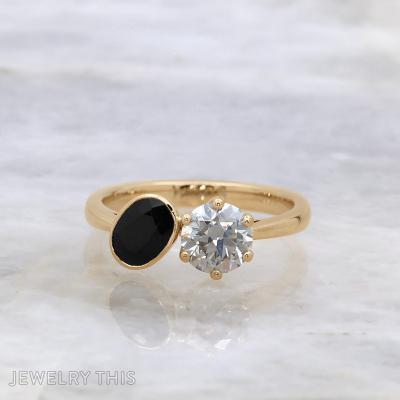
This meaningful yellow gold engagement ring showcases a beautiful combination of heirloom stones, thoughtfully incorporated ...

Behold this stunning custom wedding ring set, meticulously crafted to capture the essence of eternal ...

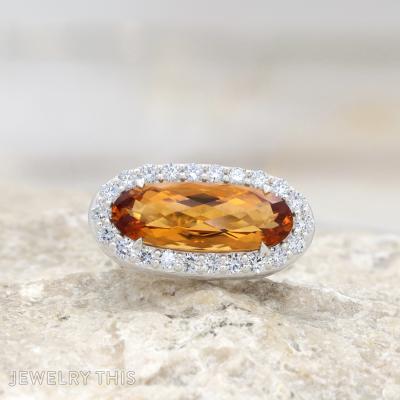
This ring rebuilds a design that existed only in a handful of old photographs — ...

This men’s wedding band takes an octagonal, faceted profile rather than a traditional rounded band, ...

This stunning sapphire and diamond wedding band combines timeless elegance with a touch of color. ...

Crafted from sterling silver, this striking flat band ring features a dimensional snake coiled around ...
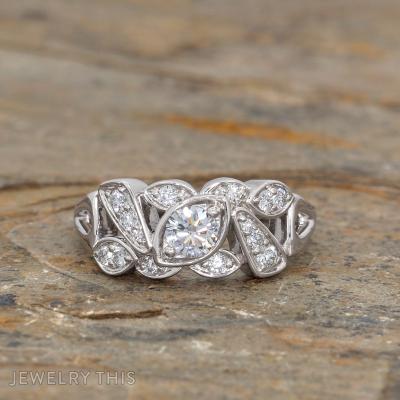
This exquisite engagement ring is a heartfelt recreation of a cherished vintage heirloom from 1925, ...
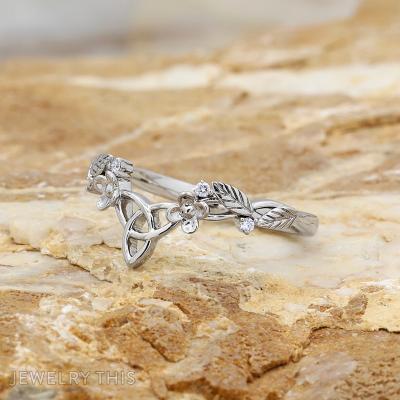
This custom platinum wedding band was thoughtfully designed to complement an existing engagement ring while ...
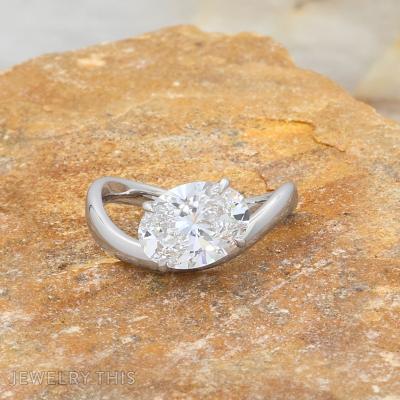
This engagement-style solitaire was built around a client-provided 2.89ct oval lab diamond, set in a ...

This custom recreation is of a cherished piece that was lost. The classic ring design ...



