


Aquamarine & Sapphire Ring in 14k Yellow Gold
$$$
14k yellow gold, natural aquamarine, natural sapphire
S. came to us with a reference photo and a clear idea: an emerald-cut aquamarine paired with a round sapphire, in yellow gold. Over several rounds of review she refined the stone color, the spacing between the two stones, and the band's width and profile until it matched what she had pictured. When the finished ring shipped, she wrote that it looked wonderful and that she couldn't wait to see it in person.
"This is so exciting, I can't wait to see it in person but I looks wonderful!" — on seeing the finished piece photo before delivery
Quick specs
Design type
Primary Metal
Shape / Cut
Primary Stone
Accent Stones
Design Complexity
Intent: Certainty
Size
Ring size 7.5 US (17.73mm). Band width 6mm, flat profile with slightly rounded sides, consistent width all the way around.
How they made it distinctive
-
01
Two different blue gemstones set side by side rather than a single center stone — aquamarine for a light watery tone, sapphire for a deeper contrast
-
02
Both stones bezel-set individually, chosen specifically to avoid the appearance of overlap from a top-down view
-
03
Flat band profile with consistent width all the way around, modeled directly after a reference ring the client already wears comfortably
-
04
Band width held at 6mm deliberately, since a narrower band would have required reducing the stone sizes
-
05
Light hammered texture applied to the polished band surface for subtle visual interest
How you'd make it yours
Stone combination: this piece pairs aquamarine with sapphire; a new commission could pair any two colored stones for a similar contrast effect
Stone cut: the center stone here is emerald cut; a new piece could use oval, cushion, or round cuts instead
Metal: this piece is 14k yellow gold; the same two-stone layout works in white or rose gold
Band width: this piece is 6mm flat profile; a new commission could use a narrower or wider band with adjusted stone sizing
Finish: this piece has a light hammered texture; a new piece could be fully polished or matte instead
One of a kind: this exact ring was designed to this client's specifications and is not reproduced — a new commission is an original piece inspired by this one, not a copy
Design changes made
The band was flattened and the taper removed so the 6mm width stays consistent all the way around, and the stone spacing was widened slightly after the first render to prevent the two stones from appearing to overlap from above. The aquamarine color was also adjusted to a lighter, more watery blue and the sapphire deepened for contrast, per the client's reference images.
Who this is for
This piece is for someone who has a specific image in their head and wants to see it through in detail — stone color, band shape, spacing, all refined until it matches. It suits someone who wants a birthstone-style ring that still feels like a considered, everyday piece rather than a traditional stacked design.
How it's made
Once the design was approved, the ring was built as a 3D-printed wax model, attached to a wax tree, and invested in plaster inside a flask. The flask was fired in a kiln to burn out the wax, leaving a hollow mold, and molten 14k yellow gold was cast into that mold. After cooling, the raw casting was cut from the tree and cleaned up in preparation for finishing.
The band was polished to its final flat-profile shape with softly rounded edges for comfort, then given a light hammered texture across the surface. The emerald-cut aquamarine and the round sapphire were each hand-set into their own bezel, angled side by side at the top of the band with deliberate spacing between them so neither stone visually overlaps the other from a top-down view.
Key note
The band's width was confirmed at 6mm specifically because narrower widths would have required reducing the stone sizes — the design needs a minimum metal base around each bezel for structural support.
Pricing guidance
A two-stone bezel-set ring in 14k yellow gold with a colored center stone and an accent stone sits in the mid range for custom rings of moderate complexity. Much of the baseline cost comes from sourcing two different gemstones and hand-setting each into its own bezel rather than a single shared setting. Band width and stone size are the next biggest levers on price.
Moves price up ↑
- ↑ Upgrading from 14k to 18k yellow gold
- ↑ Increasing the aquamarine carat weight beyond approximately 1.5ct
- ↑ Adding a third stone or converting to a three-stone layout
- ↑ Widening the band beyond 6mm, which requires more metal and finishing time
- ↑ Choosing a rarer aquamarine grade with higher clarity or more saturated color
Moves price down ↓
- ↓ Reducing the band width below 6mm with correspondingly smaller stones
- ↓ Using a lab-created or more readily available blue stone in place of natural aquamarine
- ↓ Narrowing the sapphire accent to a smaller melee size
- ↓ Choosing a single bezel setting instead of two individually bezel-set stones
- ↓ Selecting 10k gold instead of 14k
Questions people ask
Aquamarine rates 7.5 to 8 on the Mohs hardness scale, which makes it reasonably durable for daily wear, though softer than sapphire or diamond. It can still chip if struck directly at an angle, so a protective bezel setting like the one used here helps shield the girdle and edges. Avoid exposing aquamarine to sudden temperature changes or harsh chemicals, which can affect its clarity over time. With normal care, an aquamarine in a bezel setting should hold up well for years of regular wear.
A bezel setting surrounds the stone's girdle with a continuous rim of metal, holding it securely in place without any prongs. A prong setting instead uses small metal claws that grip the stone at a few points, exposing more of the stone's surface to light and impact. Bezel settings are generally more protective and better suited to softer stones or active daily wear, while prong settings tend to let a stone show a bit more brilliance. This ring uses bezel settings for both stones, which protects the aquamarine's edges and keeps the profile low.
Yes, pairing two different gemstone types side by side in individual settings is a straightforward design approach, sometimes called a toi et moi layout when the stones sit close together at an angle. The key consideration is spacing: if the settings sit too close, the stones can visually overlap from above, so most designers leave a small gap between them. Each stone is typically set in its own bezel or prong unit rather than sharing one setting. This ring uses that approach with an aquamarine and a sapphire, spaced apart after a design review to keep them visually distinct.
A two-stone ring in 14k yellow gold with a colored center stone and a smaller accent stone generally falls in the mid range for custom work of this complexity. The main cost drivers are the two separate gemstones and the hand-setting labor required for two individual bezels rather than one shared setting. Band width, metal karat, and stone size all shift the price from there. Exact pricing depends on the specific stones sourced and any adjustments made during the design process.
The full process typically runs five to six weeks from deposit to delivery. The first week or so covers the design phase — a technical sketch, then a 3D model and rendered image for review, with adjustments made until the design is approved. Once approved and the balance is substantially paid, the ring moves into production, which includes wax modeling, casting, finishing, and stone setting, typically taking four to five more weeks. Delivery timing can shift slightly if multiple rounds of design revisions are needed.
Not always — band width and stone size are connected because the setting needs enough surrounding metal for structural support. If the band is made significantly narrower, the stone settings may also need to shrink to keep the proportions balanced and the bezels properly supported. A jeweler can advise on the minimum width needed for a given stone size before finalizing a design. In this ring, the band width was kept at 6mm specifically to support the stone sizes chosen.
Yes, natural aquamarine is generally priced higher than lab-created alternatives like lab sapphire or synthetic spinel in a similar blue tone, because it's a naturally mined gemstone with inherent rarity. The exact cost depends on the stone's size, clarity, and color saturation — a lighter, more watery blue aquamarine like the one used in this ring is a popular and classic choice. Lab-created alternatives can achieve a similar visual effect at a lower material cost if budget is the primary concern. The choice usually comes down to whether natural origin matters to the wearer.
Most rings in 14k gold can be resized within a reasonable range using standard jewelry techniques, typically a size or two in either direction. A flat-profile band like this one, without stones running around the entire shank, is generally easier to resize than a fully eternity-set design. Significant resizing on a bezel-set ring should be done by a jeweler experienced with colored stones, since heat during resizing can affect certain gemstones. It's best to confirm your size as precisely as possible before the ring goes into production.
Explore Similar Creations
Every masterpiece starts with a spark. Explore how our clients raw ideas - sketches, heirlooms, inspirations - were transformed into bespoke works of arts.
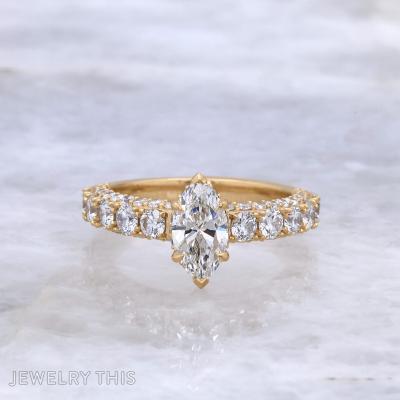
This breathtaking 14K yellow gold engagement ring is a true masterpiece of light and luxury. ...

This Platinum band is an elegant piece that seamlessly blends classic and modern elements. The ...

White and Yellow gold boxing signet ring with incredible detail. It also includes 4 diamond ...

This ring recreates a piece that had been worn for years before it was lost ...

This platinum ring recreates a family piece that existed only in a handful of photographs. ...

This meaningful white gold ring was created as a celebration of family and new beginnings. ...

This exquisitely crafted 14K yellow gold wedding band is designed with a graceful V-shaped contour, ...

This sterling silver ring wraps the words ‘Hope’ and ‘Faith’ continuously around the band, each ...

This engagement ring was built around a request for a masculine design that still felt ...

This recreated 14k white gold ring perfectly mimics the design of the client’s original ring. ...

Crafted as a heartfelt recreation of a cherished lost piece, this silver band stands elegantly ...



