


Two-Tone Dancer Pendant — Cut-Out Silver and Gold Design
$
Sterling silver, 14k gold plating
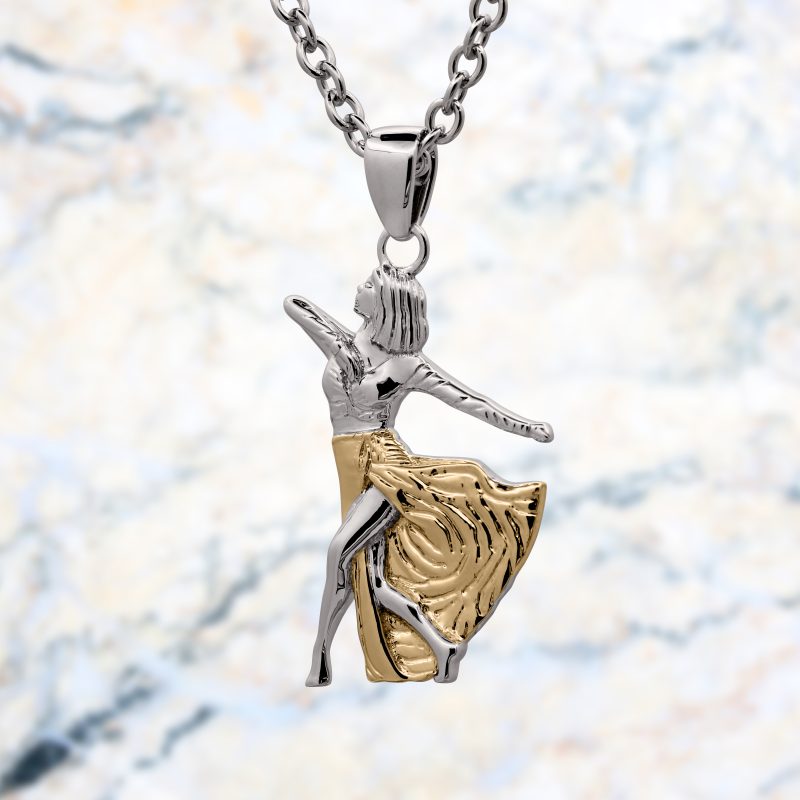
D. wanted a necklace for his girlfriend built around a photo of a dancer in mid-movement — a feminine, everyday piece rather than a literal portrait. Through the design process he pushed for a more artistic, less literal rendering, asking that fine details in the hair and face be softened so the flow of the body and skirt stayed the focal point. The final two-tone piece — silver body, gold-plated skirt — was shipped once he approved the simplified design.
Quick specs
Design type
Primary Metal
Secondary Metal
Primary Stone
Accent Stones
Style
Design Complexity
Intent: Certainty
Size
Pendant approximately 1 inch (25mm); chain 18in Sterling Silver cable, width not specified.
How they made it distinctive
-
01
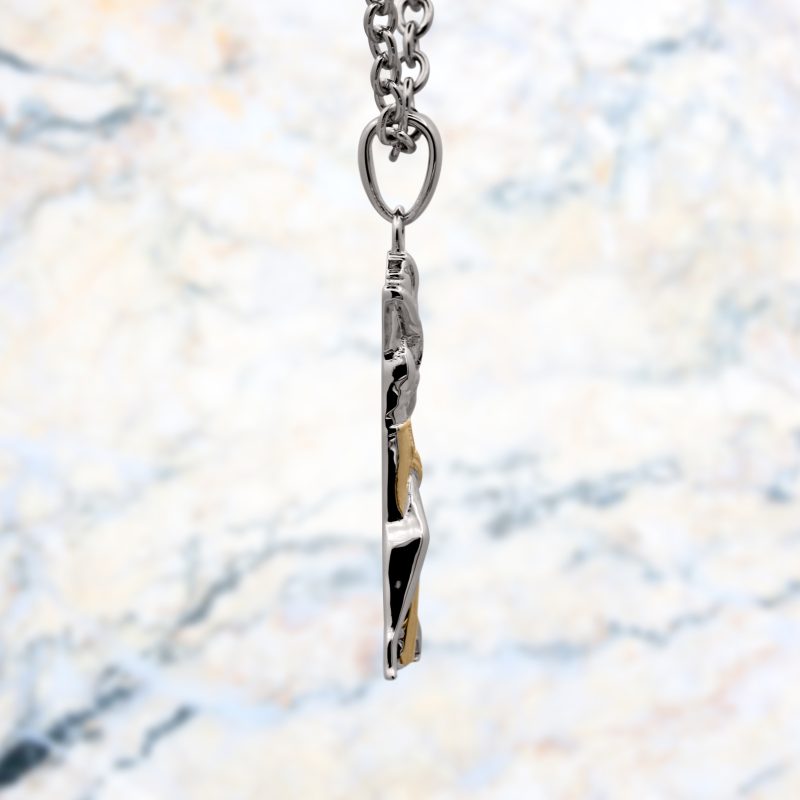
Cut-out, fully dimensional figure design rather than a flat engraved or relief silhouette
-
02
Two-tone finish — polished sterling silver figure with a gold-plated skirt — chosen specifically to keep fine details visually distinct
-
03
Facial features deliberately left in the model rather than smoothed away, intended to read as a hidden detail up close
-
04
Hairline simplified mid-design at the client's request so the flowing lines of the body and skirt remain the visual focus
-
05
Skirt and body plated rather than soldered as separate metals, since the wrap of the fabric around the leg leaves no clean seam to join two cast pieces
How you'd make it yours
Metal: this piece is sterling silver with a 14k gold-plated skirt; a new commission could use solid 10k or 14k gold throughout for a uniform tone
Finish: this piece keeps subtle facial features in the casting; a new commission could smooth these out completely for a more abstract look
Scale: this piece is sized at approximately 1 inch; a new commission could be made larger or smaller depending on the wearer's preference
Chain: this piece uses an 18-inch sterling silver cable chain; a new commission could use a different length or style to match the wearer
One of a kind: this exact pendant was modeled from one client's photo and is not reproduced — a new commission is an original piece inspired by this one, not a copy
Design changes made
The hairline was simplified to remove the dense vertical lines after the client felt they pulled attention from the body's movement, and the facial features were kept (rather than smoothed in the model) at the client's request, since he liked the idea of them becoming a near-hidden detail after polishing.
Who this is for
This piece is for someone who wants jewelry with real sculptural presence rather than a flat emblem or simple pendant — something that still reads as artistic and a little abstract rather than a literal portrait. It suits someone drawn to movement and form as the subject, who wants a piece they can wear daily without it feeling delicate or plain.
How it's made
Once the final design was approved, the model was 3D printed in wax and attached to a wax tree inside a flask. The flask was invested in plaster and fired in a kiln to burn out the wax, leaving a hollow mold. Molten sterling silver was then cast into that mold under pressure, producing the raw pendant in its cut-out dancer form, which was reviewed first as a photopolymer resin print before casting to confirm the proportions and profile.
After casting, the piece was cleaned, polished, and finished to a bright luster across the silver body, arms, legs, and face. The skirt section was then masked and gold plated separately, creating the two-tone contrast between the polished silver figure and the warmer gold-toned fabric. The facial features were left in the model rather than smoothed out, since fine detail at this scale softens naturally during polishing.
Key note
Because the dress wraps around the leg with no clean seam, the two colors on this piece come from masked gold plating over one cast silver form rather than from soldering two separately cast metals together.
Pricing guidance
A sculptural cut-out figural pendant with two-tone finishing sits in the mid range for custom pendant work. Most of the cost comes from the 3D modeling time required to translate a photo into a dimensional, cut-out figure, plus the extra finishing step of masking and plating a second color onto one cast piece. Metal choice is the biggest lever on price from there.
Moves price up ↑
- ↑ Upgrading from gold-plated silver to solid 14k or 18k gold throughout
- ↑ Increasing the pendant size beyond 1 inch, which increases metal weight and modeling complexity
- ↑ Adding more fine sculptural detail (visible facial features, individual hair strands) that requires additional hand-finishing
- ↑ Casting the two color sections separately in solid metals and soldering them, where the design allows a clean seam
- ↑ Choosing a heavier chain gauge or a solid gold chain instead of silver
Moves price down ↓
- ↓ Reducing the pendant to a smaller size, such as 3/4 inch
- ↓ Simplifying the figure further into a more abstract or flatter silhouette with less dimensional relief
- ↓ Choosing a single metal finish rather than a two-tone plated design
- ↓ Selecting a lighter chain style
- ↓ Smoothing out fine details (face, fingers) earlier in the design phase to reduce modeling time
Questions people ask
Gold plating is a thin layer of gold applied over the base metal, in this case sterling silver, and it is not permanent. With daily wear it will gradually show signs of wear, especially on areas that experience more friction or contact. Most people find a well-applied plating holds up for one to two years of regular wear before it starts to fade noticeably. Re-plating is a standard jewelry service and can restore the original color when needed.
Yes. The process starts with a 2D photo as reference, which a design team converts into a 3D digital model that captures the pose, proportions, and key details of the original image. That model is refined through a render review process where you can request changes — simplifying or adding detail — before anything is cast. The final 3D file is what gets printed in wax and cast into metal.
Very fine details like eyes, lips, and individual fingers are difficult to preserve through the casting and polishing process, especially at a small pendant scale. The metal itself has grain limitations, and polishing — which is necessary to achieve a finished look — tends to soften the sharpest, smallest details first. Designers can choose to smooth these details out in the digital model ahead of time, or leave them in knowing they will read as a subtler, almost hidden feature once the piece is finished. Either approach is a valid design choice depending on the look you want.
A cut-out, dimensional figural pendant with two-tone finishing sits in the mid range for custom pendant work. The primary cost driver is the 3D modeling and design time needed to translate a photo into a sculptural, cut-out form, along with the extra finishing step required to mask and plate a second metal color onto one piece. Metal choice, from gold-plated silver up to solid gold, is the variable that shifts the price the most.
In some designs, two sections can be cast separately in different solid metals and then soldered together, which avoids plating altogether. This only works when the design has a clean structural seam between the two sections. When a design has interlocking or wrapping elements with no clear separation point, plating one cast piece in a second color is the more practical approach, since there's no clean line to solder along.
The design phase for a piece like this typically takes about a week, during which a photorealistic render is produced and refined based on feedback. Once the design is approved, production — including 3D wax printing, casting, polishing, and plating — generally takes another three to four weeks. A resin or wax preview of the model may be shared partway through so you can see the piece's form before it's cast into metal. Total turnaround from approved design to finished piece is usually around four to five weeks.
A cast figural pendant like this is made at a fixed size and isn't designed to be resized the way a ring is, since changing its scale would require remodeling and recasting. The chain it hangs from, however, is easy to swap or adjust independently, so length and style can be changed at any time without affecting the pendant itself. If you want a different size pendant, that's a design decision made before casting rather than an adjustment after.
Common options for a piece like this range from gold-plated sterling silver on the more accessible end, up to solid 10k or 14k gold on the higher end. Sterling silver with gold plating lets a design use two visual colors affordably, since the plating can be applied selectively to just one section. Solid gold throughout, or two solid metals soldered together where the design allows it, both cost more but offer a different look and don't require re-plating over time.
Explore Similar Creations
Every masterpiece starts with a spark. Explore how our clients raw ideas - sketches, heirlooms, inspirations - were transformed into bespoke works of arts.
This sterling silver pendant features a unique cut out four leaf clover style design. The ...
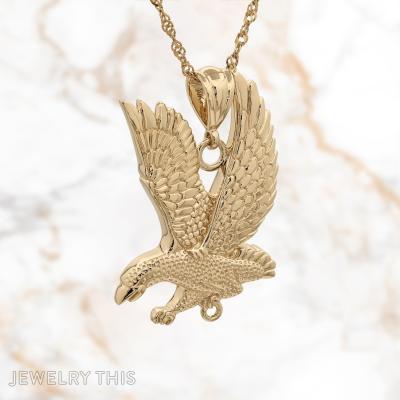
This 10k yellow gold pendant depicts an eagle in flight, wings fully spread and rendered ...

This exquisite 14k yellow gold custom logo pendant is a true masterpiece. Encrusted with sparkling ...

This sterling silver custom pendant was created to cherish the memory of the client’s beloved ...

This 10k yellow gold pendant was built around a client-provided image, translated into a raised, ...

Expertly crafted in lustrous 14k yellow gold, this custom pendant features a charming cutout design ...

Crafted with meticulous attention to detail, this pendant was created in both gold and sterling ...

Honor sporting legacy with our 1.5-inch silver pendant, shaped like the number 28. Encircled by ...

This custom sterling silver pendant is an elegant piece with a minimalist design that carries ...

This custom-made pendant is a truly unique piece of jewelry that perfectly blends technology and ...

This beautiful custom pendant is crafted from sterling silver and set with a quartz crystal, ...

Sterling silver firebird pendant featuring black and red enamel detail. Pendant: 1 inch in size. ...