


Star of David Sailboat Pendant in Enamel Silver
$$
Sterling silver, rhodium plating
A client came to us wanting a pendant for her father that combined a Star of David with a sailboat silhouette. The smaller open areas of the design had to be enlarged and thickened to survive casting without losing the look, so the piece grew from a planned 1 inch to 1.5 inches to keep every line intact. When she saw the finished piece she wrote: 'It's magnificent!' and arranged overnight shipping so her father could have it before a trip.
'IT IS PERFECT!!!' — on seeing the first render
'It's magnificent!' — on delivery
Quick specs
Design type
Primary Metal
Primary Stone
Accent Stones
Design Complexity
Intent: Certainty
Size
Pendant approximately 1.5 inches. Cut-out and solid combination design with recessed matte-finish background sections.
How they made it distinctive
-
01
Star of David formed directly from the sailboat's mast and rigging lines rather than added as a separate overlapping shape
-
02
Size increased from 1 to 1.5 inches specifically to keep the finest cut-out lines structurally sound through casting
-
03
Blue enamel reserved for the sail panels only, leaving the rest of the design open and see-through
-
04
Recessed matte-finish background used to contrast with the polished outline without closing off the open sections
-
05
Combines a personal passion (sailing) with a family faith symbol in a single unified silhouette rather than two separate charms
How you'd make it yours
Enamel color: this piece uses a deep blue on the sails; a new commission could use any enamel color or a different accent placement
Metal: this piece is sterling silver with rhodium plating; the same cut-out design language works in 10k or 14k white gold
Size: this piece is 1.5 inches to preserve fine linework; a new piece would be sized to its own design and wearer preference
Background finish: this piece uses a recessed matte background; a new commission could use a fully solid or fully open design instead
One of a kind: this exact pendant was designed for one client's father and is not reproduced — a new commission is an original piece inspired by this one, not a copy
Design changes made
The design was enlarged from 1 inch to 1.5 inches so the smaller cut-out areas could be cast with thicker lines while still reading as open, see-through sections. The client also chose blue enamel sails against an otherwise open silver frame rather than a fully solid background.
Who this is for
This piece is for someone who wants to combine more than one part of their identity — faith, heritage, a hobby, a passion — into a single symbol rather than wearing them separately. It suits a gift-giver who has a specific visual idea already in mind and wants a design team to help make it structurally real without losing what made it personal.
How it's made
Once the final design was approved, the team built a 3D CAD model and printed a resin version on a 3D printer to confirm the geometry before committing to metal. The resin model was shared with the client for a look at the piece's form ahead of casting. That model was used to produce a wax version, which was invested in plaster and burned out in a kiln to leave a hollow mold, and molten sterling silver was then cast into the mold under pressure.
After casting, the piece was cleaned and polished, with the open cut-out sections and fine linework carefully finished by hand to keep the geometric pattern crisp. The recessed background areas were given a matte finish to contrast with the polished outline, and the sail sections were filled with blue enamel last, since enamel is applied only after all other metalwork and polishing is complete.
Key note
The pendant was enlarged from 1 to 1.5 inches specifically because thinner cut-out lines at the smaller size could not survive the casting process without losing their open, see-through appearance.
Pricing guidance
A cut-out enamel pendant combining two overlapping symbolic motifs sits toward the upper end of the mid range for pendant work of this complexity. Most of the added cost comes from the fine hand-finishing required on open linework and the enamel application, which is a separate production step from the casting itself. Size and the amount of enamel coverage are the biggest variables from there.
Moves price up ↑
- ↑ Increasing the pendant size further to accommodate even finer cut-out detail
- ↑ Adding enamel color to additional sections beyond the sail panels
- ↑ Upgrading from sterling silver to 10k or 14k white gold
- ↑ Adding a two-sided design with engraving or detail on the back
- ↑ Using multiple enamel colors instead of a single hue
Moves price down ↓
- ↓ Simplifying the cut-out pattern to fewer, larger open sections
- ↓ Reducing the pendant to a smaller overall size where the design allows it
- ↓ Choosing a solid matte or polished background instead of enamel fill
- ↓ Limiting enamel to a single small accent area rather than the full sail shapes
- ↓ Omitting the cut-out element in favor of a solid silhouette design
Questions people ask
Yes, combining two meaningful symbols into a single overlapping design is a common custom request. The key design challenge is making sure both symbols remain visually readable once merged, especially with cut-out or open-line designs where shared lines do double duty. It usually takes one or two rounds of sketch revisions to get the proportions right so neither symbol gets lost in the other. A 3D render is shared before production so you can confirm both symbols are still clearly recognizable.
Cut-out or open-line metal designs have a physical limit on how thin a line can be and still survive the casting process intact. If a design has very fine linework at a small size, those thin sections can warp, fill in, or break during casting and finishing. The usual fix is to either thicken the lines, which can blur fine detail, or increase the overall size of the piece so the lines can stay thin in proportion while being thick enough in absolute terms to cast reliably. This is a structural consideration, not a stylistic one.
Sterling silver pieces are solid .925 silver, not plated silver underneath a different base metal. However, most sterling silver jewelry, including pendants like this one, receives a rhodium plating on top of the silver to maintain a bright white finish and resist tarnishing. Over time and with wear, rhodium plating can gradually fade and may need to be reapplied by a jeweler. The silver itself does not disappear — only the rhodium layer wears down.
Enamel is a colored glass-like coating fused or applied to a metal surface to add solid color to a design, commonly used in cut-out or outlined pieces where only part of the design should be colored. It is applied as one of the last steps in production, after all casting, polishing, and metal finishing is complete, because the enamel surface can be damaged by later mechanical work. Well-applied enamel holds up well to normal daily wear, though like any coating it can chip if struck hard against a surface. Avoiding harsh impacts and excessive solvents will keep the color looking its best.
A pendant combining cut-out metalwork with enamel detailing typically falls toward the upper end of the mid-range for custom pendant pricing. The main cost drivers are the hand-finishing time required for fine open linework and the separate enamel application step, both of which add labor beyond a standard solid pendant. Overall size and how much of the design is enamel-filled versus open metal are the two factors that move the price most within that range.
A custom pendant that includes enamel work typically takes around four to six weeks once the design is finalized and approved, which is longer than a standard metal-only pendant. The process starts with a sketch, moves to a 3D CAD model and photorealistic render for approval, then into production, where a wax or resin model is cast in metal before finishing and enamel application. Enamel adds extra time because it is a distinct production step that happens only after all other metalwork is complete.
Yes, a cut-out enamel pendant design can generally be produced in gold as well as silver, most commonly 10k or 14k white gold to keep a similar bright tone to rhodium-plated silver. Gold will increase the cost relative to sterling silver due to material cost alone, independent of the design's complexity. The enamel application process and the structural considerations around thin cut-out lines apply the same way regardless of which metal is chosen.
A photorealistic render is a very close approximation of the finished piece, but some minor variation between the render and the final piece is normal and expected. Enamel colors in particular can shift slightly in tone depending on the batch and how the light catches the glass-like surface compared to a digital rendering. Metal finishes can also appear slightly different in person due to lighting and the reflective properties of polished metal versus a rendered image. These are small, expected variations rather than errors in production.
Explore Similar Creations
Every masterpiece starts with a spark. Explore how our clients raw ideas - sketches, heirlooms, inspirations - were transformed into bespoke works of arts.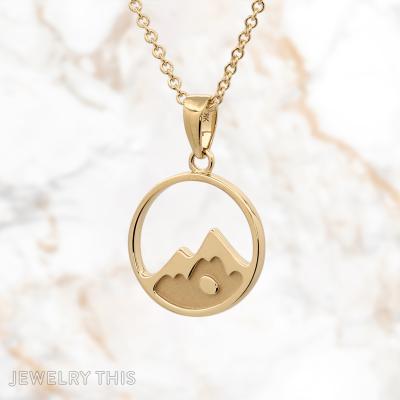
This pendant frames a mountain range and rising sun within an open gold circle, cast ...

This elegant silver cross pendant is a heartfelt birthday gift, thoughtfully crafted by a client ...

This pendant translates a real shell into a wearable keepsake, cast in 14k yellow gold ...

Crafted with meticulous attention to detail, this custom initial pendant exudes elegance and sophistication. Made ...

Celebrate corporate identity with our 1-inch double H pendant, a business logo in resplendent 14kt ...

This sterling silver dog tag-shaped pendant features a beautifully detailed scene commemorating a beloved woman. ...

This custom pendant celebrates the successful completion of the first year of a business. Crafted ...

This sterling silver pendant is a testament to personal identity, featuring a unique personalized logo. ...

This gorgeous pendant was made for a husband’s birthday and anniversary by his wife. The ...

Crafted in radiant 10K yellow gold, this pendant features cursive script that spells out “Ling ...

Celebrate love and symbolism with this exquisite custom pendant, crafted in sterling silver with a ...

This exquisite 14k yellow gold pendant was created to commemorate a 21st birthday. The pendant ...



