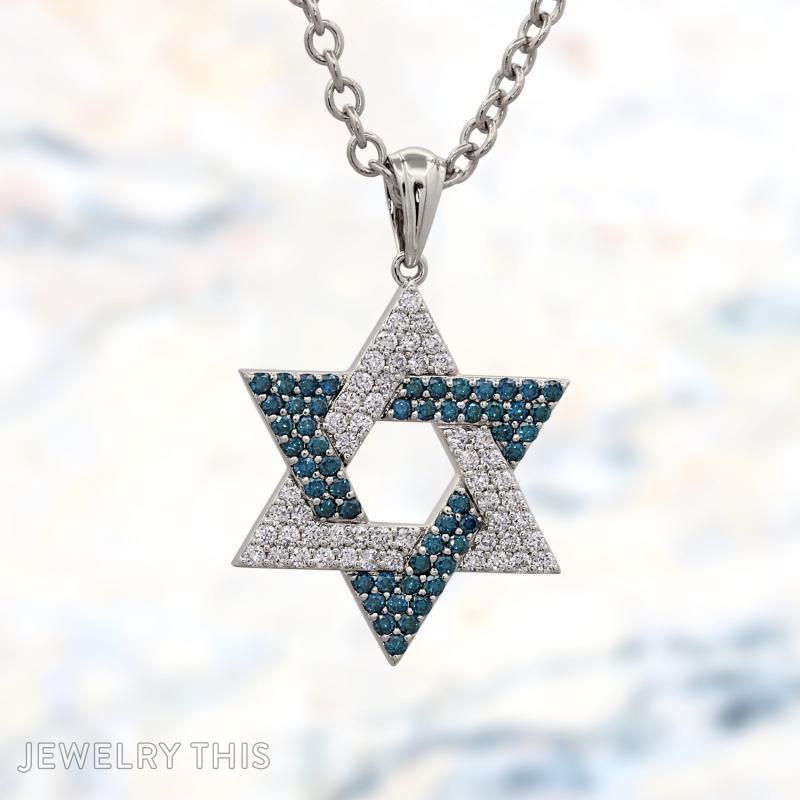
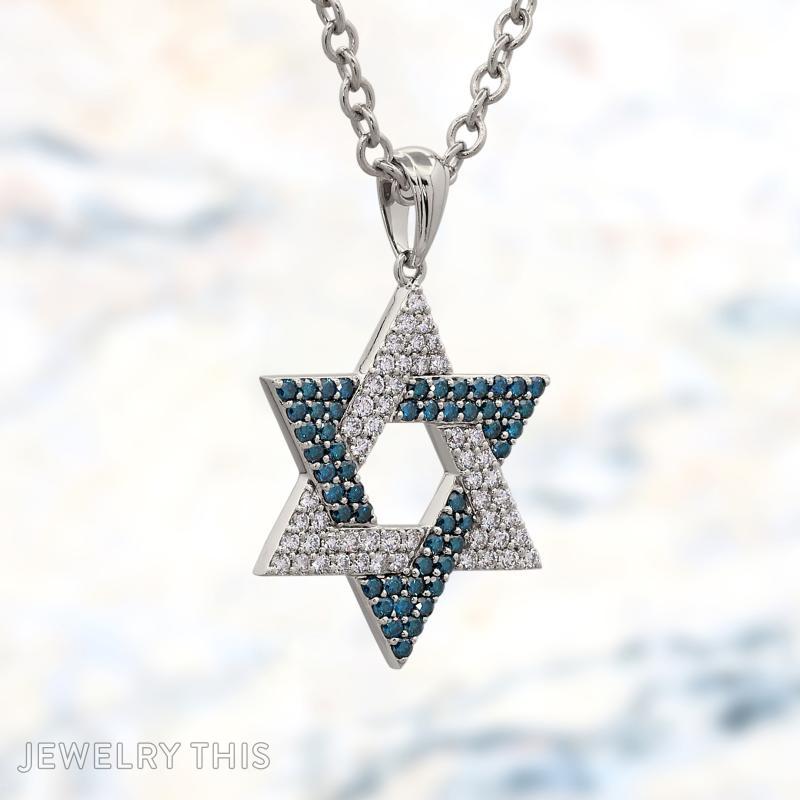
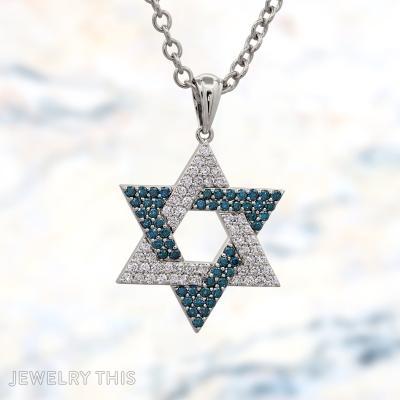
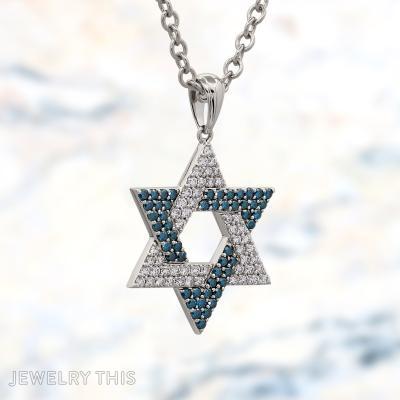
Star of David Pendant in White Gold with Blue Diamonds
$$$$
14k white gold, natural diamonds, natural heat-treated blue diamonds
A client wanted a Star of David pendant with blue and white diamonds tracing its two triangles, working from a reference photo to get the scale and stone layout right. The design took two attempts to get the proportions and stone count right at the requested size, and he chose the version that balanced the look he wanted with the budget he had in mind. When it arrived, he wrote simply: 'It looks great.'
'Thank you! Looks great' — on delivery
Quick specs
Design type
Primary Metal
Shape / Cut
Primary Stone
Accent Stones
Design Complexity
Intent: Certainty
Size
Pendant approximately 25mm (1 in) x 25mm (1 in). Two-row design, 102 stones, 1.75-2.25 ct total weight.
How they made it distinctive
-
01
Two interlocking triangles set in contrasting stone colors — colorless diamonds on one, royal blue on the other — to visually separate the two shapes of the Star of David
-
02
Heat-treated natural blue diamonds chosen over lab-grown, since lab-grown stones cannot yet replicate this range of treated diamond color
-
03
Two full design versions were modeled at the requested 1-inch size to let the client compare stone count and cost before committing
-
04
Sized to wear on the client's own existing chain rather than a new one, keeping the design focused on the pendant itself
-
05
102 individually hand-set round diamonds across both triangles, all set by a single jeweler
How you'd make it yours
Stone color: this piece uses royal blue heat-treated natural diamonds; a new commission could use a lighter blue shade or a different colored stone entirely
Stone origin: this piece uses natural diamonds throughout; a new commission could use lab-created stones for a lower-cost equivalent look
Metal: this piece is 14k white gold; the same pave pattern works in yellow or rose gold
Row count: this piece uses a two-row stone layout; a new commission could use a single row or a denser three-row version
One of a kind: this exact pendant was designed for one client and is not reproduced — a new commission is an original piece inspired by this one, not a copy
Design changes made
The original reference photo suggested a larger pendant than the requested 1-inch size could support, so two versions were modeled — a two-row design with larger stones and a three-row design with more stones and higher stone count. The client selected the two-row version and natural diamonds over lab-created after comparing carat weight and stone count between the options.
Who this is for
This piece is for someone who wants a religious or cultural symbol rendered as a genuine statement piece, not a small everyday charm. It's especially right if you want the meaning of the symbol to be visually reinforced by the design itself, using contrasting stone colors to separate its interlocking shapes rather than a single uniform setting.
How it's made
Once the design was finalized, a 3D-printed wax model was produced and shown to the client as a resin preview before casting. The model was attached to a wax tree, invested in plaster, and fired in a kiln to burn out the wax and leave a hollow mold. Molten 14k white gold was then cast into the mold, cooled, and extracted for finishing.
After casting, the piece was cleaned and polished to bring up the white gold finish across the whole pendant. The 102 round diamonds were then hand-set into the pave settings along both triangles by a single jeweler, with the colorless stones set along one triangle and the royal blue stones along the other to keep the two shapes visually distinct. The piece was recast once during finishing to meet quality control before final polishing.
Key note
The blue diamonds are natural diamonds that have been heat-treated to reach their royal blue color, since untreated natural blue diamonds in this color depth are prohibitively rare.
Pricing guidance
A pave-set Star of David pendant with natural colored and colorless diamonds sits toward the higher end of custom pendant pricing, largely because of the stone count and hand-setting labor involved. At this scale, most of the cost comes from the number of stones being individually set rather than the metal itself. Choosing lab-grown stones or reducing stone count are the two levers that move the price most.
Moves price up ↑
- ↑ Choosing natural fancy-color diamonds over heat-treated natural diamonds, where available
- ↑ Adding a third row of stones, which increases both stone count and setting labor significantly
- ↑ Upsizing the pendant beyond 1 inch, which requires larger stones or additional rows to fill the space
- ↑ Selecting higher clarity grades for the colorless diamonds
- ↑ Adding a matching chain in the same metal rather than using an existing chain
Moves price down ↓
- ↓ Switching the colorless diamonds to lab-created rather than natural
- ↓ Switching the blue diamonds to a lab-created or simulated alternative
- ↓ Reducing the pendant size below 1 inch, which reduces both stone size and count
- ↓ Using a single row design instead of two interlocking rows of stones
- ↓ Choosing a lower clarity grade for the small pave stones, which is not visible at this stone size
Questions people ask
Yes, they are natural diamonds that have been heat-treated to achieve a royal blue color. Completely natural, untreated blue diamonds in this depth of color are extremely rare and would be priced far beyond typical custom jewelry budgets. Heat-treating a natural diamond to enhance or add color is a standard and widely accepted practice in the industry. The treated stones look identical to the eye as an untreated stone of the same color would.
Technically yes, but it would require redesigning the entire pendant. Diamonds are available in very fine size increments, from well under 1mm up to 3mm and beyond, which lets a pave design fit smoothly around a curved or angled outline. Sapphires are typically limited to a small number of fixed sizes, like 1.25mm or 1.5mm, so substituting them would force a different stone layout. In most cases the savings from switching to sapphire would be minimal relative to the redesign required.
A two-row pave design at roughly one inch across typically uses just over 100 small round diamonds. Every stone is set individually by hand rather than in bulk, which is why stone count has a larger effect on price than most people expect. For a piece this size, hand-setting alone can take a meaningful portion of the total production time. A three-row version of the same design can more than double the stone count.
A pave Star of David pendant with natural colored and colorless diamonds sits toward the higher end of custom pendant pricing. The main driver is the number of individually set stones rather than the gold itself, so cost scales up quickly with stone count and size. Switching to lab-created diamonds or choosing a single row of stones instead of two are the most effective ways to bring the cost down. Natural fancy-colored stones, larger sizes, or additional rows all push the price higher.
Lab-created and natural diamonds are chemically and visually identical, so at the small sizes used in a pave design, there is no visible difference to the naked eye. The primary difference is cost: lab-created stones are typically less expensive than natural stones of comparable color and clarity. For colored stones specifically, lab-grown versions currently cannot yet replicate the same range of treated colors available in natural diamonds. Many clients choose lab-created for the colorless stones while keeping natural for a specific color effect.
The process typically takes about one week for design and approval, followed by three to five weeks for production once the design is finalized. Sourcing colored diamonds can add time if a specific shade needs to be located before setting begins. A resin or wax model is usually shown to the client partway through so they can see the piece before it's cast in metal. Occasional quality control steps, like a recast, can extend the timeline by a week or so.
Yes, the same design works in yellow gold or rose gold without any change to the stone layout. White gold was chosen here to keep the focus on the diamonds rather than warm metal tones competing with the stone colors. Rose or yellow gold would shift the overall look but would not require any redesign of the pave pattern itself. Metal choice is one of the more flexible elements of this particular design.
Not necessarily. In this case, the pendant was designed to be worn on the client's own existing chain, so no chain was included in the design or price. Most pendant designs are sized with a standard bail that fits common chain widths, but if a wider or thicker chain is wanted, the bail opening can be adjusted during design. It's worth confirming chain width before the piece is cast if pairing it with a specific existing chain.
Explore Similar Creations
Every masterpiece starts with a spark. Explore how our clients raw ideas - sketches, heirlooms, inspirations - were transformed into bespoke works of arts.
Elegantly captured in flight, this captivating pendant takes the form of a majestic owl with ...

Celebrate the beauty of love with our silver oval pendant, a wearable tribute to heartfelt ...
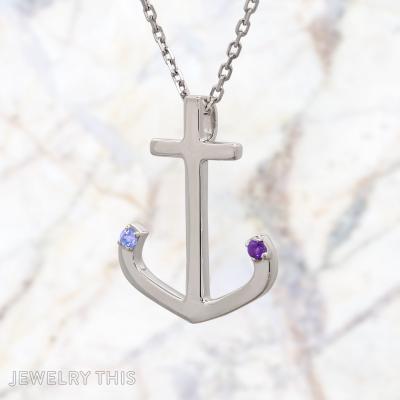
This pendant is a meaningful and symbolic wedding gift. Shaped as an anchor, it represents ...


This pendant featuring abstract elements inspired by Croatian heritage, blending vibrant colors and distinctive patterns. ...
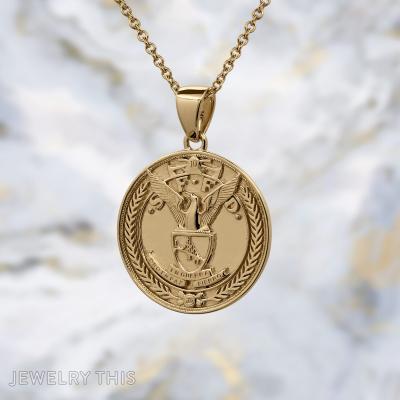
A daughter’s love for her father shines through this meaningful gift. This 1-inch pendant features ...
This pendant began as the star motif from an existing ring, rebuilt as a stand-alone ...

This custom pendant features a distinctive panda logo adorned with a crown, meticulously crafted to ...

Sterling silver pendant in shape of spinning wheel. Detailed with red enamel. Pendant: .75inches pendant ...

This custom pendant features the initials “OB” elegantly intertwined in a modern style, showcasing a ...

This unique minimalist reindeer necklace was created with 14k white gold head and 14k yellow ...