


Praying Hands Medallion Pendant in 10k Gold
$$$
10k yellow gold
A wife wanted a Christmas gift for her husband — a man she described as 6'4" and not suited to anything dainty — combining praying hands on one side with the serenity prayer on the other. After approving the first render, she asked for the medallion to be sized up twice, from a quarter-sized coin to a full 1 1/8 inches, so it would feel substantial on him. When it arrived in time for Christmas, she wrote: 'It is so beautifully done.'
'I LOVE IT!' — on seeing the first render
'It is so beautifully done.' — on delivery
Quick specs
Design type
Primary Metal
Primary Stone
Accent Stones
Design Complexity
Intent: Certainty
Size
Pendant 1 1/8 inch (28.6mm) diameter. Bail fits up to 4mm chain. Engraved on back.
How they made it distinctive
-
01
Sized at 1 1/8 inches specifically because the recipient is 6'4" and the client did not want anything dainty
-
02
Dual finish zones — sandblasted texture behind the praying hands, high polish on the hands and bezel rim — for contrast on a single face
-
03
Full serenity prayer engraved in block capital lettering across the entire back for legibility at this scale
-
04
Size was adjusted twice after the initial render to match the proportions of a medallion the recipient already owned
-
05
Bail built to fit a chain up to 4mm, keeping the pendant as the visual focus rather than a heavy chain
How you'd make it yours
Size: this piece is 1 1/8 inches; a new commission could be made smaller or larger depending on the wearer's frame
Metal: this piece is 10k yellow gold; the same design works in 14k or 18k yellow gold
Engraving: the back of this piece carries the serenity prayer; a new commission could carry a different prayer, verse, or short phrase
Finish: this piece uses a textured background with polished hands and rim; a new commission could use an all-polished or all-matte finish instead
Chain: this piece has a bail sized for up to a 4mm chain; a new commission's bail can be sized to the wearer's preferred chain width
One of a kind: this exact medallion was sized and finished for one recipient and is not reproduced — a new commission is an original piece inspired by this one, not a copy
Design changes made
The medallion size was increased in two stages — first from roughly 1 inch to 1.5 inches, then adjusted down slightly to 1 1/8 inches to match a reference medallion the client's husband already owned — so the final proportions would suit his larger frame.
Who this is for
This piece is for someone looking for a faith-based gift with real physical presence — not a small or delicate medallion, but one substantial enough to anchor a chain on a larger frame. It suits a recipient who wants to carry a meaningful prayer with them daily, worn front and back rather than tucked away.
How it's made
The approved design was first produced as a 3D-printed wax model, attached to a wax tree, and invested in plaster inside a flask. The flask was fired in a kiln to burn out the wax, leaving a hollow mold, and molten 10k yellow gold was cast into that mold under pressure to produce the raw medallion. After cooling, the piece was removed from the mold and cleaned up in preparation for finishing.
The front face was finished in two zones: the recessed background behind the praying hands was given a sandblasted, textured surface, while the hands themselves and the surrounding bezel rim were brought to a high polish for contrast. The reverse side was polished smooth and then engraved with the full serenity prayer in block lettering, a sequence that keeps the engraving crisp against a flat, reflective surface.
Key note
The textured background on the front is sandblasted specifically to contrast with the high-polish praying hands and rim, rather than being a flat finish applied to the whole face.
Pricing guidance
A large engraved medallion pendant like this sits in the mid range for custom pendant work, with cost driven primarily by the metal weight at this scale rather than by stone cost, since there is no center stone. Moving up in size or karat increases the gold weight significantly, which is the main lever on price for a solid medallion of this type. Chain cost is typically a separate line item on top of the pendant itself.
Moves price up ↑
- ↑ Increasing the medallion diameter beyond 1 1/8 inches, which adds gold weight disproportionately
- ↑ Upgrading from 10k to 14k or 18k gold
- ↑ Adding a center stone or stone accents to the front face
- ↑ Choosing a thicker chain (6mm+) in matching gold rather than a lighter chain
- ↑ Adding dimensional lettering (3D raised text) instead of flat engraving on the back
Moves price down ↓
- ↓ Reducing the medallion size closer to 1 inch
- ↓ Choosing gold-plated silver instead of solid 10k gold
- ↓ Skipping the chain and using an existing one
- ↓ Keeping the engraving flat rather than 3D-lettered
- ↓ Choosing a thinner bail sized for a standard 2-4mm chain
Questions people ask
This one was made at 1 1/8 inches in diameter, which reads as a substantial, statement-sized medallion rather than a delicate accessory. Medallion pendants in this style typically range from about 1 inch (quarter-sized) up to 1.5 inches or more depending on how bold the wearer wants it to look. Larger sizes use proportionally more metal, which is the main cost driver since there's no center stone. The right size really comes down to the wearer's frame and preference for how much presence they want the piece to have.
Yes, a full prayer or multi-line text can be engraved on the back of a flat medallion pendant, though legibility depends on the size of the piece and the length of the text. A longer passage like a full prayer generally needs a medallion of at least an inch or more in diameter to stay readable in a reasonable font size. Block capital lettering tends to read more clearly at small scale than script fonts. It's worth confirming the exact wording and line breaks before production since engraving is done after the piece is cast and polished.
10k and 14k gold differ mainly in gold purity — 10k is about 41.7% pure gold while 14k is about 58.3%, with the remainder made up of other metals for strength and color. Both are durable and suitable for daily wear; 10k is actually slightly harder and more scratch-resistant than 14k because of its higher alloy content. The main practical difference for a larger solid medallion is weight-related cost, since 14k costs more per gram than 10k. Visually, the color difference between the two is subtle and not something most people would notice side by side.
A standard custom medallion pendant typically takes around five to six weeks from approved design to completion, covering 3D modeling, casting, and finishing. If sizing changes are requested after the client sees a photorealistic render or resin model, that adds time for a new model and recast. Engraving and the dual-finish treatment (polished versus textured zones) are done after casting as part of the finishing stage. Rush timelines are sometimes possible but depend on the production schedule at the time.
A solid medallion pendant like this is cast at a fixed size, so changing the diameter significantly after casting generally isn't practical — it would require remaking the piece rather than adjusting the existing one. Minor changes, like swapping the bail to fit a different chain width, can usually be done without remaking the whole medallion. If the size needs to change substantially, the typical approach is to produce a new medallion in the correct size and credit the metal value of the original toward it. This is why confirming size with a resin model or sizing template before final production is worth doing.
A sandblasted or textured finish tends to show less visible wear than a high-polish surface because fine scratches blend into the existing texture rather than standing out against a mirror finish. The polished elements — like raised hands or a bezel rim — will show more noticeable surface wear and may need occasional re-polishing to restore their shine. Mixing textured and polished zones on one piece, as seen here, is a common way to keep contrast while concentrating maintenance needs on just the polished areas. Overall, both finishes hold up fine for daily wear in 10k gold.
Yes, an existing medallion or reference piece can be used as a sizing and proportion guide for a new custom design, which is a common request when someone wants a similar feel but in different materials or with personal text added. The existing piece's diameter, thickness, and bail opening are typically measured or compared against a resin model or sizing template to get an accurate match. This approach was used here, where a reference medallion helped settle on a final size for the piece. It's a good option when you like the scale and presence of something you already have but want a fully custom design.
Yes, on a solid medallion a difference of an eighth of an inch is noticeable both visually and in terms of how substantial the piece feels when worn, because it affects the overall proportion and the metal weight. Going from roughly 1 inch to 1 1/8 inches represents a real jump in size for a circular medallion, not a negligible rounding. This is why comparing against a physical reference piece or a printed resin model before final casting is useful — renders alone can make it harder to judge true scale. For anyone unsure, requesting a sizing template or resin trial is a practical way to confirm before the final metal is cast.
Explore Similar Creations
Every masterpiece starts with a spark. Explore how our clients raw ideas - sketches, heirlooms, inspirations - were transformed into bespoke works of arts.
18k white gold celtic cross pendant. Personalized on back with engraving. Pendant: 1.5inches tall. Hanging ...
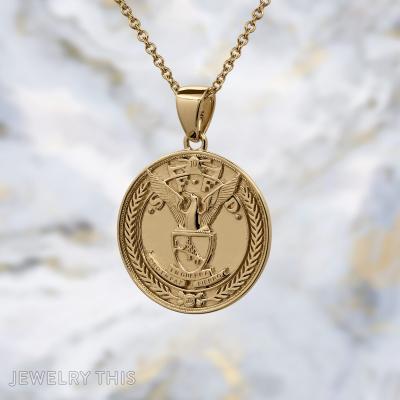
A daughter’s love for her father shines through this meaningful gift. This 1-inch pendant features ...

This pendant takes a client-submitted design — Japanese kanji script — and turns it into ...

A profound expression of heritage and spiritual connection, this custom pendant is a celebration of ...

This cross pendant was rebuilt from one photograph after the original was lost. Cast in ...

Inspired by his girlfriends nickname ‘Snow’ this exquisite 14-karat white gold pendant is shaped like ...

Sterling Silver cut out pendant featuring the number 19. Finished pendant: 1.5 inches tall.

This extraordinary custom jewelry pendant was meticulously handcrafted to capture the allure of mountain landscapes. ...
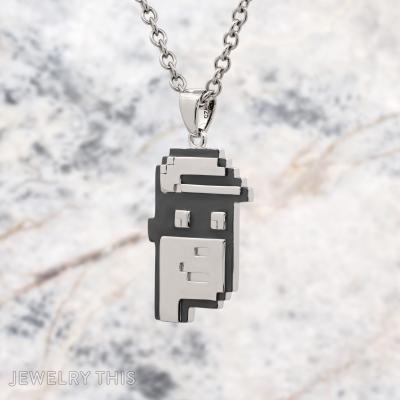
This pendant translates a blocky, pixel-art digital image into a three-dimensional sterling silver piece. The ...

This cross pendant was designed to mirror a meaningful tattoo as closely as possible, combining ...

This pendant takes the shape of a hibiscus flower, rendered in five sculpted petals with ...

Two letter J initials intertwined. This pendant is crafted in white gold and set with ...



