


Elongated Infinity Cross Pendant in 14k Yellow Gold
$$$
14k yellow gold
A returning client wanted a cross pendant designed to closely match a reference photo she'd found, with one adjustment: making the proportions slimmer and more elongated so it read clearly as a religious cross rather than looking boxy. She approved the first render without changes, writing simply, 'that looks great!'
'that looks great!' — on seeing the first render
Quick specs
Design type
Primary Metal
Primary Stone
Accent Stones
Design Complexity
Intent: Certainty
Size
Pendant approx. 26mm long; original reference piece approx. 21mm wide. Chain included.
How they made it distinctive
-
01
Open ribbon-like twisted form rather than a solid flat cross silhouette, giving it a more delicate, continuous look
-
02
Proportions specifically adjusted to be slimmer and more elongated than the reference design, at the client's request, so it reads clearly as a cross rather than boxy
-
03
Integrated top loop doubles as the bail, so the chain runs directly through the piece with no separate soldered attachment
-
04
Uniform high-polish finish across the entire twisted form, since there are no separate matte or textured zones to distinguish
How you'd make it yours
Metal: this piece is 14k yellow gold — the same open ribbon design works in white gold, rose gold, or platinum
Karat: this piece is 14k — a new commission could use 10k for durability or 18k for richer color
Size: this piece is approximately 26mm long — a new piece is sized to its own wearer's preference
Chain: this piece uses a fine rope chain — a new commission could pair the same pendant with a cable or box chain instead
Engraving: the back of a new pendant could carry a short personal inscription
One of a kind: this exact pendant was designed for one client and is not reproduced — a new commission is an original piece inspired by this one, not a copy
Design changes made
The client asked for the cross to be made slightly longer and slimmer than the reference photo so the silhouette would read as a clear religious cross rather than a boxy shape. This proportion adjustment was the only change requested, and the first render was approved without further revisions.
Who this is for
This piece is for someone who wants a cross pendant that feels considered rather than off-the-shelf — someone with a clear picture of a proportion or shape they want corrected from what's available in stores. It suits a person who prefers a minimal, everyday piece with a little unexpected construction detail, like a form that doubles as its own bail, over a heavier or more ornate design.
How it's made
Once the design was approved, the team built a 3D computer model and produced a photorealistic render for the client's review before any metal was committed. After approval, the model moved into production quality assurance, where the design was checked to ensure it was ready for casting. A wax or resin pattern was then created from the finalized model and used to cast the piece in 14k yellow gold using the lost-wax casting method, producing the raw pendant.
After casting, the pendant was cleaned up and polished to a uniform high-shine finish across the entire twisted form, since the open ribbon design has no separate matte or textured zones. The integrated loop at the top doubles as the bail, so the chain was threaded directly through it rather than requiring a separately soldered jump ring or bail attachment. The piece then passed a final quality control check before a fine rope chain was attached and the pendant was shipped.
Key note
The top of the cross's twisted ribbon form functions as its own bail, so no separate loop or jump ring had to be soldered on for the chain to pass through.
Pricing guidance
A simple 14k gold cross pendant like this sits toward the lower end of custom pendant pricing. Most of the cost comes from the labor of modeling and hand-finishing a continuous, open ribbon form in precious metal rather than from the metal itself. Metal karat and any added chain or gemstone detail are what move the price from there.
Moves price up ↑
- ↑ Upgrading from 14k to 18k gold increases the metal cost
- ↑ Adding a diamond or gemstone accent within the twisted form
- ↑ Choosing platinum instead of gold, which is significantly denser and pricier by weight
- ↑ Requesting a heavier gauge or larger overall size for a more substantial feel
- ↑ Adding engraving to the back of the pendant
Moves price down ↓
- ↓ Choosing 10k gold instead of 14k
- ↓ Selecting gold-plated silver instead of solid gold
- ↓ Making the pendant smaller and lighter in overall weight
- ↓ Skipping a custom chain and using a simpler pre-made option
- ↓ Simplifying the twist detail to reduce hand-finishing time
Questions people ask
Yes, proportions like length, width, and how open or slim the arms of a cross appear are all adjustable in the 3D design phase before anything is cast. A render is shared for approval so you can see the exact shape before production begins. Small proportion tweaks, like elongating the vertical arm or narrowing the crossbar, are common and simple to make at that stage. Once the render is approved, the final piece will match those proportions closely.
Yes, 14k gold is a common choice for daily-wear pendants because it balances durability with gold content better than higher karats like 18k or 24k, which are softer. It resists scratching and bending better than higher-karat gold while still looking rich in color. A polished 14k pendant like this can be worn daily for years with only occasional cleaning. It will not tarnish the way sterling silver can over time.
A simple pendant design like this one, in solid 14k yellow gold, generally falls toward the lower end of custom pendant pricing. The majority of the cost is the labor of building the 3D model and hand-finishing the cast piece, not the raw gold weight, since it's a small and relatively simple silhouette. Choosing 10k gold or gold-plated silver instead of solid 14k would bring the cost down further. Adding stones or upgrading to 18k gold would raise it.
The design phase, from deposit to an approved 3D render, typically takes about a week. Once the design is approved and paid to 75%, production including casting, finishing, and quality control generally takes another three to four weeks. Simple designs without gemstones, like an open ribbon cross form, are less prone to production delays than pieces requiring stone setting. Rush timelines are sometimes possible depending on current production capacity.
No, this particular design is built so the top of the twisted ribbon form doubles as its own loop, allowing the chain to run directly through the pendant without a separate bail. This is a design choice rather than a universal feature of all pendants; many pendant designs do require a bail to be added for the chain to pass through. Because the loop is part of the cast piece itself, there's no separate solder joint at that connection point, which is a plus for durability.
Yes, an open ribbon cross design like this translates well to white gold or platinum since the form doesn't rely on yellow gold's color for its effect. Platinum will be noticeably heavier and denser than the same design in gold, and costs more by weight. White gold requires occasional rhodium replating to keep its bright white color over time, while platinum keeps its color naturally. Either metal can be cast using the same lost-wax method used for this piece.
A fine rope-style chain, as used here, complements a slender pendant well because it doesn't overwhelm the delicate open form of the piece. Cable and box chains are also common choices for a similar effect. The chain width matters more than most people expect: too heavy a chain can make a delicate pendant look out of proportion, while too fine a chain may not hold up as well over years of daily wear. The chain is generally selected once the pendant's final size is confirmed.
Because this pendant is a solid cast piece rather than a stackable or stretchable design, resizing after casting is limited and generally not recommended for a piece this size. Length and proportions are best finalized during the 3D render approval stage, before any metal is cast, since that's when adjustments are simplest and don't affect the piece's structural integrity. If you're unsure about scale, a size guide comparing the pendant to common reference objects is typically provided during the design phase. Once cast and polished, this specific design is considered complete.
Explore Similar Creations
Every masterpiece starts with a spark. Explore how our clients raw ideas - sketches, heirlooms, inspirations - were transformed into bespoke works of arts.
This exquisite birthstone cross pendant is a timeless symbol of faith and devotion. Crafted in ...

This bespoke pendant is a heartfelt tribute, crafted in memory of a cherished mother. An ...

This gold pendant is a harmonious blend of elegance and wilderness. Encased in an alluring ...

This custom pendant intricately captures the silhouette of Africa serving as a tribute to its ...
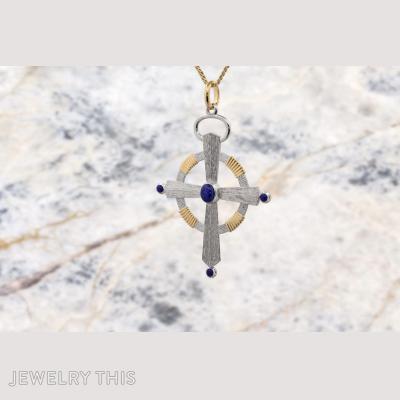
A striking statement cross pendant combining refined craftsmanship and bold design. The piece is crafted ...

This pendant was created as a true reflection of personal passions and love. The one-inch ...

This elegant custom pendant features a sculptural sterling silver fox with stag antlers wrapping upwards ...

This stunning custom jewelry pendant is meticulously crafted in 14k white gold and shaped to ...

This sterling silver pendant is a testament to personal identity, featuring a unique personalized logo. ...

This custom sterling silver logo pendant is a bold statement piece, measuring one inch in ...

This custom pendant is a heartfelt gift created by a client for her partner, who ...

Exuding regal charm and intricate craftsmanship, this custom pendant captures the essence of elegance with ...



