


Double Heart Pendant — White Gold, Amethyst & Diamonds
$$$
14k white gold, natural diamonds, amethyst
D. came to us with a reference photo and a clear idea: a heart pendant with her February birthstone at the center, fully surrounded by diamonds rather than just partially set as in her inspiration image. She approved the first render without any changes, calling it exactly what she was looking for, and chose natural diamonds and a princess-cut chain to complete it in time for Christmas.
'Great, Exactly what I was looking for' — on seeing the first render
Quick specs
Design type
Primary Metal
Shape / Cut
Primary Stone
Accent Stones
Design Complexity
Intent: Certainty
Size
Pendant approximately 1 inch; chain 1.2mm princess-cut diamond-cut link style.
How they made it distinctive
-
01
Double heart outline fully paved with diamonds rather than partially set, per the client's specific request to diversify from the reference photo
-
02
Heart-cut amethyst chosen specifically as the February birthstone, anchoring the piece's personal meaning
-
03
Infinity loop integrated above the heart, adding a second symbolic layer beyond the birthstone itself
-
04
Natural diamonds selected over lab alternatives for the full diamond coverage
-
05
Princess-cut link chain chosen to match the structured, diamond-dense design of the pendant
How you'd make it yours
Center stone: this piece uses a heart-cut amethyst; a new commission could use any birthstone or colored gem in the same heart cut
Diamond type: this piece uses natural diamonds; a new commission could use lab diamonds for the same look at lower cost
Metal: this piece is 14k white gold; the same heart-and-infinity design works in yellow or rose gold
Chain: this piece pairs with a princess-cut link chain; a new commission could pair with a cable or paperclip chain instead
One of a kind: this exact pendant was designed for one client and is not reproduced — a new commission is an original piece inspired by this one, not a copy
Design changes made
Design matched the initial brief without major changes.
Who this is for
This piece is for someone who wants their birthstone to be the center of a complete design, not just a small accent on a plain setting. It's especially right if you want a pendant substantial enough to make a statement on its own, with symbolic layers — a birthstone and an infinity motif — built into one piece.
How it's made
Once the design was approved, the team built a 3D CAD model and 3D-printed a resin version of the pendant — the physical preview shared with the client before any metal was cast. That resin was attached to a wax tree, invested in plaster, and fired in a kiln to burn out the pattern, leaving a hollow mold. Molten 14k white gold was then poured into the mold, cooled, and extracted as the raw pendant.
After casting, the piece was cleaned and polished to bring out the white gold's bright finish, since the entire surface — chain, heart outline, and infinity loop — reads as one continuous polished tone. The heart-cut amethyst was prong-set at the center first to anchor the design, then the diamonds were hand-set in sequence around both heart outlines and up through the infinity loop, finishing with the pave detail that gives the piece its continuous sparkle.
Key note
The amethyst is set before the surrounding diamonds specifically because the center stone establishes the heart's proportions that the diamond outline is then set to follow.
Pricing guidance
A double-halo heart pendant with a birthstone center and diamonds throughout sits toward the higher end of pendant pricing for this complexity level. The main cost drivers are the diamond count required to pave both heart outlines and the infinity loop, plus the choice between natural and lab diamonds. Metal karat and chain style are secondary factors that adjust the price from there.
Moves price up ↑
- ↑ Choosing natural diamonds over lab-created diamonds for the same clarity grade
- ↑ Increasing the diamond coverage to a third outline or larger stones
- ↑ Upgrading from 14k to 18k white gold
- ↑ Adding a more elaborate chain style, such as a thicker link or a designer-inspired chain
- ↑ Increasing the amethyst to a larger carat weight
Moves price down ↓
- ↓ Switching to lab-created diamonds, which look identical to natural diamonds at a lower cost
- ↓ Reducing diamond coverage to a single heart outline instead of a double halo
- ↓ Choosing a simpler chain style at a standard width
- ↓ Using a smaller center stone to reduce overall carat weight
- ↓ Selecting 10k white gold instead of 14k
Questions people ask
Amethyst rates about 7 on the Mohs hardness scale, which makes it reasonably durable for a pendant that isn't subject to the daily knocks a ring experiences. It can still be scratched by harder materials like sand or other gemstones if stored carelessly, so keeping it separate from other jewelry is a good habit. For a pendant worn regularly but not during rough activity, amethyst holds up well for years. It does not require any special daily care beyond occasional cleaning with mild soap and water.
Natural and lab-created diamonds are chemically and optically identical — both are crystallized carbon with the same hardness, brilliance, and fire. The only difference is origin: natural diamonds formed underground over millions of years, while lab diamonds are grown in a controlled setting in weeks. For small pave diamonds surrounding a center stone, the visual difference is not detectable to the eye. Lab diamonds typically cost less than natural diamonds of the same size and clarity grade.
A heart pendant with a birthstone center and two full outlines of diamonds plus an infinity loop sits toward the higher end of pendant pricing because of the diamond count involved. The cost is driven primarily by how many diamonds are needed to cover both heart outlines and whether natural or lab diamonds are chosen. Metal karat and chain choice are smaller factors that adjust the final price from that baseline.
The design phase — sketch, 3D model, and photorealistic render for approval — typically takes about one week. Once the design is approved and production begins, casting, stone setting, and finishing usually take three to four weeks. The total timeline from first approval to a finished, shipped piece is typically four to five weeks, though this can shift slightly depending on gemstone sourcing.
Yes, a heart-cut center stone setting like this one can accommodate other gemstones of a similar size and cut, including sapphire, ruby, or a different birthstone. The setting itself is designed around the heart shape rather than the specific stone, so swapping the gem is a straightforward design change for a new commission. Durability should be considered when choosing an alternative — softer stones like opal need more careful daily wear than amethyst or sapphire.
Pave-set diamonds are held in place by small metal beads or prongs worked into the surface, and when properly set they are secure for years of normal wear. The main risk to pave settings is impact — catching the pendant on fabric or dropping it can bend a prong and loosen a stone. Routine inspection, ideally once a year, lets a jeweler catch a loose prong before a stone is lost. Pendants generally see less wear and tear than rings, so pave settings tend to hold up especially well in this format.
Yes, the heart and infinity design translates well into yellow or rose gold — the diamonds and amethyst will read slightly differently against a warmer metal tone, but the proportions and setting style remain the same. White gold was chosen here for a cooler contrast with the purple center stone, which is a common pairing, but rose gold is also a popular choice with amethyst for a warmer look. The choice is primarily aesthetic rather than structural.
A pendant around one inch in size, like this one, works well with a range of chain styles from a delicate cable chain to a more structured link style such as a princess or paperclip chain. A thicker, more structured chain tends to complement a pendant with this much visual weight, since a very thin chain can look disproportionate under a fuller design. Chain width is largely a personal preference, though 1.2mm to 2mm is a common range for pendants of this size.
Explore Similar Creations
Every masterpiece starts with a spark. Explore how our clients raw ideas - sketches, heirlooms, inspirations - were transformed into bespoke works of arts.
The captivating geometric design of this pendant holds a profound significance for the wearer. Similar ...

This custom pendant is a unique statement piece, crafted from radiant 14k yellow gold. Measuring ...

Expertly crafted in lustrous 14k yellow gold, this custom pendant features a charming cutout design ...

This custom pendant is a beautifully crafted sterling silver key design, making it a symbol ...

Behold this striking custom pendant, a fusion of artistry and emblematic allure. Crafted in gold-plated ...

This yellow gold pendant spells out the name “Blue” in a graceful and flowing cursive ...

This delicate miniature masterpiece, a forever rose, is beautifully crafted in silver and features lab-grown ...

This custom necklace features a stunning centerpiece and personalized details, crafted in yellow gold. At ...

Celebrate the eternal bond of love with our exquisite pendant, where a 14k yellow gold ...
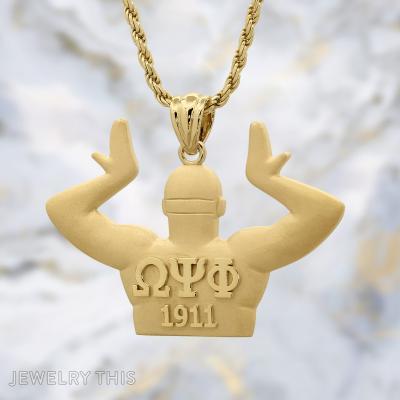
This pendant was designed around a fraternity emblem — a raised 3D figure in the ...
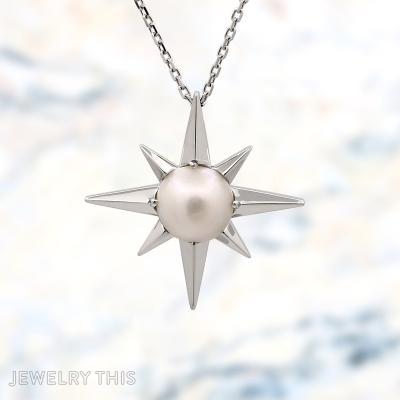
This stunning custom pendant features a striking starburst design crafted in polished silver, beautifully showcasing ...

A family crest pendant with dimensional details on a sandblasted background. The piece was made ...



