


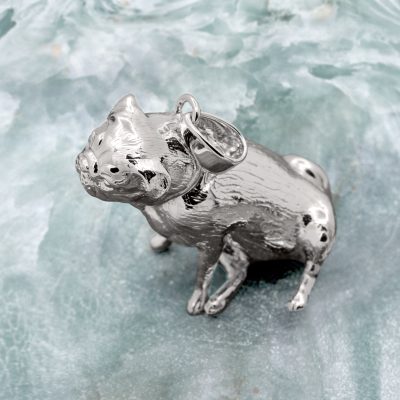
Dimensional Pet Memorial Pendant in 14k White Gold
$$$
14k white gold
A client came to us soon after losing her pug and asked for a fully dimensional pendant capturing her dog's seated pose and the tilted, alert expression she loved most. Through several rounds of photo reference and render feedback — adjusting the stance, the face, and the proportions — the design was refined until both she and her husband recognized their dog in it. When it arrived she wrote that it was very pretty, if larger and heavier than she expected.
'I received it today. It's very pretty. Larger and heavier than I expected.' — on delivery
Quick specs
Design type
Primary Metal
Primary Stone
Accent Stones
Design Complexity
Intent
Intent: Certainty
Size
Pendant approximately 1in (25mm) tall, fully dimensional (3D sculpted, not flat-backed). Pre-finishing metal weight approximately 22 grams.
How they made it distinctive
-
01
Fully three-dimensional sculpt rather than a flat or flat-backed pendant — modeled and finished on all sides
-
02
Seated pose with a tilted head chosen specifically to capture the dog's alert, expressive look the client described
-
03
Standing pose was ruled out during design because protruding legs could scratch the wearer — a practical wearability decision
-
04
Facial proportions refined across multiple rounds of feedback, including a side-view photo, to sharpen the likeness
-
05
Fur texture applied across the body while the face is kept smoother and more polished so the expression reads clearly
How you'd make it yours
Metal: this piece is 14k white gold; the same sculpted design works in yellow gold or sterling silver for a different look or weight
Pose: this piece is seated with a tilted head; a new commission could use a different pose, with standing poses adjusted for wearability
Size: this piece is about one inch tall; a new piece can be scaled up or down, which also changes the metal weight
Finish: this piece contrasts textured fur with a polished face; a new commission could use more or less contrast between zones
One of a kind: this exact pendant was modeled from one client's photographs of her own dog and is not reproduced — a new commission is an original sculpt inspired by this approach, not a copy
Design changes made
The pose changed from standing to seated after the studio flagged that a standing design risked uncomfortable legs against the skin, and the client refined the head tilt and facial proportions across two rounds of photo-referenced feedback. Metal was also switched from an initial yellow gold concept to white gold after the client saw both renders and preferred white.
Who this is for
This piece is for someone who wants a wearable likeness of a specific pet, not a generic dog charm or a flat engraved tribute. It's especially right if you have clear photos to work from and want the finished piece to be recognizable to anyone who knew the animal, with enough dimensional detail to feel like a real portrait rather than an outline.
How it's made
Once the sculpted 3D design was approved, it was printed in wax and attached to a wax tree inside a flask. The flask was invested in plaster and fired in a kiln to burn out the wax, leaving a hollow mold of the dog's form. Molten 14k white gold was then cast into that mold under pressure, producing the raw dimensional pendant once cooled and removed.
After casting, the piece was cleaned and assembled before finishing began. Because the design is fully three-dimensional rather than flat-backed, the fur texture was worked across the body on all sides, while the face was finished smoother and more polished to let the expression read clearly. The bail was fitted and stamped with the karat mark before final polishing.
Key note
The pendant was deliberately designed as a seated rather than standing pose specifically because a standing version's legs would have protruded enough to scratch the wearer's skin during daily wear.
Pricing guidance
A fully dimensional, sculptural pet pendant like this sits toward the higher end for custom pendant work, since the cost is driven primarily by the 3D modeling and metal weight rather than stone cost. Sculptural, all-around pieces use significantly more metal than a flat or relief-style pendant of the same height. Metal choice is the single biggest lever on price at this level of detail.
Moves price up ↑
- ↑ Choosing 14k or 18k gold instead of sterling silver, given the substantial metal weight of a fully sculptural piece
- ↑ Increasing the pendant size beyond about an inch, which increases metal weight disproportionately for a dimensional design
- ↑ Requesting additional hand-detailing on fur texture or facial features beyond the standard finishing pass
- ↑ Adding a matching set (for example, a smaller silver version) to the same order
Moves price down ↓
- ↓ Choosing sterling silver instead of gold for the casting
- ↓ Designing the piece with a flat back instead of fully dimensional on all sides
- ↓ Reducing the pendant size slightly to lower overall metal weight
- ↓ Simplifying the pose to reduce protruding elements like legs or tail that add modeling and casting complexity
Questions people ask
Yes, a fully dimensional pendant can be modeled from photographs of a specific pet rather than a generic breed shape. The process typically starts with a 3D render built from your photos, which you can review and request adjustments to before anything is cast. Multiple rounds of feedback on pose, facial proportions, and expression are normal and expected. The goal is a piece where people who knew the pet recognize it immediately.
A fully dimensional, all-around sculpted pendant uses significantly more metal than a flat or flat-backed design of the same height, because metal fills the entire three-dimensional form rather than just a thin profile. A piece around one inch tall can weigh over 20 grams before finishing, which is substantially heavier than a comparable flat pendant. This weight affects both cost and how the piece feels when worn. It's worth discussing expected weight with your designer before committing to a fully dimensional design.
Both can be cast successfully in a fully dimensional design, but the choice mainly comes down to look and cost rather than durability, since both metals hold fine detail well. White gold has a brighter, more reflective finish and is more durable against daily wear and tarnish than silver. Sterling silver is a common alternative when a client wants a similar look at a different price point, or wants to order a second, less formal version of the same design. Either metal can take the same level of fur texture and facial detail.
A standing pose is possible, but a seated pose is often recommended for a dimensional pendant because protruding legs on a standing figure can scratch the skin or clothing during wear. A seated or curled pose keeps the silhouette more compact and comfortable against the body while still capturing the animal's character. This is a practical wearability consideration, not just a stylistic one. Your designer can show you both options in a render before anything is cast.
The design phase, including the initial 3D render and rounds of client feedback, typically takes about one to two weeks depending on how many adjustments are requested. Once the design is approved, casting and finishing for a dimensional piece like this generally takes four to six weeks. Sculptural, fully-detailed pieces often take a bit longer than flat or simple pendants because of the additional modeling and finishing work. Your studio should be able to give you a more specific estimate once your design is finalized.
A fully dimensional pet pendant sits toward the higher end of custom pendant pricing because of the metal weight and 3D modeling work involved, regardless of which metal is chosen. Precious metal choice is the biggest cost driver — gold options run meaningfully higher than sterling silver for the same design, simply due to material cost at that weight. Pendant size and the amount of fine detail requested also affect the final price. A studio can typically give you a firm cost estimate once the 3D design and size are finalized.
Not necessarily — chain is often sourced separately from the pendant itself, so it's worth confirming this before ordering. For a pendant with meaningful weight, a sturdier chain style such as a thicker cable link, a rope chain, or a box chain around 2mm or more is generally recommended to properly support the piece. A delicate chain may not be substantial enough for a heavier dimensional pendant. Ask your jeweler for chain recommendations based on your pendant's specific weight.
Yes, refining facial proportions is a normal part of the design process for a photo-based pet pendant. Clients commonly request adjustments like a more square nose, a flatter or smoother face, or a different head angle after seeing the first render, often providing an additional reference photo to clarify the request. These changes are typically made to the digital model before anything is cast. Reviewing the design from multiple angles, not just one rendered view, helps catch details that might otherwise be missed.
Explore Similar Creations
Every masterpiece starts with a spark. Explore how our clients raw ideas - sketches, heirlooms, inspirations - were transformed into bespoke works of arts.

Created as a memorial for a beloved brother, this custom pendant serves as a heartfelt ...

This striking pendant is designed to honor a life partner, featuring their initials in a ...

This sterling silver pendant is a unique symbol of an unforgettable moment in life. The ...

Celebrate the roots of love and kinship with this exquisite custom family tree pendant. Crafted ...

Capturing familial heritage, this meticulously crafted pendant adorns the family crest with dimensional detail. Made ...

This custom pendant was crafted to replicate a tantalizing slice of pepperoni pizza. Crafted with ...

This pendant takes a hand-drawn personal mark — a simple heart shape with a face ...

Celebrate the essence of love and elegance with this exquisite custom key pendant. Crafted in ...

Experience a blend of sacred artistry and sentimental significance with our meticulously crafted custom jewelry ...

This custom jewelry pendant features a beautifully crafted sterling silver crescent moon with flowers, hanging ...
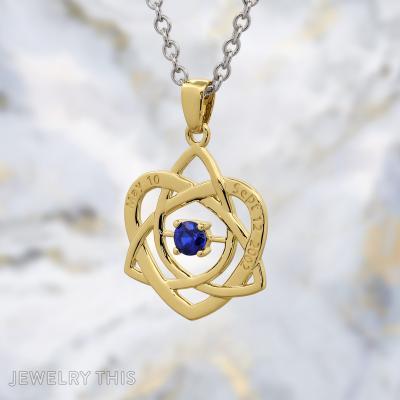
This pendant takes an interlocking Celtic-knot heart design and reworks it in 14k yellow gold, ...



