


Cut-Out Portrait Pendant With Music Note Flourish
$
Sterling silver, black rhodium plating
B. wanted a logo that mattered to her and her husband turned into a pendant he could wear — originally conceived with a small diamond accent, later simplified to fit her budget. The design went through several rounds of careful adjustment, from the part in the hair to how the musical notes flowed around the piece, before she felt it finally matched the image she had in mind. She gave it to her husband on his birthday and wrote: "my husband and I are pleased... the size is just right for him."
'Yes my husband and I are pleased... the size is just right for him.' — on delivery
Quick specs
Design type
Primary Metal
Primary Stone
Accent Stones
Design Complexity
Intent: Certainty
Size
Pendant approximately 1 inch (25.4mm) tall.
How they made it distinctive
-
01
Built directly from a personal logo image rather than a standard catalog design — every element was checked against the client's own reference
-
02
Open cut-out silhouette keeps the piece lightweight despite the layered detail of the portrait and musical notes
-
03
Black rhodium plating applied only to the hair, box, and facial shadow to recreate the contrast seen in the original flat logo
-
04
Bail placed within the music-note cluster rather than centered over the head, for a straighter hang on the chain
-
05
Musical notes redirected to flow upward and away from the head rather than wrapping in a circle, per the client's feedback
How you'd make it yours
Metal: this piece is sterling silver — a new commission in the same design language could use 14k gold or gold plating for a different tone
Stone: this piece has no stone — a new piece could include a small diamond or accent stone, as originally discussed for this design
Plating: this piece uses black rhodium on select areas only — a new piece could apply plating more broadly or use a different plating color
Background: this piece is a cut-out silhouette — a new commission could use a solid background for a sturdier feel
Size: this piece is about 1 inch — a new piece is sized to its own wearer and image source
One of a kind: this exact pendant was designed around one client's personal logo and is not reproduced — a new commission is an original piece inspired by this one, not a copy
Design changes made
The client requested a small diamond in the box early on, then removed it to stay within budget — a material simplification rather than a design addition. The musical notes were adjusted to flow upward and away from the head rather than circling it, and the hair part gap was reviewed for accuracy against the client's reference logo.
Who this is for
This piece is for someone who has a specific image or emblem that means something personal and wants it translated faithfully into a piece that can be worn daily, not just looked at. It's especially right if you're patient with a back-and-forth design process, since matching a flat graphic to a wearable 3D piece often takes a few rounds of careful comparison and adjustment.
How it's made
Once the design was approved, the piece was 3D printed in wax and attached to a wax tree inside a flask. The flask was placed in a kiln to burn out the wax, leaving a hollow mold, and molten sterling silver was then cast into that mold under pressure. After cooling, the raw cut-out pendant was removed from the mold and prepared for finishing.
The cut-out areas were cleaned and refined to sharpen the fine detail of the musical notes and lettering, since these elements only become fully crisp after polishing. The hair, the box shape at the base, and the shadowed portion of the face were plated in black rhodium last, after all polishing was complete, to create contrast against the bright silver. The bail was positioned through the note details rather than directly above the head, giving the chain a stable, straight hang.
Key note
The bail was deliberately placed within the music-note cluster rather than centered over the head, trading a perfectly symmetrical look for a pendant that hangs straight and holds up structurally on a daily-wear chain.
Pricing guidance
A cut-out sterling silver pendant with this level of fine detail — a profile portrait, layered lettering, and plating — sits toward the lower end of custom pendant work. Most of the cost comes from the intricacy of modeling a recognizable image as a thin cut-out piece rather than from the metal itself. Adding plating or stones moves the price up from there.
Moves price up ↑
- ↑ Adding a center stone or diamond accent as originally discussed
- ↑ Upgrading from sterling silver to 14k gold or gold plating
- ↑ Increasing the pendant size beyond 1 inch, which requires more metal and finer detail work
- ↑ Adding a solid background instead of an open cut-out design
- ↑ Requesting multiple rounds of significant image redesign beyond standard revisions
Moves price down ↓
- ↓ Removing the black rhodium plating and leaving the piece in polished silver only
- ↓ Simplifying the design to fewer cut-out elements
- ↓ Keeping the pendant at a smaller scale
- ↓ Choosing a solid background rather than fine openwork, which reduces modeling time
- ↓ Skipping custom engraving or additional text elements
Questions people ask
Yes, a flat logo or graphic image can be modeled into a three-dimensional pendant using 3D design software, then cast in metal. The process starts with a render for approval before anything is produced, so adjustments can be made to proportions and fine details first. Very small details, sometimes under a millimeter, may need to be slightly simplified so they cast cleanly in metal. The final piece typically reads more crisply in person than in early renders.
Yes, sterling silver (.925) is a durable choice for daily wear pendants and is the standard silver alloy used in fine jewelry. It will tarnish gradually with air exposure, but this is easily reversed with regular polishing. Black rhodium or other plating added on top of silver will wear over time with contact, especially on raised or high-contact edges. A pendant kept on a chain and not handled constantly will typically hold its finish well for years.
Black rhodium is a dark metal plating applied over a finished piece, typically sterling silver or white gold, to create deep black contrast against the bright metal. It is applied as the very last step in finishing, after all polishing is complete, because the plating itself is delicate. With normal daily wear, black rhodium plating generally holds up well for one to two years before it may need to be reapplied. Re-plating is a standard service offered by most jewelers.
A detailed cut-out pendant in sterling silver, without stones, generally sits toward the lower end of custom pendant pricing. The primary cost driver is the design and modeling work needed to translate a flat image into a wearable three-dimensional cut-out, not the metal itself. Adding a stone, upgrading the metal, or adding plating will move the price higher. Size also plays a role, since a larger pendant requires more material and more detailed finishing.
After the design deposit, the initial 3D render typically takes about a week to produce. Once the design is approved, production — casting, finishing, and plating — generally takes four to five weeks. Multiple rounds of design revisions, especially ones involving reference image changes, can extend the design phase beyond the standard timeline. The full process from first approval to shipping is usually five to seven weeks total.
Yes, but the result depends on how much detail is visible in the source image. Small details below roughly half a millimeter may not survive the casting process and will need to be slightly enlarged or simplified. A 3D render and, if needed, an STL file for viewing in 3D are typically shared during the design phase so these limitations can be addressed before production. Working from a clear, well-lit source image produces the most accurate result.
Yes, but the bail placement is often constrained by the structure of the design rather than pure preference. On a pendant with an irregular or top-heavy shape, the bail needs to sit over the most structurally solid part of the design so the piece hangs straight and doesn't shift on the chain. This sometimes means the bail is placed slightly off from where it appears in a 2D reference image. A jeweler can usually explain the structural reasoning before the design is finalized.
A cut-out pendant removes all the background metal around the design, leaving only the lines and shapes of the image itself, which creates a lighter, more open piece. A solid-background pendant keeps a flat or shaped base behind the design, which is sturdier but adds more visible metal and weight. Cut-out designs generally take more modeling precision since every edge needs to be clean and wearable. The choice is largely aesthetic, though cut-out pieces can be slightly more delicate around very fine details.
Explore Similar Creations
Every masterpiece starts with a spark. Explore how our clients raw ideas - sketches, heirlooms, inspirations - were transformed into bespoke works of arts.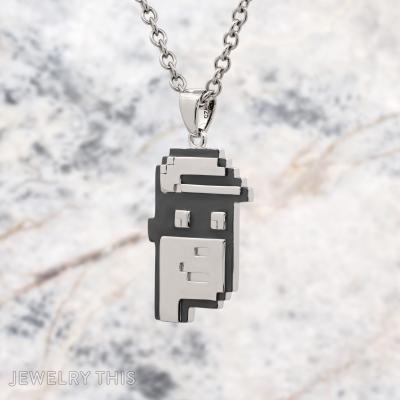
This pendant translates a blocky, pixel-art digital image into a three-dimensional sterling silver piece. The ...

Sterling silver pendant featuring personal Initial on front and Medical Alert details on back. Mixture ...

Gifted by a beloved grandmother, this recreated cross pendant holds a lifetime of cherished memories. ...

This exquisite 14k yellow gold pendant celebrates a 30th anniversary with elegant symbolism and vibrant ...

Behold this striking custom pendant, a fusion of artistry and emblematic allure. Crafted in gold-plated ...

This square pendant is cast in 10k yellow gold with a white enamel background framed ...

Embrace elegance in a compact size with our exquisite 14kt yellow gold pendant. Measuring a ...

This pendant was created to be a symbol of sisterhood and pride. Crafted with precision ...
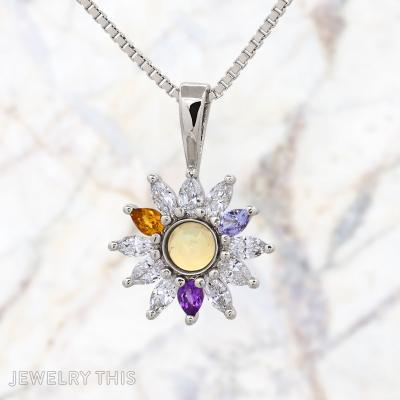
This exquisite white gold pendant is a wearable sunburst, centered by a luminous round opal ...

This platinum triangular pendant is an exquisite fusion of geometry and personal connections. This unique ...

This pendant centers on a small diamond-set ship’s helm in 14k yellow gold, with a ...

This one of a kind oval-shaped pendant is crafted from 14k yellow gold plated silver. ...



