

Circle Brand Pendant in Diamonds and Yellow Gold
$$$
14k yellow gold, lab-created diamonds
C. wanted her family's cattle ranch brand, the Circle T, turned into a necklace she could wear every day rather than an obvious logo piece. She sent a friend's necklace as a style reference to steer the design toward something dainty and elegant, and chose lab diamonds over natural ones for cost and ethical reasons. When she saw the first sketch she wrote: 'You nailed it!!!!! Way to go!!'
'You nailed it!!!!! Way to go!!' — on seeing the first sketch
'That looks great!' — on design approval
Quick specs
Design type
Primary Metal
Shape / Cut
Primary Stone
Accent Stones
Design Complexity
Intent: Certainty
Size
Pendant approximately 1.5in diameter. Chain width 1.2mm, length 18in.
How they made it distinctive
-
01
Circle-and-bar silhouette lined entirely in pave diamonds rather than left as a solid emblem, giving it a dainty, elegant look instead of a bold logo statement
-
02
Design directly represents a family cattle ranch's registered brand, reinterpreted as everyday jewelry
-
03
Lab-created diamonds chosen specifically for cost and ethical sourcing reasons over natural stones
-
04
Open construction requires each diamond to be pave-set along a narrow standing edge rather than a flat backing
-
05
Fine paperclip chain and 1.2mm gauge selected to balance delicacy with everyday durability
How you'd make it yours
Stone type: this piece uses lab diamonds; a new commission could use moissanite or cubic zirconia for a similar look at lower cost
Metal: this piece is 14k yellow gold; the same open pave design works equally well in white or rose gold
Size: this piece is 1.5 inches in diameter; a new commission could be scaled up or down with adjusted stone count
Background: this piece leaves the circle open; a new commission could add a solid backing behind the emblem for a different look
Chain: this piece uses a fine paperclip chain at 1.2mm; a new commission could use a different chain style or length
One of a kind: this exact pendant was designed for one client's family brand and is not reproduced — a new commission is an original piece inspired by this one, not a copy
Design changes made
The client's early idea of a solid-background circle shifted after she shared a reference photo of a friend's necklace, moving the design toward an open, diamond-lined circle with a slim diamond bar rather than a filled emblem. Chain thickness was also adjusted from her requested 0.9mm to 1.2mm for better durability.
Who this is for
This piece is for someone who wants a personal or family emblem worn as fine jewelry, not as an obvious logo statement. It's especially right if you have a meaningful mark — a brand, a symbol, an initial — and want it reinterpreted as something dainty enough for daily wear.
How it's made
Once the design was approved, the piece moved into a design quality assurance check before production began. A wax model of the pendant was 3D-printed and attached to a wax tree, then invested in plaster and placed in a kiln to burn out the wax and leave a hollow mold. Molten 14k yellow gold was cast into that mold, then the piece was extracted, cleaned, and polished.
After casting, the open circle-and-bar silhouette was refined by hand to keep the pave line even and continuous around the curve and down the center bar. The round lab-created diamonds were then set one by one along both the circular frame and the vertical bar, and the pendant was fitted with its jump rings before the paperclip chain was attached on each side.
Key note
The pendant's circle-and-bar frame is left completely open rather than backed with solid metal, so every diamond had to be individually pave-set along a narrow standing edge instead of into a flat surface.
Pricing guidance
A diamond-lined emblem pendant of this size and detail sits toward the higher end of the mid range for custom pendant work. Most of the cost comes from the density of pave stone-setting required to line both the circle and the center bar continuously, plus the gold content at this diameter. Stone choice and chain selection are the two biggest levers on the final price.
Moves price up ↑
- ↑ Using natural diamonds instead of lab-created diamonds of the same size and clarity
- ↑ Increasing the pendant diameter beyond 1.5 inches, which requires more stones and more gold
- ↑ Upgrading to 18k gold instead of 14k
- ↑ Choosing a heavier or more elaborate chain style than a fine paperclip chain
- ↑ Adding a solid background behind the emblem, which increases both metal weight and finishing time
Moves price down ↓
- ↓ Switching to a smaller pendant diameter, reducing both stone count and gold weight
- ↓ Using cubic zirconia or a moissanite substitute in place of lab diamonds
- ↓ Choosing a thinner, simpler chain style
- ↓ Leaving the emblem outline in polished gold with fewer pave stones
- ↓ Selecting a lower stone clarity grade within the lab-diamond range
Questions people ask
Yes, a registered brand or personal logo can be translated into a jewelry design by rendering its lines as a wearable outline, then deciding which parts get stone detail and which stay plain metal. The design process typically starts with a sketch based on the original mark, followed by a 3D render for approval before anything is cast. Simple line-based marks, like a letter inside a shape, translate especially well because the lines can be lined with pave stones. The final result reads as a personal emblem rather than a literal logo reproduction.
Lab-created and natural diamonds are chemically and optically identical — the same hardness, brilliance, and clarity grading scale apply to both. The only real difference is origin: natural diamonds are mined, lab diamonds are grown in a controlled setting, which typically makes them less costly for the same size and grade. In a pave design with many small stones, this cost difference becomes more meaningful since dozens of stones are used rather than one center stone. Visually, once set, there is no way to distinguish lab from natural diamonds by eye.
A pendant of this size with a fully pave-set open design sits toward the higher end of the mid-range for custom pendant work. The cost is driven primarily by the number of diamonds required to line the full outline and the labor of setting them individually along a narrow standing edge rather than a flat surface. Metal karat, stone type, and chain choice are the main variables that move the price up or down. A smaller diameter or fewer pave stones would bring the cost down noticeably.
The full process from design approval to shipping typically runs four to six weeks on a standard timeline. The first week or so is spent on the sketch and 3D render, refined based on the client's feedback before anything is cast. Once approved, casting, stone sourcing, and pave-setting the diamonds by hand take the bulk of the remaining time. Chain selection and attachment happen near the end of production, just before final quality checks and shipping.
A paperclip chain in 14k gold at 1.2mm is a reasonable choice for a pendant of this weight and is intended for regular daily wear. The slightly heavier 1.2mm gauge holds up better against everyday tension and clasp wear than a very fine 0.9mm chain would, especially with a pendant of this size hanging from it. As with any fine gold chain, it should be removed before activities involving heavy pulling or snagging. Regular inspection of the jump rings and clasp is recommended for any daily-wear chain.
Yes, a pave design like this can be set with cubic zirconia or moissanite instead of diamonds to reduce cost while keeping the same sparkle and layout. Moissanite in particular has a similar refractive quality to diamond and holds up well to daily wear due to its hardness. Cubic zirconia is softer and may show wear over years of daily use, but is a common substitute for pave designs where cost is a priority. The setting technique and design remain identical regardless of which stone is chosen.
Yes, the circle-and-bar design scales up or down without losing its shape, though the stone count changes accordingly. A smaller pendant uses fewer pave stones and less gold, which lowers the cost, while a larger version requires more of both. The proportion between the circle diameter and the width of the center bar is typically kept consistent regardless of scale so the emblem reads clearly at any size. Chain length should be adjusted to suit where the wearer wants the pendant to sit.
Explore Similar Creations
Every masterpiece starts with a spark. Explore how our clients raw ideas - sketches, heirlooms, inspirations - were transformed into bespoke works of arts.


This custom pendant embodies the spirit of faith and community. A classic cross motif takes ...

This round pendant features a detailed image of the sacred figure, surrounded by an elegant ...

This custom pendant is a heartfelt tribute to the beloved family pet, Dezi. Crafted with ...

14k white gold pendant with custom logo design elevated in center of circular frame. Entire ...

This pendant captures faith and beauty in a smaller, more wearable size. Recreated for daily ...

This sterling silver pendant takes the classic sun-face motif and renders it with real dimension ...

This pendant takes the form of a snake, its body curving in a graceful S-shape ...

Elevate your style with our 1-inch 14kt yellow gold-plated silver round pendant featuring a raised ...
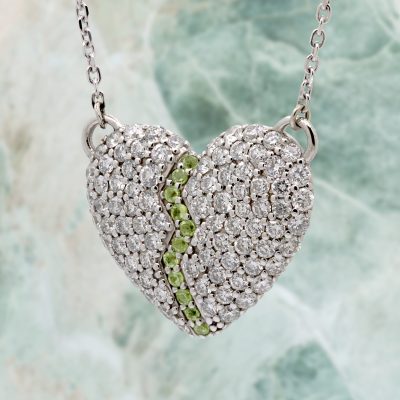
A broken heart pendant pave set with VS1 lab created diamonds with peridot gemstones in ...

A beautiful combination of a mamba snake and the infinity symbol with a personalized engraving ...



