
Bear Paw Pendant with Birthstone — Sterling Silver
$
Sterling silver, natural sapphire
A client wanted to honor his uncle's memory through a bear paw pendant like one his uncle used to wear, but reimagined with a sapphire in place of the original turquoise to mark his uncle's September birthday. He had two made — one for himself and one for his father to give as a Father's Day gift. When the pieces arrived, he wrote simply: 'They are great. I appreciate you guys.'
'Oh my goodness that looks awesome! Great job.' — on seeing the first render
'They are great. I appreciate you guys.' — on delivery
Quick specs
Design type
Primary Metal
Shape / Cut
Primary Stone
Accent Stones
Design Complexity
Intent: Certainty
Size
Pendant approximately 17mm (dime-sized).
How they made it distinctive
-
01
Stone set directly into the palm of the paw rather than held between the claws, a deliberate departure from the inspiration piece
-
02
Sapphire chosen specifically to mark a September birthday rather than matching the original turquoise
-
03
Made as a matching pair so the design could be shared between two family members
-
04
Bezel setting chosen to protect the stone on the pendant's small, shallow palm surface
-
05
Dime-sized scale keeps the piece subtle and wearable against the body
How you'd make it yours
Stone: this piece uses a natural sapphire; a new commission could use a lab sapphire, a different birthstone, or a non-birthstone colored gem
Metal: this piece is sterling silver; the same paw design works in 14k gold or platinum
Stone shape: this piece uses an oval stone; a new commission could use round, cushion, or another shape
Size: this piece is dime-sized; a new commission could be scaled larger or smaller
Engraving: the back of the pendant can carry a new inscription on a fresh commission
One of a kind: this exact pendant was designed for one client's family and is not reproduced — a new commission is an original piece inspired by this one, not a copy
Design changes made
The design shifted from a full recreation of the uncle's original pendant to a new interpretation: the same bear paw silhouette, but with the stone set directly into the palm rather than held between the claws, and swapped to a birthstone sapphire instead of the original turquoise.
Who this is for
This piece is for someone who wants to carry a memory of a specific person without spelling out the loss on the piece itself. It's especially right for someone who wants to share that memory with another family member through a matching piece, each wearing a small, personal marker of the same person.
How it's made
Once the design was approved, the piece was 3D printed in wax and attached to a wax tree inside a flask. The flask was placed in a kiln to burn out the wax, leaving a hollow mold, and molten sterling silver was poured into the mold under pressure to form the raw pendant. After cooling, the piece was removed from the mold and prepared for finishing.
The raw casting was cleaned and polished to a bright finish across the paw and claws. The oval sapphire was then bezel-set into the palm of the paw, with a continuous rim of metal pressed around the stone's girdle to hold it securely and protect it from the kind of catching or chipping a prong setting could risk on a piece this small. A matching second pendant was produced from the same approved design.
Key note
The stone sits in a bezel rather than prongs specifically because the palm of the paw is a small, shallow surface — a bezel distributes pressure evenly around the stone's girdle instead of relying on a few thin metal points.
Pricing guidance
A small sterling silver figural pendant with a single bezel-set center stone sits toward the lower end of custom pendant pricing. Most of the cost is in the 3D modeling of the sculptural paw shape and the hand-finishing of the claws, rather than the stone itself. Ordering a second matching piece typically costs less than the first since the design work is already done.
Moves price up ↑
- ↑ Upgrading from sterling silver to 14k gold or platinum
- ↑ Choosing a larger center stone than dime-size allows
- ↑ Adding more sculptural detail to the claws or fur texture
- ↑ Using a natural sapphire of larger carat weight or higher clarity grade
- ↑ Adding engraving to the back of the pendant
Moves price down ↓
- ↓ Using a smaller or simpler stone shape such as round instead of oval
- ↓ Choosing a synthetic or lab-created stone instead of natural sapphire
- ↓ Simplifying the claw detailing to a flatter, less dimensional design
- ↓ Ordering additional matching pendants from the same approved design
- ↓ Omitting the bezel in favor of a simpler flush-set stone
Questions people ask
Yes, a sculptural paw shape with a stone set into the palm is a common custom pendant design. The paw is modeled in 3D first so the claws and palm can be shaped before any metal is cast, and the center stone is typically set using a bezel so it sits securely within the small palm area. This design works well in sterling silver, gold, or platinum. The stone can be any shape the client prefers, though oval and round are the most common for a palm-set design.
Sterling silver (.925) is a durable choice for a pendant, though it is softer than gold or platinum and can tarnish over time with air exposure. Daily wear is generally fine, and tarnish is easily removed with a polishing cloth. For a pendant with raised detail like claws or textured surfaces, silver holds fine detail well during casting. It's a common, affordable choice for figural pendants like this one.
A bezel setting wraps a continuous rim of metal around the stone's outer edge, fully enclosing and protecting it, while prongs use a few individual metal claws to hold the stone from several points. On a small or shallow setting area, like the palm of a paw pendant, a bezel is generally more secure because it distributes pressure evenly around the stone rather than relying on a few thin points of contact. Bezels also tend to protect the stone's edges from chipping during daily wear. The tradeoff is that a bezel covers slightly more of the stone's girdle than prongs do.
Yes, ordering a second pendant from an already-approved design is a common request and is typically less expensive than the first piece since the design and modeling work is already complete. Both pendants are cast from the same approved 3D model, so they come out essentially identical in shape and proportion. This is a common way to create matching pieces for two family members. Minor natural variation in stone color or metal polish between the two pieces is normal.
A small sculptural pendant in sterling silver with one center stone generally falls on the lower end of custom pendant pricing. The main cost driver is the 3D design and modeling work needed to create a dimensional shape like a paw, plus the hand-finishing of the claws after casting. Stone choice and size have some effect on price, but for a dime-sized stone the difference is relatively small. A second matching piece from the same design typically costs less than the first.
The design phase for a custom pendant typically takes about a week, during which a 3D render is created for approval. Once the design is approved and production begins, casting and finishing usually take a few additional weeks, including the wax printing, casting, polishing, and stone setting steps. A second matching piece made at the same time does not significantly extend this timeline since it is produced from the same approved design. Total time from deposit to shipping is usually around five to six weeks under a standard schedule.
Yes, substituting a birthstone for whatever stone appeared in an original or inspiration piece is a common and straightforward design choice. The setting style and stone size can generally stay the same regardless of which stone is chosen, as long as the stone's hardness suits the setting. Sapphire, for example, is a hard and durable stone well-suited to a bezel setting. This kind of substitution is often chosen to add personal or symbolic meaning distinct from the original piece.
Yes, a paw pendant design like this can be produced in yellow, white, or rose gold using the same 3D model used for the silver version. The main differences would be cost and the metal's color and weight characteristics. Gold holds fine detail just as well as silver during casting and is more resistant to tarnishing over time. The choice typically comes down to budget and personal metal preference.
Explore Similar Creations
Every masterpiece starts with a spark. Explore how our clients raw ideas - sketches, heirlooms, inspirations - were transformed into bespoke works of arts.
This square pendant is cast in 10k yellow gold with a white enamel background framed ...

This basketball and hoop pendant was designed for a basketball enthusiast. Crafted in sterling silver ...
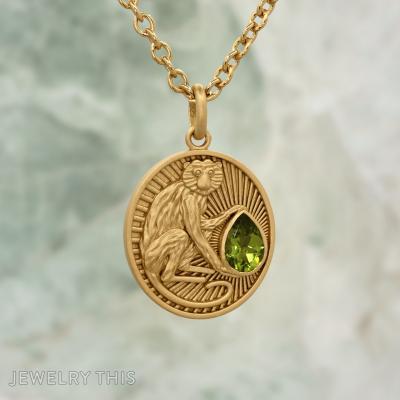
This circular pendant is cast in 14k gold-plated sterling silver with a matte, satin finish ...

This captivating custom jewelry pendant is a mesmerizing blend of symbolism and style. This sterling ...

This unique pendant features a highly detailed and lifelike Gorilla head, complete with a gritting ...

This exquisite custom jewelry pendant is a stunning representation of national pride and elegance. This ...

18karat Yellow gold Round pendant featuring detailed Snake eating its tail (Ouroboros) A symbol of ...

This stunning gold medallion-style pendant is circular in shape, featuring an eye-catching ray-like angular design ...

This sterling silver pendant was built around a client-supplied logo image, reimagined as a wearable ...

This custom-crafted necklace is a masterpiece in 14K yellow gold. The necklace features a unique ...

Celebrate heritage with our 1-inch round pendant in 14kt yellow gold. This pendant beautifully recreates ...

Created as a memorial for a beloved brother, this custom pendant serves as a heartfelt ...