

Gold Dreamcatcher Pin with Turquoise and Diamond Feather
$$$$$
14k yellow gold, turquoise, diamond
An organization came to us wanting a dreamcatcher pin with a turquoise center stone and a diamond-set feather, built from a reference photo and refined over several rounds until the feather connections were sturdy enough for daily wear. The final batch of 50 gold pins was gifted to team members marking 20 years of service at a company banquet. The team reported back that the group loved the pins, and a follow-up fix was arranged for a backing preference on the clutch closure.
'The team members loved the pin.' — on delivery
Quick specs
Design type
Primary Metal
Shape / Cut
Primary Stone
Accent Stones
Design Complexity
Intent: Certainty
Size
Pin approximately 1 inch (25mm) diameter dreamcatcher wheel with three dangling feather drops; center turquoise cabochon approximately 2-3mm; one feather set with a round diamond approximately 2mm. Bulk order of 50 identical pins.
How they made it distinctive
-
01
Dreamcatcher motif rebuilt from a reference photo into a wearable structure — the center turquoise was given a proper bezel mounting and feather connection points were thickened to prevent breakage
-
02
Diamond set into only one of the three feathers, keeping the design symbolic rather than uniformly decorative
-
03
Produced as a uniform batch of 50 so stone color, metal finish, and casting quality stayed consistent across every recipient's piece
-
04
Designed specifically as a lapel pin rather than a pendant, with a pin stem and clutch back added after the original concept was adjusted mid-project
How you'd make it yours
Stone: this piece uses a turquoise cabochon; a new commission could use a different colored stone or birthstone for the center
Metal: this piece is 14k yellow gold; the same design works in 14k gold-plated sterling silver at a different price point
Accent stone: this piece sets one diamond in a single feather; a new commission could use more stones or a different gem
Backing: this piece uses a standard clutch back; a new commission could specify a locking clutch from the start
One of a kind: this exact pin was designed for a specific 20-year service recognition program and is not reproduced — a new commission is an original piece inspired by this one, not a copy
Design changes made
The original dreamcatcher reference image was adjusted to make the piece wearable — the center turquoise setting was given a proper mounting and the connection points of the feathers were thickened to prevent breakage, based on client feedback about structural durability.
Who this is for
This piece is for an organization that wants to mark a meaningful group milestone with something every recipient can keep and wear, not a generic trophy or certificate. It's especially right if you want a symbolic design — like a dreamcatcher or cultural motif — produced consistently across a large group, so every person receives a piece of equal quality and meaning.
How it's made
Each pin began as a 3D-printed wax model built from the approved render, attached to a wax tree and invested in plaster. The flask was fired in a kiln to burn out the wax, leaving a hollow mold, and molten 14k yellow gold was cast into each mold in a single batch run so that metal color and finish stayed consistent across all 50 pieces. After casting, the pieces were cleaned from their trees and prepared for finishing.
Each dreamcatcher wheel was polished to a bright finish, and the openwork spokes and feather edges were cleaned up by hand to keep the linear feather detailing crisp. The turquoise cabochons were sourced in a matched batch and bezel-set into the center mounting, while the round diamond was set by hand into one feather on every pin. Pin stems and clutch backs were then attached to each finished piece.
Key note
Sourcing and casting all 50 turquoise stones and pins in a single batch was a deliberate choice to keep stone color and metal finish consistent across the entire set, rather than producing them individually.
Pricing guidance
A multi-element cast pin with a bezel-set center stone and several dangling diamond-accented charms sits toward the higher end for bulk commemorative orders of this complexity. Labor is the dominant cost driver — each dangling feather must be cast, finished, and attached individually, and that cost multiplies across every unit in a batch. Metal choice between gold-plated silver and solid gold, along with batch size, is where the price moves most from there.
Moves price up ↑
- ↑ Upgrading from gold-plated silver to solid 14k or 18k gold for the entire run
- ↑ Adding diamonds to more than one feather per piece
- ↑ Increasing the number of dangling elements beyond three feathers
- ↑ Ordering a smaller batch size, which loses the per-unit savings of mass production
- ↑ Sourcing larger or higher-grade turquoise stones with more uniform color across the batch
Moves price down ↓
- ↓ Choosing 14k gold-plated sterling silver instead of solid gold for the full run
- ↓ Increasing the batch size, which reduces the per-unit cost through shared casting and sourcing
- ↓ Removing the diamond accent and using an all-metal feather instead
- ↓ Reducing the number of dangling feather charms
- ↓ Simplifying the center stone setting from a bezel to a simpler flush mount
Questions people ask
Yes, bulk orders of 25, 50, or more identical pieces are common for organizational gifting and recognition awards. Producing a large batch together actually improves consistency, because the stones, metal, and casting are sourced and run at the same time rather than piece by piece. This also typically brings down the per-unit cost compared to ordering the same design one at a time. The tradeoff is that production takes a few weeks once the design is finalized and the full order is confirmed.
Turquoise is a relatively soft stone, roughly 5 to 6 on the Mohs hardness scale, so it is more prone to scratching or chipping than a diamond or sapphire. In a bezel setting, where a rim of metal wraps around the stone's edge, the turquoise is reasonably well protected from everyday knocks. For a lapel pin that is worn occasionally rather than daily against skin or fabric, turquoise generally holds up well over years of use.
A pin with an openwork design, a center gemstone, and multiple dangling charms sits toward the higher end of the price range for custom pins because of the labor involved in finishing each dangling element by hand. Choosing 14k gold-plated sterling silver instead of solid gold brings the cost down significantly while keeping the same look. Ordering in bulk also lowers the per-unit price compared to a single custom piece. The exact cost depends on metal choice, stone count, and batch size.
The design phase typically takes about a week, during which a 3D render is created and refined based on feedback. Once the design is approved and the full order is confirmed, production for a batch of pins typically takes around three weeks, covering wax printing, casting, stone sourcing, setting, and finishing. Batches are usually cast together in one run to keep metal color and stone quality consistent. Rush timelines are possible but should be discussed early, since stone sourcing for a large batch takes some lead time.
Yes, pin backings can be swapped after delivery if the original clutch style does not suit how the piece is worn. A locking or more secure clutch back can be shipped separately and attached without remaking the pin itself. This is a simple post-delivery adjustment rather than a structural change to the piece. If you have a strong preference for a specific backing style, it is worth confirming that detail before production to avoid a follow-up shipment.
For a small accent diamond set into a feather or similar detail, lab-grown and natural diamonds look identical to the naked eye and have the same hardness and sparkle. The practical difference is cost, with lab diamonds typically running lower for the same size and quality grade. At the 2mm size used in a piece like this, either option performs the same in terms of durability and daily wear. The choice mostly comes down to budget and personal preference.
Yes, a reference photo is a normal starting point for a custom pin design. The design team typically needs to adjust elements like stone mountings and connection points between dangling charms so the piece holds up structurally as real jewelry, since a flat reference image does not always account for wearability. These adjustments are made during the 3D design phase and shared with you as a render before anything is cast. The goal is to stay as close as possible to the original concept while making sure the finished piece is durable.
Turquoise used in fine jewelry can be natural or stabilized, where a treatment is applied to improve durability and color consistency, and both types are common in the market. For a bulk order where color matching across many pieces matters, a stabilized or carefully matched batch of cabochons is typically sourced together to keep the look consistent from piece to piece. Either type is suitable for occasional-wear items like lapel pins. If stone origin or treatment matters to you, it is worth confirming with your jeweler before sourcing begins.
Explore Similar Creations
Every masterpiece starts with a spark. Explore how our clients raw ideas - sketches, heirlooms, inspirations - were transformed into bespoke works of arts.
This tie bar was built around a client-sourced pre-made bar rather than cast from scratch, ...

This lapel pin takes the classic “I ❤ [Name]” motif and renders it as an ...
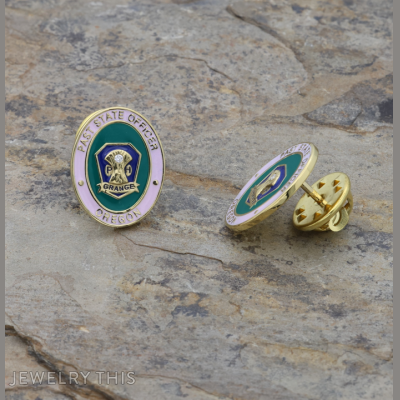
This oval lapel pin reproduces a state agricultural organization’s past-officer insignia — a wheat sheaf ...
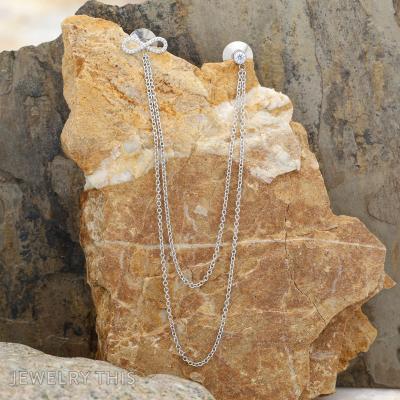
This piece pairs a pave-set diamond infinity symbol with a single bezel-set diamond stud, the ...

This is an open-outline star pin, its five points formed from slim tapered bars that ...