


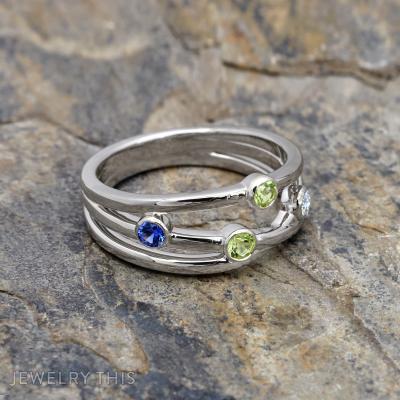
Multi-Band Bezel Ring Remade with Sapphire, Peridot & Diamond
$
14k white gold, sapphire, peridot, diamond
A client came back to have a ring remade after the original's bezel walls turned out too thin during production, and a stone worked its way loose and fell out. The rebuild kept the same wandering, multi-band design and four-stone arrangement, but with properly reinforced bezels this time around.
Quick specs
Design type
Primary Metal
Shape / Cut
Primary Stone
Style
Design Complexity
Intent: Certainty
Size
Ring size 6 US (16.51mm).
How they made it distinctive
-
01
Three intertwined bands cast as one piece + creates a stacked-ring look without the risk of individual rings shifting out of alignment
-
02
Bezel settings deliberately thickened + directly addresses the exact production flaw that caused the original stone to fall out
-
03
Four different stones — sapphire, two peridots, and a diamond + allows mixed colors and meanings without needing matching gems
-
04
Organic, wandering band placement + gives the piece movement and visual interest beyond a simple straight multi-band design
How you'd make it yours
Stone selection: this piece uses sapphire, peridot, and diamond — a new commission could use birthstones or an all-diamond version instead
Metal: this piece is 14k white gold — the same woven-band design works in yellow gold, rose gold, or platinum
Band count: this piece has three interwoven strands — a new piece could use two or four for a different width and look
Bezel size: the stones here are small accent-scale — a new commission could use larger stones with proportionally sized bezels
One of a kind: this exact ring was rebuilt for one client's specific stones and sizing and is not reproduced — a new commission is an original piece inspired by this one, not a copy
Design changes made
The bezel walls were thickened during the rebuild so each stone would be held securely — the original design's setting depth had been insufficient for daily wear.
Who this is for
This piece is for someone who wants a ring with real movement and mixed color, but who also cares about the practical durability of the setting holding up over years of wear. It's especially right if you've had a setting fail before and want the peace of mind that comes from a properly reinforced rebuild.
How it's made
This ring was cast using the lost-wax method: a wax or resin model of the intertwined multi-band design was produced first, then invested in plaster and burned out to leave a hollow mold. Molten 14k white gold was cast into that mold under pressure, producing the raw multi-strand band ready for cleanup and stone setting.
After casting, the piece was cleaned up and polished to a mirror finish across all three crossing bands. Each of the four stones — the sapphire, two peridots, and the diamond — was set individually into its own bezel, with the metal walls burnished down evenly around the stone's girdle to hold it securely and protect the edges from daily wear.
Key note
Because the original piece failed from bezel walls cast too thin, the rebuild used deliberately thicker bezel walls — a small dimensional change that significantly increases how securely each stone is held long-term.
Pricing guidance
A multi-band ring with several small bezel-set stones in white gold sits toward the lower-to-mid range for custom rings of this complexity. Most of the cost comes from the multiple interwoven bands and the hand-finishing needed to set four individual bezels cleanly. Stone choice and metal karat are what move the price most from there.
Moves price up ↑
- ↑ Adding more stones or additional interwoven bands to the design
- ↑ Upgrading from 14k to 18k white gold or platinum
- ↑ Using natural sapphires or diamonds instead of lab-created or smaller stones
- ↑ Increasing individual stone size beyond the current small accent scale
- ↑ Adding pavé or additional texture along the bands
Moves price down ↓
- ↓ Reducing the number of bands from three to two
- ↓ Using fewer stones or a single stone instead of four
- ↓ Choosing sterling silver instead of 14k white gold
- ↓ Selecting lab-created stones instead of natural sapphire and diamond
- ↓ Simplifying the bezel shapes to a uniform round size
Questions people ask
A stone typically falls out of a bezel setting when the metal walls holding it are too thin to grip the stone securely over time. If the bezel wasn't cast with enough metal depth and thickness during production, the setting can loosen with normal wear until the stone works its way free. This is a production issue rather than something caused by how the piece was worn. The fix is to remake the setting with thicker, more substantial bezel walls so each stone is held firmly.
Yes, generally — a bezel setting wraps a continuous wall of metal around the entire stone, which protects the edges and reduces the chance of snagging or loosening compared to prongs. Prongs only touch the stone at a few points, so if one prong wears down or bends, the stone can become loose. A properly cast bezel with adequate wall thickness is one of the more secure setting styles for daily wear. That said, a bezel still needs sufficient metal thickness to do its job — a too-thin bezel can fail just like a worn prong.
A ring with three interwoven bands and four small bezel-set stones in white gold sits toward the lower-to-mid range for custom work of this complexity. The main cost driver is the labor involved in cleanly setting four individual bezels across a multi-strand design rather than a single band. Stone type and metal karat can shift the price meaningfully in either direction from there.
Yes, the four bezel positions can hold a variety of stone types — birthstones, diamonds, sapphires, or other colored gems, in any combination the wearer wants. Because each stone is individually bezel-set, they don't need to match each other, which makes this a flexible design for combining meaningful colors or dates. Lab-created stones are also an option in place of natural ones for the same visual effect at a different cost point.
A standard remake following this kind of production issue typically takes around five to six weeks from design approval to delivery. That includes producing a new wax or resin model, casting the metal, and hand-setting each of the four stones into its bezel. Because the design was largely already established from the first version, most of that time goes into careful casting and setting rather than new design work.
White gold is a solid, durable choice for daily wear and holds up well to regular use. It typically has a rhodium plating over the base white gold to give it a bright white finish, which may need occasional re-plating over the years as it naturally wears with contact. Aside from that maintenance, white gold is a hard-wearing metal well-suited to a ring worn daily, especially with bezel-set stones that protect the edges from impact.
This particular design has the three bands cast together as a single unified piece rather than as separate stacking rings, which is part of what gives it its secure, wandering look. A new commission inspired by this design could be built as truly separate stacking rings instead, though that would change the construction and the way the bands interact with each other. The connected version tends to hold its shape and spacing more reliably over time.
Explore Similar Creations
Every masterpiece starts with a spark. Explore how our clients raw ideas - sketches, heirlooms, inspirations - were transformed into bespoke works of arts.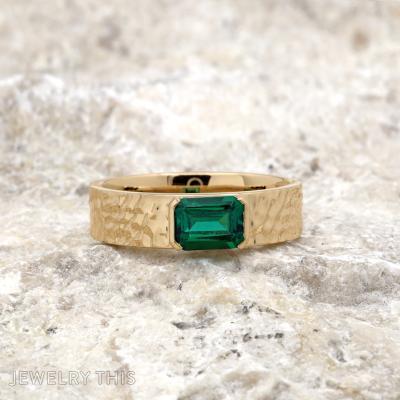
This striking 14-karat yellow gold band offers a bold, handcrafted aesthetic that balances rugged texture ...
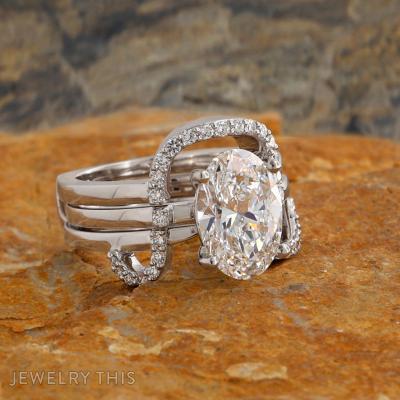
This engagement ring set is built from three interlocking bands in 14k white gold, designed ...
This exquisite engagement ring showcases a stunning 0.81-carat round moissanite center stone, surrounded by a ...
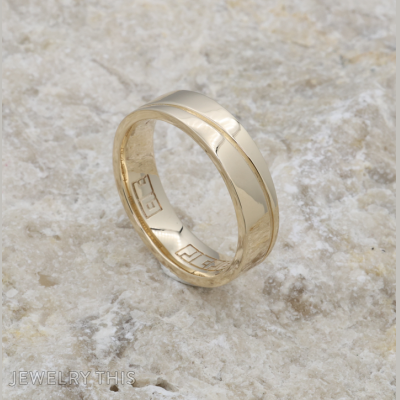
This custom wedding band is a sophisticated tribute to a shared journey, blending modern design ...

This client came to us with her stunning engagement ring and requested a custom made ...

This custom wedding band is a sentimental recreation of the original ring, bringing back cherished ...
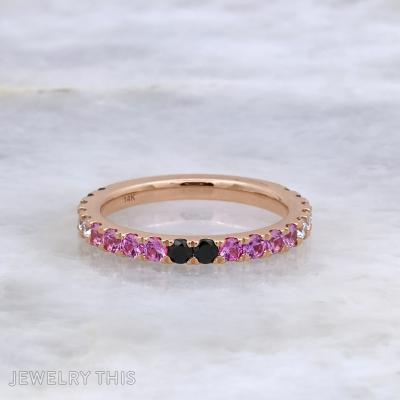
This captivating rose gold wedding band showcases a striking ombré design through a harmonious blend ...

Crafted in sterling silver and plated with black rhodium, the ring features a captivating 3D ...

Radiant and reborn, this engagement ring is a recreated masterpiece born from cherished memories. Crafted ...
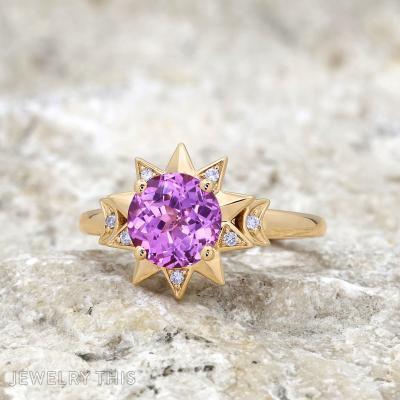
This enchanting 14K yellow gold engagement ring is a masterful celebration of celestial beauty and ...
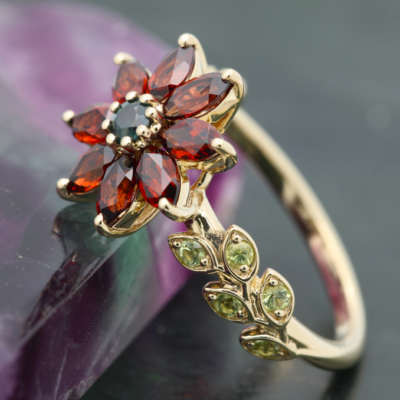
This custom 14k yellow gold ring is a blooming masterpiece. At its heart lies a ...

This ethereal engagement ring is a masterpiece of gothic-inspired botanical design, meticulously crafted from white ...



