

Five-Stone Birthstone Ring in White Gold
$$
14k white gold, lab emerald, blue topaz, aquamarine, citrine
A client came to us with a sketch and a clear idea: a row of five colored stones, each one meaningful, set into a single band. He worked through the setting style and stone size with us, landing on a classic prong setting he felt fit the design best. When the finished ring arrived, he called it 'beautiful, bright' and said it had turned into a Valentine's Day gift.
'Looks wonderful so far, thank you! It's beautiful, bright, and I love it in the photorealistic.' — on seeing the first render
Quick specs
Design type
Primary Metal
Shape / Cut
Primary Stone
Accent Stones
Style
Design Complexity
Intent: Certainty
Size
Ring size 6 US (16.51mm). Band width 3mm. Stones 3.5mm x 3.5mm princess cut.
How they made it distinctive
-
01
Five princess-cut stones in different colors set in a single row, rather than one center stone with accents
-
02
Prong setting chosen specifically for its classic, delicate look over bezel or channel alternatives
-
03
Lab-grown emerald used in place of natural to manage cost while keeping the exact look of a natural stone
-
04
3mm band width calibrated to match the 3.5mm stone size for proportional balance
-
05
Uniform princess cut across all five stones creates a clean, continuous line of color
How you'd make it yours
Stone colors: this piece uses blue topaz, aquamarine, lab emerald, and citrine — a new commission could use different colors or birthstones
Setting style: this piece uses prongs — a new commission could use a bezel for a more modern look or channel setting for a sleeker profile
Metal: this piece is 14k white gold — the same five-stone layout works in yellow or rose gold
Stone count: this piece uses five stones — a new commission could use three or seven depending on how many colors or people are being represented
One of a kind: this exact ring was designed for one client and is not reproduced — a new commission is an original piece inspired by this one, not a copy
Design changes made
The client chose a prong setting over the bezel or channel options after discussing the look of each with the team; stone sizing was set at 3.5mm princess cut to match the approved 3mm band width. Design matched the initial brief without major changes beyond finalizing these details.
Who this is for
This piece is for someone who wants a ring built around a specific combination of colors or meanings, not a single dominant stone. It's especially right if you're drawn to a clean row of color across the band rather than a traditional solitaire or halo design.
How it's made
Once the design was approved, a 3D wax model of the ring was printed and attached to a wax tree inside a flask. The flask was placed in a kiln, where the wax was burned out to leave a precise hollow mold. Molten 14k white gold was then cast into that mold under heat and pressure, and once cooled, the raw ring was removed and prepared for finishing.
After casting, the band was cleaned and polished to its bright finish before the five princess-cut stones were set one by one into individual prongs across the top of the band. Each stone was seated and secured in sequence, then the entire piece received a final polish and cleaning pass before quality inspection and rhodium plating.
Key note
The team flagged that some of the softer colored stones in this row needed extra care during prong-setting, since softer gems are more prone to chipping when set in sharp-cornered princess cuts.
Pricing guidance
A five-stone princess-cut ring in 14k white gold sits toward the lower end of mid-range for multi-stone custom pieces. The baseline cost comes from sourcing five individually cut stones and setting each one by hand, rather than from the metal itself. Stone choice — lab versus natural, and which colored gems are included — is what moves the price most from there.
Moves price up ↑
- ↑ Using natural emerald instead of lab-grown for the center stone
- ↑ Increasing stone size beyond 3.5mm princess cut across all five positions
- ↑ Switching to a bezel setting, which requires more hand-fabrication per stone
- ↑ Adding diamonds or more rare colored stones in place of topaz or citrine
- ↑ Widening the band beyond 3mm, which increases metal weight and labor
Moves price down ↓
- ↓ Reducing the stone count from five to three
- ↓ Using all lab-created stones instead of a mix with natural accents
- ↓ Choosing smaller stones, such as 3mm instead of 3.5mm princess cut
- ↓ Selecting sterling silver instead of 14k white gold
- ↓ Using a single stone type instead of five different colored gems
Questions people ask
This ring uses five princess-cut stones set in a row: blue topaz, aquamarine, a lab-grown emerald, a pale blue accent stone, and citrine. Each stone is cut to 3.5mm x 3.5mm so they sit evenly together across the band. The lab emerald is chemically and optically identical to a natural emerald, just grown in a controlled environment rather than mined. Mixing multiple colored stones like this is a common way to represent different meaningful colors or birthstones in one piece.
Yes, a lab-grown emerald has the same hardness and durability as a natural emerald because it is chemically identical. Emeralds generally rank around 7.5-8 on the Mohs hardness scale, which is durable enough for regular wear but can still chip if struck at a sharp angle. The main difference between lab and natural emeralds is origin and cost, not physical properties. Lab emeralds are significantly more budget-friendly while looking identical to the naked eye.
A multi-stone custom ring like this one sits toward the lower end of mid-range pricing for custom jewelry. Most of the cost comes from sourcing and setting five individual stones rather than from the 14k white gold band itself. Choosing lab-grown stones over natural ones, especially for pricier gems like emerald, keeps the cost more moderate. The final price depends on stone size, stone type, and setting style.
The design phase for a ring like this typically takes about a week, during which a 3D render is created and refined based on feedback. Once the design is approved, production takes approximately three to four weeks, covering wax modeling, casting, stone setting, and finishing. The full process from first conversation to delivery usually runs five to six weeks total. Rush timelines are sometimes possible but depend on the complexity of the stone setting.
Yes, princess cut stones can be set in a bezel, prong, or channel setting, and each has a different look. A bezel setting wraps metal fully around the stone's edge for a modern, slightly chunkier appearance and better stone protection. Prong settings, like the one used on this ring, hold the stone with small metal claws for a more classic and delicate look. Channel settings sit stones flush between two metal walls for a sleek, low-profile line.
Citrine and blue topaz are both reasonably durable for everyday wear, ranking around 7 on the Mohs hardness scale, similar to quartz. They can handle daily activities but should be protected from hard knocks against sharp edges or harsh chemicals. Some colored stones used in multi-stone designs are softer than diamond or sapphire, so sharp princess-cut corners can be more vulnerable to chipping than rounded cuts. With normal care, these stones hold up well in a ring worn regularly.
Yes, a five-stone row design like this can be built around any combination of colored gemstones a client chooses, including birthstones for family members or personally meaningful colors. The setting style, stone shape, and band width can all stay consistent while the specific gem choices change. Swapping stone types does not significantly change the production process, though pricing varies based on which gems are selected. This kind of design is popular for representing multiple people or meanings in a single band.
Yes, both band width and stone size are adjustable on a five-stone design like this one. A narrower band, such as 3mm, keeps the focus on the stones and gives a more delicate look, while a wider band can accommodate larger stones and a bolder appearance. Stone size and band width are closely linked, since wider stones generally require a wider band to sit properly. These details are typically finalized during the 3D design phase before production begins.
Explore Similar Creations
Every masterpiece starts with a spark. Explore how our clients raw ideas - sketches, heirlooms, inspirations - were transformed into bespoke works of arts.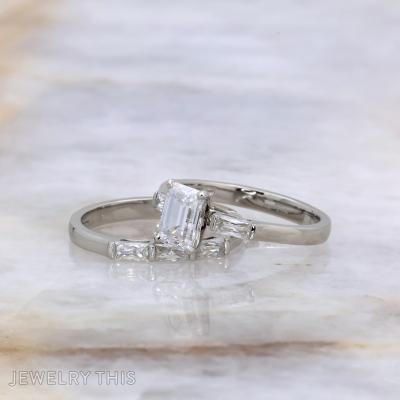
This exquisite platinum engagement ring and wedding band set features a stunning 1-carat emerald-cut moissanite ...

The intricate design on this Sterling Silver ring embraces the eternal bond where two links ...

Celebrate a decade of love and commitment with this modern custom ring, a tangible reminder ...
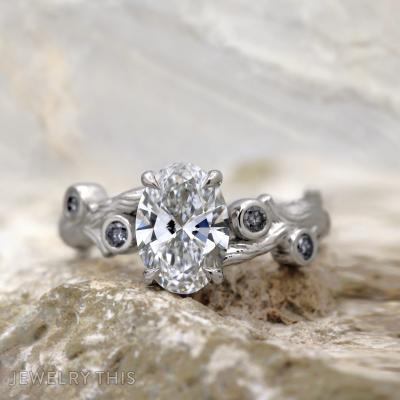
This Platinum engagement ring is a testament to the everlasting beauty of love and nature. ...

This stunning platinum engagement ring brings nature-inspired elegance to life with its intricate branch-like design. ...
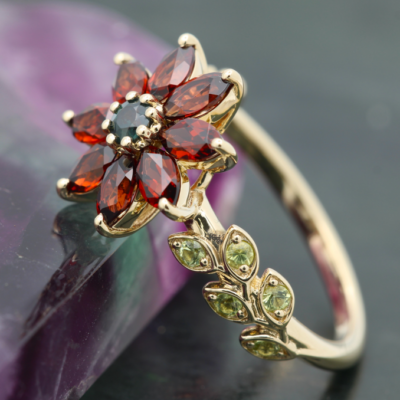
This custom 14k yellow gold ring is a blooming masterpiece. At its heart lies a ...

This custom 14k yellow gold wedding band is a meaningful recreation of the client’s father’s ...

This custom made men’s wedding band is a recreation of the client’s original ring. Crafted ...

This stunning custom ring was created to celebrate family. Crafted in lustrous 14K yellow gold, ...

This ring was built entirely around a single oversized emerald-cut aquamarine supplied by the client, ...

This sophisticated 14K yellow gold wedding set represents a perfect harmony of clean modernism and ...

Crafted as a heartfelt recreation of a cherished lost piece, this silver band stands elegantly ...