




Two-Tone Heart Pendant With Bezel-Set Moonstone
$$$
14k white gold, 14k rose gold, moonstone
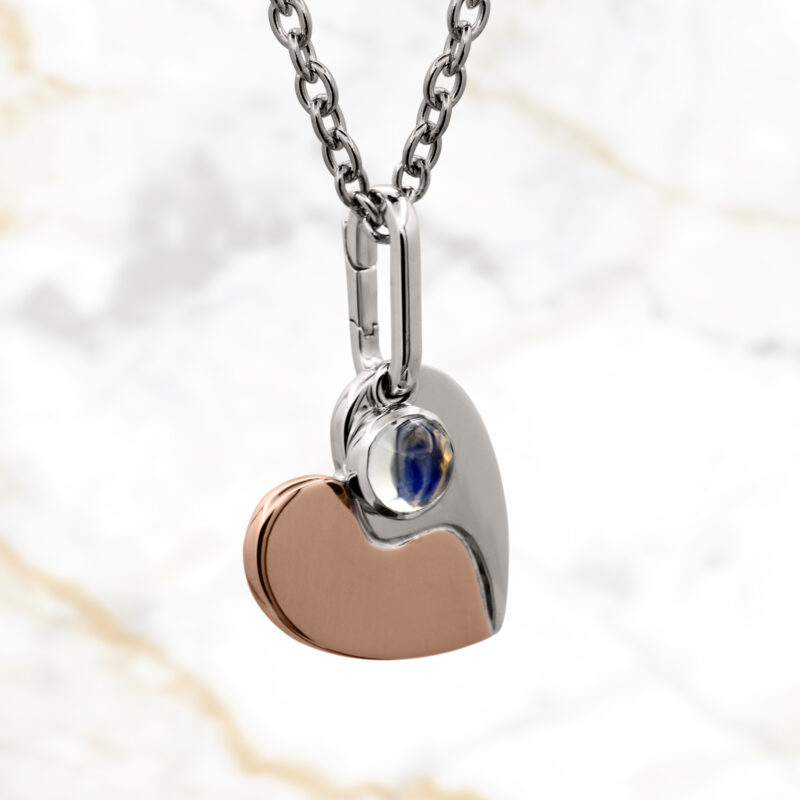
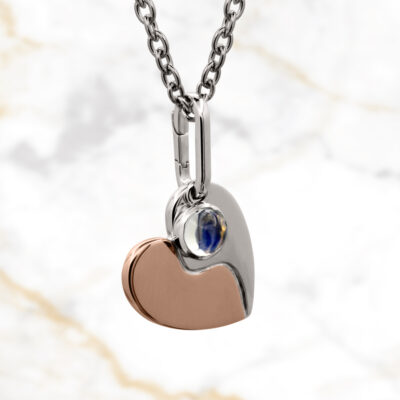
A client wanted a single pendant where two metals could stand for two different people in her life, built around a heart shape she already had in mind as a reference. Over several months she worked through the stone choice — settling on a moonstone for its personal meaning rather than its appearance — and the two-tone split, eventually landing on a curved seam between white and rose gold with 'Cherished' engraved on the back. When it arrived, she wrote simply that she loved it.
'This looks beautiful and I do absolutely love it!! I am so excited!!' — on seeing the first render
'Thank you for all of your help. I do love the piece.' — on delivery
Quick specs
Design type
Primary Metal
Secondary Metal
Shape / Cut
Primary Stone
Accent Stones
Design Complexity
Intent: Certainty
Size
Heart pendant 0.75in; moonstone 6mm round cabochon. Chain: 14k white gold cable, 22in with jump ring at 20in.
How they made it distinctive
-
01
Two-tone construction with a curved seam chosen specifically to represent two different people in one piece
-
02
Moonstone selected over a diamond for its personal meaning rather than its appearance, tied to the client's profession as a mental health counselor
-
03
Open-back bezel setting used deliberately so light can pass through the transparent stone, following traditional moonstone wearing guidance
-
04
Heart resized smaller and the stone sized up after the first render, so the stone would not get visually lost against the metal
-
05
Hinged connecting ring system designed so the heart and a separate stone pendant can be worn together or apart
-
06
Engraving cast directly into the model rather than added afterward, for a cleaner script result on a small scale
How you'd make it yours
Metal combination: this piece uses white and rose gold; a new commission could pair yellow gold with white, or use platinum for stronger contrast
Stone: this piece uses a moonstone; a new commission could use a different colored gemstone depending on personal meaning or preference
Seam style: this piece uses a curved dividing line; a new piece could use a straight line or a zig-zag seam instead
Engraving: a new commission can carry a different word or short phrase on the metal half of choice
Connecting mechanism: this piece uses a hinged ring so pieces can be worn separately; a simpler fixed jump ring works for a piece not meant to be split apart
One of a kind: this exact pendant was designed for one client and is not reproduced — a new commission is an original piece inspired by this one, not a copy
Design changes made
The heart was sized down from 1 inch to 3/4 inch and the moonstone sized up, after the client felt the original proportions let the stone get visually lost against the heart. The straight center seam was also changed to a dramatic curved line, and the connection method was reworked from a basic jump ring to a hinged ring so the heart and stone pendant could be worn together or separately.
Who this is for
This piece is for someone who wants a small, wearable symbol of more than one relationship in a single piece, without it feeling heavy or literal. It's especially right if you're drawn to a stone for what it represents rather than how it looks in a catalog, and if you'd rather wear something delicate every day than save a statement piece for special occasions.
How it's made
Once the design was finalized, the piece was 3D printed in wax and attached to a tree inside a casting flask. The flask was fired in a kiln to burn out the wax, leaving a hollow mold, and molten metal was cast into the mold under pressure — a separate pour for the white gold and rose gold portions, which were later joined. After cooling, the raw pieces were removed from the mold and prepared for finishing.
The two metal halves were cleaned, fitted along the curved seam, and soldered together before polishing to a consistent mirror finish across both colors. The moonstone was bezel-set in the white gold half with an open back, so that light can pass through the stone rather than being blocked by solid metal. The word 'Cherished' was engraved into the model before casting so the script was cast directly into the rose gold half rather than engraved afterward.
Key note
The moonstone's bezel setting was deliberately left open on the back rather than backed in metal, since an open setting lets light pass through the stone and is the traditional way to wear a transparent moonstone.
Pricing guidance
A two-tone heart pendant with a bezel-set colored stone and an engraved back sits in the mid range for custom pendant work. Combining two gold colors in one piece adds labor, since the metals are cast and finished separately before being joined, and that joining step is a meaningful part of the baseline cost. Stone choice and chain style are where the price moves most from there.
Moves price up ↑
- ↑ Using two higher karat golds (18k instead of 14k) for both halves
- ↑ Adding faceted or larger carat-equivalent stones in place of a small cabochon
- ↑ Adding a second engraving on the opposite metal half
- ↑ Upgrading the connecting ring system to a more elaborate interlocking or convertible mechanism
- ↑ Choosing platinum in place of one of the gold tones for extra color contrast
Moves price down ↓
- ↓ Using a single metal color instead of a two-tone build
- ↓ Choosing a smaller cabochon stone or a more readily available stone color
- ↓ Skipping the engraving detail entirely
- ↓ Using a simpler jump ring instead of a hinged connecting ring
- ↓ Choosing a shorter, simpler chain style without added length rings
Questions people ask
Yes. A two-tone piece like this is cast as two separate metal sections — in this case white gold and rose gold — which are each finished individually and then soldered together along a seam. The seam can be a straight line, a curved line, or even a zig-zag depending on the look you want. This adds labor compared to a single-metal piece because each half has to be cast, cleaned, and polished before the two are joined, but it allows each metal to keep its true color rather than blending.
Moonstone is a feldspar mineral known for adularescence — an optical effect that produces a soft white-to-blue sheen as the stone catches light, distinct from a mineral's actual internal color. It falls around 6 to 6.5 on the Mohs hardness scale, which is softer than sapphire or diamond, so it's better suited to a pendant or earrings worn with some care than to a ring that takes daily impact. A bezel setting, which wraps metal around the stone's edge, offers more protection than a prong setting would. With reasonable care it holds up well for regular wear.
Yes, and for a transparent moonstone this is often the preferred approach. An open-back bezel setting allows light to pass through the stone rather than being blocked by solid metal behind it, which is part of how the stone's color and sheen are meant to be experienced. The setting still has a small metal lip around the back edge to hold the stone securely in place. This is different from an opaque cabochon, which doesn't rely on light passing through to show its color.
A two-tone gold pendant with a single bezel-set colored stone and an engraving detail typically falls in the mid range for custom pendant work. The combination of casting and joining two metal colors, plus hand-finishing the seam and setting the stone, accounts for most of the baseline cost. Stone selection and chain choice can move the final price up or down from there, but the two-tone construction itself is the main cost driver relative to a single-metal pendant of similar size.
A custom pendant typically takes about one week for the design phase, where a 3D model and render are created and refined based on feedback, followed by roughly three to four weeks for production once the design is approved. Pieces with more complexity — like a two-tone build or a hinged connecting mechanism — may take slightly longer on the production side since multiple parts are cast, finished, and assembled separately. The client in this case saw a wax/resin preview of the piece before final casting, which is a normal step in confirming fit and proportion before the metal is poured.
Yes. This is done by using a connecting ring or hinged link system rather than permanently joining two pendant elements. One common approach is a small ring with a locking or hinged mechanism that threads through both pieces, allowing either one to be removed and worn alone on its own chain. It takes some extra planning during design, since both pieces need bails or openings sized to work with the connecting ring, but it's a workable option for pendants meant to function as a set or separately.
Yes, though on a soldered two-tone piece the engraving is typically placed on only one of the two metal halves, since the pieces are joined along a seam before finishing. The most common approach is to include the engraving directly in the 3D model so it's cast into the metal rather than hand-engraved afterward, which produces a cleaner, more consistent result for script or lettering. A single word or short phrase works well on a smaller pendant without overwhelming the design.
Transparent moonstones let light pass through while still showing their adularescent sheen, and they're traditionally worn with an open-back setting so light can move through the stone. Opaque moonstones don't transmit light the same way and show their color and sheen primarily on the surface, which means a closed-back setting doesn't change their appearance. Both are natural variations of the same mineral; the choice mostly comes down to personal preference in color and how the stone is meant to interact with light.
Explore Similar Creations
Every masterpiece starts with a spark. Explore how our clients raw ideas - sketches, heirlooms, inspirations - were transformed into bespoke works of arts.
Embrace the natural beauty of the wilderness with this captivating custom pendant. Entirely three-dimensional, it ...

Celebrate the cherished bond of love with this custom “Grammie” word pendant, a heartfelt tribute ...

This sterling silver pendant is a testament to personal identity, featuring a unique personalized logo. ...

This oval shaped silver pendant is a simple yet elegant piece of jewelry. The pendant ...
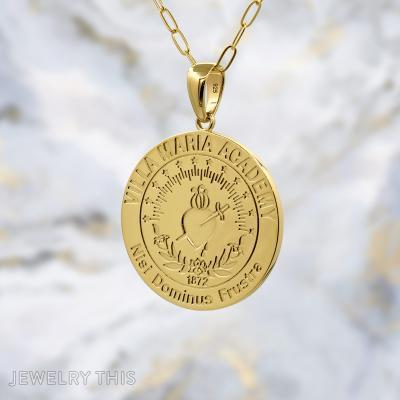
This medallion pendant reproduces a school’s institutional crest in dimensional, engraved detail: a sacred heart ...

Skillfully crafted in sterling silver, this round pendant showcases a magnificent three-eyed owl in 3-dimensional ...

This custom sterling silver word pendant is the perfect way to commemorate a special moment. ...

Sterling silver pendant featuring combination of the first letter of each family member’s name. Pendant: ...

A sterling silver butterfly pendant with multiple colors of purple in the wings and amethysts ...

This custom sterling silver pendant captures the essence of love and heartfelt emotion. Crafted with ...

This elegant gold pendant features a timeless circular frame with a modern, artistic twist. At ...
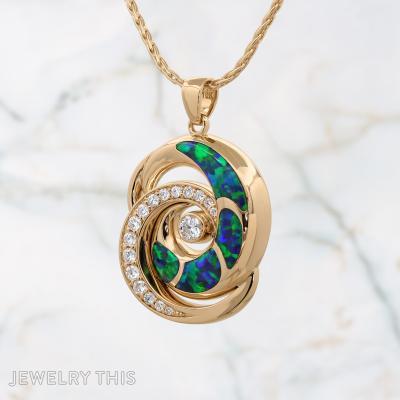
This exquisite custom pendant captures the essence of a rolling ocean wave, expertly crafted in ...



