

Pink & Blue Sapphire Cluster Pendant — Gift for a Godmother
$$
14k white gold, lab pink sapphire, purple sapphire, lab blue sapphire, lab diamond
A client came to us designing a birthday pendant for her boss to give as a gift to the godmother of twins. Working from a reference photo of a five-stone cluster, the design was reworked into a four-stone version — a center pink sapphire with blue, purple, and diamond accents — to fit the budget while keeping the same layered, asymmetric look. When the final render was shared, the client wrote back: 'this looks great!! Thank you so much!'
'That looks beautiful! My boss loves it. Thank you!!!' — on design approval
'this looks great!! Thank you so much!' — on seeing the final render
Quick specs
Design type
Primary Metal
Shape / Cut
Primary Stone
Style
Design Complexity
Intent: Certainty
Size
Pendant cluster approx 4.5mm center stone, 3mm accent stones. Chain 18in 14k white gold cable chain.
How they made it distinctive
-
01
Four-stone asymmetric cluster adapted from a five-stone reference photo to fit the client's budget while preserving the varied-size, layered look
-
02
Center lab pink sapphire paired with blue and light purple sapphire accents for a mixed, personalized color palette rather than a single stone color
-
03
A small lab diamond was added as the fourth stone specifically to stay within budget while still echoing the reference photo's composition
-
04
Designed as a gift piece on behalf of a boss, for a godmother of twins, built around a specific birthday deadline
How you'd make it yours
Stone count: this piece uses a four-stone cluster — a new commission could use three, four, or five stones depending on budget
Stone color palette: this piece mixes pink, blue, and purple sapphires — a new piece could use a single color family or a different combination
Metal: this piece is 14k white gold — the same cluster design works in yellow or rose gold
Chain: this piece uses an 18-inch cable chain — length and link style can differ on a new commission
One of a kind: this exact pendant was designed for one client's gift and is not reproduced — a new commission is an original piece inspired by this one, not a copy
Design changes made
The design shifted from the original three-sapphire request to a four-stone cluster after the client asked to get closer to the varied sizing of the original reference photo; a small lab diamond was added as the fourth stone to stay within budget, and one accent sapphire was changed from pink to a light purple for color contrast.
Who this is for
This piece is for someone looking for a colorful, personalized gift pendant rather than a single traditional stone. It's especially right if you're working within a defined budget but still want a layered, multi-stone look with some asymmetry and personality.
How it's made
Once the design was approved, the piece was 3D printed in wax using the finalized digital model, then attached to a wax tree and set into a flask. The flask was placed in a kiln to burn out the wax, leaving a hollow mold, and molten 14k white gold was cast into that mold under pressure. After cooling, the raw pendant was removed from the mold and prepared for finishing.
The cast pendant was cleaned, polished, and refined to bring the cluster's prong work to its final smooth finish. The center lab pink sapphire, the blue sapphire, the light purple sapphire, and the small diamond accent were each set by hand into individual prongs, positioned to preserve the varied-size, clustered arrangement the client requested. The pendant was then strung on an 18-inch 14k white gold cable chain.
Key note
A resin model of the piece was shared with the client before casting so she could see the exact form the cast metal would take, a step that let her confirm proportions while changes were still easy to make.
Pricing guidance
A multi-stone cluster pendant with lab-created and natural sapphires sits toward the lower end of the price range for custom gemstone pendants. Most of the baseline cost comes from the number of stones being individually prong-set rather than the metal itself. Stone count, stone origin, and chain length are what move the price most from there.
Moves price up ↑
- ↑ Using natural sapphires instead of lab-created sapphires for one or more stones
- ↑ Increasing the center stone size beyond 4.5mm
- ↑ Adding a fifth stone to the cluster to fully match the original five-stone reference
- ↑ Upgrading the chain to a thicker gauge or a different link style
- ↑ Using 18k gold instead of 14k for the pendant and chain
Moves price down ↓
- ↓ Reducing the cluster to three stones instead of four
- ↓ Using the smallest available stone sizes for the accent sapphires
- ↓ Choosing a shorter chain length
- ↓ Selecting a single stone color family instead of a mixed-color cluster
- ↓ Using a simple bail-and-chain setting instead of a cluster of individually pronged stones
Questions people ask
Yes, a cluster pendant like this one combines several different sapphire colors — in this case pink, blue, and light purple — along with a small diamond accent. Each stone is set into its own prongs, so mixing colors doesn't require any special setting technique beyond standard prong work. This approach works well for clients who want a personalized palette rather than a single matching stone color. The stones can be arranged symmetrically or, as in this design, in an asymmetric cluster inspired by a reference photo.
Lab-created sapphires have the same chemical composition, hardness, and visual appearance as natural sapphires — both score a 9 on the Mohs hardness scale, making them highly durable for daily wear. The difference is origin: natural sapphires are mined from the earth, while lab-created sapphires are grown in a controlled environment over a much shorter time. For a multi-stone cluster like this, lab-created sapphires typically cost significantly less than natural stones of comparable size and color, which allows for more stones or larger stones within the same budget. Visually, most people cannot tell the difference without specialized equipment.
A small cluster pendant with three to four prong-set stones in 14k white gold generally falls at the lower end of the price range for custom gemstone jewelry. The main cost driver is the number of individually set stones rather than the metal weight, since each stone requires its own prong work. Choosing lab-created stones over natural ones, and keeping the stone count to three or four, are the two biggest ways to keep the cost down. Chain length and gauge also factor in but have a smaller effect on the total.
The full process for a piece like this typically runs around four to six weeks from deposit to delivery. The first week or so is spent on the 3D design and render, which the client reviews and approves before any metal is cast. Production — wax printing, casting, polishing, and hand-setting each stone — takes several more weeks, and a resin preview is often shared partway through so the client can see the piece's form before it's finalized in metal. Shipping typically adds a few more days once the piece passes final inspection.
Yes, a reference photo is typically used as a starting point rather than an exact template, especially when the stone count or budget differs from the original. In this case, the client's reference showed five stones, but the final design used four stones with adjusted sizing to keep the same layered, varied-size look within a smaller budget. The design team can sketch out options showing how the proportions shift as stones are added or removed, so the client can approve the look before anything is cast.
Yes, 14k white gold is a standard, durable choice for pendant work and holds up well to daily wear. It typically has a rhodium plating applied to give it a bright white finish, which may need occasional re-plating over years of wear as it gradually dulls with exposure to skin oils and daily contact. For a pendant that isn't handled as roughly as a ring, this maintenance is minimal. 14k is also a common choice because it balances durability with workability for detailed prong-setting around multiple small stones.
Yes, custom pendant projects can often be completed within four to six weeks, which covers design, casting, stone setting, and shipping. If you have a specific date in mind, like a birthday, it's best to share that deadline at the very start of the design process so the production schedule can be planned around it. Projects with a firm deadline are prioritized accordingly, though more complex multi-stone designs may need the full timeline to allow for careful stone sourcing and setting. Confirming the deadline early also leaves room for a design revision round if needed.
Explore Similar Creations
Every masterpiece starts with a spark. Explore how our clients raw ideas - sketches, heirlooms, inspirations - were transformed into bespoke works of arts.
This pendant reimagines the sand dollar as a wearable keepsake, cast in sterling silver with ...

This 14karat Yellow gold Family pendant features a unique and elegant design. The pendant is ...

This pendant takes a classic fleur-de-lis motif and reworks it into a bolder, more masculine ...

Created in response to the client’s rebranding efforts, this medal reflects the updated design of ...

Elevate your style with our exquisite 18kt yellow gold tetragrammaton cut-out pendant. Measuring a radiant ...

This pendant was inspired by a daughter’s years of ballroom dancing and a celebration of ...

This custom key pendant is a heartfelt symbol of commitment and strength, created to celebrate ...

This sterling silver skull pendant was created to unleash an edgy style with. Crafted with ...
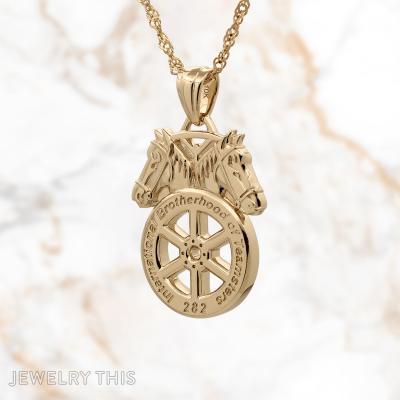
This remarkable custom pendant features the iconic teamsters logo, expertly crafted in radiant 10k yellow ...

Crafted with exquisite craftsmanship and profound symbolism, this custom pendant is a testament to faith ...
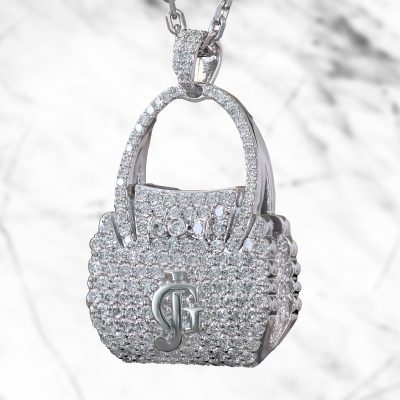
A fully dimensional handbag pendant crafted in14k white gold and set with VS1 lab created ...



