

Nautical Anchor Pendant with Diamond Filigree & Pearl Drop
$$$
14k yellow gold, lab-grown diamonds, pearl
A client returning for a second nautical-themed pendant worked through several rounds of sketches to get the design just right — starting from a ring's filigree pattern as inspiration, adjusting the border from star accents to a diamond pattern, and settling on a round frame with crossed anchors and a pearl drop to match her original piece. She wanted the new pearl matched closely to the shape on her first pendant, and the team sourced a slightly smaller teardrop pearl and added extra jump rings to prevent kinking.
'I love it!' — on seeing the first photorealistic render
Quick specs
Design type
Primary Metal
Shape / Cut
Primary Stone
Accent Stones
Design Complexity
Intent: Certainty
Size
Pendant disc 3/4 inch (19mm) diameter. Chain 18in cable style.
How they made it distinctive
-
01
Round frame chosen specifically to echo a ring's filigree pattern the client admired, translated into a circular border
-
02
Extra jump rings added at the pearl's connection point to prevent kinking, a lesson carried over from her first nautical pendant
-
03
Single diamonds placed at the top and bottom of the border to read like a sun or star on the horizon, reinforcing the nautical theme
-
04
Teardrop pearl sourced to closely match the shape of the pearl on her original piece, even at a slightly smaller size
-
05
Polished finish kept throughout rather than the matte background originally proposed, so the anchors and border stones stand out against a smooth surface
How you'd make it yours
Stone type: this piece uses lab-grown diamonds in the border; a new commission could use natural diamonds for the same look at a different cost
Pearl shape: this piece uses a teardrop pearl; a new commission could use a round pearl or a different drop shape
Metal: this piece is 14k yellow gold; the same anchor-and-filigree design works in white or rose gold
Chain: this piece uses an 18-inch cable chain; a new commission could use a wheat chain or a different length
Border pattern: the scalloped diamond border on this piece could be adjusted to a different filigree or scroll pattern on a new design
One of a kind: this exact pendant was designed for one client as a second piece in her nautical series, and is not reproduced — a new commission is an original piece inspired by this one
Design changes made
The border design went through multiple iterations — client reviewed several diamond-pattern borders and chose one with a single stone at the top and bottom resembling a sun or star on the horizon, removing an earlier plan for scattered star accents that felt too crowded against the anchors.
Who this is for
This piece is for someone building a personal collection of meaningful pieces around a theme that matters to them, not just picking out one item. It's especially right if you already have a piece you love and want a companion to it, matching its spirit without being an exact copy, and if you care about small wearability details like how a dangling pearl moves over time.
How it's made
Once the design was finalized, a wax model of the pendant was produced using a 3D printer and attached to a wax tree inside a flask. The flask was placed in a kiln and the wax burned out, leaving a hollow mold. Molten 14k yellow gold was then poured into the mold, and once cooled, the piece was extracted, cleaned, and polished.
The crossed-anchor relief and scalloped border were cleaned up by hand after casting to keep the detail crisp at a 3/4-inch diameter. Small round lab-grown diamonds were set along the sides and top/bottom of the border, and a teardrop pearl was attached beneath the disc on a short link fitted with extra jump rings so it can move freely without kinking. The entire piece was finished in a polished gold rather than the matte background originally proposed, so the anchors and stones read cleanly against the smooth disc.
Key note
Extra jump rings were deliberately added to the pearl's connection point — a small construction detail specifically meant to prevent the kinking that can happen with a single connecting link.
Pricing guidance
A nautical-themed gold pendant with a cast relief design, diamond border accents, and a pearl drop sits in the mid range for pendants of this complexity. Most of the cost comes from the detailed relief casting and hand-finishing of the border pattern, plus the diamond setting. Chain choice and diamond origin are the two biggest variables from there.
Moves price up ↑
- ↑ Upgrading from lab-grown to natural mined diamonds in the border
- ↑ Choosing a heavier woven chain style instead of a cable chain
- ↑ Increasing the diamond count or size along the border
- ↑ Adding more intricate filigree detailing to the scalloped edge
- ↑ Using a larger or higher-grade pearl drop
Moves price down ↓
- ↓ Choosing a shorter or lighter-gauge chain
- ↓ Reducing the diamond count along the border
- ↓ Omitting the pearl drop for a simpler finished edge
- ↓ Selecting a smaller pendant diameter with less relief detail
- ↓ Using a round pearl instead of a sourced teardrop shape
Questions people ask
Yes, this exact combination — a round disc with a relief anchor motif and a pearl hanging beneath it — is a common nautical-themed design. The anchors are typically cast in relief directly into the disc, and the pearl is attached below on a small connector with extra jump rings to keep it from kinking. Round frames work well for this kind of symmetrical design since the anchors can cross cleanly in the center. The border can be left plain, scalloped, or set with small stones depending on preference.
Yes, lab-grown and natural diamonds have identical optical properties, so they sparkle exactly the same to the naked eye. The only real differences are origin and price, with lab-grown typically costing less for the same clarity and color grade. For small accent stones like the ones framing a pendant border, there is no visible difference in brilliance. Many clients choose lab-grown specifically because the savings don't come at the cost of appearance.
A pendant like this — a cast relief design with a diamond-accented border and a pearl drop — typically falls in the mid range for custom pendant work. The main cost drivers are the detailed casting and hand-finishing required for a raised design plus the labor of setting multiple small stones. Chain style and diamond origin (lab-grown versus natural) are the two factors that move the price most from there.
A pendant of this complexity typically takes about one week for the design phase, including sketches and a photorealistic render for approval. Once the design is approved and paid, production runs roughly four to five weeks, covering wax modeling, casting, stone setting, and finishing. Sourcing matched pearls or replacement stones for quality control can occasionally add extra time, so it's worth building in some flexibility around the final week.
A single connecting jump ring can sometimes let a dangling pearl twist and kink over time, especially with daily wear. The fix is to add one or two extra jump rings at the connection point, which gives the pearl more range of motion and prevents it from catching in one position. This is a simple construction adjustment that doesn't change the look of the piece but meaningfully improves how it wears day to day. It's a good question to ask about any pendant with a dangling element.
A round relief pendant has a practical lower size limit determined by how much detail needs to fit — anchors, a border pattern, and diamond accents typically need at least a certain diameter to avoid looking crowded. For a design with this level of detail, roughly 3/4 of an inch is a common minimum for comfortable daily wear and clear detail. Going smaller usually means simplifying the design, such as reducing the border pattern or omitting some stones. It's best to discuss sizing early since it affects how much detail the design can support.
A cable chain is made of simple oval or round links connected in a classic open pattern, giving a clean, traditional look. A wheat chain is more tightly woven, with multiple strands twisted together for a denser, more textured appearance. Cable chains are generally lighter and less expensive than wheat chains of the same length and gauge. The choice is mostly aesthetic, though a wheat chain will feel slightly heavier and more substantial around the neck.
Explore Similar Creations
Every masterpiece starts with a spark. Explore how our clients raw ideas - sketches, heirlooms, inspirations - were transformed into bespoke works of arts.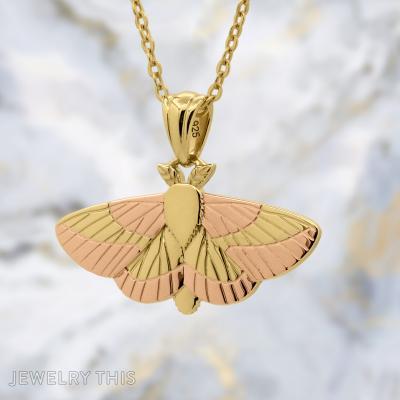
A delicate moth pendant symbolizing transformation and light. Crafted in silver with 14kt yellow and ...

This stunning custom-made wolf pendant captures the wild spirit with an elegant touch. Crafted from ...

Exquisitely crafted, this custom yin yang pendant symbolizes harmony and unity within relationships. Made of ...

This Custom silver pendant set with birthstones is inspired by the iconic LEGO® block. The ...
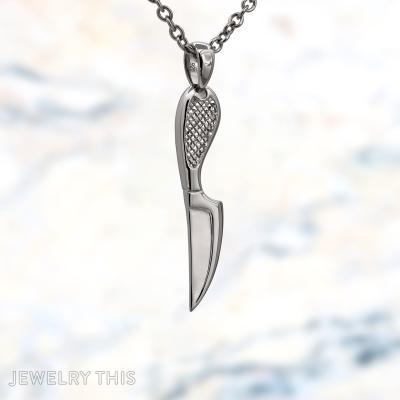
This pendant takes the form of a knife, cast in sterling silver from a custom ...

This sterling silver pendant holds a personal prayer, a heartfelt reminder that spirals around its ...

Inspired by timeless love, this Eternal Connection pendant is a touching 5th anniversary gift. Crafted ...

This custom compass pendant beautifully embodies a meaningful journey, featuring coordinates representing the birthdays of ...

This pendant reproduces a police department’s badge in 14k yellow gold, with the shield, eagle, ...

In this custom logo pendant the iconic letter “E” takes center stage, expertly crafted in ...

The Gold plated Silver pendant features a beautifully detailed elephant walking with its trunk lifted ...

This custom sterling silver logo pendant is a bold statement piece, measuring one inch in ...



