


Lucky Horseshoe Pendant — Sterling Silver, Engraved Back
$
Sterling silver
R. wanted to recreate a horseshoe pendant his son already wears, matching its exact scale, lettering style, and a meaningful date on the back. He was precise about every detail — the penny-sized scale, the indented lettering instead of printed text, and a bail that would let the piece sit flat on the chain — and the team adjusted the design twice to get those details right before he approved it.
'That's looks great!! Thanks . Looking fwd to the final product.' — on design approval
Quick specs
Design type
Primary Metal
Primary Stone
Accent Stones
Design Complexity
Intent: Certainty
Size
Pendant approximately 0.75in (19mm) horseshoe height; large oval bail ring added to sit flat against a separate jump ring.
How they made it distinctive
-
01
Sized to match a penny for scale, chosen specifically to mirror an existing piece worn by a family member
-
02
Lettering and dot details cast as indentations rather than printed, so the texture reads the same as the original reference piece
-
03
Oversized oval bail added above the horseshoe's own loop specifically so the pendant sits flat on the chain instead of twisting
-
04
Back engraved with a meaningful date, following the curve of the horseshoe shape
-
05
Each stamped dot placed to mirror the spacing seen in the reference photo
How you'd make it yours
Shape: this piece uses a horseshoe silhouette; a new commission could use any symbol meaningful to the wearer
Metal: this piece is sterling silver; the same cast-lettering design works in 14k gold or gold-plated silver
Engraving: the back currently carries a date; a new piece could carry initials, coordinates, or a short phrase instead
Size: this piece is sized to match an existing reference piece; a new commission is sized to its own wearer's preference
Bail style: this piece uses an oversized oval bail for flat hanging; a new commission could use a standard bail if that isn't a concern
One of a kind: this exact pendant was designed to match one family's existing piece and is not reproduced — a new commission is an original piece inspired by this one, not a copy
Design changes made
After reviewing the first render, the client asked for the lettering and dots to be properly indented rather than appearing as flat printed text, for a larger bail loop so the pendant would hang flat, and for a small adjustment to the engraved date and dot placement on the back to match the reference piece.
Who this is for
This piece is for someone who already has a meaningful piece of jewelry in the family and wants to extend it rather than start over — a second version for another family member, matched as closely as possible. It's especially right if you care about getting small details exactly right: the scale, the texture of the lettering, the way it hangs on the chain.
How it's made
Once the design was finalized, the piece was 3D printed in wax and attached to a wax tree inside a flask. The flask was placed in a kiln to burn out the wax, leaving a hollow mold in its place. Molten sterling silver was then poured into that mold under heat, and once cooled, the raw cast pendant was broken out of the investment material and prepared for finishing.
The lettering and the small dot details were cast directly into the piece as indentations rather than printed or engraved afterward, so the raised bail, horseshoe band, and stamped letterforms all finish as one solid piece. After casting, the pendant was cleaned up, smoothed, and polished to round over the sharper edges left by the 3D-printed original, and the date was engraved along the back curve as a final step before the large oval bail was attached to let the piece hang flat.
Key note
The lettering on the front isn't printed or added after casting — it's part of the original 3D model, so it comes out of the mold already indented into the metal.
Pricing guidance
A small cast sterling silver pendant like this one sits toward the lower end of the price range for custom pendants. The main cost driver is the 3D modeling needed to recreate fine surface details like stamped lettering and dot accents at a small scale, rather than the metal itself. Adding engraving and bail modifications moves the price only slightly from the baseline.
Moves price up ↑
- ↑ Increasing the pendant size beyond the penny-sized scale requested here, which uses more metal and modeling time
- ↑ Switching from sterling silver to 14k gold or gold-plated silver
- ↑ Adding a two-sided engraving with multiple lines of text or additional symbols
- ↑ Adding gemstone accents to the horseshoe band
- ↑ Requesting a hand-finished rather than cast lettering for extra crispness
Moves price down ↓
- ↓ Reducing the pendant to a smaller, simpler size with less surface detail
- ↓ Omitting the custom bail modification and using a standard jump ring
- ↓ Skipping the back engraving entirely
- ↓ Choosing a plain horseshoe shape without stamped lettering or dot details
- ↓ Using a thinner gauge of silver for the casting
Questions people ask
Yes. This pendant was designed by matching a reference photo as closely as possible, including the exact scale, the cast lettering style, and small stamped dot details. The process starts with a 3D render based on the photo and description, which the client reviews and can request changes to before anything is cast. Matching an existing piece exactly does take a bit more back-and-forth than an original design, since small details like letter depth and bail shape need to be confirmed against the reference image.
On this piece, the lettering is cast directly into the metal as an indentation, not printed on top of the surface. This is done by building the letters into the 3D digital model before the piece is cast in wax and then silver, so the depth is part of the metal itself rather than a coating. Indented lettering holds up far better over time than printed text, which can wear off or scratch away with daily use. If a design calls for raised or printed lettering instead, that's a different technique and should be discussed upfront.
Sterling silver (.925) is durable enough for daily wear but will tarnish over time with exposure to air and moisture, especially if not cleaned periodically. It's softer than gold or platinum, so a pendant with fine detail like stamped lettering can wear smoother at the edges after years of handling. Regular polishing with a silver cloth keeps the tarnish at bay and the detail crisp. For something that will be worn constantly for decades without maintenance, a harder metal like 14k gold holds detail slightly longer, but sterling silver is a normal and durable choice for this kind of pendant.
A pendant around three-quarters of an inch in cast sterling silver, with stamped lettering and a custom bail, typically falls toward the lower end of the price range for custom pendant work. Most of the cost comes from the 3D modeling time needed to get fine details like small letters and dots to read clearly at a small scale, not from the silver itself. Adding engraving on the back or modifying the bail shape adds a modest amount to that baseline.
From the initial design deposit to a finished, shipped piece, the process typically takes around five to six weeks total. The first week or so covers the 3D design and render, which may go through a couple of rounds of revisions based on feedback. Once the design is approved, casting, finishing, and engraving typically take another four to five weeks before the piece ships.
Yes, bail shape and size can be adjusted during the design phase before casting. On this piece, a larger oval bail was added above the horseshoe's own loop specifically so the pendant would hang flat against the chain instead of twisting to the side, a common issue with small bails on pendants with an off-center loop. This kind of adjustment is best made at the 3D render stage, since changing a bail after casting is more difficult than designing it correctly from the start.
Yes, a date or short text can be engraved along the back of a pendant like this one, following the curve of the shape if needed. The exact format of the date (such as numerals versus written out) should be confirmed carefully before production, since engraving is difficult to correct once the piece is cast and finished. On a curved surface like a horseshoe, the engraving typically follows the contour of the piece rather than running in a straight line.
Yes, small repeating details like stamped dots can be built into the 3D model to match a reference photo, including their placement and spacing. These details are typically cast as part of the piece rather than added afterward, so they hold their shape and position permanently. Getting dot placement to mirror a reference image closely usually takes a review of the first render, since fine details are easier to adjust digitally before casting than after.
Explore Similar Creations
Every masterpiece starts with a spark. Explore how our clients raw ideas - sketches, heirlooms, inspirations - were transformed into bespoke works of arts.
This key-shaped pendant is a unique and meaningful piece. The top head of the key ...

This custom pendant intricately captures the silhouette of Africa serving as a tribute to its ...

This custom pendant is a captivating blend of elegance and simplicity. Crafted in yellow gold, ...

Capture the essence of love with this silver cross cut-out pendant, a heartfelt tribute to ...

This exquisite Silver pendant takes the form of a majestic female lion, exuding regal grace ...

This heartfelt pendant features a 1-inch silver heart with a charming buffalo dangling at its ...

This powerful yellow gold pendant carries a profound message of equality and freedom. At the ...
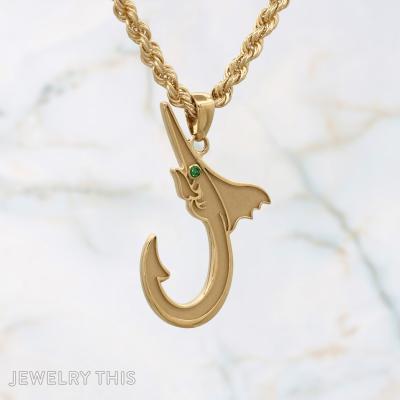
This pendant reshapes a logo’s lettering into a wearable emblem: a billfish curving into a ...

This pendant was lovingly recreated for a client who wanted to preserve the spirit of ...


Bursting with joy and nostalgia, this pendant beautifully replicates a cherished carnival ride designed by ...

This 14k white gold pendant pairs two cut-out snowflakes, each catching light through their faceted ...



