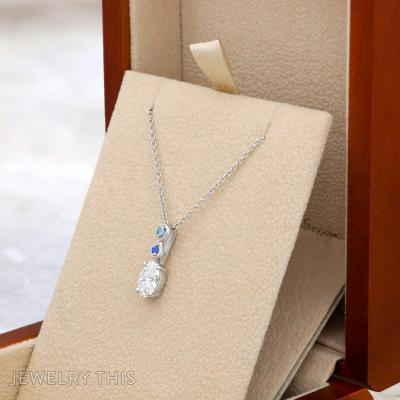
Infinity Anniversary Pendant with Aquamarine & Sapphire
$$$
Platinum, lab diamond, aquamarine, sapphire
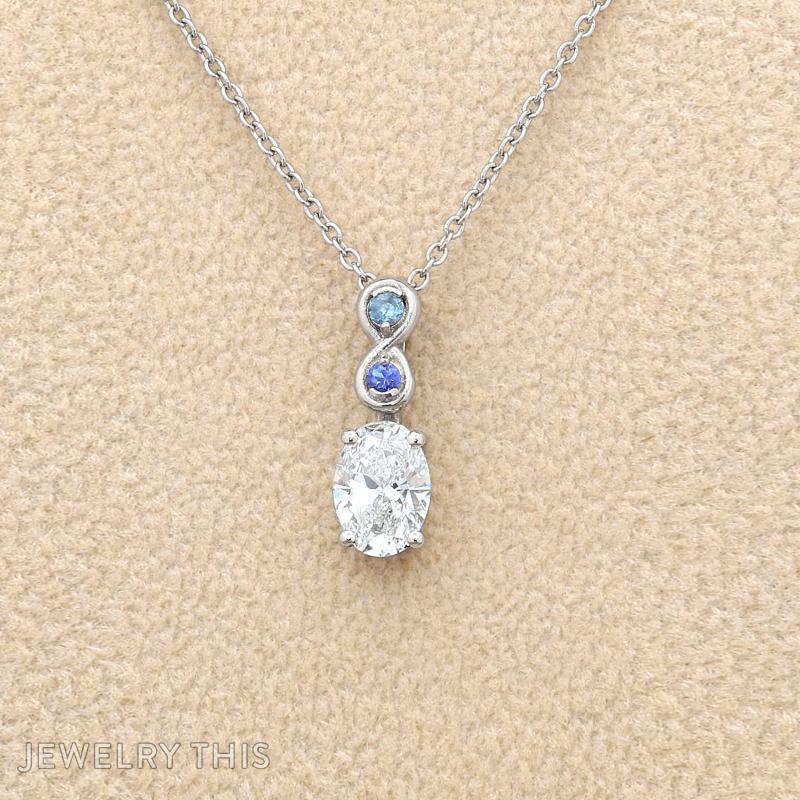
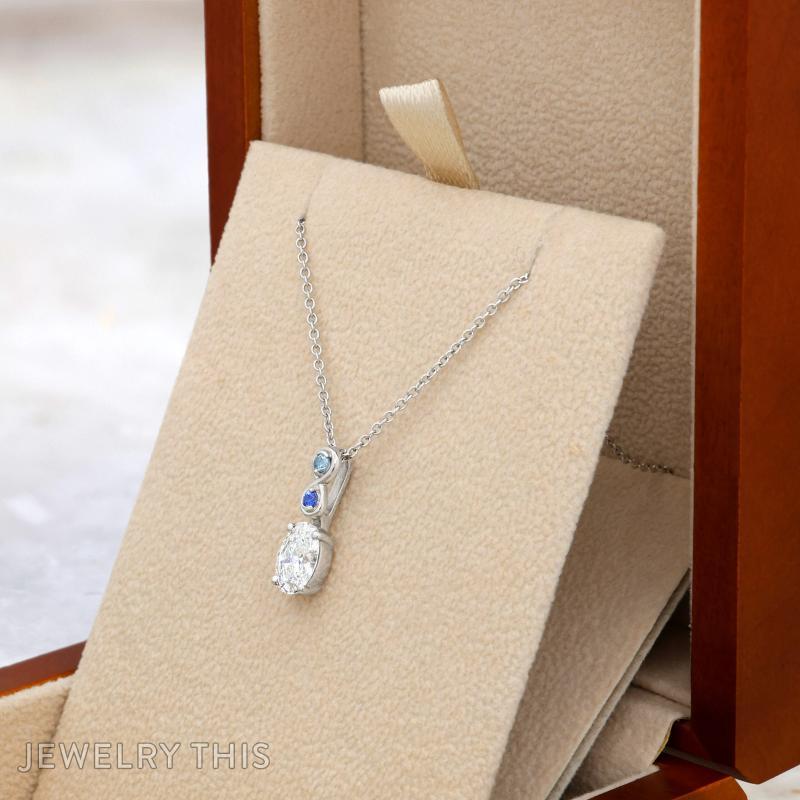
A client wanted to mark his 25th wedding anniversary with a pendant that carried both their birthstones and a nod to lasting love. The design started with a halo of stones around the center diamond, but he worried it would feel too busy for her taste — so the halo was dropped, leaving the diamond and the infinity twist with its aquamarine and sapphire to carry the design on their own.
Quick specs
Design type
Primary Metal
Shape / Cut
Primary Stone
Style
Design Complexity
Intent: Certainty
Size
Pendant approximately 3/4 inch. Platinum cable chain, 1.5mm width.
How they made it distinctive
-
01
Aquamarine and sapphire chosen specifically as March and September birthstones rather than generic blue accent stones
-
02
Halo of accent stones removed late in the design process to keep the piece from feeling too busy
-
03
Infinity-shaped twist doubles as the setting for both accent stones, combining symbolism with function
-
04
Platinum chosen for its durability and hypoallergenic properties for decades of wear
-
05
Sized deliberately smaller than the client's first instinct — from a full inch down to 3/4 inch — for a more understated result
How you'd make it yours
Stone type: this piece uses a lab diamond center — a new commission could use a natural diamond or moissanite for a different look or cost
Halo: this piece has no halo around the center stone — a new piece could add one in diamonds or colored stones for more sparkle
Metal: this piece is platinum — the same twist-and-bail design works in white gold or sterling silver
Accent stones: this piece uses aquamarine and sapphire for specific birth months — a new commission could use any two birthstones or colored gems
One of a kind: this exact pendant was designed for one client's anniversary and is not reproduced — a new commission is an original piece inspired by this one, not a copy
Design changes made
The halo of alternating accent stones around the center diamond was removed after the client felt it looked too busy in the render; the design was simplified to the center diamond and the infinity twist alone, which he preferred in the mockups.
Who this is for
This is for someone who wants an anniversary piece with real meaning built into small details, not a piece that announces itself by size. It's especially right if you're drawn to birthstone symbolism but want it handled quietly — one clean motif rather than a full row of stones around the center.
How it's made
Once the design was finalized, a 3D CAD model was built and used to produce a resin render for the client's approval. After approval, the oval lab-created diamond was sourced and confirmed to fit the setting before the platinum was cast using a lost-wax casting method, producing the pendant's basic form including the prong setting and the infinity-shaped bail.
After casting, the piece was cleaned up and polished to a mirror finish throughout, since the design carries a single consistent finish rather than mixed textures. The oval diamond was set into its four-prong setting first, followed by the aquamarine and sapphire, each individually prong-set into the twist of the infinity bail above. The platinum cable chain was finished and attached last.
Key note
The halo originally planned around the center diamond was removed at the design stage, which simplified the stone-setting work to just three stones total rather than a full ring of accents.
Pricing guidance
A platinum pendant with a lab diamond center and two birthstone accents in a moderately detailed setting sits toward the higher end for pendants of this style, largely because platinum is denser and more costly to work with than gold or silver. Labor for the twist bail and individual stone setting is the next largest driver. Stone choice and metal are where the price moves most from there.
Moves price up ↑
- ↑ Choosing a natural diamond instead of a lab-created diamond for the center stone
- ↑ Increasing the center stone size beyond 1-1.25 carats
- ↑ Adding a halo of accent stones around the center diamond
- ↑ Upgrading the chain to a heavier gauge or a more elaborate link style
Moves price down ↓
- ↓ Switching from platinum to sterling silver or white gold
- ↓ Choosing a smaller center stone
- ↓ Using moissanite instead of a diamond for the center stone
- ↓ Simplifying the bail to a plain design without the infinity twist and accent stones
Questions people ask
Lab-created and natural diamonds are chemically and visually identical — both are pure carbon with the same hardness, brilliance, and clarity potential. The difference is origin: natural diamonds are mined, while lab diamonds are grown in a controlled environment over a period of weeks. For a center stone in the 1 to 1.25 carat range, lab diamonds typically cost significantly less than natural diamonds of comparable quality. Many clients choose lab diamonds specifically to get a larger or higher-quality stone within the same budget.
Platinum is denser, more durable, and naturally white, so it never needs rhodium replating the way white gold does over time. It's also hypoallergenic, which matters for anyone with sensitive skin. The tradeoff is cost and weight — platinum is more expensive to work with than gold or silver because more raw material is needed and it's harder to cast. For a pendant meant to be worn for decades, many clients feel the durability and lack of maintenance are worth it.
Aquamarine is the birthstone for March, and sapphire is the birthstone for September. Pairing them in one piece is a common way to represent two people's birth months, especially in anniversary or couple's jewelry. Aquamarine has a light, airy blue tone, while sapphire runs darker and more saturated — the contrast between the two is often used deliberately in a design like this.
A platinum pendant with a lab diamond center and two smaller birthstone accents set in a detailed bail generally falls in the mid-to-upper range for custom pendant work. Platinum's material cost and the labor for individually setting multiple small stones are the two biggest cost drivers. Removing a halo, using a smaller stone, or switching to a lab-alternative like moissanite are all ways to bring the cost down without losing the core design.
A custom pendant typically takes about a week for the design phase — sketch, 3D model, and rendered approval — followed by several more weeks for sourcing the center stone, casting, and hand-finishing. Rush timelines are possible when a client has a fixed deadline like an anniversary or birthday, though they can add pressure to the sourcing and quality-check steps. It's worth building in extra time whenever possible rather than relying on a rush turnaround.
Yes — a halo of alternating stones around the center diamond is a common way to add more sparkle and color to a pendant like this. It was considered for this design but ultimately left off in favor of a cleaner, simpler look. A new commission could reintroduce a halo, use all-diamond accents, or leave it off entirely depending on how bold or subtle the wearer wants the piece to feel.
Platinum can be resized and repaired, but it requires a jeweler experienced in working with it, since it behaves differently under heat than gold or silver. It's denser and has a higher melting point, so standard gold-working tools and techniques don't always translate directly. This isn't a reason to avoid platinum — it just means any future resizing or repair should go to a jeweler who explicitly works with platinum.
An infinity symbol is a common way to represent enduring or unending love, which makes it a natural motif for an anniversary piece. In this design, the infinity-shaped twist sits above the center stone and holds the two accent stones within its curves, so the symbolism and the birthstone detail work together in one small element rather than as two separate design features.
Explore Similar Creations
Every masterpiece starts with a spark. Explore how our clients raw ideas - sketches, heirlooms, inspirations - were transformed into bespoke works of arts.
This custom pendant is a heartfelt tribute to an adoption agency. Crafted in lustrous 14k ...


This pendant, inspired by a logo originally found on a hat, is a striking and ...

This rose gold heartfelt pendant symbolizes the personal journey to have a child. Crafted in ...

The captivating geometric design of this pendant holds a profound significance for the wearer. Similar ...

This custom sterling silver pendant is an elegant piece with a minimalist design that carries ...

This Silver pendant is a recreation of a beloved lost treasure. This pendant captures the ...


An exquisite 1-inch 18kt yellow gold name pendant, meticulously crafted to capture timeless beauty and ...

Club logo pendant with dimensional text. This pendant is 2 inches in size and was ...

This pendant centers a round lab-grown emerald inside a cushion-shaped double halo of small round ...

This striking 1-inch pendant, crafted in black rhodium-plated silver, brings a company logo to life ...