Cross, Anchor & Hockey Stick Pendant in Gold
$$$
14k yellow gold
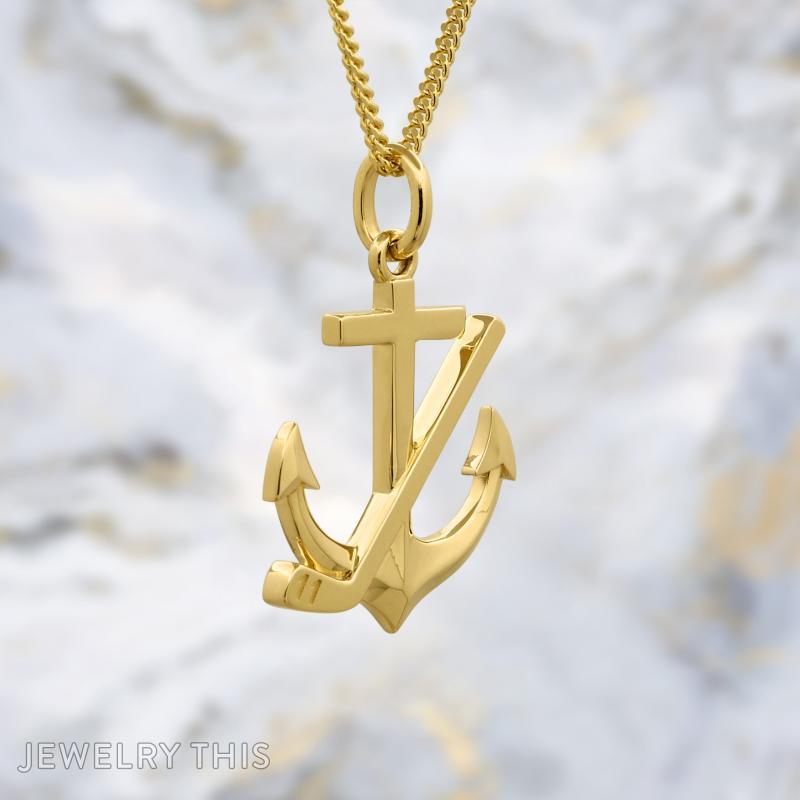
A father wanted one pendant to hold everything his daughter was stepping into: her faith, her graduation from the Naval Academy, and her role as captain of the hockey team. He worked through the design over several weeks, combining a cross, an anchor, and a hockey stick into a single symbol, with her jersey number worked into the blade. He gave it to her in person, and though he later mentioned the chain turned out thinner than she needed for how active she is, he confirmed she loved the pendant itself.
'LOOKS Great! Lets finish up and let me know' — on design approval
'she loved the pendant' — on delivery
Quick specs
Design type
Primary Metal
Primary Stone
Accent Stones
Design Complexity
Intent: Certainty
Size
Pendant approximately 22mm (3/4-1 inch). Chain length 16 inches, curb style.
How they made it distinctive
-
01
Three separate symbols — cross, anchor, and hockey stick — engineered to overlap into one fused design rather than three attached charms
-
02
The number 11 engraved into the hockey stick blade to mark the wearer's team role
-
03
High polish finish chosen specifically for durability and daily wear over a textured alternative
-
04
Pendant size reduced from an initial 1 inch to 22mm to balance visual impact against budget
-
05
Curb chain selected specifically for its strength, given the wearer's active lifestyle
How you'd make it yours
Symbol combination: this piece merges a cross, anchor, and hockey stick — a new commission could combine different meaningful symbols in the same fused style
Metal: this piece is 14k yellow gold — the same design language works in 18k yellow gold, white gold, or rose gold
Chain: this piece uses a 16-inch curb chain — a new piece could use rope, figaro, or cable depending on preferred strength and look
Engraving: the hockey stick blade carries a number on this piece — a new commission could engrave initials, a date, or a different number in the same spot
One of a kind: this exact pendant was designed for one client's daughter and is not reproduced — a new commission is an original piece inspired by this one, not a copy
Design changes made
The design was simplified from an initial two-hockey-stick concept to a single stick after the client felt the cross plus two sticks was too busy. The number 11 was moved from the top of the stick to the blade after the design team found there wasn't room at the top, and the pendant size was reduced slightly from 25mm to 22mm to help meet budget.
Who this is for
This piece is for someone who wants one wearable symbol to represent several parts of who they are — faith, service, and personal achievement — instead of separate pieces for each. It's especially right for an active recipient who needs jewelry sturdy enough to survive daily wear without sacrificing meaning or detail.
How it's made
Once the combined design was finalized, it was built as a 3D digital model and reviewed by the design team for casting feasibility before a wax model was printed. That wax was attached to a tree and invested in plaster, then the mold was fired in a kiln to burn out the wax entirely. Molten 14k yellow gold was then cast into the resulting cavity to form the raw pendant.
After casting, the piece was cut from the tree, cleaned, and polished to a high shine across the cross, anchor, and hockey stick elements, which are fused into a single overlapping form rather than finished as separate parts. The number 11 was engraved into the blade of the hockey stick as a final detail. No stones were set, so the finishing focused entirely on surface polish and clean, crisp edges where the three symbols intersect.
Key note
The pendant's cross, anchor, and hockey stick are cast as one fused piece rather than three separate elements joined afterward, which is why the design had to be engineered so the three shapes could overlap cleanly before the mold was ever made.
Pricing guidance
A multi-symbol gold pendant combining several design elements into one fused piece sits in the mid range for custom pendant work. Most of the cost comes from the gold weight at this size plus the labor to model and clean up the intersections where multiple shapes overlap. Chain style and metal karat are the biggest levers for moving the price within this category.
Moves price up ↑
- ↑ Choosing 18k gold instead of 14k or 10k, which increases both material cost and weight
- ↑ Selecting a heavier fancy-link chain style like curb, rope, or figaro over a lighter cable chain
- ↑ Increasing the pendant size beyond 3/4-1 inch, which adds more gold and more surface to finish
- ↑ Adding gemstone accents to any of the three design elements
- ↑ Adding engraving or lettering to additional surfaces beyond the number on the blade
Moves price down ↓
- ↓ Choosing 10k gold instead of 14k, which reduces material cost
- ↓ Selecting a lighter cable chain instead of a fancy-link style
- ↓ Reducing the pendant size slightly, which lowers both gold weight and finishing time
- ↓ Simplifying the design to two combined elements instead of three
- ↓ Omitting the engraved number or lettering detail
Questions people ask
Yes, combining multiple symbols into a single fused pendant is a common custom request. The elements are digitally modeled together so they overlap cleanly and read as one design rather than separate charms bolted together. This does add design complexity compared to a single-symbol pendant, since the shapes need to be engineered to intersect without looking cluttered. The final piece is cast as one solid unit, not assembled from separate parts.
For an active wearer, fancy-link chains like curb, rope, or figaro are generally more durable than a thin cable chain because the links are thicker and more resistant to bending or snapping under stress. A cable chain is a lighter, more economical option but is more prone to weakening with heavy daily wear or physical activity. If durability is the top priority, choosing a wider gauge in any of the fancy-link styles will hold up better than a fine link. It's worth discussing expected activity level with the jeweler before finalizing chain choice, since size alone doesn't guarantee strength.
Yes, small design elements like a hockey stick blade can carry engraved numbers or initials as long as there's enough flat surface area at that scale. On a compact pendant, the exact placement sometimes has to shift from where it was originally requested if there isn't enough room, and the bottom of an element is often the most reliable spot. A simple, thick-lined font engraves more clearly at small sizes than a thin decorative script. This kind of detail is typically finalized once the render or 3D model shows exactly how much space is available.
A pendant combining several fused design elements in solid gold typically falls in the mid range for custom pendant work, mostly because of the gold weight and the labor required to model and finish the overlapping shapes. Chain style has a meaningful impact on the total, since fancy-link chains cost more than a basic cable chain. Metal karat also matters: 10k costs less than 14k, which costs less than 18k, for the same design. Pricing is typically finalized after the 3D model confirms exact gold weight and any adjustments to size.
14k gold is a solid choice for daily wear because it balances gold content with added durability from the alloy metals mixed in, making it more scratch- and bend-resistant than higher-karat gold like 18k or 22k. It will still show some wear over years of daily use, particularly at points where the pendant contacts clothing or equipment, but it holds up well under normal activity. 10k gold is even more durable due to a higher ratio of alloy, though it has a slightly less rich color. For a pendant meant to survive an active lifestyle, 14k is a common middle-ground choice between durability and gold content.
Yes, before casting, a pendant's overall size can typically be scaled down from the 3D model, which proportionally reduces every element of the design along with it. This is usually done to adjust cost, since a smaller pendant uses less gold and requires less finishing time. Once a piece has been cast, however, scaling it down is far more limited since it would require re-modeling and re-casting rather than a simple adjustment. It's best to confirm final size before the model moves to casting.
A custom pendant with multiple combined design elements typically takes about one week for the design and revision phase, covering the initial sketch, 3D model, and any adjustments after client review. Once the design is approved, production usually takes another three to four weeks, covering casting, finishing, and quality checks. More complex designs with multiple fused elements can sometimes take a bit longer in the finishing stage because of the additional detail work at each intersection. Total turnaround from approved design to a finished, shipped piece is typically around four to five weeks.
A curb chain is made of flattened, twisted links that lie flat and interlock tightly, giving it more structural strength and resistance to bending than a standard cable chain. A cable chain uses simple round or oval links and is lighter and more delicate, making it a more economical option but less suited to heavy daily wear or active use. For a pendant that will be worn during sports or physical activity, a curb chain or similarly structured fancy-link chain is generally the sturdier choice. Chain width also matters independent of style — a thicker gauge in any style adds strength.
Explore Similar Creations
Every masterpiece starts with a spark. Explore how our clients raw ideas - sketches, heirlooms, inspirations - were transformed into bespoke works of arts.
This stunning custom jewelry pendant is meticulously crafted in 14k white gold and shaped to ...

Crafted with precision, this custom silver brand logo features an intricate design adorned with black ...

Elegance meets symbolism in this 14k white gold custom pendant featuring the captivating number 444. ...

This delicate and sentimental pendant was designed as a touching tribute to a beloved husband ...
Celebrate the essence of architectural style with this geometric 10k yellow gold pendant, featuring an ...

This striking pendant features a sterling silver geometric shaped base with a gold plated design ...

This exquisite white gold pendant is a faithful recreation of a cherished family piece. The ...

Inspired by the essence of enduring love and shared milestones. This pendant was designed and ...

This elegant 14karat yellow gold pendant features the name of a loved one displayed in ...
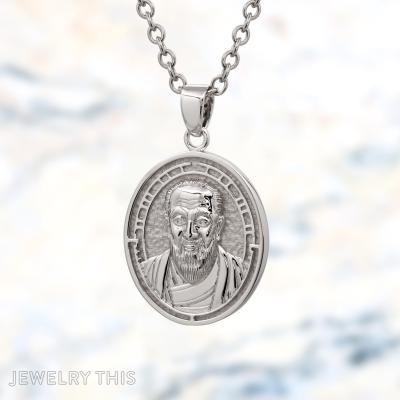
This exquisite pendant captures the profound wisdom and timeless philosophy of Confucius, embodying the core ...

14k yellow gold pendant featuring name in cutout design. Pendant: .75inches in size. Pendant hangs ...
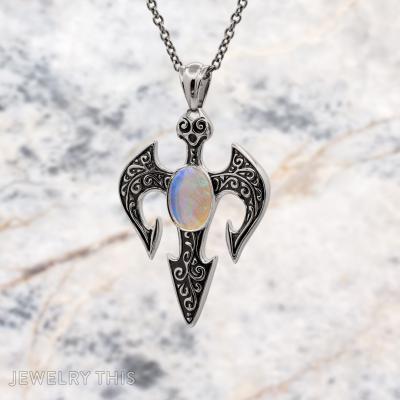
This striking men’s pendant showcases a powerful Poseidon’s trident design, expertly crafted in sterling silver ...