


Birthstone Trio Pendant — Pearl, Moonstone & Alexandrite
$$
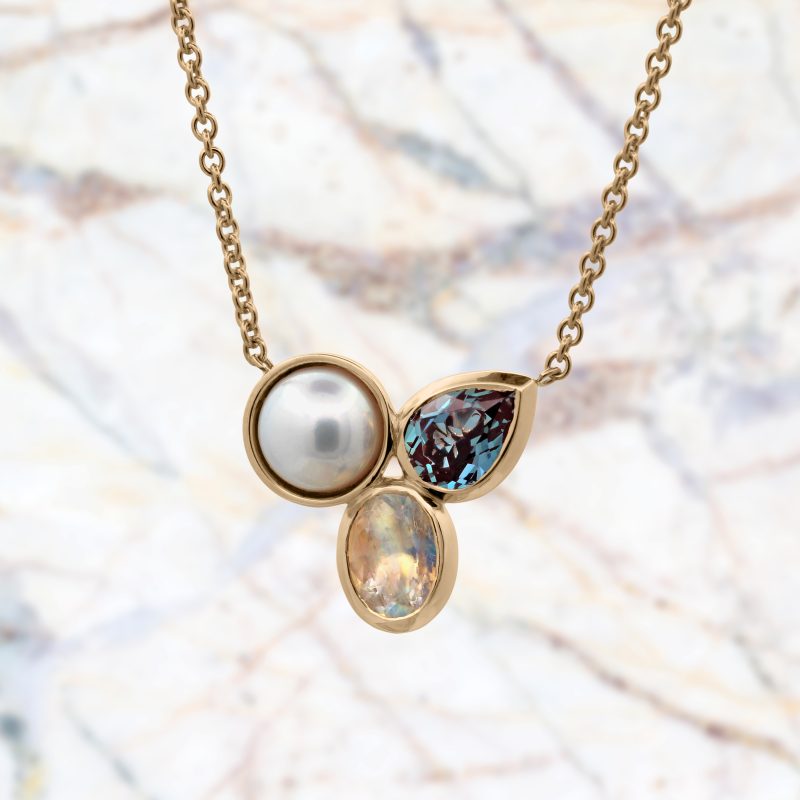
14k yellow gold, pearl, moonstone, lab-grown alexandrite
An employee was asked to help design a gift for her employer's wife, built around her birthstones — pearl, moonstone, and alexandrite. The brief was clear from the start: nothing flashy or overstated, just three meaningful stones brought together simply. After one placement adjustment during the design phase, the finished piece arrived and, as the employee put it, it was a great experience from start to finish and he was very pleased with it.
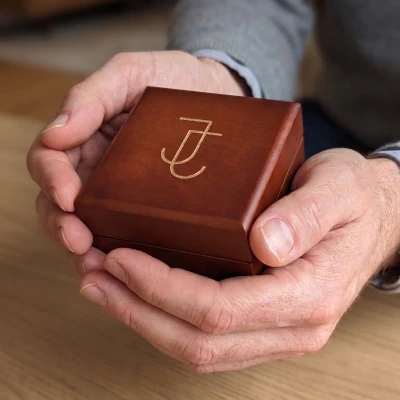
'He was so pleased with it! He said the packaging it was delivered in was beautiful as well. It was a great experience from start to finish.' — on delivery
Quick specs
Design type
Primary Metal
Shape / Cut
Primary Stone
Accent Stones
Design Complexity
Intent: Certainty
Size
Pendant cluster approximately dime-sized (~18mm); chain 18in, 14k yellow gold.
How they made it distinctive
-
01
Three different June birthstones — pearl, moonstone, and alexandrite — combined in one cluster rather than a single center stone
-
02
Three distinct cut shapes (round, oval, pear) deliberately mixed so the cluster doesn't read as repetitive
-
03
Bezel settings used throughout specifically for durability, since both pearl and moonstone are softer stones prone to chipping in prong settings
-
04
Stone placement was swapped between moonstone and alexandrite after the first render to improve visual balance
-
05
Lab-grown alexandrite chosen over natural to keep the stone accessible without sacrificing its color-change effect
-
06
No engraving or added text, kept intentionally minimal per the client's request
How you'd make it yours
Stone selection: this piece uses pearl, moonstone, and alexandrite; a new commission could use any birthstone combination for a different recipient
Stone shapes: this piece mixes round, oval, and pear; a new piece could use all one shape or a different mix
Metal: this piece is 14k yellow gold; the same bezel-cluster design works in white or rose gold
Chain length: this piece has an 18 inch chain; a new commission can be sized to its own wearer
Alexandrite type: this piece uses lab-grown alexandrite; a natural stone could be used in a new commission at a different cost tier
One of a kind: this exact pendant was designed for one recipient's birthstones and is not reproduced — a new commission is an original piece inspired by this one, not a copy
Design changes made
After seeing the first render, the client felt the layout looked slightly awkward with the stones as originally arranged, so the alexandrite and moonstone positions were swapped. This small shift made the cluster feel more balanced while keeping the same three stones and bezel approach.
Who this is for
This piece is for someone who wants meaningful stones without a flashy presentation — a wearer who has said outright that she finds over-designed jewelry a little tacky. It suits someone celebrating a birth month or family connection through stone choice rather than text, and who prefers her jewelry understated enough for daily wear.
How it's made
Once the stone positions were finalized, the design was rebuilt as a 3D model and printed in wax using a 3D printer. The wax pattern was attached to a tree, invested in plaster, and fired in a kiln to burn out the wax before molten 14k yellow gold was cast into the resulting mold. Because this piece used individually bezel-set stones rather than prongs, the stones were sourced and matched to the design before the final casting, so the bezels could be built to the exact dimensions of the actual pearl, moonstone, and alexandrite.
After casting, the pendant was cleaned, polished, and the three bezels were burnished by hand around each stone — the pearl first, given its softness, followed by the faceted moonstone and alexandrite. The chain was then attached to either side of the pendant body, completing the finished piece in a single polished yellow gold finish throughout.
Key note
Because bezel settings must be custom-fit to a stone's exact measurements, the three gemstones were sourced and approved before the pendant's final 3D model was built — stones first, metalwork second, the reverse of how most prong-set pieces are made.
Pricing guidance
A three-stone bezel-set cluster pendant in 14k gold with a mix of organic and faceted stones sits in the mid range for custom pendant work. Most of the cost comes from sourcing matched, well-cut stones and hand-fitting three individual bezels rather than a single setting. Chain length and gold weight have a smaller but noticeable effect on the final price.
Moves price up ↑
- ↑ Upgrading to 18k gold instead of 14k for more gold content by weight
- ↑ Choosing a larger or higher-grade natural alexandrite instead of lab-grown
- ↑ Adding a fourth stone or a more elaborate cluster arrangement
- ↑ Using a larger, higher-luster Akoya or South Sea pearl instead of a freshwater pearl
- ↑ Adding diamond accents around the bezels
Moves price down ↓
- ↓ Reducing the chain length or using a thinner gauge chain
- ↓ Choosing all round stones instead of mixed oval and pear shapes, which simplifies bezel fabrication
- ↓ Selecting a smaller overall cluster size
- ↓ Using sterling silver instead of 14k gold
- ↓ Choosing a single birthstone instead of a three-stone combination
Questions people ask
Yes, but both are softer stones — moonstone rates about 6 to 6.5 on the Mohs hardness scale and pearl is softer still — so the setting style matters more than it would with a diamond or sapphire. A bezel setting, where a continuous wall of metal surrounds the stone's edge, protects both stones from chips and knocks far better than open prongs would. This pendant uses individual bezels for each stone specifically because of that durability concern.
Lab-grown alexandrite is chemically, physically, and optically identical to natural alexandrite — the same color-change effect, the same hardness, the same durability. The only differences are origin and price, since natural alexandrite is extremely rare and mined stones of good size and color command a steep premium. For a piece like this, lab-grown alexandrite delivers the same visual effect and daily-wear durability without that rarity premium.
A pendant combining three different birthstones in individual bezel settings, in 14k gold, sits in the mid range for custom pendant work. The main cost driver is sourcing three well-matched stones and hand-fitting a bezel to each one's exact shape, rather than using a single mass-produced setting. Metal karat, stone quality, and overall size are what shift the price up or down from there.
For bezel settings, the metal wall has to match the exact outline and dimensions of the specific stone being set, which varies more than people expect — especially with natural-shaped stones like moonstone. Because of this, stones for a bezel-set piece are often sourced and approved first, and the final 3D model is built around their true measurements rather than an estimated size. This sequencing avoids a mismatch between the render and the finished piece.
When a design requires sourcing specific stones before the bezels can be finalized, the timeline runs a bit longer than a single-stone pendant — typically five to six weeks from design approval to completion once stones are confirmed. That includes about a week to finalize the 3D render, stone sourcing and confirmation time, and three to four weeks of production once the final design and stones are both locked in. Adjustments to stone placement, like swapping two stones' positions after seeing the first render, can be made without restarting the whole timeline.
Yes, stone placement is one of the most flexible parts of a cluster design like this one. In this project, the client reviewed the first render and asked to swap the positions of two stones because the original layout felt slightly off, and that adjustment was made directly to the 3D model before production began. This kind of placement change is a normal part of the design review process and doesn't require starting over.
This pendant is solid 14k yellow gold rather than gold plating, which matters most for the bezel edges that get handled and adjusted over time. Solid gold bezels can be re-burnished or tightened around a stone if they ever loosen, while plated bezels would wear through with that kind of handling. For a piece meant to hold three different stones long-term, solid gold is the more durable choice for the setting itself.
Yes, a plain, unengraved design like this is a common request for clients who prefer a minimal look. The three birthstones carry the meaning on their own, so no text or symbols were added to the pendant or chain. This keeps the design quiet and lets the stone colors and shapes do the work.
Explore Similar Creations
Every masterpiece starts with a spark. Explore how our clients raw ideas - sketches, heirlooms, inspirations - were transformed into bespoke works of arts.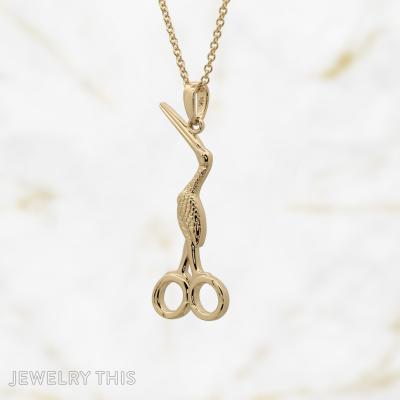
This pendant is a faithful recreation of a client’s beloved vintage piece, originally worn but ...
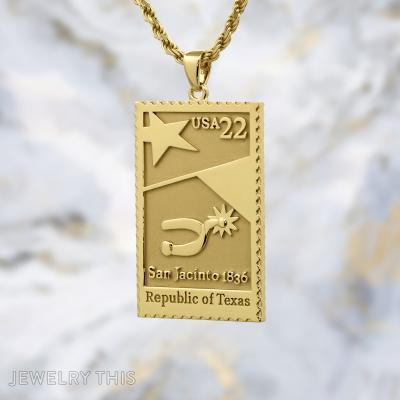
This rectangular pendant recreates two vintage postage stamps in raised, dimensional metalwork on a gold-plated ...

A unique family crest pendant created in 14k white and yellow gold with enamel details ...

With deep personal significance, this 1.5-inch 14kt yellow and white gold pendant beautifully represents the ...

Club logo pendant with dimensional text. This pendant is 2 inches in size and was ...

This custom-made pendant is a truly unique piece of jewelry that perfectly blends technology and ...
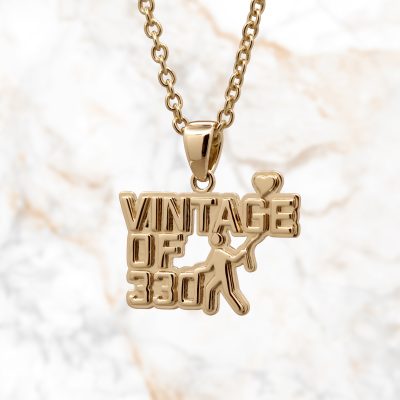
10k yellow gold cut out style pendant featuring client’s logo. Pendant: 1 inch in size. ...

This custom pendant features a beautifully crafted cut-out heart outline, symbolizing love and connection. In ...
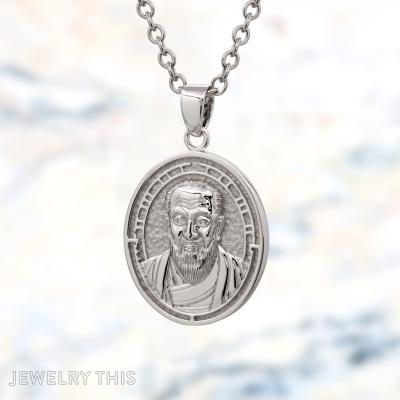
This exquisite pendant captures the profound wisdom and timeless philosophy of Confucius, embodying the core ...

This stunning yellow gold pendant centers on a luminous round pearl. Above the pearl, a ...

This pendant takes a client’s own sketch of a heart — drawn as one continuous, ...

Crafted from exquisite 18K yellow gold, this stunning pendant holds a beautiful meaning within its ...