
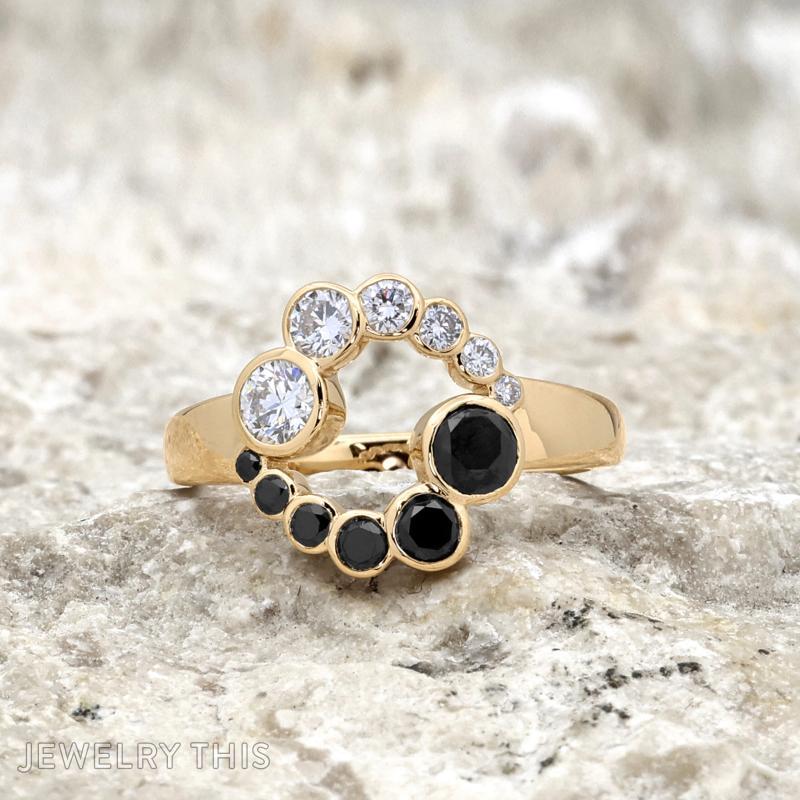
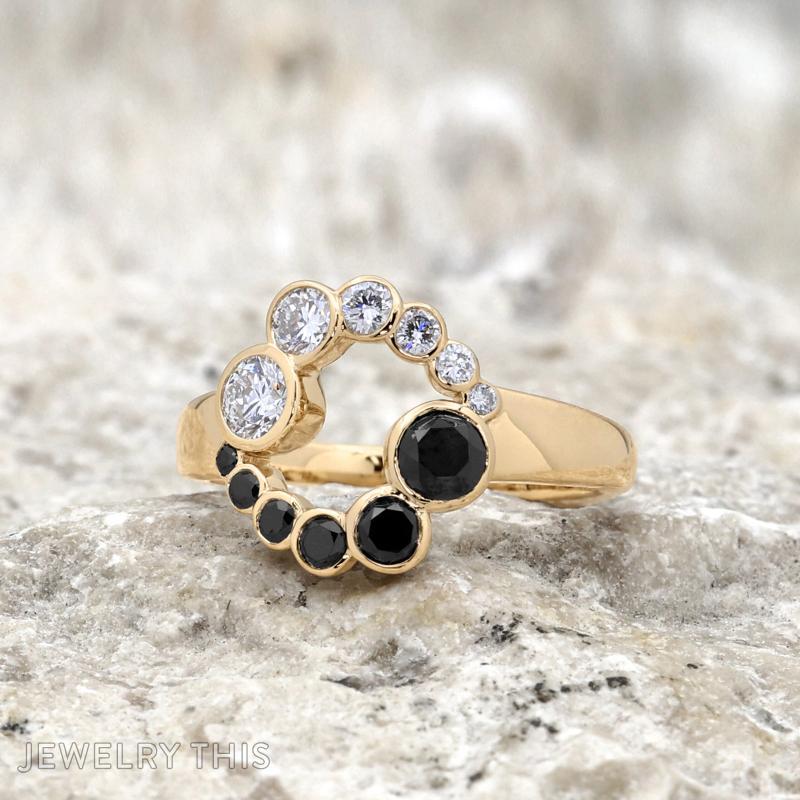
Yin-Yang Diamond Cluster Engagement Ring in Yellow Gold
$$
14k yellow gold, natural diamonds, natural black diamonds
A client came to us wanting an engagement ring built around a yin-yang design, using black and white diamonds set in a graduated circle to represent balance. The design went through several rounds of refinement — from an original bracelet concept to a bezel-set circular motif — before landing on its final form. When it arrived, he wrote: 'Received and I only had a few minutes to open it and make sure it arrived safely. It's rather stunning!' Nearly a year later, he returned to share that she said yes, and the couple is now moving forward with matching wedding bands to complete the set.
'I like that! It's almost exactly as I was envisioning! Well done.' — on seeing the first render
'Received and I only had a few minutes to open it and make sure it arrived safely. It's rather stunning!' — on delivery
Quick specs
Design type
Primary Metal
Shape / Cut
Primary Stone
Design Complexity
Intent: Certainty
Size
Ring size 5.5 US. Circular top approximately 0.5 inch diameter, set with graduated round stones in a bezel setting.
How they made it distinctive
-
01
Circular motif built from seven graduated bezel-set stones rather than a single center stone, splitting evenly between black and colorless diamonds
-
02
The two largest stones are set touching at the center specifically to reinforce the open circular structure against bending
-
03
Bezel setting chosen over prongs for both durability and a clean, protected look for each stone
-
04
Design evolved from an original bracelet concept into a ring, carrying the same color-sequence idea into a completely different form
-
05
Part of a three-piece set where the wedding bands are designed to curve and align with this ring's stone placement
How you'd make it yours
Stone type: this piece uses natural black and colorless diamonds; a new commission could use lab-grown diamonds or moissanite for a similar look at lower cost
Stone count: this piece uses seven graduated stones; a new design could use fewer or more depending on the desired scale
Metal: this piece is 14k yellow gold; the same bezel-circle language works in 18k yellow, white, or rose gold
Setting style: the graduated bezel arrangement is central to this design and would need to be substantially reworked to use a different setting approach
One of a kind: this exact ring was designed for one client and is not reproduced — a new commission is an original piece inspired by this one, not a copy
Design changes made
The original concept was a Mobius-twist bangle bracelet with chakra stones, which shifted to a yin-yang engagement ring design after budget and structural discussions. The circular top moved from a clustered stone layout to individually bezel-set, graduated stones touching at the center for structural stability.
Who this is for
This piece is for someone who wants their engagement ring to carry a specific personal meaning rather than a conventional solitaire look. It's especially right if you're drawn to symbolic color or stone sequences and want that meaning built structurally into the design, not just added as an afterthought.
How it's made
Once the design was approved, a wax model was 3D printed and shared with the client as a preview before any metal was committed. The model was then invested in plaster and fired in a kiln to burn out the wax, leaving a hollow mold. Molten 14k yellow gold was cast into the mold, producing the raw ring, which was then cleaned and prepared for stone setting.
Each of the seven stones — colorless diamonds on one side, black diamonds on the other — was set individually into its own bezel, with the two largest stones set touching at the center to reinforce the open circular structure. The band was polished to a plain, narrow finish so the graduated circular motif remains the visual focus. Two black diamonds were reordered mid-production after the original stones did not meet quality standards.
Key note
The two largest stones in the circle are set touching rather than spaced apart — a structural choice, since a gap at that point would leave the open circular setting prone to bending.
Pricing guidance
An engagement ring with a bezel-set graduated stone motif and mixed black-and-white diamonds sits toward the upper end of the mid range for custom rings of this complexity. Much of the cost comes from the number of individually set stones and the precision bezel work required to keep a graduated, touching arrangement structurally sound. Stone origin (natural versus lab) and metal karat are the next biggest levers on price.
Moves price up ↑
- ↑ Using all naturally mined diamonds rather than a mix of natural and lab-grown
- ↑ Increasing the number of graduated stones in the circular motif beyond seven
- ↑ Upgrading from 14k to 18k gold
- ↑ Custom-cutting stones into a specific curved shape rather than using standard round cuts
- ↑ Adding matching engraving inside the band
Moves price down ↓
- ↓ Switching all diamonds to lab-grown for the same appearance at lower cost
- ↓ Reducing the stone count in the circular motif
- ↓ Choosing a single bezel-set stone cluster instead of individually set graduated stones
- ↓ Using moissanite in place of some diamond accents
- ↓ Simplifying the band profile further
Questions people ask
A bezel setting surrounds the stone's edge with a continuous rim of metal, which protects it better from chips and knocks than a prong setting. This makes it a strong choice for daily wear, especially for stones set close together in a cluster like this. The tradeoff is that a bezel covers slightly more of the stone's surface than prongs would, but for a graduated multi-stone design it also adds structural strength. Bezels are generally recommended for anyone with an active lifestyle or hands-on work.
Lab-grown and natural diamonds are chemically, physically, and optically identical — the same hardness, brilliance, and appearance. The only real differences are origin and price, with lab-grown typically costing less. Some clients have a personal or symbolic preference for natural stones, while others see no meaningful difference and prefer the cost savings of lab-grown. Either option performs the same in terms of durability and daily wear.
Yes, black diamonds are true diamonds and share the same hardness rating as colorless diamonds, making them highly durable for daily wear. Their color comes from dense internal inclusions rather than a different mineral, so they hold up structurally the same way. In a bezel setting, black diamonds are well protected from chipping. They're an increasingly popular choice for adding contrast to mixed-stone designs.
A ring with a graduated, multi-stone bezel motif in 14k gold typically falls toward the upper end of the mid range for custom engagement rings. The cost is driven mainly by the number of individually set stones and the setting precision required, rather than by any single expensive material. Choosing lab-grown stones over natural, or reducing the stone count, are the two most effective ways to bring the cost down. Metal karat has a smaller but still noticeable effect on the final price.
From design approval to shipping, a ring like this typically takes about three to four weeks in production, following an initial design phase of one to two weeks for renders and revisions. Delays can occur if a specific stone doesn't meet quality standards and needs to be resourced, which can add another week or two. The full process, from first conversation to delivery, commonly runs longer when a client is designing multiple coordinated pieces rather than a single ring.
Yes, a companion wedding band can be custom-curved to sit flush against an engagement ring with an irregular top, like this graduated circular motif. The band's curve is typically finalized only after the engagement ring's model is complete, since the fit depends on the exact contour of the ring it needs to sit against. Some clients prefer to keep their own band straight even when their partner's is curved. This kind of fitted pairing is a common approach for engagement rings with a non-standard silhouette.
Yes, stones can be set in a deliberate color sequence rather than a random or symmetric arrangement, as long as the sizes and setting style are planned around that order from the start. This requires coordinating stone sourcing carefully, since each position needs a stone of a specific color and size. Sapphire is often recommended over softer colored stones like citrine or amethyst in a sequence like this, since it offers better durability for the same visual effect. Substituting a more durable stone of the same color is a common recommendation without disrupting the intended sequence.
Explore Similar Creations
Every masterpiece starts with a spark. Explore how our clients raw ideas - sketches, heirlooms, inspirations - were transformed into bespoke works of arts.
This Cushion Cut Double Halo Double Diamond Band Engagement Ring is a stunning symbol of ...

Embrace the ethereal elegance of this custom engagement ring, a radiant tribute to love. Fashioned ...
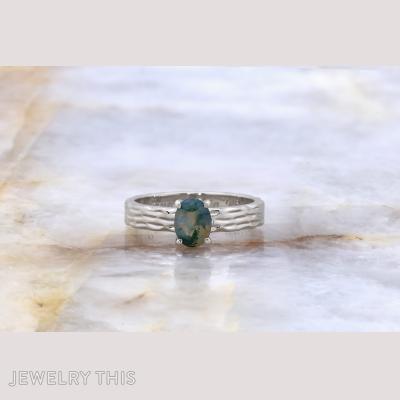
This custom sterling silver engagement ring is both meaningful and deeply personal, crafted to reflect ...
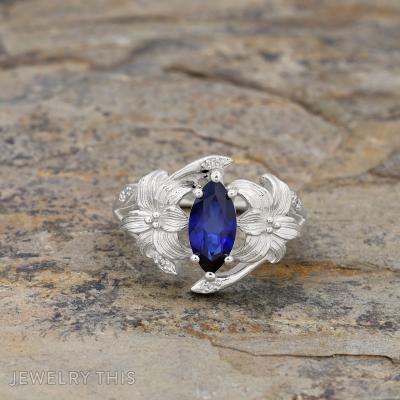
This exquisite engagement ring showcases a stunning marquise cut lab created blue sapphire as its ...
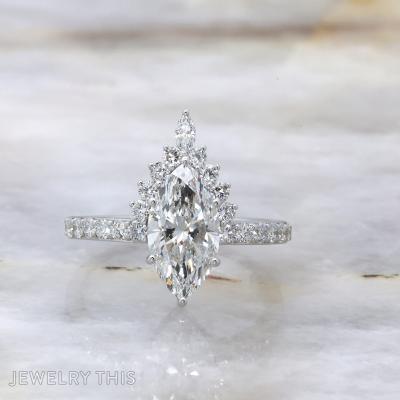
This stunning white gold engagement ring showcases a marquise-shaped center lab-grown diamond, striking in its ...

This stunning 14k white gold engagement set is the perfect blend of gothic and modern. ...
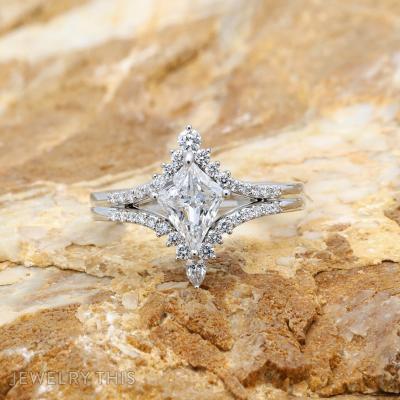
This striking white gold engagement ring features a kite-shaped lab-grown diamond as its bold center. ...

These exquisite wedding sets, each carefully customized, reflect the unique journey of the couple. They ...

This White gold masterpiece of a ring showcases a mesmerizing 3.2 carat Moissanite stone at ...

This exquisite platinum art-deco inspired engagement ring features a stunning 2.02carat asscher cut diamond set ...
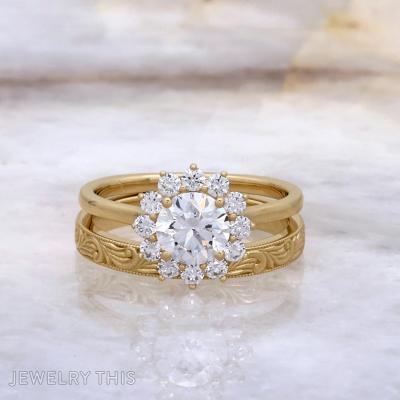
This exquisite 14K yellow gold wedding set seamlessly blends timeless romanticism with modern ethical luxury. ...

This Yellow gold ring is a celebration of beauty and craftsmanship. At its heart lies ...



