

Bezel-Set Oval Diamond Ring in 18k Yellow Gold
$$$
18k yellow gold, lab-grown diamond
K. came in with a clear reference image and a specific vision: an oval lab-grown diamond set flush into a substantial, tapered gold band with no prongs to worry about. She approved the render without changes and, after a small stone-availability swap, waited through the full production process. When it arrived, she wrote simply: 'I love it. Thank you.'
'I love it. Thank you.' — on delivery
Quick specs
Design type
Primary Metal
Shape / Cut
Primary Stone
Accent Stones
Style
Design Complexity
Intent: Certainty
Size
Ring size 4 US. Band width 6-7mm at top, tapering toward the back.
How they made it distinctive
-
01
Bezel setting chosen so the diamond is mechanically locked in by a continuous wall of gold rather than prongs, eliminating catch points
-
02
Substantially domed band that tapers from a wide top to a narrower back, giving a bold look without added bulk on the sides
-
03
Oval diamond selected and set on its horizontal axis to maximize visual size within the bezel
-
04
18k yellow gold chosen over 14k for a deeper, richer gold tone
-
05
Design approved on the first render with no revisions requested
How you'd make it yours
Stone shape: this piece uses an oval diamond; a new commission could use round, cushion, or pear for a different silhouette
Stone type: this piece uses a lab-grown diamond; a new commission could use a natural diamond or moissanite for the same look at a different cost
Metal: this piece is 18k yellow gold; the same domed bezel design works well in white or rose gold
Band profile: the substantial dome and taper is a defining feature and would need to be preserved to keep this exact look, though the width could be adjusted
One of a kind: this exact ring was designed for one client at size 4 and is not reproduced — a new commission is an original piece inspired by this one, not a copy
Design changes made
Design matched the initial brief without major changes. The only adjustment was a stone substitution during production, when the originally selected 0.80 carat diamond sold before the order was finalized and a comparable 0.82 carat stone of the same color and clarity was secured at no price difference.
Who this is for
This is for someone who knows exactly what they want and doesn't need a lot of back-and-forth to get there — a clean, modern solitaire with real presence on the hand. It suits anyone who prefers a low-profile setting with no prongs to catch on daily activities, and who likes a bolder, more substantial band rather than a thin one.
How it's made
Once the design was approved and the diamond secured, a wax model of the ring was produced on a 3D printer and attached to a wax tree inside a flask. The flask was fired in a kiln to burn out the wax, leaving a hollow mold, and molten 18k yellow gold was cast into that mold under pressure. After cooling, the raw ring was extracted from the mold and prepared for finishing.
The cast band was cleaned up and polished to a high shine across its full domed surface before the stone was set. The oval diamond was then set using a bezel technique, where the surrounding metal is hammered down and burnished tightly over the stone's edge, locking it in place without prongs and giving the ring its smooth, prong-free profile.
Key note
The bezel is not a decorative rim — the metal is hammered and burnished directly over the stone's edge, so the diamond is mechanically locked in place by an unbroken wall of gold rather than by prongs.
Pricing guidance
A simple bezel-set solitaire in 18k gold sits in the mid range for custom rings of this type. The main cost drivers are the gold weight in the substantially domed band and the size and quality of the center diamond, since the bezel setting itself is relatively straightforward compared to more intricate prong or halo work. Diamond choice — lab versus natural, and carat weight — is where the price moves most.
Moves price up ↑
- ↑ Upgrading from a lab-grown to a natural diamond of the same size and quality
- ↑ Increasing the diamond size beyond approximately 0.8 carats
- ↑ Choosing a higher color/clarity grade for the diamond
- ↑ Increasing the band width or metal thickness in the domed profile
- ↑ Adding accent stones or engraving to the band
Moves price down ↓
- ↓ Reducing the diamond size below 0.75 carats
- ↓ Choosing a lower, still-eye-clean color or clarity grade
- ↓ Narrowing the band width to reduce gold weight
- ↓ Switching from 18k to 14k gold
- ↓ Choosing a round brilliant cut instead of a custom oval, which can simplify sourcing
Questions people ask
Yes, generally. A bezel setting surrounds the stone's edge with a continuous wall of metal rather than a few thin prongs, so there's no single point that can bend, catch, or wear thin over time. In this ring, the metal is hammered directly over the diamond's edge, mechanically locking it in place. For the stone to fall out, the ring itself would have to sustain serious damage. This makes bezel settings a common choice for people who want lower-maintenance daily wear.
Lab-grown and natural diamonds are chemically, physically, and optically identical — the same hardness, brilliance, and fire. The only real difference is origin: one is grown in a controlled lab environment, the other is mined from the earth. Because lab-grown diamonds take less time and resource investment to produce at scale, they typically cost significantly less than a natural diamond of the same carat weight, color, and clarity. Visually, there is no way to tell them apart without specialized equipment.
A ring like this — an 18k gold band with a bezel-set lab diamond around three-quarters of a carat — falls in the mid range for custom fine jewelry. Most of the cost comes from the gold weight in a substantially domed band plus the diamond itself; the bezel setting technique is comparatively efficient labor-wise. Carat weight and color/clarity grade of the diamond are the biggest levers on price, followed by whether the metal is 14k or 18k.
The full process typically takes about five to six weeks from approved design to delivery. The first week covers finalizing the 3D design and render for approval. Once approved and the majority of the balance is paid, the ring moves into production, which for a piece like this — casting, polishing, and bezel-setting a single stone — takes roughly four weeks. Sourcing a specific diamond can occasionally add a short delay if a selected stone sells before the order is finalized.
A domed, tapered band like this one can generally be resized within a modest range using standard jewelry techniques, though a bezel setting requires extra care since the setting sits directly in the metal rather than on prongs that are unaffected by resizing. Because the band is thickest at the top and tapers toward the back, larger size adjustments may affect the proportions more than they would on a uniform band. It's best to have any resizing done by a jeweler familiar with the original construction. Getting the size right from the start, using a proper ring sizer rather than a guess, is the best way to avoid this altogether.
18k gold contains a higher percentage of pure gold (75%) than 14k (58.3%), giving it a richer, warmer yellow color and slightly better resistance to tarnishing. It is also a bit softer than 14k, which matters more for pieces with fine detail work than for a smooth, substantially domed band like this one. Many people choose 18k specifically for the deeper gold tone. Either karat is a durable, long-term choice for daily wear.
Yes — this is exactly what a bezel setting accomplishes. Instead of prongs, a continuous wall of metal is formed around the stone's edge and hammered down to secure it, so the diamond sits flush with a clean, uninterrupted line of metal surrounding it. This gives a smoother, more streamlined look and eliminates prong tips that can catch on clothing or hair. It works especially well on oval and round stones like the one used here.
Explore Similar Creations
Every masterpiece starts with a spark. Explore how our clients raw ideas - sketches, heirlooms, inspirations - were transformed into bespoke works of arts.
This Cushion Cut Double Halo Double Diamond Band Engagement Ring is a stunning symbol of ...
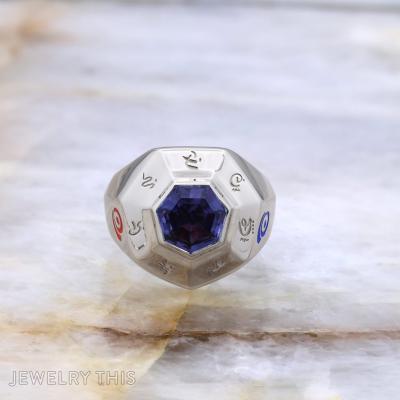
This remarkable custom silver ring features a captivating, custom cut lab created Alexandrite as its ...

This stunning engagement ring blends classic elegance with intricate detailing. Crafted in 18K yellow gold, ...

This White gold ring showcases a captivating round lab-grown Ruby at its heart. Held securely ...

Immerse yourself in the allure of this custom ring, a harmonious blend of sophistication and ...

This custom made men’s wedding band is a recreation of the client’s original ring. Crafted ...
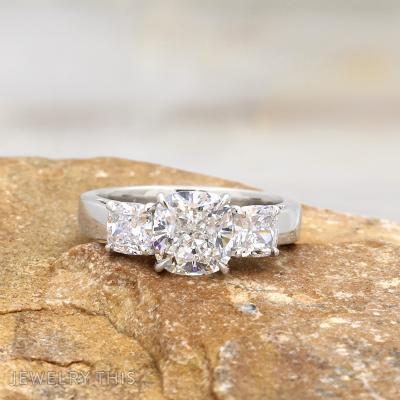
This exquisite custom engagement ring features a stunning 2-carat lab-created cushion cut diamond as the ...

This stunning 14K yellow gold engagement ring features a round brilliant moissanite center stone and ...

This elegant engagement ring captures the beauty of cultural symbolism and timeless style. At its ...
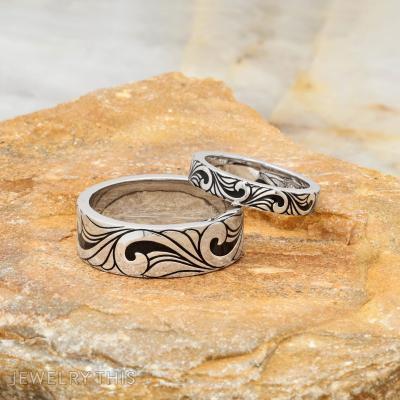
Celebrate your journey with these sterling silver wedding bands, featuring a soulfully crafted Western-inspired design. ...
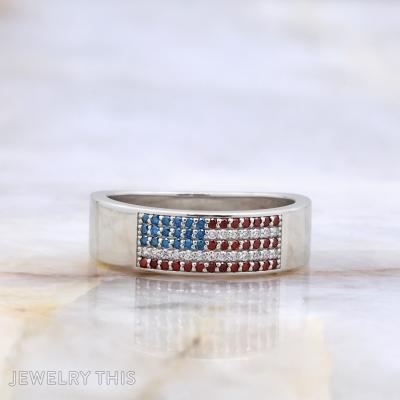
This wide 14k white gold band carries a pave-set American flag across its face, built ...

This white gold wedding band is a symbol of enduring love and unity. This exquisite ...