
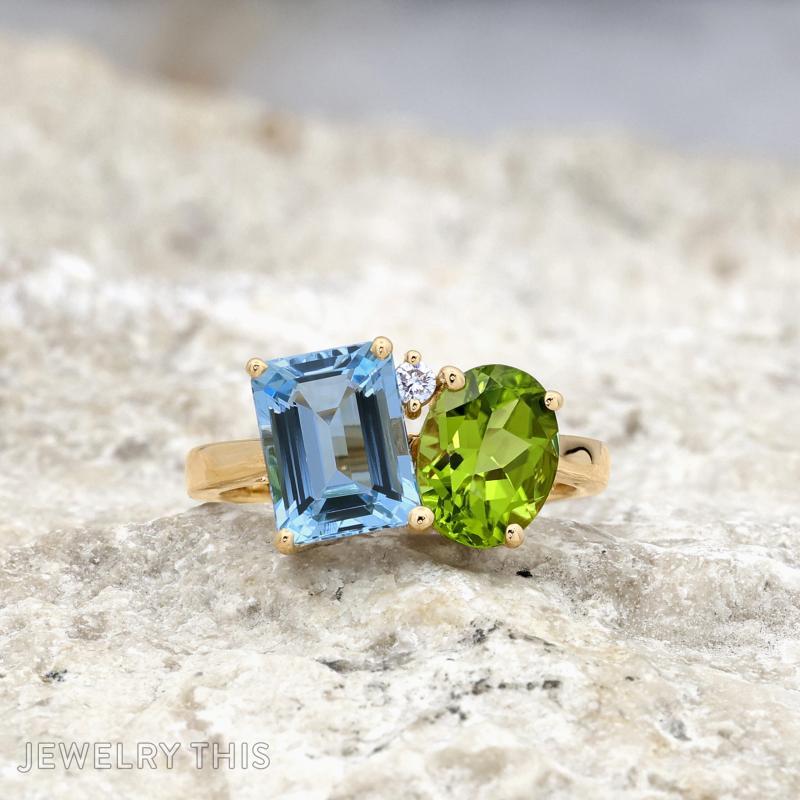
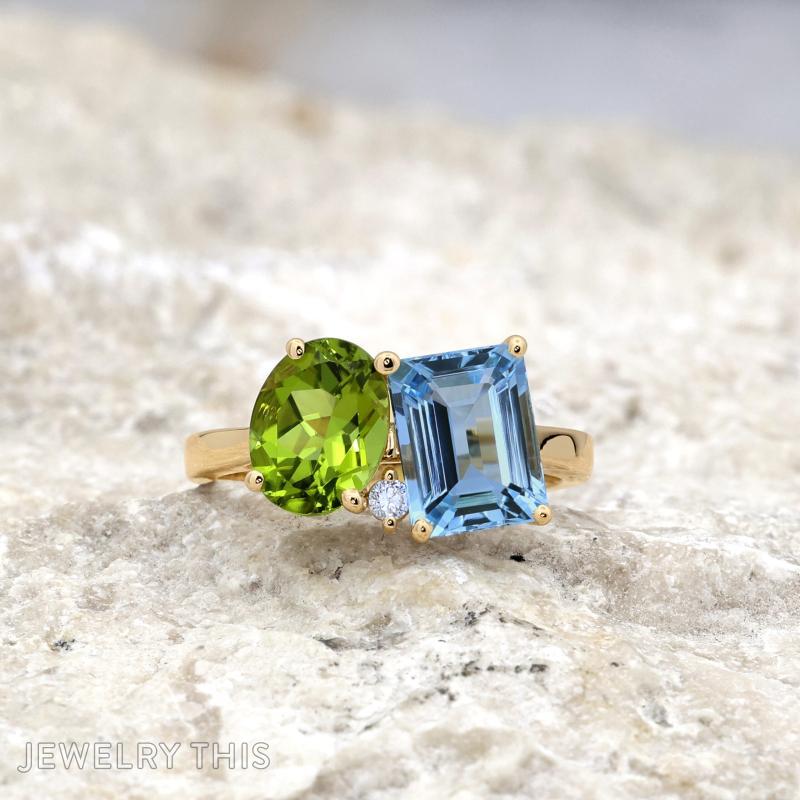
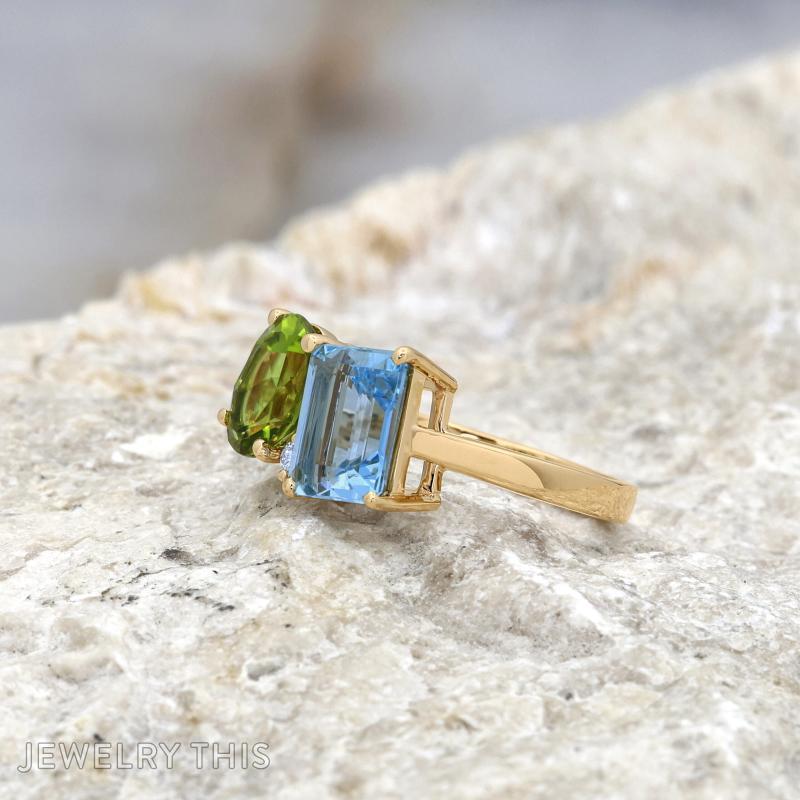
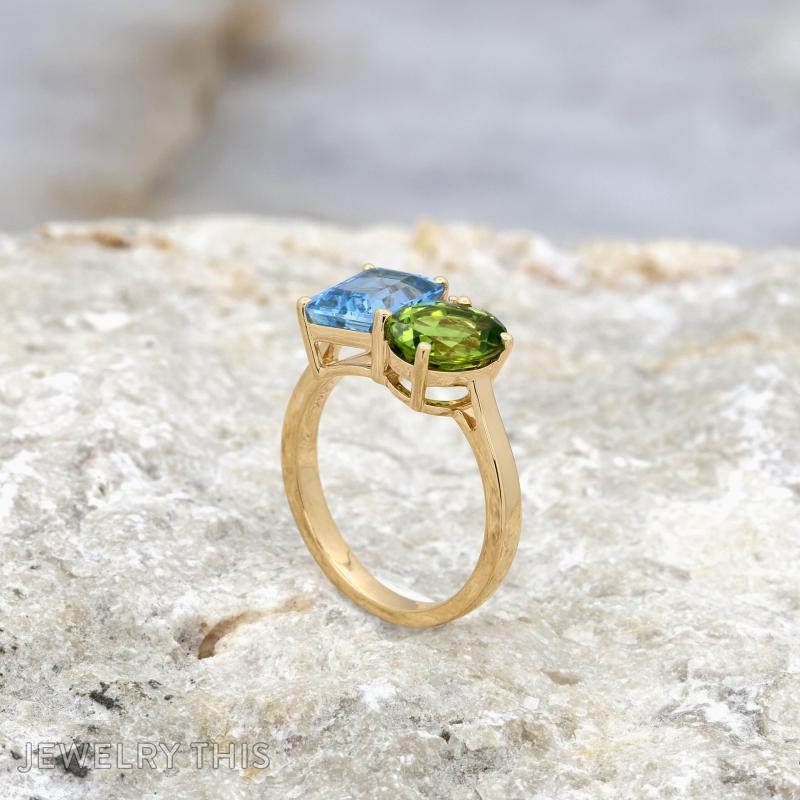
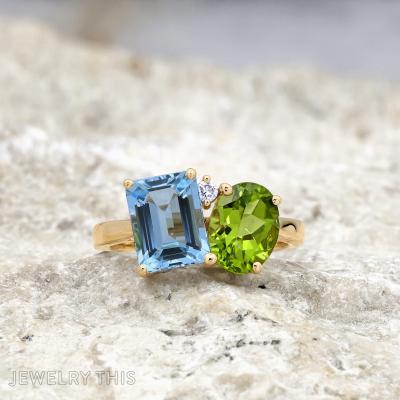
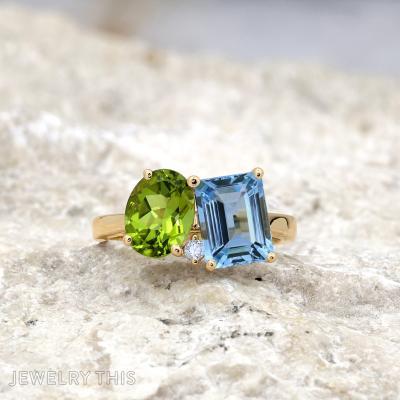
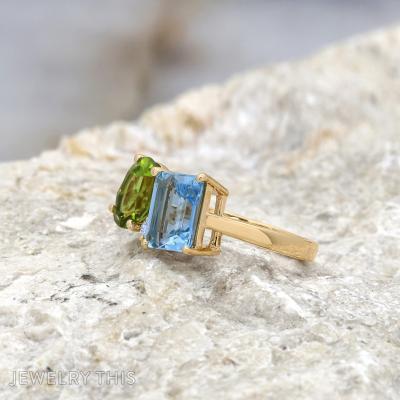
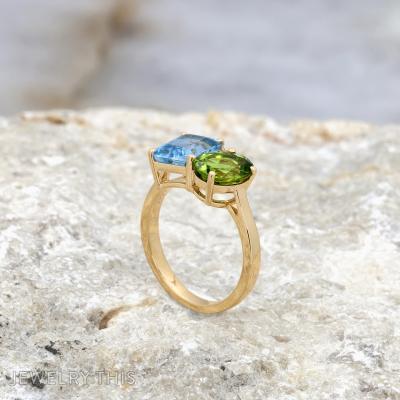
Aquamarine & Peridot Toi et Moi Ring for Two Daughters
$$$
14k yellow gold, aquamarine, peridot, diamond
A husband wanted a birthday ring for his wife built around their family's birthstones — aquamarine and peridot for their two daughters, with her own diamond accent set between them. The design went through several rounds of stone-color and size refinement as the couple worked out exactly how deep a blue they wanted and how large the stones should read on her hand before settling on the final pairing.
'Looks good, wife approved! Do want to specify that she wants a darker blue gemstone.' — on seeing the first render
'It looks good. Diamond is smaller than I expected but it does seem to align with the models.' — on delivery
Quick specs
Design type
Primary Metal
Shape / Cut
Primary Stone
Style
Design Complexity
Intent: Certainty
Size
Ring size 7.5 US. Aquamarine emerald cut approximately 7x5mm scaled up toward 2ct; peridot oval approximately 8x6mm scaled to match; one round diamond accent between the two stones.
How they made it distinctive
-
01
Aquamarine and peridot chosen specifically as birthstones representing the couple's two daughters
-
02
Small diamond set between the two larger stones to represent the wife herself, completing a three-person family reference
-
03
Emerald-cut and oval shapes paired deliberately in a side-by-side toi-et-moi arrangement rather than a single center stone
-
04
Aquamarine selected in a deeper, richer blue than typical for the species after direct comparison against blue topaz alternatives
-
05
Stone scale determined by comparing a finger-width reference image rather than carat weight alone
How you'd make it yours
Stone type: this piece uses aquamarine and peridot; a new commission could use any two birthstones or colored gems in the same side-by-side arrangement
Stone color: a lighter, more common aquamarine tone could be used instead of the deeper rare blue, or blue topaz for a different blue profile at lower cost
Metal: this piece is 14k yellow gold; the same two-stone setting works in 18k gold or white gold
Stone size: this piece uses stones close to 1 carat each; a new commission could go smaller or larger depending on preference
Accent stone: the small diamond between the two main stones could be a birthstone or a lab-created stone instead
One of a kind: this exact ring was designed for one client's family and is not reproduced — a new commission is an original piece inspired by this one, not a copy
Design changes made
The stone sizing was adjusted more than once after the couple compared visual references of the stones at different carat weights against a scale image of the finger, ultimately settling on a size between the two options they had been considering. They also explored moving from aquamarine to blue topaz for a deeper blue before deciding to stay with a richer-colored aquamarine instead.
Who this is for
This piece is for someone who wants a ring built around specific personal meaning — each stone standing in for a person who matters — rather than a single traditional center stone. It's especially right if you like the idea of a deliberate pairing over a symmetrical or matched look, and if you're comfortable taking a little extra time comparing stone colors and sizes to get it exactly right.
How it's made
Once the design was approved, a wax model of the ring was produced using a 3D printer. That wax model was attached to a wax tree and set inside a flask, which was placed in a kiln to burn out the wax and leave a hollow ceramic mold. Molten 14k yellow gold was then cast into that mold, producing the raw ring ready for finishing.
After casting, the ring was extracted from the mold, cleaned, and polished to bring out the finish on the gold. The emerald-cut aquamarine and oval peridot were each set into their own prong settings side by side, with the small round diamond set last into the narrow gap between the two larger stones to complete the accent detail.
Key note
The aquamarine and peridot were sourced from the cutter only after the design deposit was paid, since the final stone sizing depended on the couple's approved scale comparison against the finger.
Pricing guidance
A two-stone gold ring with an emerald-cut and an oval colored gemstone, plus a small diamond accent, sits in the mid range for custom rings of this complexity. Labor is the main driver — cutting a clean gallery for two side-by-side stones and setting them independently takes more work than a single center stone. Stone size and color rarity are the biggest variables from there.
Moves price up ↑
- ↑ Choosing a rarer, more saturated color grade of aquamarine or a larger carat weight for either stone
- ↑ Increasing the size of both stones toward 2 carats each rather than closer to 1 carat
- ↑ Upgrading the accent stone from a small diamond to a larger or fancier-cut stone
- ↑ Adding a halo or pave detail around either of the two main stones
- ↑ Using 18k gold instead of 14k
Moves price down ↓
- ↓ Reducing the carat weight of the aquamarine and peridot closer to 0.75 carats each
- ↓ Choosing a more common, lighter color grade of aquamarine instead of a rare deep blue
- ↓ Substituting the diamond accent with a lab-created stone or smaller melee
- ↓ Using a simpler prong setting rather than a more elaborate gallery structure
- ↓ Choosing sterling silver instead of gold as the base metal
Questions people ask
Aquamarine rates a 7.5 to 8 on the Mohs hardness scale, which makes it reasonably durable for daily wear, though softer than sapphire or diamond. It can still chip or scratch if struck hard against another surface, so it's worth removing before heavy manual work. Regular cleaning with warm water and a soft brush keeps it looking clear. Most jewelers recommend an occasional prong check to make sure the stone stays secure over years of wear.
Peridot is softer than aquamarine, rating around 6.5 to 7 on the Mohs scale, so it's a bit more prone to scratching over time. It holds up fine for regular wear but benefits from being removed during activities like gardening, cleaning, or exercise. Peridot can also be sensitive to sudden temperature changes, so ultrasonic cleaners are not recommended. A soft cloth and mild soap and water is the safest way to clean it.
Aquamarine color comes from trace amounts of iron in the beryl crystal, and the depth of blue depends on how much iron is present and how the stone was cut. Most aquamarine on the market is a pale, light blue, while deeper, more saturated blue stones are considerably rarer and command a higher price. Cut and size also affect how the color reads — larger stones tend to show more visible color than small ones. This is why comparing photos of individual stones before committing is worthwhile, since color can vary meaningfully within the same stone type.
Yes, blue topaz is a common alternative when someone wants a more saturated blue than typical aquamarine offers. It comes in a few standard shades, including Swiss blue (brighter, more vivid) and London blue (the darkest and most saturated). Blue topaz is generally more affordable than a rare deep-color aquamarine of comparable size. The tradeoff is that it's a different mineral entirely, so it has a different light behavior and hardness profile than aquamarine.
A two-stone ring pairing an emerald-cut aquamarine with an oval peridot, plus a small diamond accent, typically falls in the mid range for custom rings once you factor in the double stone-setting labor. The price moves significantly with stone size and aquamarine color rarity, since a deeply saturated aquamarine costs meaningfully more than a standard pale one at the same carat weight. Metal karat is a smaller factor by comparison. Getting a firm number usually requires finalizing stone size and color first.
From approved design to finished ring, the process typically takes around five to six weeks total. The first week or so covers the design phase — sketch, 3D model, and render for approval. Once approved and the stones are sourced, production including casting, stone setting, and finishing generally takes four to five more weeks.
A two-stone ring like this can typically be resized within a reasonable range, since the shank is a continuous band without stones set into it. Larger resizing adjustments are more involved when the setting includes an open gallery structure beneath the stones, since the metal has to be reshaped without disturbing the stone settings. It's best to confirm your ring size as accurately as possible before production to avoid a resize altogether. A local jeweler can typically handle minor resizing after delivery.
Yes, a small accent stone set in the gap between two larger side-by-side stones is a common way to add detail to a two-stone or toi-et-moi style ring without competing with the main gems. The accent is usually set low and close to the two larger stones so it reads as a connecting detail rather than a third focal point. Because the accent stone is small, it doesn't significantly change the overall cost of the piece. It does add a bit of extra hand-setting work compared to a plain two-stone ring.
Explore Similar Creations
Every masterpiece starts with a spark. Explore how our clients raw ideas - sketches, heirlooms, inspirations - were transformed into bespoke works of arts.
This yellow gold ring is a heartfelt recreation of a cherished, lost engagement ring. At ...

This one-of-a-kind ring is crafted from sterling silver with black rhodium plating. This family ring ...
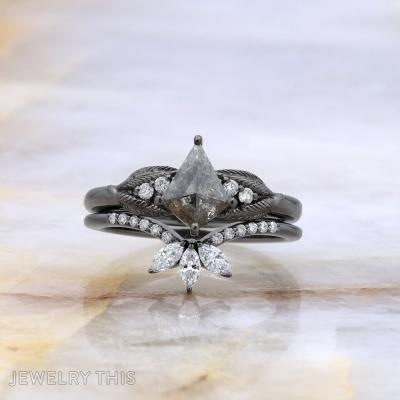
Embrace a dark, ethereal aesthetic with this captivating black rhodium-plated wedding set. The engagement ring ...

This stunning custom ring showcases a captivating emerald green tourmaline at its center, beautifully held ...

This custom wedding set exudes romance and sophistication. The engagement ring, inspired by the classic ...

Embrace the promise of forever with this captivating custom engagement ring set. Crafted in 14k ...

This sterling silver signet ring was customized to perfection. The top surface of the ring ...
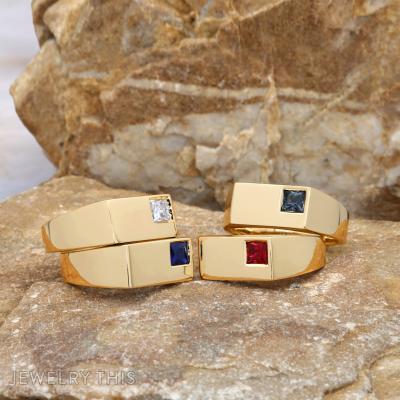
This collection of 14K yellow gold signet rings is a sophisticated celebration of family heritage ...

This platinum engagement ring showcases a stunning Asscher cut diamond at its center, set in ...

This engagement ring centers a 1.5 carat emerald-cut moissanite, flanked on each side by a ...

This sophisticated 14K yellow gold wedding set represents a perfect harmony of clean modernism and ...

This elegant white gold engagement ring showcases a radiant-cut diamond at its center, exuding brilliance. ...



