


Owl Pendant with Bag Motif — 18k Gold, Diamond Accent
$$
18k yellow gold, lab diamond
C. wanted to turn his wife's handbag brand logo — an owl carrying a purse — into a pendant he could gift her for Christmas. The design went through several rounds of refinement on scale and stone placement before landing on a dimensional owl in flight with a single bezel-set diamond at the purse clasp.
'I like it.' — on design approval
Quick specs
Design type
Primary Metal
Shape / Cut
Primary Stone
Accent Stones
Design Complexity
Intent: Certainty
Size
Pendant approximately 33mm (1.3in) wing to wing. Chain 18in, thin diamond-cut cable style.
How they made it distinctive
-
01
Dimensional owl-in-flight silhouette with detailed feather texture on both wings, rather than a flat logo reproduction
-
02
White-metal face inlay used instead of set stones specifically to preserve the owl's distinctive teardrop eye shape
-
03
Diamond bezel-set rather than pronged because the stone is cut smaller than 1mm and prongs would look disproportionate
-
04
Purse charm with an open handle detail, adjusted at the client's request to mirror the original logo more closely
-
05
Sized at 1.3 inches — the smallest scale the design team could produce while still fitting a visible stone proportionally
How you'd make it yours
Stone: this piece uses a single round lab diamond at the clasp; a new commission could use a sapphire or other colored stone for a different accent
Metal: this piece is 18k yellow gold; the same sculptural style works in 14k yellow gold or white gold
Face detail: this piece uses a matte white-metal inlay; a new piece could use additional small stones if sized larger
Size: this piece is 1.3 inches wing to wing; a new commission is sized to the client's own preference and proportions
Chain: this piece uses a thin diamond-cut cable chain; a new commission could pair with a box, rope, or curb chain instead
One of a kind: this exact pendant was designed around one client's wife's brand and is not reproduced — a new commission is an original piece inspired by this one, not a copy
Design changes made
The piece grew from an initial 1-inch size to 1.3 inches so a small diamond could be set proportionally, and the plan to set stones in the owl's eyes and face was dropped in favor of a white-metal inlay to preserve the eye shape. The purse handle was also opened up per the client's request, and the stone count was reduced to a single bezel-set diamond at the clasp for a cleaner look.
Who this is for
This piece is for someone who wants to turn a meaningful logo or personal brand into a wearable keepsake rather than printed merchandise. It's especially right for a partner or spouse looking to honor someone else's creative or business achievement in a piece they can wear every day.
How it's made
Once the design was finalized in 3D, a wax model was produced using a 3D printer and attached to a wax tree inside a flask. The flask went into a kiln where the wax was burned out, leaving a hollow mold, and molten 18k yellow gold was poured into the mold to cast the piece. After cooling, the casting was removed from the mold for cleanup and finishing.
The cast owl was cleaned, polished, and finished with a white-metal inlay applied to the face for contrast against the yellow gold body. The feather texture on the wings was refined during hand-finishing to keep the detail crisp at this scale. The single round diamond was then bezel-set into the purse clasp area, chosen specifically so no prongs would be visible on such a small stone.
Key note
The diamond was set in a bezel rather than prongs specifically because, at under 1mm, prongs large enough to secure the stone would have looked disproportionate on a charm this small.
Pricing guidance
A sculptural logo pendant like this, cast in solid 18k gold with fine feather detailing and a bezel-set accent stone, sits in the mid range for custom pendant work. Most of the cost comes from the hand-finishing required to keep fine detail crisp at a small scale, plus the gold content itself. Stone count, metal karat, and overall size are what move the price most from there.
Moves price up ↑
- ↑ Increasing the pendant size, which requires more gold and more surface detail to finish
- ↑ Adding diamonds to additional areas such as the eyes or face rather than a single accent stone
- ↑ Upgrading from 18k to platinum for the metal body
- ↑ Using a larger or higher-clarity diamond at the clasp
- ↑ Adding a matching engraved chain or custom clasp detail
Moves price down ↓
- ↓ Reducing the pendant to a flatter, less dimensional silhouette
- ↓ Dropping the accent stone entirely for a plain metal finish
- ↓ Choosing 14k gold instead of 18k
- ↓ Simplifying the feather texture to reduce hand-finishing time
- ↓ Choosing a standard sourced chain instead of a matching diamond-cut cable chain
Questions people ask
Yes, this is a common request — a flat 2D logo is translated into a dimensional, wearable design rather than a literal flat reproduction. The process usually starts with a sketch, moves to a 3D CAD model, and finishes with a photorealistic render for approval before anything is cast. Small design choices, like how a wing or handle is shaped, often need a few rounds of feedback to feel proportional in miniature. The result reads as fine jewelry rather than printed or stamped merchandise.
At very small sizes — under 1mm in this case — prongs large enough to securely hold the stone would look bulky and out of proportion with the rest of the design. A bezel setting wraps a thin rim of metal around the stone's edge instead, holding it securely without adding visual bulk. This is a common solution for small accent stones on dimensional pieces where prongs would otherwise dominate the design. It also offers slightly more day-to-day protection for the stone's edge than open prongs would.
A dimensional pendant in solid 18k gold with fine detail work and a single accent stone typically falls in the mid range for custom pendant work. Most of the cost comes from the labor of keeping fine texture and proportion crisp at a small scale, along with the gold content itself. Adding more stones, increasing the size, or upgrading the metal karat or type are the main levers that move the price from there.
Diamonds can be cut down to around 0.9mm and still be set securely, which is close to the practical minimum for a bezel or prong setting. Going smaller than that becomes difficult both to cut reliably and to set without risking the stone during production. At this size, the stone functions more as a bright accent point than a focal gem. Sizing the overall piece up slightly is often the easiest way to accommodate a visible stone without the proportions feeling off.
The design phase — sketch, 3D model, and rendered approval — typically takes one to two weeks and can take longer if proportions or stone placement go through several rounds of revision. Once the design is approved and production begins, casting, finishing, and stone-setting usually take an additional four to five weeks. Complex sculptural details, like feather texture or an inlay, don't usually add much extra time since they're handled during the standard finishing stage. Total turnaround from first approval to shipping is typically five to seven weeks.
18k gold contains a higher percentage of pure gold, giving it a warmer, richer color, while 14k is more common for everyday pieces because it's slightly more durable against scratching. For a pendant with fine detail work like feather texture, either karat can hold the detail well since the difference is in gold content, not hardness at a level that affects fine casting. The choice usually comes down to preferred color depth and budget rather than durability for a pendant that isn't subject to heavy daily impact. Both are solid choices for a piece meant to be worn regularly but not roughly handled.
Yes, a white metal inlay is a good alternative when a design has areas too small or oddly shaped to hold cut stones without compromising the silhouette. In this case, setting stones directly into the face would have required losing a specific eye shape that was important to the overall look. A white metal inlay, especially with a matte finish, creates contrast and visual interest without needing to cut and set additional stones. It's a common solution on animal and figural pendants where small detailed features would otherwise be hard to set.
A thin cable or diamond-cut cable chain is a popular classic choice because it doesn't compete visually with a detailed pendant. Thicker or more decorative chains, like curb or rope styles, can work too but tend to suit bolder or simpler pendant shapes better. The chain width should be proportional to the pendant's bail opening and overall scale — a chain that's too thick can overwhelm a delicate design. Matching the chain's metal karat and color to the pendant keeps the overall look cohesive.
Explore Similar Creations
Every masterpiece starts with a spark. Explore how our clients raw ideas - sketches, heirlooms, inspirations - were transformed into bespoke works of arts.
Sterling silver pendant featuring personal Initial on front and Medical Alert details on back. Mixture ...


This custom white gold pendant was thoughtfully designed to preserve and honor a cherished stone ...

This rectangular sterling silver pendant carries four initials arranged in a two-by-two grid — E ...


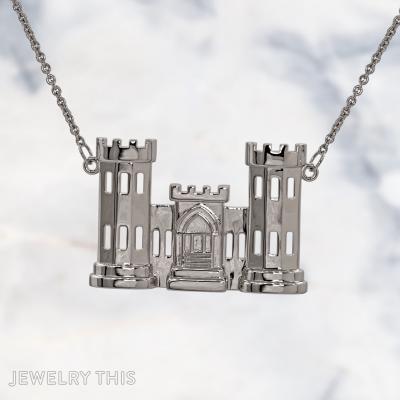
This pendant recreates a castle emblem in dimensional sterling silver, built from reference photos of ...

This gorgeous sterling silver pendant features the name “Alicia” in cut out letters that have ...
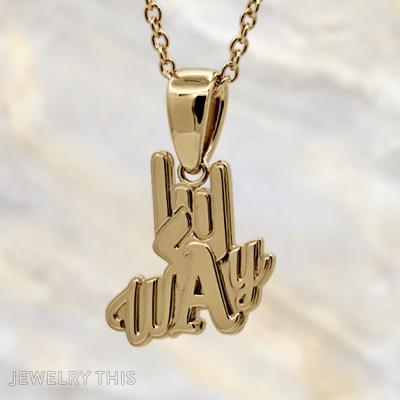
Celebrate the essence of duality with this one-inch custom pendant, a wearable embodiment of the ...

This 14karat Yellow gold Family pendant features a unique and elegant design. The pendant is ...

A heartfelt tribute to a remarkable dentist and artist, this pendant captures the essence of ...

Introducing our innovative 1-inch round Cuban flag pendant in 14kt yellow gold plated silver, showcasing ...



