
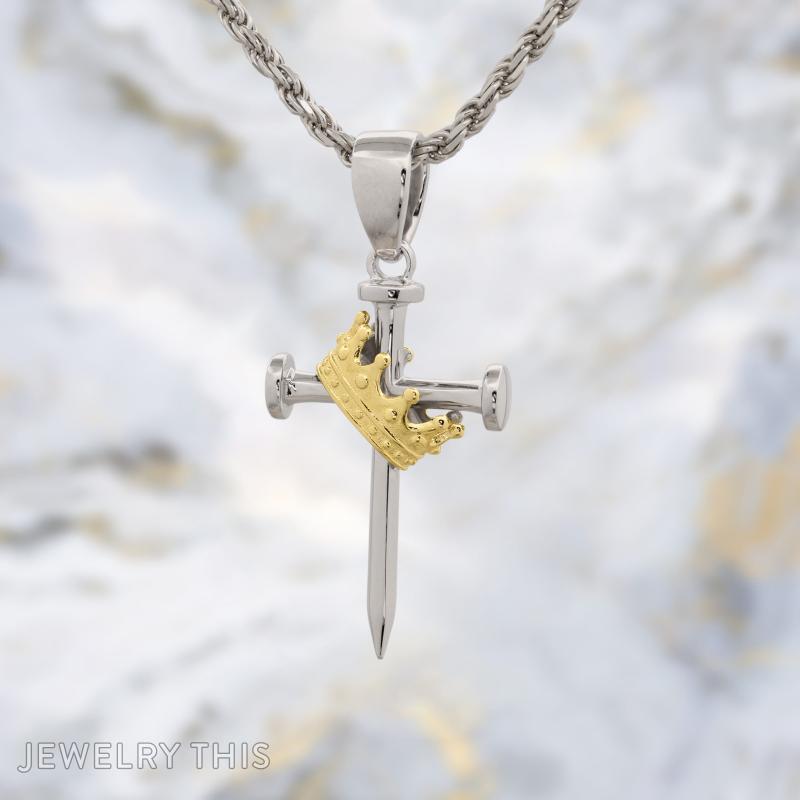
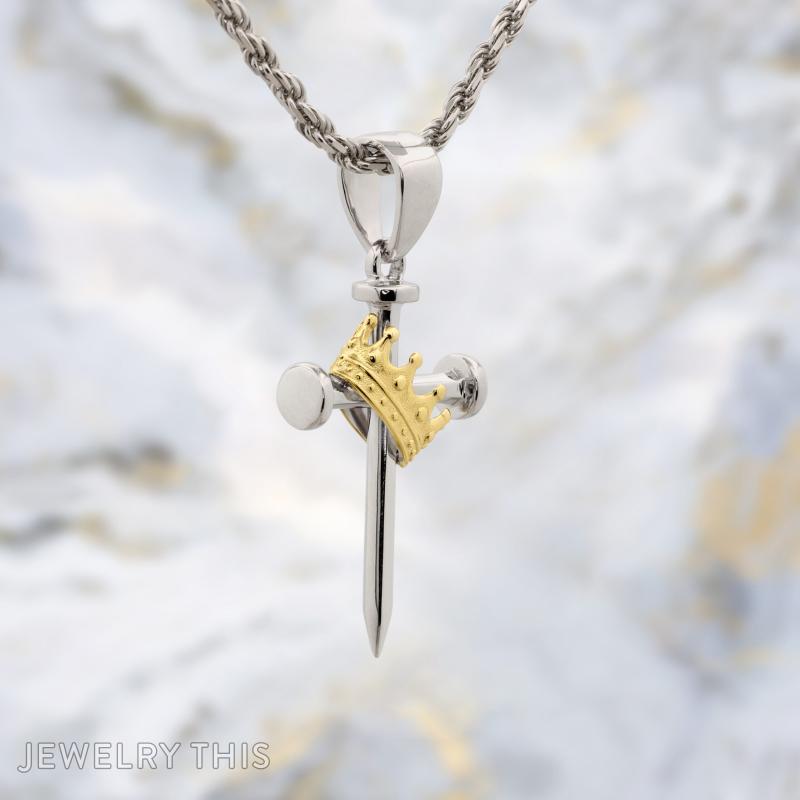
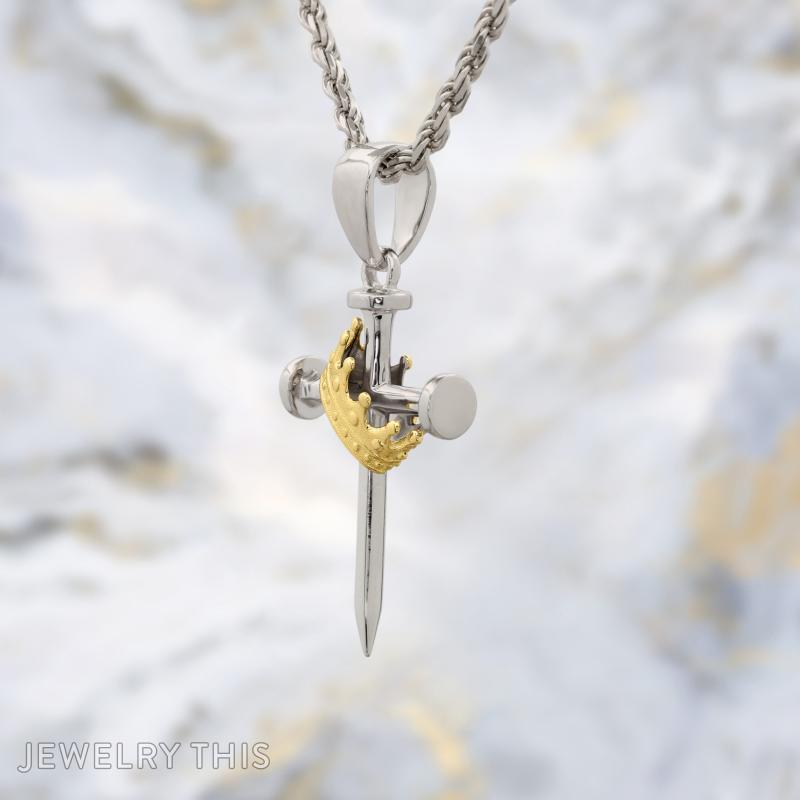
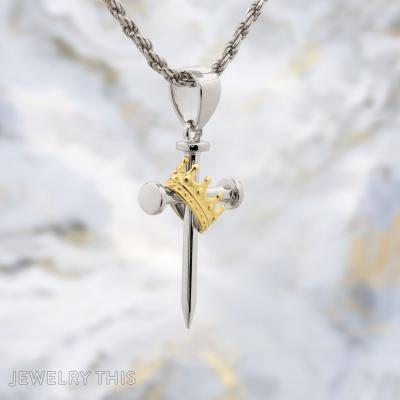
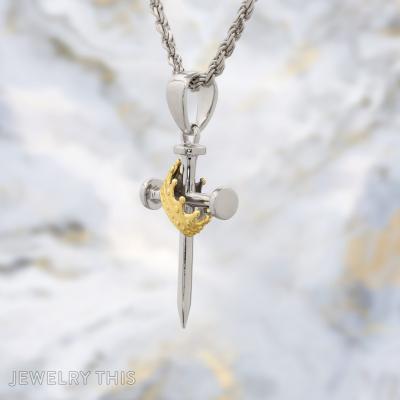
Nail Cross Pendant with Dangling Crown Accent
$$$
10k white gold, 10k yellow gold
A wife wanted a meaningful Christmas gift for her husband — a nail-shaped cross wrapped with a small crown, worn on a chain he could keep close every day. She worked through a sketch and a render with the design team to get the crown positioned just the way she pictured it, approving the final look with 'Absolutely perfect!' When it arrived in time for the holiday, she wrote: 'It's so beautiful. Really it's great... It's truly beautiful!!!!'
'Absolutely perfect!' — on seeing the technical sketch
'It's so beautiful. Really it's great... It's truly beautiful!!!! Oh my gosh the PACKAGING!!!! HIGH CLASS!!' — on delivery
Quick specs
Design type
Primary Metal
Secondary Metal
Primary Stone
Accent Stones
Design Complexity
Intent: Certainty
Size
Pendant approximately 1.5in total length including bail (cross approx. 1.25in x 0.75in); chain not specified.
How they made it distinctive
-
01
Nail-styled cross chosen instead of a flat traditional cross, giving the piece a more dimensional, sculptural silhouette
-
02
Crown cast as a separate connected piece rather than fused flat, intended to add subtle movement at the join
-
03
Two-tone construction pairs white gold for the cross with yellow gold reserved for the crown only, keeping the contrast deliberate rather than blended
-
04
Sized to just over 1.5 inches including the bail, scaled specifically for a man's pendant rather than a smaller unisex size
-
05
Commissioned in secret while the client was traveling internationally, timed specifically to arrive before a Christmas deadline
How you'd make it yours
Metal: this piece is 10k white and yellow gold — a new commission could use 14k or 18k for a richer color depth
Size: this piece is sized just over 1.5 inches — a new piece can be scaled larger or smaller to the wearer's preference
Joint construction: this piece's crown sits fixed against the cross — a new commission could specify a jump-ring or looser joint for a fully dangling crown
Cross style: this piece uses a nail-shaped cross — a new commission could use a traditional flat cross or another silhouette in the same two-tone language
Engraving: the back of the cross can carry a new inscription on a fresh commission
One of a kind: this exact pendant was designed for one client's husband and is not reproduced — a new commission is an original piece inspired by this one, not a copy
Design changes made
The initial rough sketch combined the cross and crown in a fixed arrangement, but the client clarified she wanted the crown to hang loosely off the cross rather than sit flush against it — the technical sketch was revised to reflect the dangling crown before moving to 3D design.
Who this is for
This piece is for someone who wants a faith-driven symbol with a distinctive, non-traditional shape rather than an off-the-shelf cross pendant. It's especially right for a partner choosing a meaningful gift for someone who likes to handle and wear their jewelry daily, and who wants two metal tones combined deliberately rather than blended into one.
How it's made
Once the design was approved, the piece moved into a wax model stage — a physical version of the design attached to a wax tree, then invested and fired in a kiln to burn out the wax and leave a mold. Molten 10k white and yellow gold was cast into the resulting cavity to form the cross and the separately cast crown element, which were then joined so the crown wraps around the crossbar.
After casting, the piece was cleaned up and polished to a bright finish across the white gold nail-cross body, with the yellow gold crown left in its own tone for contrast rather than plated to match. The crown was set onto the crossbar as a second connected piece rather than soldered flat, intended to allow slight movement at the joint before final assembly and finishing.
Key note
The cross and crown were cast as two separate pieces and joined afterward specifically so the crown could move independently of the cross body, rather than being cast or soldered as one fixed unit.
Pricing guidance
A two-tone metal pendant combining a sculpted cross and a separately cast crown element sits in the mid range for custom pendant work of this size and complexity. Most of the cost comes from modeling and casting two connected metal components rather than one, plus the labor to finish each piece separately before assembly. Metal karat and overall pendant size are the biggest variables from there.
Moves price up ↑
- ↑ Increasing the pendant size beyond roughly 1.5 inches, which requires more metal and larger casting runs
- ↑ Upgrading from 10k to 14k or 18k gold for either or both metal tones
- ↑ Adding stones or engraving to the cross or crown surfaces
- ↑ Designing the crown to be fully articulated with a jump-ring connection rather than a fitted joint
- ↑ Using platinum or heavier gauge metal for extra durability
Moves price down ↓
- ↓ Reducing the pendant to a smaller overall size
- ↓ Using sterling silver for the cross body with a gold-plated or 10k gold crown accent
- ↓ Simplifying the crown detail to a plainer band rather than a jeweled-look crown
- ↓ Choosing a single metal tone instead of a two-tone combination
- ↓ Omitting the separate moving-joint construction in favor of a single fixed casting
Questions people ask
Yes, this is possible when the two elements are cast as separate pieces and then joined at a connection point rather than being cast or soldered as one solid unit. The design intent has to be communicated clearly before the wax model stage, since a joint fitted too tightly during casting can end up rigid instead of movable. Achieving a loose, dangling connection typically requires either a jump-ring style link or a looser-fitted casting join, and either approach should be specified explicitly in the design review stage. If movement is important to you, ask to see how the joint will be constructed before approving the final render.
Both are legitimate gold alloys, but 10k contains a lower percentage of pure gold (about 41.7%) compared to 14k (about 58.3%), which makes 10k slightly more durable and scratch-resistant but with a marginally less rich color. For a two-tone piece combining white and yellow gold, the practical difference is mostly in cost and color depth rather than in day-to-day durability. Either option holds up well for regular pendant wear. The choice mostly comes down to your color preference and how much gold content you want in the piece.
The full process from design approval to a finished piece typically runs about one week for the design phase, followed by three to four weeks of production. Production includes a design quality check, wax model creation, casting, polishing, and any assembly of separate metal components. If you have a hard deadline like a holiday gift date, it's worth flagging that early so the timeline can be planned around it. Rush requests can sometimes be accommodated but should be discussed as early as possible in the design process.
A pendant combining a sculpted cross with a separately cast crown accent, in the roughly 1.5 inch size range, generally falls in the mid range for custom pendant work. The cost is driven mainly by the two-component construction and the labor of finishing and assembling both pieces, rather than by stone costs since this design has no center stone. Metal karat (10k vs 14k) and overall size are the two factors that shift the price most from there. A simpler single-piece pendant in the same metal would typically cost less.
Yes, a nail-styled cross is a design variation where the crossbar and vertical bar are shaped to resemble forged nails rather than a flat traditional cross silhouette. It adds visual texture and a more dimensional, sculptural look compared to a plain cross shape. This style works well in white metals like white gold or silver since the nail heads and tapered point read clearly against a polished finish. It can be combined with other symbolic elements, like a crown, wrapped around the crossbar.
Yes, combining white and yellow gold in one pendant does not compromise durability as long as both metals are properly finished and, if needed, rhodium plated on the white gold portion. The two metals are simply alloyed differently for color and are joined using standard jewelry soldering or assembly techniques. Daily wear is generally fine for a pendant, since it doesn't experience the same friction and impact as a ring. Occasional cleaning with a soft cloth helps maintain the shine on both metal tones.
Yes, but resizing a two-component pendant like this typically means redesigning and recasting rather than simply enlarging an existing casting, since the proportions between the cross and crown need to stay balanced. Increasing the overall size from around 1.5 inches to 2 inches or larger usually requires a new 3D model and can change the cost significantly. It's best to settle on final dimensions during the design and render approval stage rather than after production begins. If you're unsure about scale, ask to see the render next to a common object for a sense of true size.
For a design combining two metal tones, sterling silver with a gold-plated or solid 10k gold crown accent is a common way to achieve a similar two-tone look. This keeps the bulk of the pendant in a less costly metal while still getting the warm gold contrast on the crown detail. 10k gold in both tones is another option that reduces cost compared to 14k or 18k while still being solid gold rather than plated. The final choice usually comes down to balancing the look you want against the metal composition that fits your plans.
Explore Similar Creations
Every masterpiece starts with a spark. Explore how our clients raw ideas - sketches, heirlooms, inspirations - were transformed into bespoke works of arts.
This silver pendant features a circular silver frame combined with a cut-out central area. Three ...

Designed as a retirement gift for a valued employee, the pendant features a unique cut-out ...
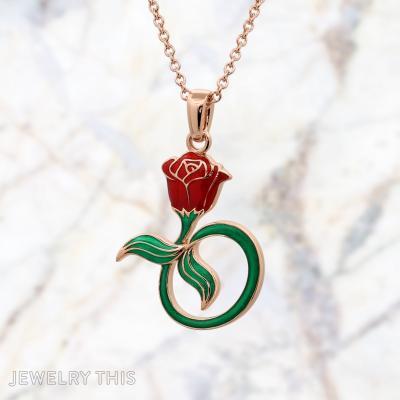
Discover a beautifully crafted pendant that merges the delicate elegance of a rose with the ...

Indulge in the captivating allure of this custom pendant crafted from 14k white gold with ...


Celebrate the art of self-expression with this 0.75-inch round pendant, expertly crafted in silver. This ...
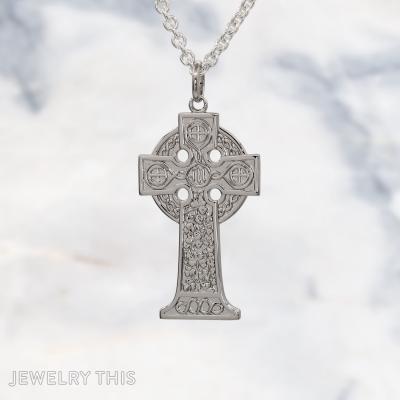
This stunning Celtic cross pendant is a meaningful symbol of faith and heritage, beautifully crafted ...
Celebrate the essence of duality with this one-inch custom pendant, a wearable embodiment of the ...

The Gold plated Silver pendant features a beautifully detailed elephant walking with its trunk lifted ...

This Silver pendant is a recreation of a beloved lost treasure. This pendant captures the ...

This sterling silver pendant is a unique representation of a barber shop logo. The design ...

Celebrate medical expertise with our 1-inch round pendant, crafted in lustrous 14kt yellow gold. The ...



