Koi Fish Pendant — Engraved Silver Water Motif
$$$
Sterling silver
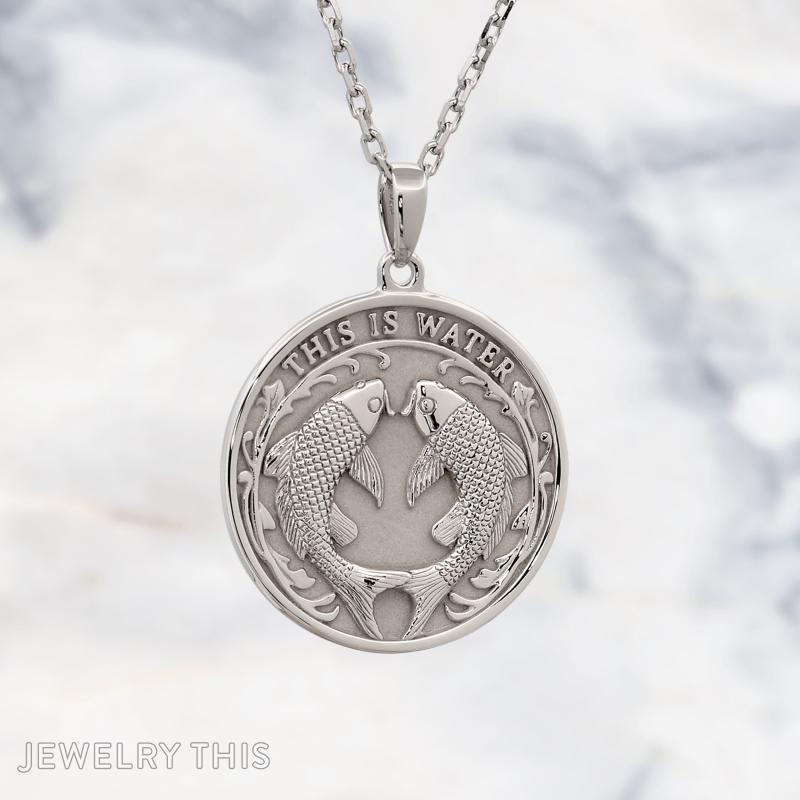
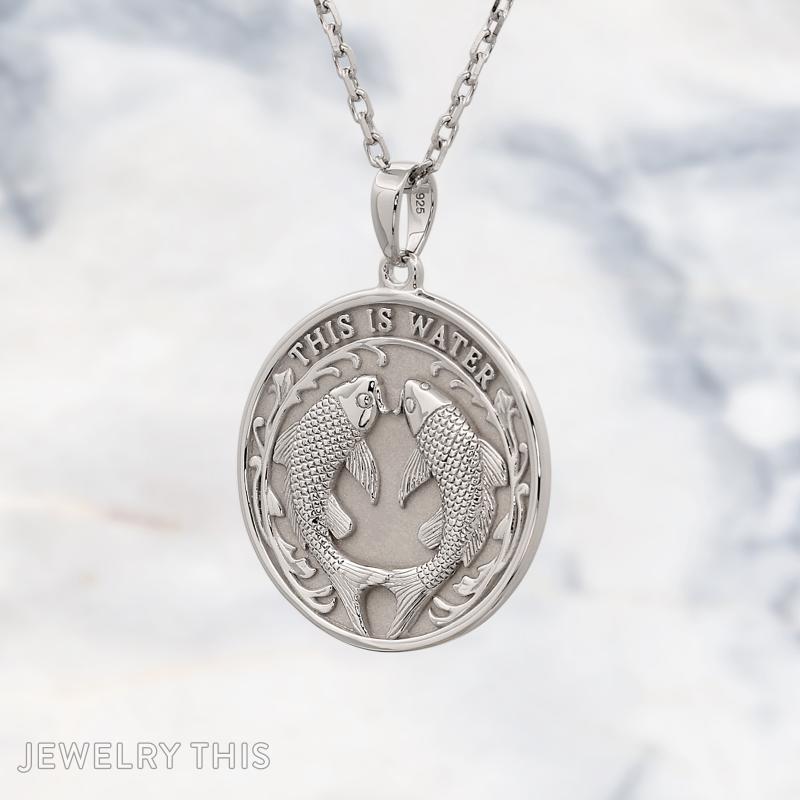
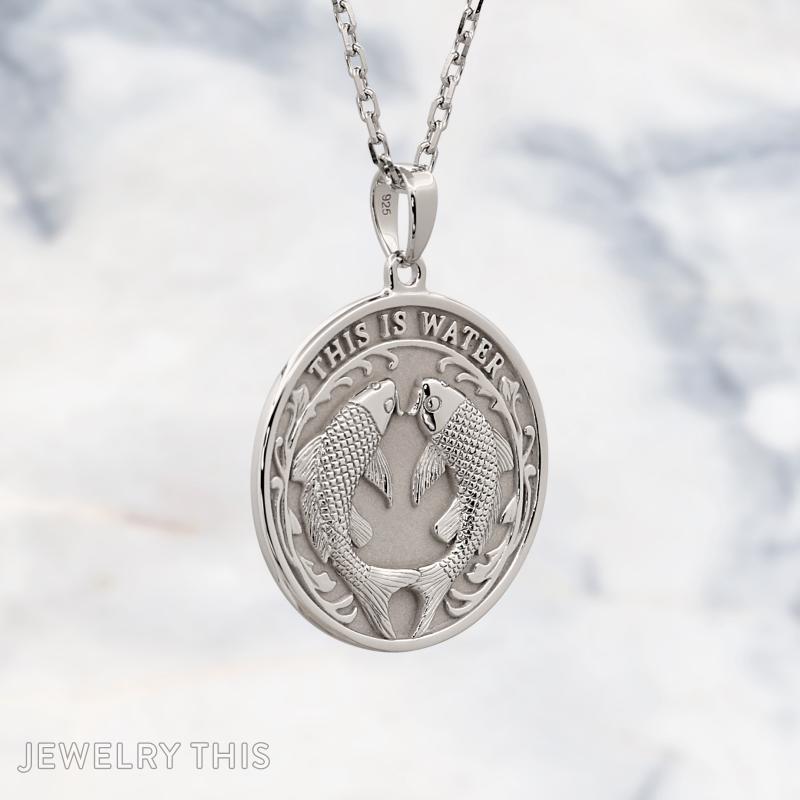
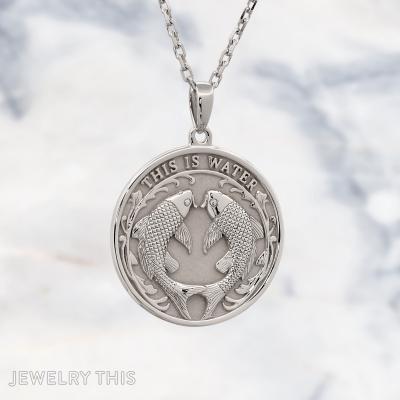
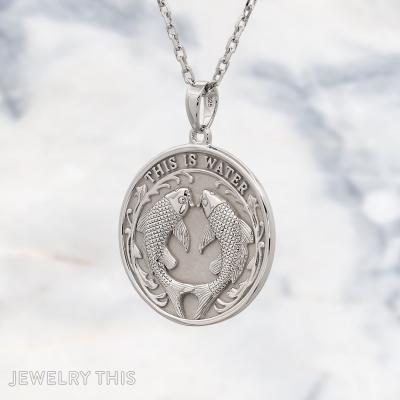
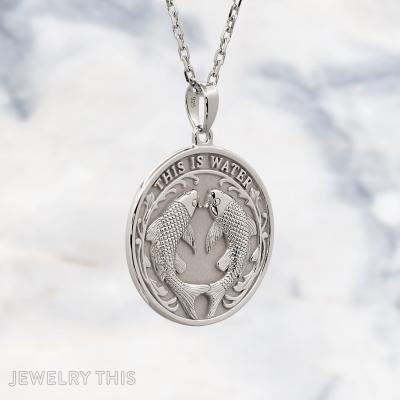
A client wanted a pendant built around a meaningful phrase and an AI-generated reference image of two fish framed by leaves. Over several rounds of feedback, the design shifted from a fully polished sterling silver piece to a matte-background, polished-foreground finish, with the fish made symmetrical and the lettering adjusted to curve evenly around the circle. When it arrived, he wrote: "It came out great! Thank you for all your hard work."
'It came out great! Thank you for all your hard work' — on delivery
Quick specs
Design type
Primary Metal
Primary Stone
Accent Stones
Design Complexity
Intent: Certainty
Size
Pendant approximately 20-22mm (about 7/8 inch) diameter. Chain 18in, 1.5mm cable.
How they made it distinctive
-
01
Two-finish treatment — matte background paired with a polished foreground — chosen specifically to make the fish, lettering, and vine detail stand out without needing color or stones
-
02
Fish rendered as mirrored symmetrical pair rather than two independently modeled figures, for a cleaner, more balanced look
-
03
Lettering curvature revised multiple times to sit evenly along the pendant's circular edge rather than bunching at the center
-
04
Vine border trimmed back from the text after the first render so the lettering reads cleanly without encroaching leaf detail
-
05
Sized down from an initial one-inch concept to roughly seven-eighths of an inch at the client's request for a more compact piece
How you'd make it yours
Metal: this piece is sterling silver — a new commission could use 14k or 18k white or yellow gold for a different tone and finish response
Finish: this piece pairs a matte background with polished raised elements — a new piece could use an all-over polish, brushed, hammered, or dotted texture instead
Border motif: this piece uses a generic leaf-and-vine border — a new commission could use a different natural motif in the same relief style
Lettering: this piece carries a custom short phrase — a new piece could carry different wording sized to fit the same circular format
One of a kind: this exact pendant was designed for one client through many rounds of revision and is not reproduced — a new commission is an original piece inspired by this one, not a copy
Design changes made
The leaf border was trimmed back from the lettering, the finish changed from high-polish to a matte background with polished foreground elements, the fish scales were softened for a less uneven texture, and the right-hand fish was mirrored to match the left. The lettering font and curvature were also revised more than once to sit evenly around the circle's edge.
Who this is for
This piece is for someone who wants a small, symbolic pendant built around a personal phrase rather than a stone or a name. It suits someone who cares about getting finish details right — the contrast between matte and polish, the exact curve of lettering — and who is willing to go through several rounds of revision to get a compact, wearable piece exactly right.
How it's made
Once the design was finalized, a wax model of the pendant was produced using a 3D printer and attached to a wax tree inside a flask. The flask was placed in a kiln to burn out the wax, leaving a hollow mold, and molten sterling silver was poured into that mold. After cooling, the piece was removed from the mold, cleaned, and prepared for finishing.
The pendant carries two distinct surface finishes: a matte texture applied to the recessed background, and a polished finish left on the raised foreground elements — the two koi fish, the lettering, and the vine border. This contrast was applied after the piece was cast and cleaned, since the matte and polish treatments are worked separately on their respective surfaces. No stones were set, as the design relies entirely on relief detail and surface contrast for its effect.
Key note
The matte and polished areas are two separate finishing passes on the same piece — the recessed background is textured matte while the raised fish, lettering, and vine detail are left high-polish, which is why the contrast reads clearly even though it's all one solid casting.
Pricing guidance
A sterling silver relief pendant with dual-finish detailing like this sits toward the lower end of the price range for custom pendants, since silver is the most economical of the precious metals used. Most of the cost comes from the design refinement and the hand-finishing needed to create the matte-versus-polish contrast across raised and recessed surfaces. Complexity of the relief work and finishing steps are the main drivers from there.
Moves price up ↑
- ↑ Upgrading the metal to 14k or 18k white or yellow gold instead of sterling silver
- ↑ Adding gemstone accents or eyes to the fish figures
- ↑ Increasing the pendant diameter beyond an inch, which increases metal and finishing time
- ↑ Adding a two-sided design with engraving or detail on the back
- ↑ Requesting additional textured finishes (hammered, brushed, or dotted) across multiple zones
Moves price down ↓
- ↓ Keeping the design single-sided with no engraving on the back
- ↓ Choosing an 18-inch standard cable chain rather than a heavier or longer chain style
- ↓ Simplifying the border detail to reduce hand-finishing time
- ↓ Using an all-over polish finish instead of a two-zone matte/polish contrast
- ↓ Reducing the pendant diameter slightly to use less metal
Questions people ask
Yes, this is a common request and is achieved by applying different surface treatments to different areas of the same cast piece after it's cleaned up. The recessed background can be given a matte or sandblasted texture while the raised design elements are left polished, creating contrast without needing multiple metals. This technique works well on relief-style pendants where the design elements sit above the background plane. The finishing is done by hand after casting, so the exact look can be adjusted piece by piece.
Sterling silver is a solid, durable choice for a relief pendant and is the most economical of the precious metals commonly used in fine jewelry. It takes fine detail well, which matters for pieces with raised figures and lettering like this one. Sterling silver can tarnish over time with air exposure, but regular wear and occasional polishing keeps it looking bright. It's a good option for anyone who wants a substantial-looking piece without the cost of gold or platinum.
The design phase typically takes about a week to finalize once a deposit is placed, though pieces with more revision rounds, like adjusting text curvature or finish details, can take longer. Once the design is approved, production runs approximately three to four weeks. The process starts with a wax model made from the approved 3D design, which is then cast in metal, cleaned, and finished. Total timeline from first approval to delivery is typically five to six weeks, though revisions to the design add time before production starts.
A sterling silver relief pendant with a two-finish treatment and moderate design complexity sits toward the lower end of the pricing range for custom jewelry, since silver is the most affordable of the fine metals used. Most of the cost is tied up in the design refinement and the hand-finishing work needed to create the matte-and-polish contrast. A chain is typically included in the total quoted for a pendant like this. Pricing shifts up with a metal upgrade, added stones, or additional engraving.
Yes, though it takes careful spacing and sometimes a font adjustment to get lettering to curve evenly around a circular pendant, especially with a classic serif font that has straight vertical strokes. Block-style fonts curve less naturally than fonts with more rounded, flowing letterforms. Increasing the pendant's diameter slightly can also give more room for letters to sit evenly spaced without crowding near the edges. It typically takes a couple of rounds of review on the 3D model to get the curvature looking right.
Yes, the 3D render stage is specifically for reviewing and adjusting the design before it goes to casting. Common adjustments include finish changes, symmetry corrections, font changes, and refining how design elements are positioned relative to each other. Multiple rounds of revision are normal, particularly for pieces with lettering that needs to follow a curved edge. Once the design is approved, changes become more difficult and costly because production has already begun.
A chain can be included as part of the pendant order, and an 18-inch cable chain in a lightweight gauge is a common standard option. The chain length and style can be adjusted based on preference, and heavier or longer chains typically add to the overall cost. If you already own a chain you'd like to use, that can sometimes be accommodated, though the bail size needs to be confirmed to make sure it fits. Ordering the chain together with the pendant simplifies fitting and delivery.
A wax model is a 3D-printed replica of the final design, produced before any metal is used. It's attached to a wax tree and placed in a flask, which is then heated in a kiln to burn away the wax and leave a hollow mold in its exact shape. Molten metal is poured into that mold to create the actual piece, which is why the process is called lost-wax casting. This method allows for precise relief detail, fine lettering, and intricate figures to be reproduced accurately in metal.
Explore Similar Creations
Every masterpiece starts with a spark. Explore how our clients raw ideas - sketches, heirlooms, inspirations - were transformed into bespoke works of arts.
This exquisite custom pendant embodies a heartfelt story, capturing the spirit and personality behind the ...

This gold pendant was meticulously crafted into a captivating open and geometric shape. Designed by ...

Crafted for a Southwest flight attendant, this key pendant embodies both elegance and sentimentality. Crafted ...

Elevate your style with our exquisite 18kt yellow gold tetragrammaton cut-out pendant. Measuring a radiant ...

This Yellow gold pendant is a testament to the sea’s timeless allure. The circular design ...

This exquisite custom pendant is a celebration of the bond between a parent and their ...

Embrace the essence of family love with the heart-shaped pendant. This heart has a subtly ...

This sterling silver dog tag pendant captures the essence of strength and inspiration. The front ...
This custom couples’ pendant is a graceful celebration of partnership, weaving two lives together into ...

This stunning custom halo pendant was created as a special birthday present. The pendant is ...


Celebrate the spirit of Kappa Alpha Psi with this striking custom pendant. Crafted in sterling ...