Why Some Diamonds Look Bigger Than Others (Even at the Same Carat Weight)
Shopping for a diamond can be confusing when two stones with the exact same carat weight look noticeably different in size. Many buyers assume carat directly determines how large a diamond appears, but that’s only part of the story.
In reality, several factors influence a diamond’s visual size—including its shape, cut proportions, depth, and even the ring setting. Understanding these details helps you choose a diamond that looks impressive while still fitting your budget and personal style.
Carat Weight Doesn’t Equal Visible Size
Carat measures a diamond’s weight—not its dimensions.
A one-carat diamond always weighs 200 milligrams, but its diameter, length, width, and overall face-up appearance can vary depending on how that weight is distributed.
For example:
- A deep-cut diamond carries more weight below the surface, making it appear smaller from the top.
- A shallow-cut diamond may spread more weight across its surface, making it appear larger.
This is why two diamonds with identical carat weights can have noticeably different visual sizes.
Diamond Shape Has the Biggest Impact
One of the largest influences on perceived size is the diamond’s shape.
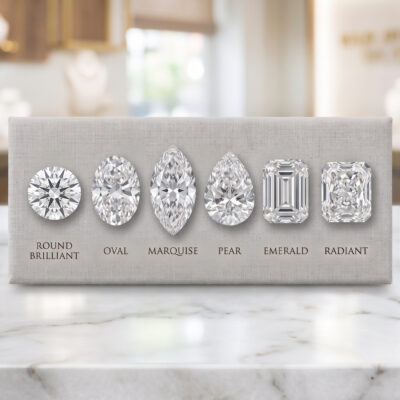
Certain shapes naturally have larger surface areas than others because of their elongated outlines or different cutting styles.
Shapes that often appear larger include:
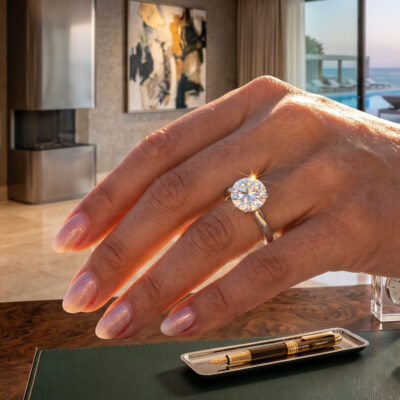
Round brilliant diamonds, while timeless and exceptionally brilliant, tend to face up slightly smaller because more of their weight is concentrated in their depth.
This is one reason oval diamonds have become increasingly popular among modern engagement ring buyers.
Cut Proportions Matter More Than Most People Realize
Cut quality isn’t just about sparkle—it also affects perceived size.
A well-proportioned diamond balances:
- Table size
- Crown angle
- Pavilion depth
- Total depth percentage
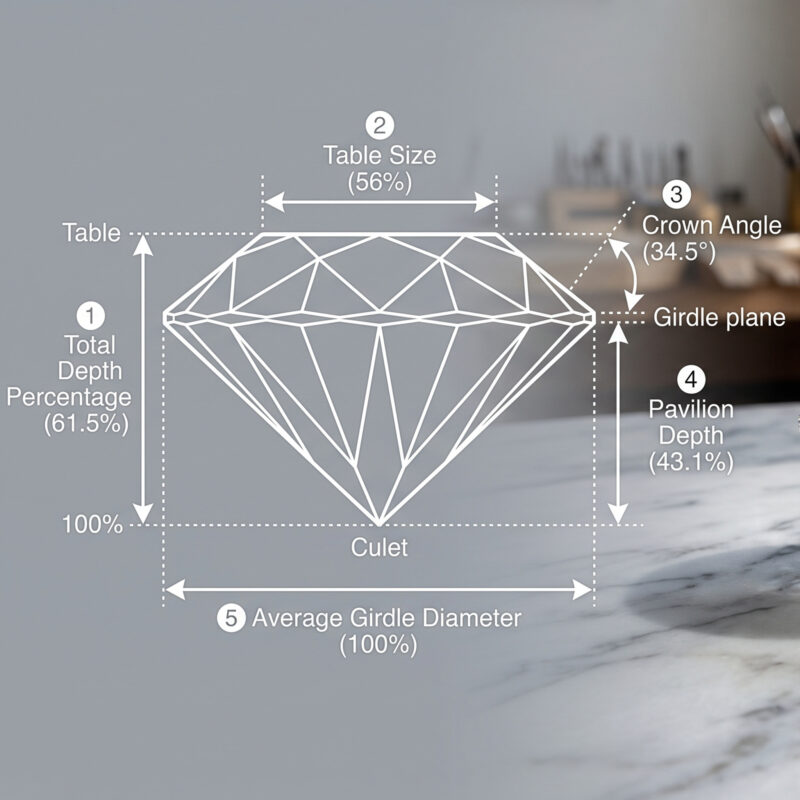
Round Brilliant Diamond Cut
If a diamond is cut too deep, extra weight is hidden underneath instead of contributing to the visible surface.
If it’s cut too shallow, it may appear larger but lose brilliance and fire.
The goal is finding the right balance between visual size and light performance.
Elongated Diamonds Create an Optical Illusion
Our eyes naturally perceive longer shapes as larger.
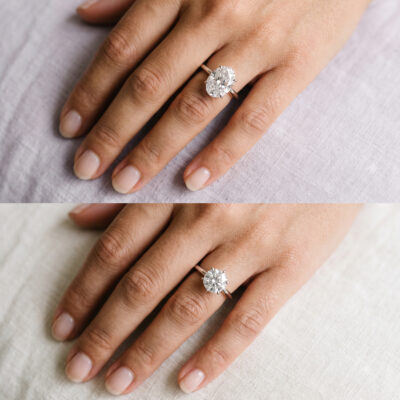
This is why oval, marquise, and pear diamonds often appear bigger than round diamonds of the same carat weight.
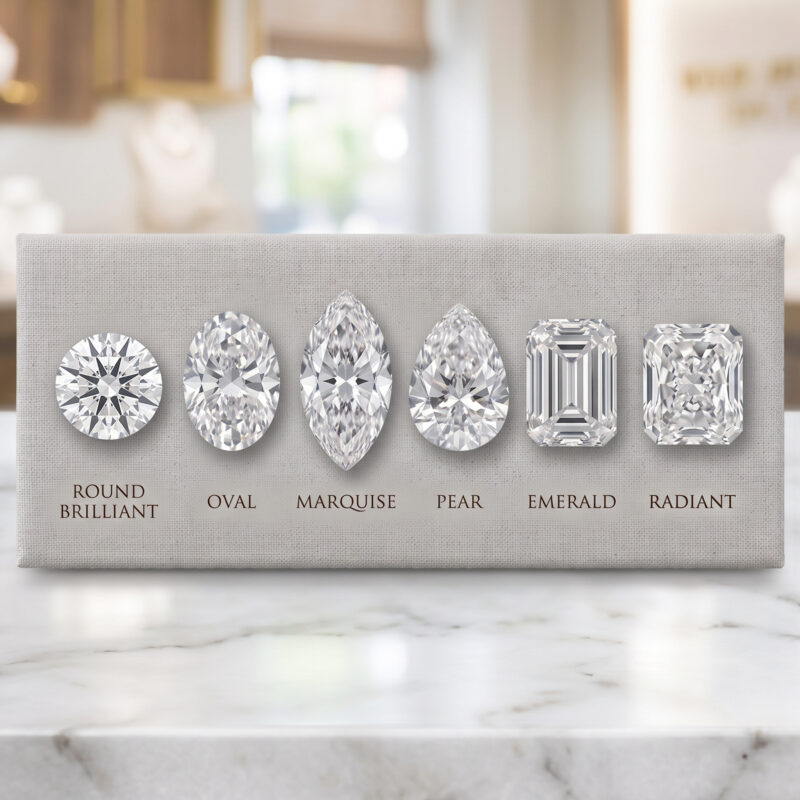
Same Carat Weights Different Shapes
Their extended length creates more finger coverage and gives the impression of a larger stone without increasing carat weight.
For buyers wanting maximum visual impact, elongated shapes offer excellent value.
Ring Settings Can Make a Diamond Look Larger
The design of the engagement ring itself also influences how large a center diamond appears.
Settings that maximize visual size include:
Thin Bands
Slim bands make the center stone stand out by creating contrast.

A knife-edge band creates the illusion of a narrower band without losing strength or stability.
Hidden Halo Settings
A hidden halo adds sparkle underneath while subtly increasing visual presence.
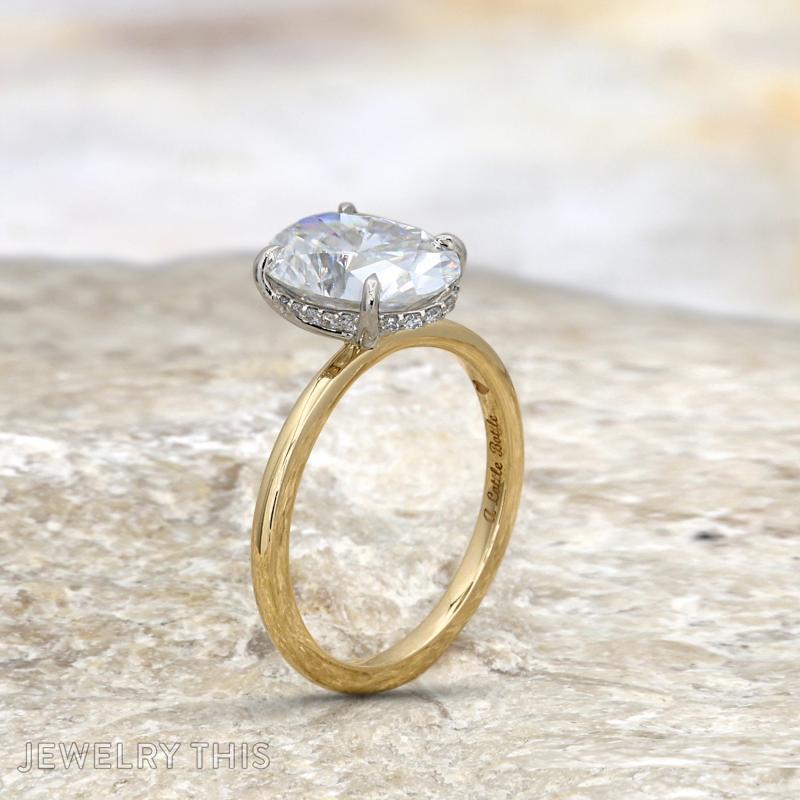
Hidden Halo setting
Halo Settings
Small accent diamonds surrounding the center stone create the illusion of a much larger diamond.
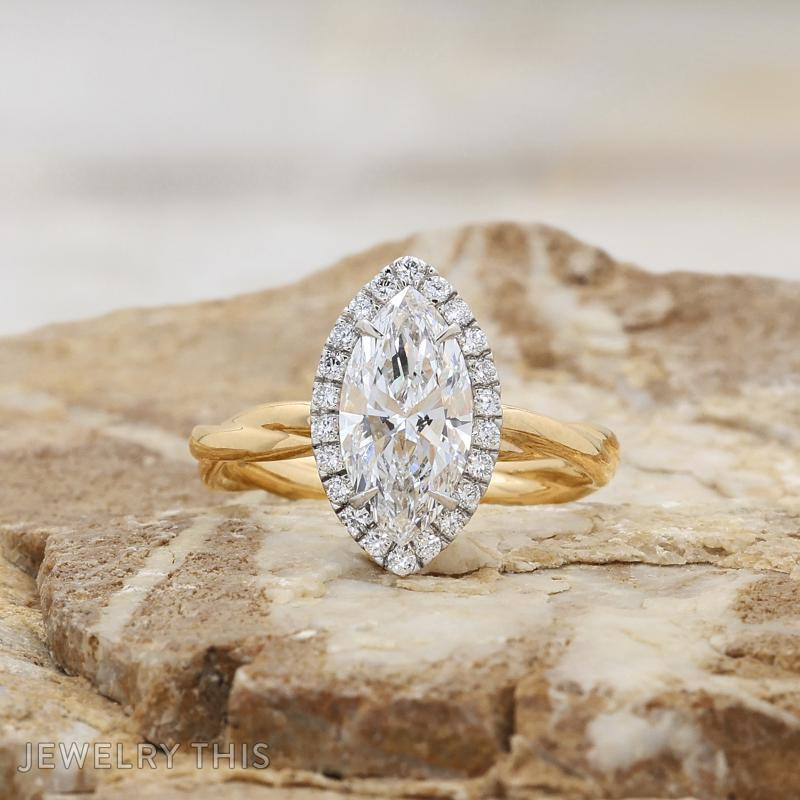
Halo Setting
Minimal Prongs
Delicate claw prongs expose more of the diamond, allowing it to appear larger.
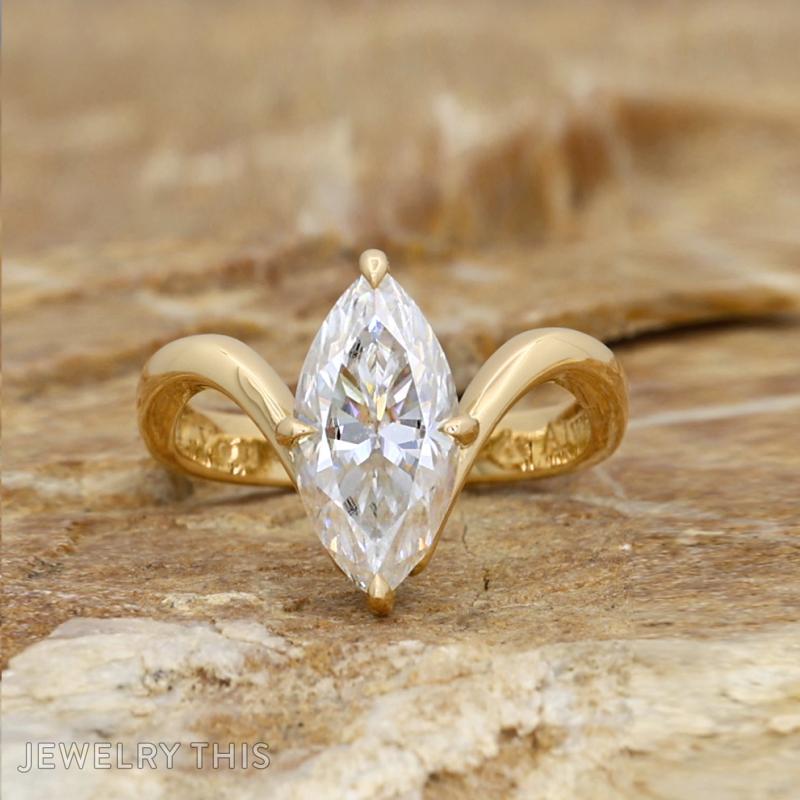
Marquise Minimal Claw Set Engagement Ring
Color and Clarity Play a Small Role
Although less significant than shape or cut, higher transparency and brightness can make diamonds appear more vibrant and slightly larger.
A diamond that reflects light efficiently often commands more attention than a duller stone of identical size.
Is a Bigger-Looking Diamond Always Better?
Not necessarily.
Choosing a diamond is about balancing:
- Sparkle
- Shape
- Finger coverage
- Personal style
- Budget
Some buyers prioritize brilliance above all else, making round diamonds an excellent choice. Others prefer maximizing visual size and gravitate toward elongated shapes like oval or pear.
The best diamond is the one that fits both your style and your priorities.
Final Thoughts
If you’re comparing diamonds, don’t focus solely on carat weight. Shape, cut, proportions, and setting all influence how large a diamond appears.
Whether you’re designing an engagement ring or another bespoke piece, thoughtful design ensures the finished jewelry is balanced, beautiful, and made to last.
Focus on creating custom jewelry that brings your ideas to life with a design tailored to your vision.
If you’re considering different diamond shapes, our guide comparing Oval Diamonds vs. Round Diamonds in 2026 explores why so many couples are choosing elongated designs today
Frequently Asked Questions
Does an oval diamond look bigger than a round diamond?
Yes. Oval diamonds typically have a larger face-up surface area than round diamonds of the same carat weight, making them appear larger.
Does a halo make a diamond look bigger?
Absolutely. Halo settings can significantly increase the perceived size of a center diamond by surrounding it with smaller accent stones.
Does cut affect diamond size?
Yes. A deep-cut diamond hides more weight below the surface, while an ideally proportioned diamond maximizes its visible dimensions and brilliance.
Which diamond shape looks the biggest?
Marquise generally offers the largest face-up appearance, followed closely by oval and pear shapes.