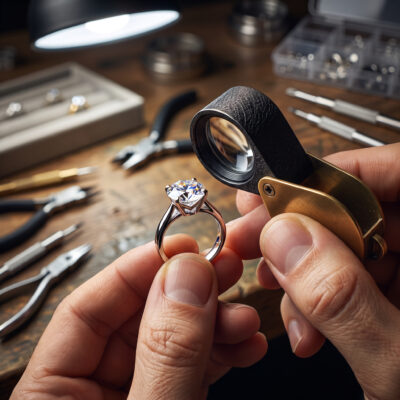
What Makes a Diamond Sparkle? The Science Behind Diamond Brilliance
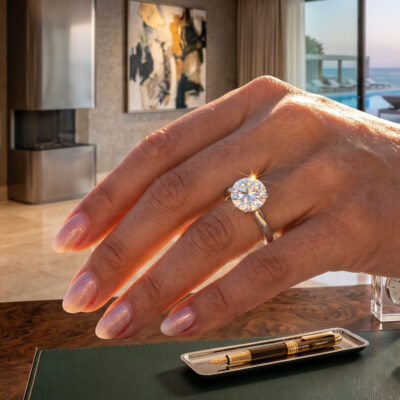
A diamond’s sparkle is one of the first things people notice. That flash of light across the stone can make a diamond feel almost alive, changing as the stone moves from one angle to another. But what actually makes a diamond sparkle?
The answer is more nuanced than simply saying that diamonds are highly reflective. A diamond’s sparkle is primarily influenced by its cut, proportions, symmetry, polish, and the way it interacts with light. Clarity and the diamond’s shape can also affect how much light reaches the eye and how that light is distributed.
Understanding these factors can make choosing a diamond much easier, especially when you are selecting a stone for an engagement ring, wedding band, pendant, or custom piece designed to be treasured for years.
What Makes a Diamond Sparkle?
A diamond sparkles when light enters the stone, interacts with its facets, and returns toward the viewer’s eye.
Three visual effects contribute most to what we perceive as diamond sparkle:
- Brilliance: The white light reflected back from the diamond.
- Fire: Flashes of spectral colors, such as red, blue, and yellow.
- Scintillation: The flashes of light and dark that appear as either the diamond or the viewer moves.
Together, these effects create the lively appearance commonly described as a diamond’s sparkle. However, not every diamond interacts with light in exactly the same way. The way a diamond is cut has a particularly important role.
How Does a Diamond Create Sparkle?
1. Light Enters the Diamond
When light reaches a diamond, some of it enters the stone through the top, or table, while some is reflected from its surface. The light that enters interacts with the diamond’s internal facets.
2. Light Travels Through the Diamond
A diamond has a high refractive index, which means light changes direction significantly as it moves into and through the stone. The arrangement of the diamond’s facets helps determine how that light travels.
3. Facets Reflect the Light
The facets act somewhat like tiny windows and mirrors, redirecting light within the diamond. When the diamond has well-balanced proportions and appropriate facet relationships, much of the light can be directed back toward the viewer.
4. Light Returns to Your Eye
The light that exits the diamond is what creates much of the visual brightness and sparkle we see. As the diamond, your hand, or the light source moves, different facets catch and return light. This movement creates the flashes associated with scintillation. In simple terms: the diamond’s sparkle comes from the way its cut controls light.
Why Is Diamond Cut So Important for Sparkle?
When discussing diamond quality, cut is one of the most important factors affecting visual performance. Cut should not be confused with diamond shape.
A diamond’s shape describes its outline, for example, round, oval, pear, emerald, or cushion.
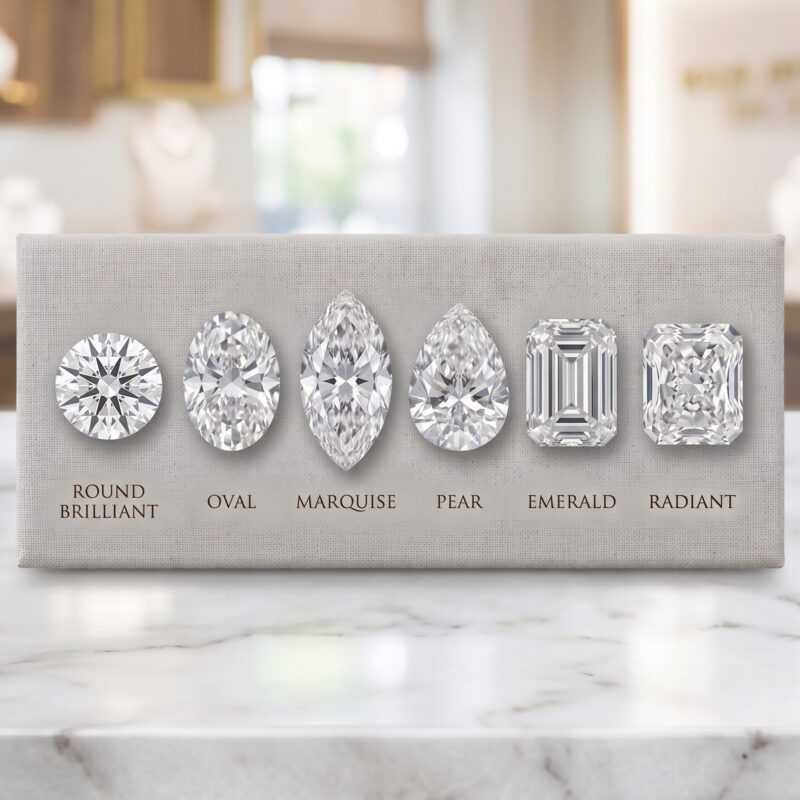
Different Diamond Shapes
A diamond’s cut refers to the quality of its proportions, facet arrangement, symmetry, and finish, all of which influence how it interacts with light.
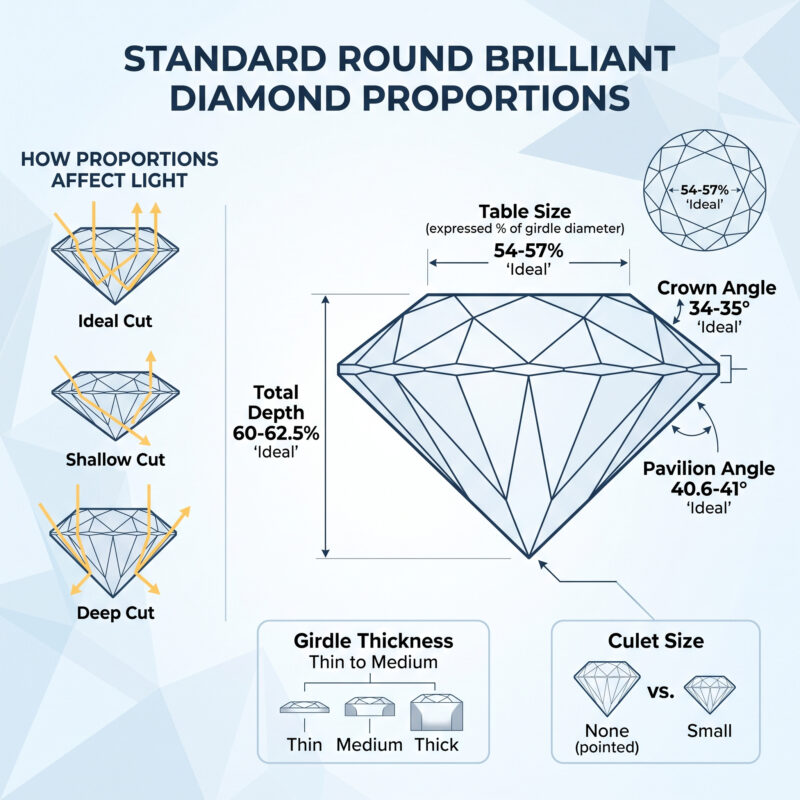
Diamond Cut
A beautifully shaped diamond can still have less visual brightness if its proportions and facet relationships do not allow light to return effectively to the viewer.
Does a Better Cut Mean More Sparkle?
Generally, a well-executed cut can produce stronger light performance than a poorly executed cut, assuming other factors are comparable. This is why two diamonds with similar color and clarity grades can look noticeably different when viewed side by side.
The goal is not simply to find a diamond with the most facets or the largest apparent size. It is to find a stone whose facets and proportions work together to create an appealing balance of brightness, fire, and scintillation.
What Is Diamond Brilliance?
Diamond brilliance is the appearance of white light reflected from a diamond. It is often the bright, luminous quality people notice when looking at a diamond in normal lighting.
Brilliance depends heavily on how the diamond is cut and how effectively it returns light. When someone says, “That diamond looks incredibly bright,” they are often responding primarily to its brilliance. Brilliance is different from fire and scintillation, although all three contribute to the overall appearance of sparkle.
What Is Diamond Fire?
Diamond fire refers to the flashes of spectral color that can appear when white light is dispersed by the diamond. Instead of appearing simply white, the light may separate into colors resembling small flashes of a rainbow.
Fire is particularly noticeable under certain lighting conditions and viewing angles. A diamond can therefore have excellent brightness while displaying a different visual balance of fire depending on its cut, proportions, shape, and facet design.
What Is Diamond Scintillation?
Scintillation is the pattern of light and dark flashes you see as the diamond or observer moves. Imagine turning an engagement ring slightly under a light. Instead of seeing exactly the same reflection, different facets suddenly catch the light.
That movement creates the characteristic flashes associated with diamond sparkle. Scintillation is one reason a diamond can look dramatically different while moving than when viewed completely still.
Does Diamond Clarity Affect Sparkle?
Yes, but the relationship is more nuanced than simply saying that higher clarity always means more sparkle. Clarity describes the presence of internal characteristics, called inclusions, and surface characteristics, called blemishes. If characteristics are large, numerous, or positioned in ways that interfere with the passage of light, they may affect a diamond’s appearance.
However, many inclusions are microscopic and have little noticeable effect on a diamond’s visual appearance. This means that choosing a diamond is not simply about selecting the highest clarity grade available. The important question is how the stone actually looks to the eye.
For a custom jewelry piece, the diamond should be considered as part of the complete design rather than as an isolated grading characteristic.
Does Diamond Color Affect Sparkle?
Diamond color and sparkle are related, but they describe different characteristics. Color grading generally describes how much body color is visible in a diamond, while sparkle describes its interaction with light. A diamond with a noticeable color tint can still be beautifully bright and lively.
Conversely, a diamond with a high color grade is not automatically more brilliant if its cut and light performance are less effective. This is why evaluating a diamond requires looking at several characteristics together rather than treating one grading factor as the sole measure of beauty.
Does Diamond Shape Affect Sparkle?
Yes. Different diamond shapes use different facet patterns and proportions, which can create distinctive patterns of brilliance, fire, and scintillation.
Round Brilliant
The round brilliant is particularly well known for its strong emphasis on light performance and is a popular choice for those who want pronounced brilliance and scintillation.
Oval
Oval diamonds can offer substantial brilliance while creating a more elongated silhouette. Their visual character can vary considerably depending on facet pattern and proportions.
Cushion
Cushion diamonds can have a softer, romantic appearance and may display a combination of brilliance and larger flashes, depending on their facet design.
Emerald
Emerald-cut diamonds are known for their step-cut facets. Rather than producing the same type of sparkle associated with a brilliant cut, they often create broad, mirror-like flashes of light.
Pear
Pear-shaped diamonds combine characteristics of round and marquise-style silhouettes, producing a distinctive combination of brilliance and shape.
The important point is that sparkle does not look identical in every diamond shape. The best choice depends partly on the type of light performance and visual character you prefer.
Does Diamond Polish Affect Sparkle?
Polish describes the quality of a diamond’s surface finish. A well-polished diamond has a smooth facet surface that allows light to interact with the stone as intended.
Poor surface finishing can potentially affect the way light behaves, although polish is only one component of overall diamond appearance. Symmetry is similarly important because it describes how precisely the facets are aligned and arranged.
Why Do Some Diamonds Look More Sparkly Than Others?
Two diamonds can have similar grading characteristics and still appear different to the eye.
That can happen because sparkle is influenced by several factors working together, including:
- Cut quality
- Proportions
- Facet arrangement
- Symmetry
- Polish
- Diamond shape
- Clarity characteristics
- Lighting conditions
- Viewing angle
- The surrounding jewelry design
This is why looking at the diamond itself matters. A grading report provides valuable information about a diamond’s characteristics, but the visual experience of the stone is also important when selecting a diamond for a meaningful piece of jewelry.
Does Diamond Size Determine Sparkle?
Not necessarily. A larger diamond is not automatically more brilliant or sparkly than a smaller diamond. Sparkle is primarily about light performance, not simply physical size.
A well-cut diamond can appear remarkably lively regardless of its carat weight, while a poorly proportioned stone may not perform as well even if it is larger. This is an important distinction when choosing a diamond: size and sparkle are separate considerations.
Does Lighting Change How a Diamond Sparkles?
Absolutely. A diamond can look different under different types of lighting. Under bright point-source lighting, you may notice sharp flashes and scintillation. In softer or more diffuse lighting, the diamond may appear different, with its overall brightness becoming more noticeable than individual flashes.
Natural daylight, indoor lighting, jewelry-store lighting, and evening environments can all produce different visual effects. This is one reason it is useful to consider how a diamond looks in more than one lighting environment.
After all, an engagement ring or other meaningful piece will be worn in everyday life—not just under jewelry-store lights.
Can a Diamond Be Too Sparkly?
Sparkle itself is not generally a simple “more is better” characteristic. Different people are drawn to different types of diamond light performance. Some prefer intense, lively scintillation. Others appreciate broader flashes, softer brilliance, or colorful fire.
The ideal diamond is therefore not necessarily the one that produces the most obvious flashes under one particular light source. It is the diamond whose overall appearance feels right for the wearer and complements the design.
What Should You Look for When Choosing a Sparkly Diamond?
If sparkle is one of your priorities, consider the diamond as a complete visual object rather than focusing on one specification.
| What to Look At | Why It Matters |
|---|---|
| Cut Quality | Consider how effectively the diamond interacts with light. |
| Proportions | These influence how light travels through the stone. |
| Symmetry | Precise facet alignment contributes to consistent visual performance. |
| Polish | A well-finished surface supports the intended interaction with light. |
| Clarity | Consider whether inclusions have any noticeable effect on appearance. |
| Shape | Different shapes create different styles of sparkle. |
| Overall Appearance | The diamond should look beautiful to your eye, not simply impressive on paper. |
| Finished Jewelry Design | The setting, metal, and proportions of the piece all contribute to how the finished diamond is presented. |
Natural vs. Lab-Grown Diamonds: Does One Sparkle More?
A common question is whether natural diamonds sparkle differently from lab-grown diamonds. Both natural and lab-grown diamonds are diamonds and can display brilliance, fire, and scintillation.
Their origin is different: natural diamonds form through geological processes, while lab-grown diamonds are created using controlled technological processes. The factors that govern sparkle; particularly cut, proportions, facet arrangement, symmetry, polish, and the interaction with light remain important when evaluating either type.
For someone choosing between natural and lab-grown, the decision can therefore involve considerations beyond sparkle, including origin, personal values, design preferences, and the characteristics of the individual stone.
How the Setting Can Affect a Diamond’s Appearance
A diamond does not exist in isolation once it becomes part of a piece of jewelry. The setting can influence how the stone is presented and how much of it is visible.
A well-designed setting can frame the diamond, complement its shape, and support the overall proportions of the piece. Metal color can also influence the visual impression of a diamond. White metals can create a crisp, bright appearance, while yellow or rose gold can introduce a warmer contrast.
For custom jewelry, these decisions can be considered together from the beginning of the design process.
The Bottom Line: What Really Makes a Diamond Sparkle?
A diamond sparkles because of the way its cut and facets interact with light. Its proportions, symmetry, polish, shape, and clarity characteristics can all influence the final appearance, while lighting and the surrounding setting affect how that sparkle is perceived.
The most important takeaway is that sparkle is not determined by a single number on a grading report. A beautiful diamond is the result of multiple characteristics working together.
When selecting a diamond for an engagement ring, wedding band, pendant, or heirloom redesign, take time to consider not only its specifications but also how the stone actually looks, moves, and interacts with light.
Designing a Diamond Piece Around the Way You Want It to Sparkle
Choosing a diamond is about more than finding a stone that meets a list of specifications. It is about finding a diamond whose personality suits the person who will wear it.
When you create custom jewelry the diamond can be considered as part of the complete custom design; from the initial concept and CAD design through craftsmanship, setting, quality control, and the finished piece.
Whether you are envisioning an engagement ring, wedding band, pendant, meaningful gift, or heirloom redesign, the goal is to create something that feels personal from every angle.
Frequently Asked Questions About Diamond Sparkle
What makes a diamond sparkle the most?
The diamond’s cut and proportions have a major influence on sparkle because they determine how light travels through the stone and returns toward the viewer. Symmetry, polish, shape, and clarity characteristics also contribute to its appearance.
Why do diamonds sparkle in the light?
Diamonds sparkle because their facets reflect and refract light. As the diamond or viewer moves, different facets interact with the light, creating flashes of brightness and color.
Does diamond clarity affect sparkle?
It can. Significant inclusions may interfere with a diamond’s appearance, but many inclusions are too small to noticeably affect sparkle. Clarity should therefore be considered alongside cut and the diamond’s overall visual appearance.
Is cut more important than carat for sparkle?
Carat weight measures a diamond’s weight, not its light performance. A larger diamond is not automatically more sparkly. Cut and proportions play a major role in how effectively a diamond interacts with light.
Do lab-grown diamonds sparkle like natural diamonds?
Yes. Lab-grown diamonds can display the same types of brilliance, fire, and scintillation as natural diamonds. Sparkle depends heavily on the individual diamond’s cut, proportions, facet arrangement, symmetry, and polish rather than simply its origin.
Which diamond shape sparkles the most?
There is no single answer that applies to every person or every diamond. Brilliant-cut shapes are generally designed to emphasize light return, while step-cut shapes such as emerald cuts produce a different style of broad, mirror-like reflections.
Does a diamond sparkle without sunlight?
Yes. Diamonds can interact with many different types of light, including indoor and artificial lighting. Their appearance will vary depending on the intensity, direction, and type of light.
Can a jeweler help me choose a diamond for maximum sparkle?
Yes. A knowledgeable jeweler can help you compare individual stones, explain their proportions and characteristics, and consider how the diamond will work with the intended jewelry design.