Wedding Band Styles Explained
Choosing a wedding band is about more than finding a ring that looks beautiful. Your wedding band becomes part of your everyday life, and its style should complement your engagement ring, reflect your personal taste, and feel comfortable enough to wear for years to come.
From classic plain bands and diamond-set designs to curved, contoured, vintage-inspired, and completely custom wedding bands, there are more choices than many couples realize.
So, what are the different wedding band styles, and how do you choose the right one?
This guide explains the most popular wedding band styles, how they differ, what to consider when pairing a band with an engagement ring, and when a custom design may be the best option.
Wedding Band Styles at a Glance
| Wedding Band Style | Key Characteristic | Best For | Can Be Customised? |
|---|---|---|---|
| Classic Plain Band | Clean, timeless metal design | Minimalist and traditional styles | Yes |
| Comfort-Fit Band | Rounded interior for everyday comfort | Daily wear | Yes |
| Diamond Band | Diamonds set into the band | Added sparkle | Yes |
| Pavé Band | Small diamonds closely set across the surface | A refined, continuous sparkle | Yes |
| Eternity Band | Stones extend around the entire band | Maximum diamond presence | Yes |
| Half-Eternity Band | Stones cover the upper portion | Sparkle with practical considerations | Yes |
| Curved Band | Gently shaped to follow an engagement ring | Rings with unusual settings or proportions | Yes |
| Contoured Band | Specifically shaped around an engagement ring | Close-fitting ring combinations | Yes |
| Anniversary Band | Often features a row of diamonds or gemstones | Milestones and meaningful occasions | Yes |
| Vintage-Inspired Band | Details such as milgrain, engraving or filigree | Antique-inspired aesthetics | Yes |
| Modern Band | Architectural or contemporary details | Minimalist and fashion-forward styles | Yes |
| Mixed-Metal Band | Combines two or more metal colours | Distinctive, personalised designs | Yes |
| Custom Wedding Band | Designed specifically for the wearer | One-of-a-kind preferences | Yes |
What Is a Wedding Band?
A wedding band is a ring traditionally exchanged during a wedding ceremony and worn as a symbol of marriage and commitment.
Unlike an engagement ring, which often centres around a prominent gemstone, a wedding band can take many forms. It may be a simple metal band, a diamond-set ring, a sculptural design, or a custom piece created to sit alongside an engagement ring.
There is no single “correct” wedding band style.
The right choice depends on your engagement ring, lifestyle, preferred metal, desired level of detail, comfort, and personal style.
1. Classic Wedding Bands
The classic wedding band is one of the most enduring choices. Typically featuring a continuous band of precious metal without prominent gemstones, this style is understated, versatile, and easy to wear. Classic bands can be completely plain or may include subtle details such as a polished and brushed finish, a bevelled edge, milgrain detailing, or engraving.
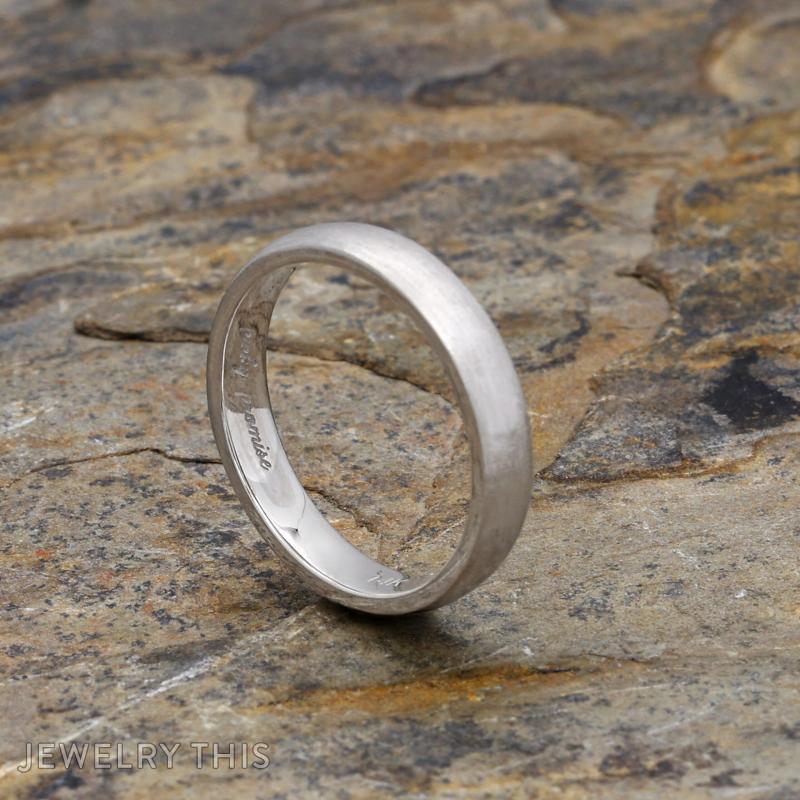
Classic half round wedding band
Why choose a classic band?
A classic wedding band can be ideal if you want:
- A timeless appearance
- A minimalist aesthetic
- A versatile everyday ring
- A design that will remain relevant for decades
- A band that allows the engagement ring to remain the focal point
Classic does not have to mean ordinary. Small changes to the profile, finish, width, or edges can create a wedding band that feels distinctly personal.
2. Diamond Wedding Bands
If you want your wedding band to add sparkle, a diamond-set design can be an elegant choice.
Diamonds may be incorporated in several ways, including:
- A single row of diamonds
- Pavé-set diamonds
- Channel-set diamonds
- Bezel-set diamonds
- Alternating diamond and metal details
- Larger individual stones spaced around the band
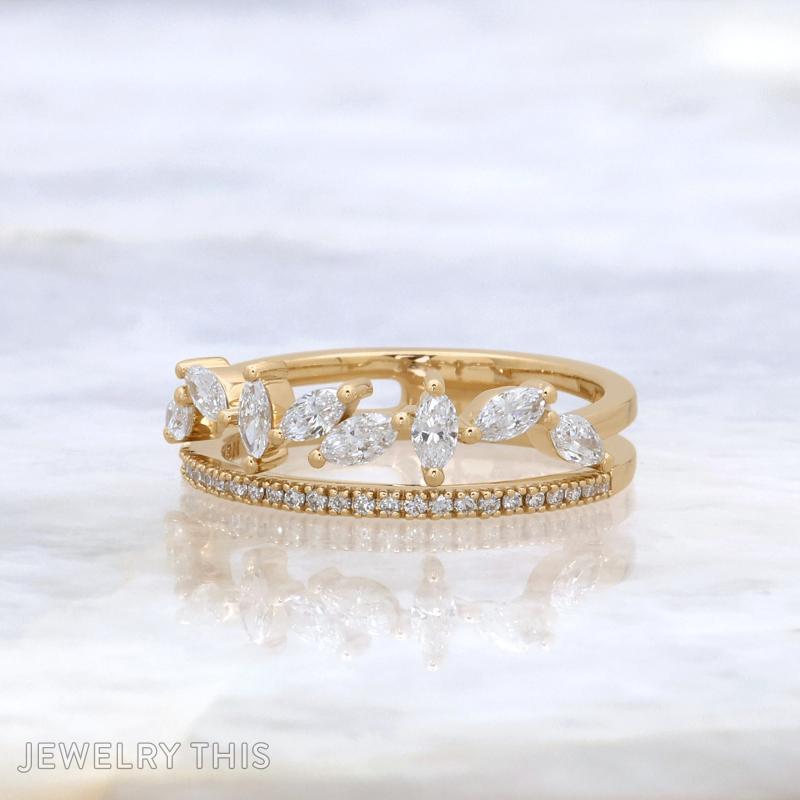
Diamond wedding band
The amount and placement of diamond coverage can dramatically change the appearance of the ring. A delicate diamond band can provide subtle brilliance, while a more substantial design can create a stronger visual presence beside an engagement ring.
3. Eternity Bands
An eternity band features gemstones set around the full circumference of the ring. Diamond eternity bands are particularly associated with anniversaries and other meaningful milestones, but they can also be chosen as wedding bands.
The continuous circle of gemstones creates sparkle from multiple angles. One practical consideration is sizing. Because stones extend around the entire band, traditional resizing can be more complex than with a plain metal band or a design with stones only across part of its circumference.

Black and white diamond full eternity
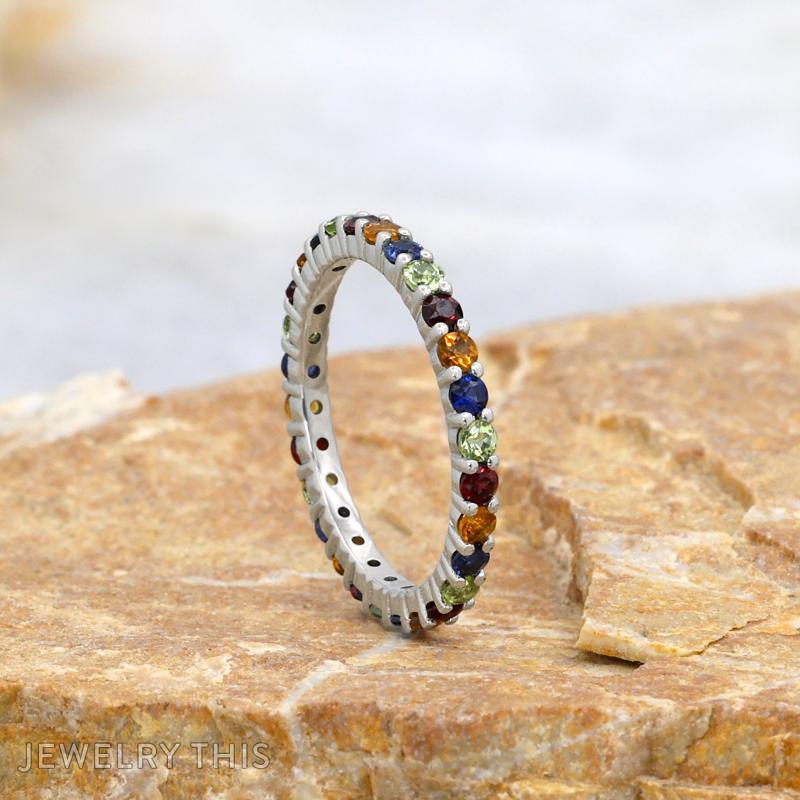
Gemstone full eternity band
For that reason, accurate sizing and careful planning are especially important.
Half-Eternity Bands
A half-eternity band places gemstones around the upper portion of the ring rather than completely around the circumference. This can offer a balance between the appearance of a diamond band and the practicality of having a larger section of metal underneath the finger.

Half eternity marquise diamond band
Half-eternity designs can also be easier to adjust in certain circumstances than full eternity designs, depending on the construction. They are a popular choice when you want visible diamond coverage while maintaining a simpler lower portion of the band.
4. Curved Wedding Bands
Not every engagement ring has a straight profile. A curved wedding band is designed with a gentle curve that can follow the shape of the engagement ring. This can be particularly useful when the centre stone or setting extends lower toward the finger and prevents a straight band from sitting flush.
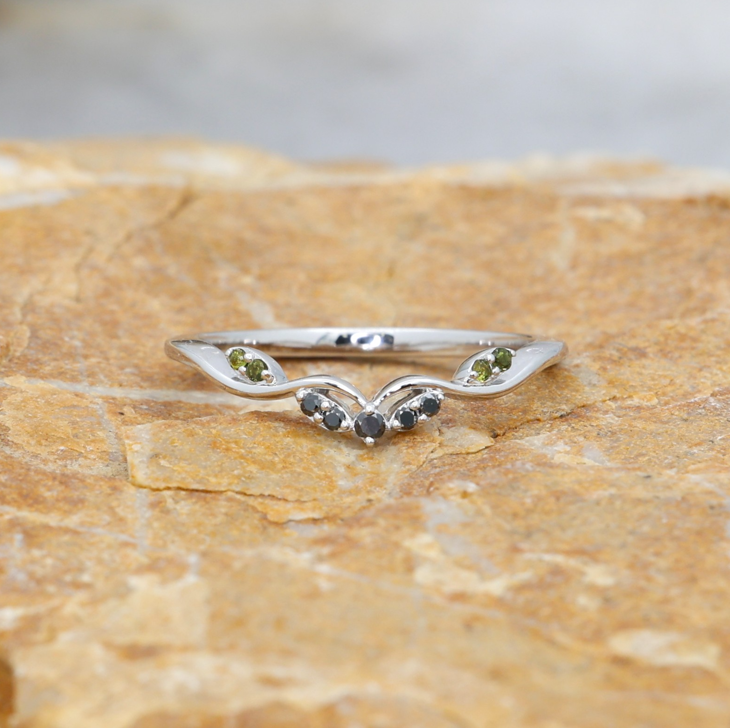
Curved wedding band
A curved band can also be chosen purely for aesthetic reasons, even when a straight band would technically fit. The curve can introduce a subtle design detail while helping the two rings appear intentionally coordinated.
5. Contoured Wedding Bands
Contoured wedding bands are shaped specifically to accommodate the profile of an engagement ring. While the terms “curved” and “contoured” are sometimes used interchangeably, a contoured band is often more closely designed around the shape of a particular engagement ring.
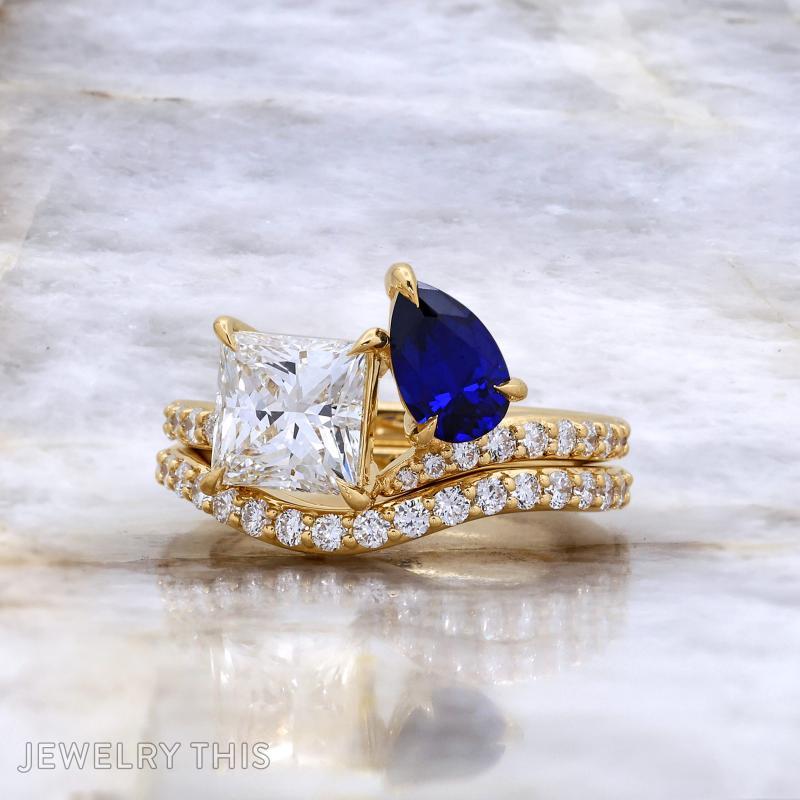
Contour wedding band
This makes the style especially useful for unusual settings, prominent centre stones, halo designs, and engagement rings with low or complex profiles.
A custom contoured band can be designed after assessing the actual engagement ring, allowing the proportions and shape of both rings to work together.
6. Vintage-Inspired Wedding Bands
Vintage-inspired wedding bands draw on design details associated with earlier jewellery periods.
Common details include:
- Milgrain
- Filigree
- Engraving
- Decorative edges
- Beaded details
- Geometric motifs
- Intricate metalwork

Oval Golden Rays Vintage Gold and Diamond Ring

Vintage Inspired Opal Oval Engagement Ring
A vintage-inspired ring does not have to be an antique. A new, custom-made band can incorporate traditional design influences while being created specifically for the wearer. This is an appealing option if you want your wedding jewellery to have character and craftsmanship without necessarily sourcing an original antique ring.
7. Modern Wedding Bands
Modern wedding bands tend to focus on clean lines, unusual proportions, geometric details, or contemporary finishes.
A modern design might feature:
- Sculptural curves
- Angular edges
- Mixed metals
- Brushed or satin finishes
- Asymmetrical details
- Minimalist diamond placement

Marquise cut diamond and ruby set with a space between them from a modern yet harmonious look

Oval and Pear Diamond Two Stone Ring
Modern does not necessarily mean dramatic. A very simple band with carefully considered proportions can have a distinctly contemporary character.
8. Mixed-Metal Wedding Bands
Mixed-metal designs combine different precious metals or colours within one ring. For example, a design might combine yellow gold with white gold or platinum, creating contrast without relying on gemstones.
Mixed-metal wedding bands can be especially useful if your existing jewellery collection includes different metal colours. They can also provide a more personalised appearance than a traditional single-metal band. When combining metals, the design should consider differences in colour, hardness, finish, and long-term wear.

Mixed metal organic wedding band
9. Matching Wedding Bands
Some couples prefer wedding bands that coordinate closely with one another. Matching does not necessarily mean identical.
Two bands can share a design element such as the same metal, engraving, edge treatment, or finish while differing in width or proportions to suit each person. This approach creates a visual connection while allowing each ring to feel individual.
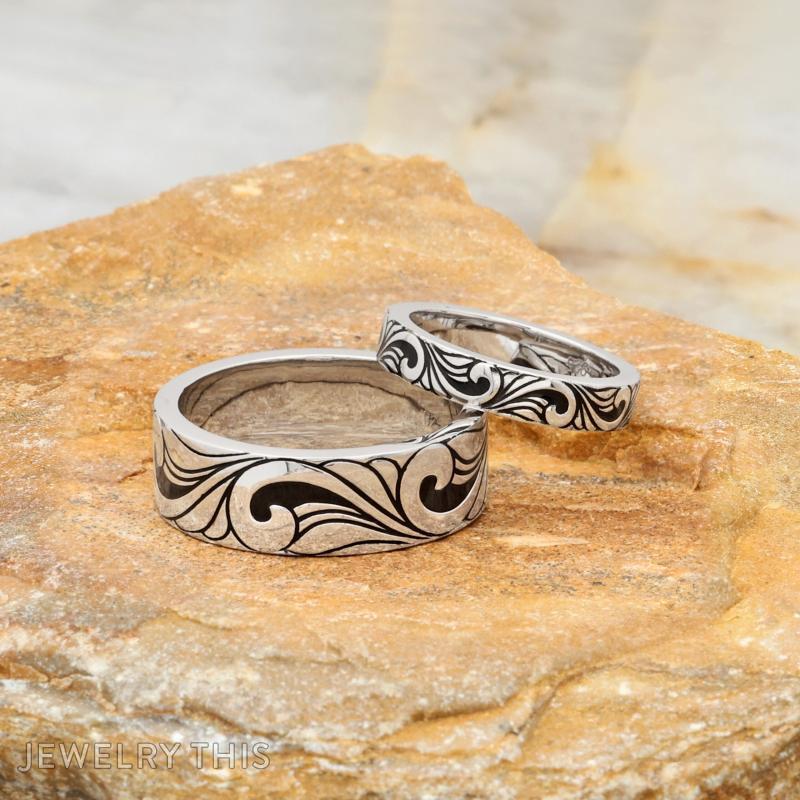
Matching wedding bands
10. Wedding Bands with Engraving
Engraving can turn a relatively simple wedding band into something deeply personal.
Possible engraving ideas include:
- Wedding dates
- Initials
- Meaningful words
- Personal messages
- Symbols
- Coordinates of a significant location
- Handwritten messages

Ring with Hidden Engraved Message
The engraving can be placed inside or outside the band depending on the design and available surface area. For a custom piece, engraving can be incorporated into the design from the beginning rather than treated as an afterthought.
How Do You Choose the Right Wedding Band Style?
There are several important factors to consider when choosing a wedding band.
Start With Your Engagement Ring
If you already have an engagement ring, begin by looking at its overall shape and proportions.
Consider:
- The centre stone
- The setting height
- The width of the engagement ring
- The metal
- The profile of the setting
- Any existing diamond or gemstone details
- Whether you want the wedding band to sit flush
A straight band may work beautifully with one engagement ring but create an unwanted gap with another.
Consider Your Lifestyle
Your wedding band should work with the way you live.
If you use your hands frequently, work with tools, exercise regularly, or prefer low-maintenance jewellery, a practical profile and secure setting may be important considerations.
A more intricate or gemstone-heavy design can still be suitable for everyday wear, but it may require more consideration around setting security, cleaning, and maintenance.
Think About Your Personal Style
Ask yourself whether you are naturally drawn to:
- Minimalist jewellery
- Traditional designs
- Vintage details
- Contemporary shapes
- Diamond-heavy styles
- Subtle gemstone accents
- Unusual or artistic designs
Your wedding band does not need to follow a trend. It should feel like something you will still enjoy wearing years from now.
Choose Your Metal Carefully
Wedding bands can be created in a range of precious metals, including yellow gold, white gold, rose gold, and platinum.
Metal choice affects the ring’s colour, appearance, feel, durability, and maintenance requirements.
The best choice depends on the design and how you intend to wear the ring rather than simply choosing the most popular option.
Should Your Wedding Band Match Your Engagement Ring?
No. Your wedding band does not have to match your engagement ring exactly.
However, the two rings should feel visually compatible.
You might coordinate them through:
- Matching metal
- Similar diamond shapes
- Complementary textures
- Related design details
- Similar proportions
- Contrasting finishes
For example, a polished yellow-gold engagement ring can be paired with a simple polished band for a classic look, or with a textured or diamond-set band for more contrast.
The goal is coordination rather than necessarily creating an identical pair.
What If a Standard Wedding Band Does Not Fit Your Engagement Ring?
This is where custom wedding band design can be particularly valuable.
Some engagement rings have settings that make a traditional straight band difficult to wear comfortably or prevent the two rings from sitting neatly together.
A custom band can be designed around the existing engagement ring.
Depending on the design, this may involve creating a curved or contoured profile, adjusting the band width, incorporating a shaped section around the setting, or creating complementary details that visually connect the two rings.
Rather than choosing a wedding band and hoping it works, the design can be developed with the engagement ring as part of the starting point.
Custom Wedding Bands: When They Make Sense
A custom wedding band can be an excellent choice when you want something that cannot be found in a standard collection.
It may be especially appropriate when:
- Your engagement ring has an unusual shape
- You want a perfect pairing between two rings
- You have a specific design in mind
- You want a meaningful engraving or motif
- You want to incorporate diamonds or gemstones in a particular arrangement
- You prefer a particular metal combination
- You want to create a one-of-a-kind wedding ring
The custom process typically begins with understanding your preferences and examining the engagement ring. From there, the design can be developed, refined, and approved before production.
For a made-to-order piece, a considered process—from design and CAD development through casting, setting, finishing, quality control, and final delivery—helps ensure the finished ring reflects the approved design.
The Right Wedding Band Is the One That Feels Like Yours
There is no single wedding band style that is right for every couple. A classic band may be perfect for someone who values simplicity. Another person may prefer the sparkle of pavé diamonds, the character of a vintage-inspired design, or the precise fit of a custom contoured band.
The most important considerations are how the band works with your engagement ring, how it fits into your lifestyle, and whether the design reflects your personal story.
When a standard style does not quite capture what you want, a custom wedding band offers another possibility: creating the proportions, details, metal, gemstones, and shape specifically for you.
The process is centred on creating meaningful, made-to-order jewellery rather than simply selecting a ring from a shelf. Whether you are looking for a timeless wedding band or a completely individual design, the goal is to create custom jewelry you will be proud to wear long after the wedding day.
Wedding Band Style FAQs
What are the most popular wedding band styles?
Popular wedding band styles include classic plain bands, diamond bands, pavé bands, eternity bands, curved bands, contoured bands, and vintage-inspired designs. The best style depends on your engagement ring, lifestyle, and personal taste.
What wedding band style is best for an engagement ring?
The best wedding band style depends on the shape and setting of the engagement ring. A straight band works well with many classic settings, while a curved or contoured band can be useful when the engagement ring has a low or unusual profile.
Should my wedding band be the same metal as my engagement ring?
It does not have to be. Matching metals creates a traditional, coordinated appearance, while mixed-metal designs can create intentional contrast and a more distinctive look.
What is the difference between a curved and contoured wedding band?
Both styles can be shaped to work with an engagement ring, but a contoured band is generally designed more specifically around the profile of the engagement ring. The terminology can vary between jewellers.
Are diamond wedding bands suitable for everyday wear?
They can be, provided the design and settings are appropriate for regular wear and properly maintained. The type of setting, metal, construction, and lifestyle should all be considered when selecting a diamond wedding band.
Can I combine different wedding band styles?
Yes. Wedding bands can combine several design elements. For example, a ring could have a classic profile with pavé diamonds, a curved shape with vintage engraving, or a modern mixed-metal design.