
Jewelry Finishes and Techniques
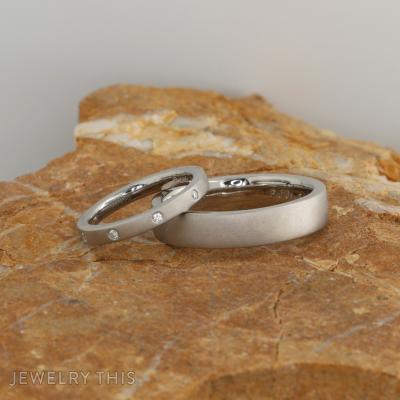
Jewelry finishes are one of the most important (and often overlooked) parts of the design process. While gemstones, metal choice, and setting style usually get most of the attention, the finish is what ultimately defines how a piece looks, feels, and interacts with light.
A finish can make the same design appear modern or vintage, bold or understated, high-shine or softly organic. It’s the final layer of craftsmanship that brings a piece of jewelry to life.
When designing custom jewelry, understanding these finishes helps you make more intentional choices so the final piece reflects not just the design itself, but the style you actually want to wear every day.
Below is a breakdown of the most common jewelry finishes and techniques used in fine jewelry today.
High Polish (High Shine Finish)
A high polish finish is the most classic and widely recognized jewelry finish. It is created by polishing the metal until the surface becomes smooth, reflective, and mirror-like.
This finish is especially popular in engagement rings and wedding bands because it highlights the natural beauty of precious metals like gold and platinum. It reflects light beautifully and gives jewelry a bright, luxurious appearance.
However, high polish finishes do tend to show scratches more easily over time—particularly on rings worn daily. Many people still choose it because it can always be re-polished to restore its original shine.

Pendant with highly polished metal finish.
Brushed Finish
A brushed finish has a soft, directional texture created using fine abrasive tools that lightly etch the surface of the metal. Instead of reflecting light sharply, it diffuses it, creating a more subdued and modern appearance.
This finish is especially popular in men’s wedding bands and contemporary custom designs because it feels understated yet intentional.
Unlike high polish finishes, brushed textures naturally hide minor scratches better, which makes them a practical choice for everyday wear pieces.
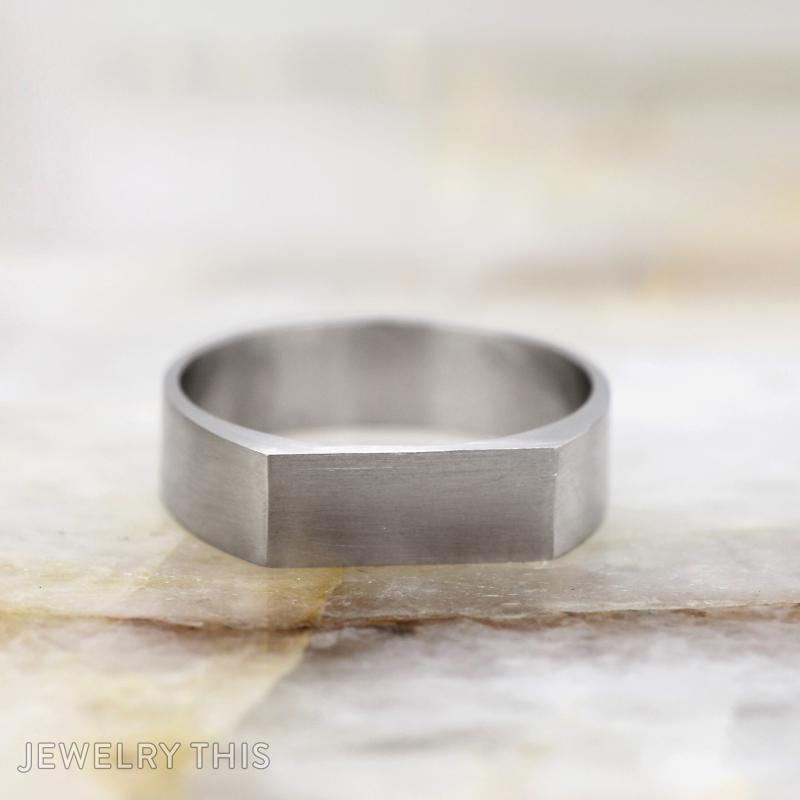
Bushed finish mens ring
Hammered Finish
A hammered finish creates a textured surface that resembles small, intentional indentations in the metal. Each piece is slightly unique because the pattern is formed by hand or specialized tools.
The result is a warm, organic look that feels artisanal and handcrafted. Depending on the style, hammered finishes can range from bold and dramatic to subtle and refined.
A variation known as a pebbled finish softens the texture further and is often paired with matte surfaces for a more contemporary, sculptural look.
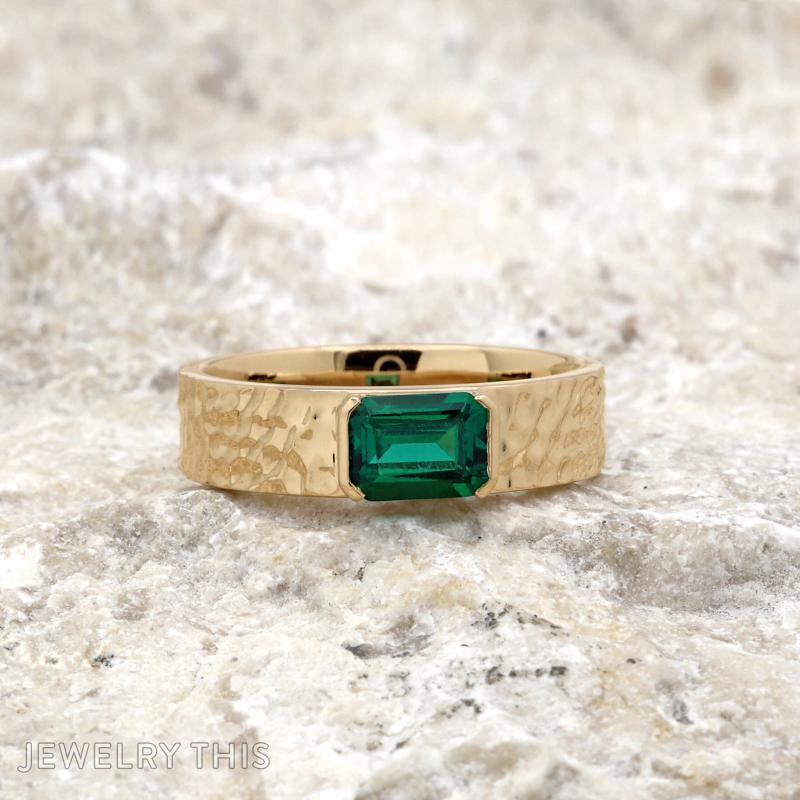
Hammered Partial Bezel Emerald Ring
Matte (Satin) Finish
A matte or satin finish removes shine entirely, creating a soft, non-reflective surface. This is achieved through controlled abrasion or chemical treatment that smooths the metal in a way that diffuses light rather than reflecting it.
Matte finishes are often chosen for their modern, minimalist feel. They allow the form and design of a piece to stand out without the distraction of shine.
Over time, matte surfaces may naturally develop a soft sheen in areas of frequent contact, giving the piece a lived-in, evolving character.

Pendant with highly polished and matte/satin finish
Sandblasted (Stardust Finish)
A sandblasted finish creates a frosted, slightly textured surface that feels more dimensional than a standard matte finish. It is achieved by blasting fine particles—such as sand or glass—at the metal surface under controlled pressure.
The result is a soft, sparkling texture that scatters light in a subtle, almost celestial way. This finish is often used in modern or nature-inspired designs and works beautifully when paired with polished edges or gemstone accents.
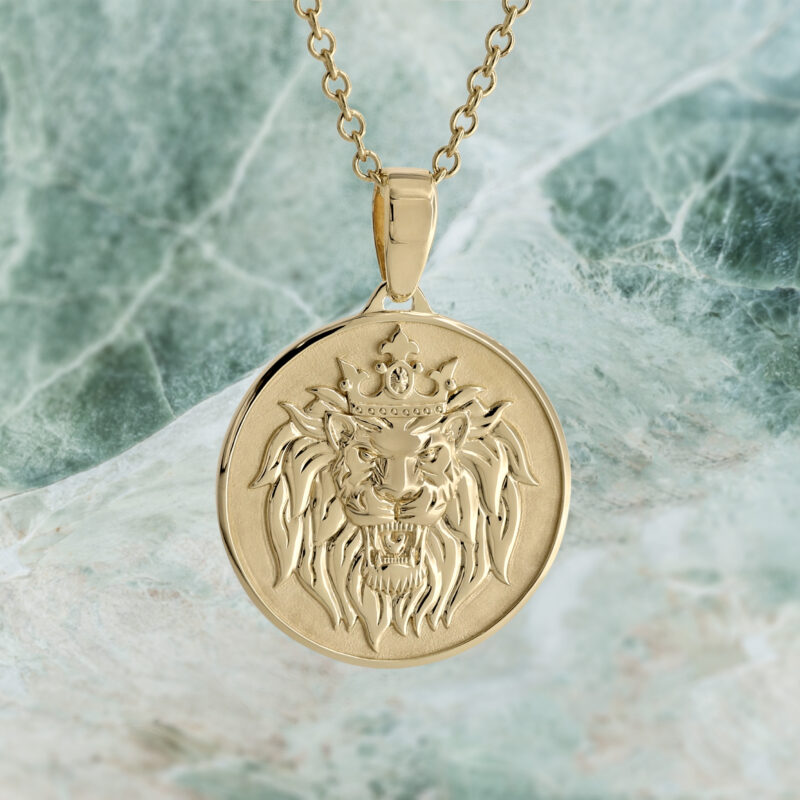
Pendant with sandblasted background
Learn more about High Polished vs Brushed vs Sandblasted Finishes in Pendant Design
Jewelry Techniques That Change Color, Not Texture
Not all finishing methods change the surface texture of jewelry. Some techniques are used specifically to alter color, contrast, or visual detail while leaving the structure of the metal intact.
Enameling
Enameling is a decorative technique that involves fusing powdered glass to metal at high temperatures. Once fired, it becomes a smooth, glass-like surface that can be glossy, translucent, or opaque depending on its composition.
One of its most striking uses in modern jewelry is black enamel, which creates deep contrast and bold graphic detail within custom designs. It is often used for logos, signet rings, and intricate inlay work where definition is key.

Black Enamel Inlay Cross Pendant
E-Coating
E-coating (electro-deposition coating) is a process that uses an electrical charge to evenly bond a thin layer of colored coating to metal surfaces. Unlike traditional plating, it allows for more consistent color application, including nontraditional shades.
This technique is often used in contemporary jewelry design to achieve uniform color finishes that complement modern styling.
Oxidation (Antique Finish)
Oxidation is a controlled chemical process used to darken metal surfaces most commonly silver to create an antique or aged appearance. This results in a dark patina that settles into recessed areas, enhancing detail and contrast.
It is sometimes referred to as a “blackened” or “antiqued” finish and is especially popular in vintage-inspired and sculptural designs.
Over time, oxidation can naturally soften depending on wear, gradually revealing highlights in raised areas of the design.
Plating
Plating is a process where a thin layer of metal—often gold—is applied to the surface of another metal using an electrical current.
This technique is commonly used to transform base metals or silver into gold-tone jewelry. It allows for visual versatility while maintaining a more accessible base material underneath.
Gold plating, rose gold plating, and rhodium plating are all widely used variations in modern jewelry design.

Silver pendant with yellow gold plating detail
Final Thought
Choosing a jewelry finish is more than a final detail—it acts as a design decision that shapes how a piece feels every time you wear it. Whether you prefer the bright reflection of high polish, the soft texture of brushed metal, or the modern depth of matte and sandblasted finishes, each option tells a different visual story and changes how light interacts with the piece. Even subtle choices like enamel accents or plating techniques can completely shift the personality of a design. If you’re exploring ideas for something personal or meaningful, the best way to bring it to life is to create custom jewelry designed around your style, story, and the finish that makes it truly yours.